
Soup night reveals a missing ingredient faster than any other meal. You reach for the vegetable broth, and the shelf is bare.
A good vegetable broth substitute keeps your dish tasting balanced, and the right pick depends on three things: how much umami depth you need, how salty the substitute runs, and whether color or acidity matters in the final dish.
Most substitutes work at a 1:1 ratio. The exceptions are concentrated options like bouillon or paste, where you dissolve a smaller amount into water before measuring.
Mushroom broth is the closest match for savory depth. Vegetable bouillon is the easiest pantry fix. White miso + water adds body fast. Soy sauce + water works in a pinch. Tomato juice + water suits tomato-based recipes. Adjust salt after any swap.
5 Best Vegetable Broth Swaps (Ranked Options)
Every swap below is tested against the same three metrics: umami depth, salt level, and color impact. The table gives you a fast reference before you commit.
| # | Substitute | Best For | Ratio | Key Note |
|---|---|---|---|---|
| 1 | Mushroom Broth | Both | 1:1 | Deepest umami swap |
| 2 | Bouillon + Water | Both | 1:1 | Watch the salt level |
| 3 | White Miso + Water | Both | 1:1 | Add off-heat only |
| 4 | Soy Sauce + Water | Savory | ¾:1 | May darken pale dishes |
| 5 | Tomato Juice + Water | Savory | ¾:1 | Tomato recipes only |
1. Mushroom Broth
Mushroom broth is the swap that most cooks reach for first, and for good reason. It carries natural glutamates that mimic vegetable broth's savory backbone almost exactly.
If you want to keep checking on storing broth properly, that's worth a look before you commit to buying more.
For mild dishes, choose a lighter mushroom broth or cut it with a splash of plain water to soften the earthiness.
Mushroom Broth
Works for: Soups, stews, braises, risotto, and any savory grain dish needing depth
Skip if: Your dish needs a neutral, mild flavor base, since mushroom can stand out
- Soups and stews: Use 1:1 with no adjustment; it behaves exactly like broth in volume and salt
- Rice and grains: Works well, but pair with neutral aromatics so the earthiness doesn't dominate
- Light sauces: Dilute slightly (add 2 tablespoon water per cup) to keep the flavor from going too heavy
- Color: Mushroom broth runs darker than most vegetable broth; expect a deeper amber tone
2. Vegetable Bouillon + Water
A bouillon cube or concentrate dissolved in hot water is the fastest pantry fix on this list. It already contains salt and aromatics, so the flavor is consistent batch to batch.
The main risk is oversalting, especially if your recipe reduces the liquid later.
Dissolve the cube in 1 cup of hot water and simmer for 2 to 3 minutes before adding it to your dish. This smooths out the slightly sharp initial taste that undissolved bouillon can carry.
- Dissolve method: Use hot water (not cold) and stir until no granules remain before measuring
- Salt control: Choose low-sodium bouillon when the recipe reduces; add extra salt only after tasting
- Best recipe types: Soups, stews, rice pilaf, and braised vegetables
- Concentrated paste bouillon: Use 1 teaspoon paste per 1 cup water; never add paste dry to a long-cooking dish
- Skip if: Your bouillon is heavily salted and the recipe is a long braise; you risk a very salty result
3. White Miso (Shiro) + Water
White miso dissolved in warm water gives a broth-like body that most other pantry swaps can't match. It carries fermented umami and a mild sweetness that works especially well in ramen-style soups and vegetable braises.
When you're deciding on choosing a miso alternative, the flavor gap between white and other varieties matters.
- When to add: Always stir miso in off-heat; boiling miso kills its live cultures and flattens the flavor
- Flavor adjustments: Add a pinch of garlic powder or a drop of rice vinegar to round it out
- Texture: Miso adds a slightly thicker body than vegetable broth; thin with a little extra water if needed
- Skip if: Your recipe needs a non-fermented, clean vegetable flavor; miso has a distinct tang
4. Soy Sauce + Water
Soy sauce + water delivers the salty, savory punch that vegetable broth provides, using two things almost every kitchen has. Use roughly 1 tablespoon of soy sauce per cup of water to approximate the salt level of a standard broth. For darker or fermented-sauce options, umami-forward sauce swaps cover that ground well.
The one thing soy sauce misses is broth's brightness. A small splash of rice vinegar or a squeeze of lemon, added just before serving, corrects that flat quality and brings the dish into balance.
Skip this swap if your recipe needs to stay pale, because soy sauce tints soups and light sauces a noticeable brown.
5. Tomato Juice + Water
Tomato juice is a natural fit in recipes that already lean tomato, like minestrone, shakshuka, or braised lentils. It adds acidity and body at the same time, which is something plain water can't do.
For a broader look at this salty pantry staple's lifespan, that's separate reading, but here the focus is tomato's role as a broth stand-in.
- Dilution ratio: Mix equal parts tomato juice and water for the right viscosity
- When acidity helps: Braised beans, lentil soups, and red-sauce pastas all benefit from the extra tang
- Texture note: Passata runs thicker; thin it more aggressively (1 part passata to 2 parts water)
- Skip if: Your dish is pale or neutral in color; tomato juice will tint everything red-orange
Making the Substitute Taste Like Vegetable Broth
Three levers control how close any substitute gets: salt level, umami depth, and acidity. If your swap tastes flat, a pinch of salt plus a 2-minute simmer usually fixes it.
When you're working with swapping in fermented paste or trying to decide between broth styles, those adjustments matter even more. If the swap runs too salty, dilute with plain water and re-taste before adding anything else.
- Fix flat flavor: Add a pinch of salt, a bay leaf, and simmer 2 to 3 minutes; taste again before seasoning further
- Fix too-salty flavor: Add water in 2-tbsp increments, stir, and wait 1 minute before tasting each time
- Fix missing brightness: A few drops of rice vinegar or a small squeeze of lemon added off-heat restores the lively quality broth usually carries
Frequently Asked Questions
Mushroom broth is the closest match for savory soups. It has the same umami depth and works at a 1:1 ratio with no salt adjustments needed.
Plain water works only in recipes where other ingredients carry the flavor. Add aromatics like garlic, onion, and a bay leaf to compensate for the missing depth.
Use low-sodium bouillon and dissolve it fully before adding to the dish. Taste after simmering and only season with extra salt at the very end.
Always add miso off-heat, after the dish stops boiling. Boiling miso flattens its flavor and you lose the fermented depth it's meant to contribute.
Vegetable bouillon dissolved in water is the most consistent option for rice and grains. It absorbs evenly and gives the cooked grains a savory finish without adding excess liquid.
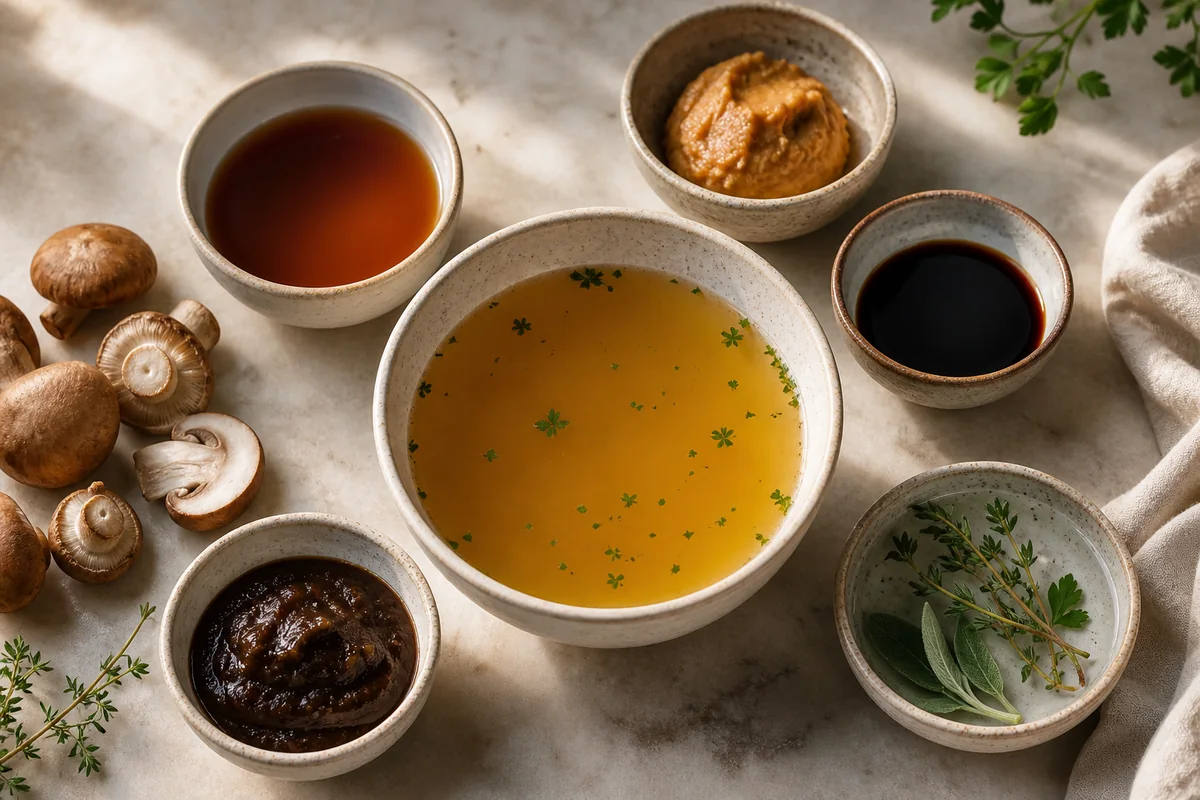
5 Best Vegetable Broth Substitutes (Ranked)
Ingredients
Method
- Match the goal of your recipe: for soups/stews, prioritize depth (mushroom broth, bouillon, miso).
- Use the ratio in the table: replace vegetable broth 1:1 (or use the listed ratio) and stir until fully dissolved.
- If your substitute is salty (bouillon, soy sauce), simmer 2-3 minutes first, then fine-tune with water or a small acid splash.
- If it’s bland or too flat, add aromatics (garlic/onion powder, bay leaf) and simmer briefly to round out flavor.
- Taste before serving: vegetable broth substitutions often need salt and acid adjustments to land the same “brothy” balance.
Notes
- For best results, choose a substitute based on your recipe’s flavor lane (neutral vs tomato vs deeply umami).
- Add miso off-heat and avoid boiling to keep the flavor smooth.
Tried this recipe?
Let us know how it was!
Carrie is a food writer and editor with more than 15 years of experience. She has worked for some of the biggest names in the food industry, including Bon Appétit, Food & Wine, and Martha Stewart Living.
As the Editor in Chief of EpicureDelight, Carrie oversees all of the content on the site. She also manages the team of contributing writers and editors, who help to create delicious recipes, helpful tips, and informative articles that you’ll find on the site.
A native of the Chicago area, Carrie is passionate about all things food. She loves trying new restaurants and experimenting with new recipes in her kitchen. She’s also a graduate of the Culinary Institute of America, so she knows a thing or two about food!



