
That smoky, earthy heat in a good taco rub or a slow-cooked chili? It usually comes from chipotle powder.
Finding the right chipotle powder substitute means matching two things at once: the smoke and the chili depth.
Chipotle powder is made from dried, smoked jalapeños. It sits at medium heat with a woody, almost leathery backbone.
Swaps that only bring heat, or only bring smoke, will fall short.
Ancho chili powder is the closest 1:1 swap for chipotle powder in most dishes. For smoke-first recipes, smoked paprika leads. For a full match of both heat and smoke, a smoked paprika and cayenne blend gets closest. Start 1:1, then adjust in small pinches.
5 Best Chipotle Powder Substitutes for Home Cooks
| # | Substitute | Best For | Ratio | Key Note |
|---|---|---|---|---|
| 1 | Ancho Chili Powder | Both | 1:1 | Add smoke if needed |
| 2 | Smoked Paprika | Savory | 1:1 | Boost heat with cayenne |
| 3 | Smoked Paprika + Cayenne | Both | ¾ + ¼ | Best full-profile match |
| 4 | Chili Powder | Both | 1:1 | Less smoky; add paprika |
| 5 | Gochugaru | Savory | 1:1 | Different texture; taste first |
Match smoke first, then heat, then earthiness. These ratios are starting points, not fixed rules.
Check your aged spice blends before swapping-old powder loses potency fast.
1. Ancho Chili Powder
Ancho chili powder comes from dried poblano peppers. It is the closest flavor cousin chipotle has in most pantries.
The earthiness is nearly identical. Ancho runs a bit milder on heat and noticeably softer on smoke, but it nails the dark chili backbone that chipotle brings to rubs and braises.
If you want to pick the right ancho swap for a follow-up recipe, the same logic applies in reverse.
- Starting ratio: Use 1 teaspoon ancho chili powder for every 1 teaspoon chipotle powder.
- Heat and smoke: Milder and less smoky than chipotle; expect a gentler burn.
- Best uses: Tacos, chili, dry rubs, enchilada sauce, slow-cooked beef.
- Quick adjustment: Add ⅛ teaspoon smoked paprika per teaspoon of ancho to bring smoke closer to chipotle's level.
Skip if your dish depends entirely on chipotle's smoky character. Ancho reads noticeably less smoky on its own, and in a simple spice rub that difference will show.
2. Smoked Paprika
Smoked paprika is the swap to reach for when the recipe's whole point is smoke.
It is made from peppers dried over oak wood, so the paprika smoke profile is genuine, not artificial. The gap is heat: smoked paprika is much milder than chipotle, so you will almost always need a cayenne boost.
- Starting ratio: Use 1 teaspoon smoked paprika for every 1 teaspoon chipotle powder.
- Heat expectation: Noticeably milder. Chipotle sits at medium heat; smoked paprika is closer to mild.
- Adjust heat: Add cayenne in ⅛ teaspoon increments until you hit the warmth you want.
- Recipes where it shines: Grilled chicken rubs, fajita seasoning, potato wedge seasoning, roasted vegetables.
Skip if you need chipotle's actual chili heat. Smoked paprika alone in a spicy salsa or a hot wing rub will taste flat.
3. Smoked Paprika + Cayenne Blend
Chipotle powder is smoke and chili heat in one ingredient. A blend of smoked paprika and cayenne can replicate both at once, and it is more accurate than either ingredient alone.
The starting point is ¾ teaspoon smoked paprika plus ¼ teaspoon cayenne per 1 teaspoon chipotle powder. That ratio lands at medium heat with solid smoke.
Think of the sharp heat profile of cayenne as the gas pedal: the more you add, the hotter it runs. The best smoked paprika options will matter here too, since a lower-quality paprika mutes the smoky base.
More Heat
Works for: Hot dishes, spicy rubs, marinades where chipotle's kick matters most
Skip if: You're cooking for spice-sensitive guests or the dish has acidic balance
More Smoke
Works for: Braises, soups, smoked salt-free rubs where a woody depth sets the tone
Skip if: You've already used a smoky ingredient like liquid smoke or smoked salt
- Blend starting point: ¾ teaspoon smoked paprika + ¼ teaspoon cayenne = 1 teaspoon chipotle powder.
- Adjustment directions: More heat → add cayenne in ⅛ teaspoon steps. More smoke → increase paprika and pull back cayenne.
- Prevent one-note taste: Add a small pinch of garlic powder or cumin to round the blend out and keep it from tasting like two separate spices.
Skip this if you need a single-ingredient swap. Blending mid-cook is annoying when you just want to grab and measure.
4. Chili Powder
Regular chili powder is what most people already have. It is the fastest option, and it works well enough in dishes where smokiness is not the star.
The flavor is warmer and earthier than chipotle, but noticeably flatter in the smoke department. Chili powder is also often a blend itself, containing cumin and oregano, so it can shift the overall seasoning of a dish slightly.
That blend character-described more on the earthy spice blend page-matters in simple recipes where chipotle was the only seasoning.
- Starting ratio: 1 teaspoon chili powder for every 1 teaspoon chipotle powder.
- Expected difference: Less smoky, sometimes slightly more cumin-forward.
- Fix tip: Add a small pinch of smoked paprika (about ⅛ teaspoon per teaspoon of chili powder) to bring in smoke without overseasoning.
Skip if smokiness is the dominant flavor in the dish. In a simple chili rub or a two-ingredient seasoning mix, the absence of smoke will be obvious.
5. Gochugaru
Gochugaru is Korean red pepper flakes. It brings genuine chili heat with a slightly fruity, vegetal edge that reads surprisingly close to chipotle in savory dishes.
The main trade-off is texture. Gochugaru is coarser than chipotle powder, so it can look uneven in a spice rub or seasoning blend.
For marinades, soups, and braised dishes, that texture dissolves into the liquid. The deeply smoky character of chipotle is still different, but gochugaru gets you chili heat with body.
| Use | Ratio | Notes |
|---|---|---|
| Marinades | 1:1 | Gochugaru dissolves well; texture is not an issue |
| Soups and braises | 1:1 | Start 1:1, reduce slightly if it tastes sharper than chipotle |
| Dry rubs | ¾:1 | Finer grind preferred; pulse gochugaru briefly if needed |
Texture Difference
Works for: Wet dishes, marinades, stews where the coarser flakes soften
Skip if: You need a fine, uniform powder for a dry rub or coating
- Best dish types: Korean-spiced tacos, braised meats, spicy soups, kimchi-adjacent marinades.
- After tasting: If it runs sharper or more pungent than chipotle, reduce by ¼ teaspoon and add a pinch of smoked paprika.
- Bitterness caution: High heat can make gochugaru slightly bitter; add it mid-cook, not at the start of a high-temperature sear.
Skip if your recipe needs a smooth, fine-ground powder. Gochugaru in a tightly textured dry rub stands out the wrong way.
Making Chipotle Powder Substitutes Work
The core approach is simple: match smoke first, then correct heat with cayenne, and taste as you go. Early additions of any chili-based spice build in flavor as the dish cooks.
Adding more dark, earthy chili near the end of cooking is usually fine for depth, but hot spices like cayenne added at the last minute can taste raw and sharp.
- Start with a ratio: Use 1:1 as the baseline for every swap, then correct from there rather than guessing a lower amount upfront.
- Adjust heat vs smoke separately: Cayenne moves heat; smoked paprika moves smoke. Treat them as two independent dials, not one combined fix.
- Time your additions: Add spice blends early in cooking for a mellowed, integrated flavor. Add heat-boosting pinches in the last 5 minutes only if you need a brighter, sharper edge.
Frequently Asked Questions
Ancho chili powder is the closest match at a 1:1 ratio. It has the same earthy chili depth, though slightly less smoke-add a pinch of smoked paprika to close that gap.
Add cayenne pepper in ⅛ teaspoon increments to boost heat. That combination of smoked paprika plus cayenne is the closest DIY match for chipotle's full flavor.
Yes, at a 1:1 ratio. Baked goods using chipotle often want a background heat more than smoke, so chili powder works well in spiced chocolate or mole-flavored batters.
Reduce the swap by ¼ teaspoon and replace that amount with smoked paprika. Dairy, acid, or a spoonful of tomato paste in the dish also tames excess heat.
It works, but the coarser texture can be uneven in a dry rub. Pulse it briefly in a spice grinder first for a finer result closer to chipotle's grind.
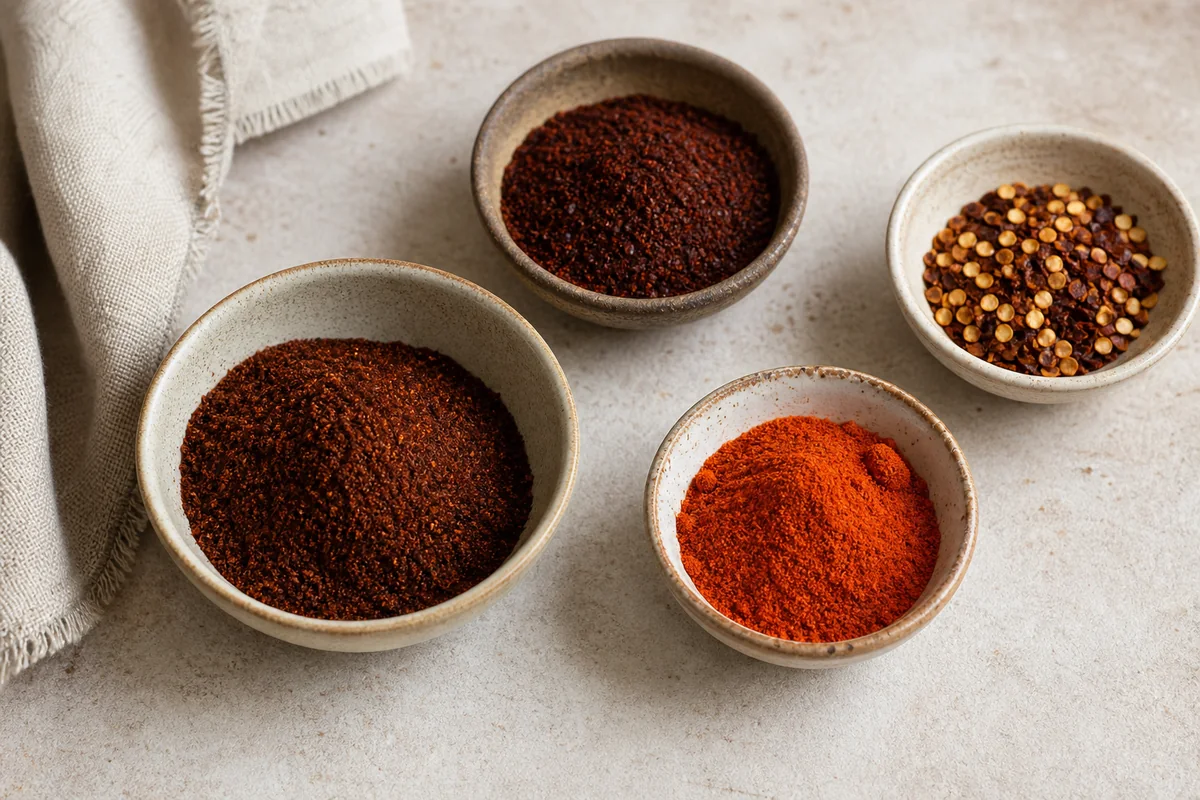
5 Best Chipotle Powder Substitutes for Home Cooks
Ingredients
Equipment
Method
- Decide whether you need “same heat” or “same smokiness” first—chipotle is smoky chili powder with medium heat.
- Start with the closest 1:1 powder-style substitute from the list, then adjust with small pinches (cayenne for heat, smoked paprika for smoke).
- If your substitute is milder than chipotle, add heat gradually (e.g., ⅛ teaspoon increments per 1 teaspoon chipotle powder).
- If your substitute is smokier but hotter, reduce the swap slightly and let the dish’s other flavors balance it.
- Taste once the dish is cooked/combined and make final micro-adjustments before serving.
Notes
- Powders vary by brand and grind, so use pinches for adjustments.
- For baking, avoid liquid substitutes; stick to chili powders for best texture and even flavor distribution.
Tried this recipe?
Let us know how it was!
Carrie is a food writer and editor with more than 15 years of experience. She has worked for some of the biggest names in the food industry, including Bon Appétit, Food & Wine, and Martha Stewart Living.
As the Editor in Chief of EpicureDelight, Carrie oversees all of the content on the site. She also manages the team of contributing writers and editors, who help to create delicious recipes, helpful tips, and informative articles that you’ll find on the site.
A native of the Chicago area, Carrie is passionate about all things food. She loves trying new restaurants and experimenting with new recipes in her kitchen. She’s also a graduate of the Culinary Institute of America, so she knows a thing or two about food!



