
That chewy, slightly open crumb with a crust that crisps fast under heat is what makes ciabatta hard to replace. When it's gone from the shelf, most bread swaps fall flat because they don't hold up to wet fillings or a hot press.
The right ciabatta substitute gets you close by matching two things: crumb structure and crust behavior.
A good ciabatta alternative needs an open crumb and a crust that toasts quickly without going rock-hard. Sourdough baguette is the closest overall match. Artisan French bread handles a panini press well. Focaccia works for sandwiches but runs denser. All swaps here are wheat-based, not gluten-free.
Ciabatta Substitute Options (5 Best Swaps)
Every swap below is rated on three things: chew, crumb openness, and how fast the crust toasts. The ratio column tells you how much to use per portion of ciabatta your recipe requires.
| # | Substitute | Best For | Ratio | Key Note |
|---|---|---|---|---|
| 1 | Sourdough Baguette | Both | 1:1 | Toast cut sides briefly |
| 2 | Artisan French Bread | Both | 1:1 | Great on a press |
| 3 | Focaccia (plain) | Sandwiches | 1:1 | Denser, more moisture |
| 4 | No-Knead Rustic Loaf | Both | 1:1 | Cool fully before slicing |
| 5 | Sub / Slider Rolls | Sandwiches | ¾:1 | Toast to firm crumb |
1. Sourdough Baguette
A sourdough baguette is the strongest match for ciabatta's chew. The tang adds character, and the open crumb holds up to saucy fillings without turning to mush.
When you're storing artisan bread ahead of time, keep it unsliced until you're ready to use it so the crumb stays intact.
- Slicing: Cut on a slight diagonal to get wider surface area, closer to ciabatta's natural shape.
- Toasting: Toast cut sides on a dry skillet for 45-60 seconds to mimic ciabatta's firmer crust.
- Ratio: Use 1:1 by portion; one baguette half per ciabatta slice.
Sourdough Baguette vs. Ciabatta
Works for: sandwiches needing chew, panini press use, open-faced toasts with toppings
Skip if: you need very soft, pull-apart bread - the crust may be too crisp for some fillings
2. Artisan French Bread
Artisan French bread has a white, airy interior and a crust that crisps fast. It performs well under a hot press or skillet because the crust doesn't buckle or split unevenly.
- Wet fillings: Toast cut sides to reduce sogginess before adding sauces or juicy vegetables.
- Press use: Apply medium pressure. French bread compresses slightly more than ciabatta but holds its shape.
- Freshness: Use same-day bread. Day-old French bread dries faster and may crack under pressure.
Skip if your recipe needs a very open, hole-filled crumb visible in cross-section. French bread's interior is airy but not as openly structured as ciabatta.
3. Focaccia (Plain)
Plain focaccia is thicker and holds more moisture than ciabatta, so it behaves differently under heat. The texture is softer throughout, with a spongy chew rather than the snappy bite you get from ciabatta's crust.
That said, focaccia works surprisingly well for sandwiches when you slice it horizontally and toast the cut sides. It also carries wet fillings without soaking through as fast because of its denser crumb.
If you're still deciding on focaccia alternatives, the comparison there can help you narrow down further.
- Slicing: Slice horizontally through the middle to get two flat sandwich halves.
- Toasting: 60-90 seconds cut-side down on a dry pan firms the surface enough to hold fillings.
- Seasoning check: Use plain focaccia only. Herb or salt-heavy versions can overpower fillings.
Focaccia vs. Ciabatta
Works for: sandwiches, soft-fill wraps, open-faced melts where crust snap matters less
Skip if: your filling is already very salty or your recipe needs an open-crumb visual presentation
4. No-Knead Rustic Bread
A Dutch oven loaf baked no-knead style delivers one of the best crust-to-crumb ratios of any homemade bread. The crust is thick and crackly, and the interior is chewy enough to pass for ciabatta in most sandwich builds.
One key thing: wait until it is fully cool before slicing, or the crumb compresses and turns gummy. If you're weighing the Dutch oven versus other vessels, that choice affects how much crust you get.
- Slicing thickness: Cut slices at least ¾ inch thick. Thinner slices compress under fillings.
- Rest time: At minimum, 1 hour after baking before you cut into it.
- Freezing: Slice and freeze portions individually. Reheat directly from frozen to preserve crust.
| Use | Ratio | Notes |
|---|---|---|
| Sandwiches | 1:1 | Slice ¾ inch thick; toast cut sides 45 sec |
| Open-faced | 1:1 | Thicker slices hold toppings without sagging |
| Baking sub | 1:1 | Use fully cooled loaf; warm slice in oven first |
Skip if you need the open-crumb look right away from a warm loaf. Slicing warm collapses the crumb and ruins the texture.
5. Sub Rolls / Slider Rolls
Thick bakery sub rolls are a solid emergency swap, especially when all the artisan loaves are gone. They're softer throughout, so the texture won't fully match ciabatta's chew, but toasting firms them up considerably.
- Toast first: Cut side down on a dry skillet for 60-90 seconds. This is non-negotiable for texture.
- Ratio: Use about ¾ of the roll volume you'd use in ciabatta. Rolls are denser, so less goes further.
- Size match: Pick thicker slider rolls over standard soft hot dog rolls for the best crumb structure.
We prefer bakery-style sub rolls over packaged slider buns. The packaged ones have too much sugar and go soft almost immediately after toasting. Skip if you want a chewy, crusty loaf with any kind of artisanal crumb - rolls simply won't give you that.
Making Your Ciabatta Substitute Work
The difference between a good swap and a soggy one usually comes down to three steps: toast the cut sides, slice at the right thickness, and serve promptly. For sandwiches, toasting cut sides for 45-90 seconds on a dry skillet reduces moisture absorption by a noticeable margin.
If your substitute is denser than ciabatta, cutting thicker slices and briefly warming them in a low oven keeps the interior from feeling gummy. Understanding focaccia's flavor profile also helps you decide whether its richer, oilier character fits your specific sandwich build.
- Sandwiches: Toast cut sides first, add fillings immediately, and serve within 10 minutes to prevent softening.
- Panini press: Brush the outer crust lightly with olive oil before pressing to prevent sticking and improve color.
- Baking applications: If a recipe calls for ciabatta cubes (stuffing or panzanella), use a day-old rustic loaf and dry the cubes in a 300°F oven for 15 minutes before using.
Frequently Asked Questions
A sourdough baguette is the closest match. Slice it on a diagonal to widen the surface, then toast cut sides briefly to replicate ciabatta's firmer crust and open crumb.
Mainly sandwiches. Focaccia is too dense and oily for panzanella or stuffing applications where ciabatta cubes need to absorb liquid evenly without turning mushy.
Toast the cut sides on a dry skillet for 45-90 seconds before adding fillings. Serve the sandwich within 10 minutes of assembling for the best texture.
Artisan French bread is our top pick for a press. Its thin crust handles heat evenly and compresses without splitting, which makes it the most predictable option.
Use a ¾:1 ratio. Slider rolls are denser than ciabatta, so slightly less volume gives you a comparable result without the sandwich feeling too bready.
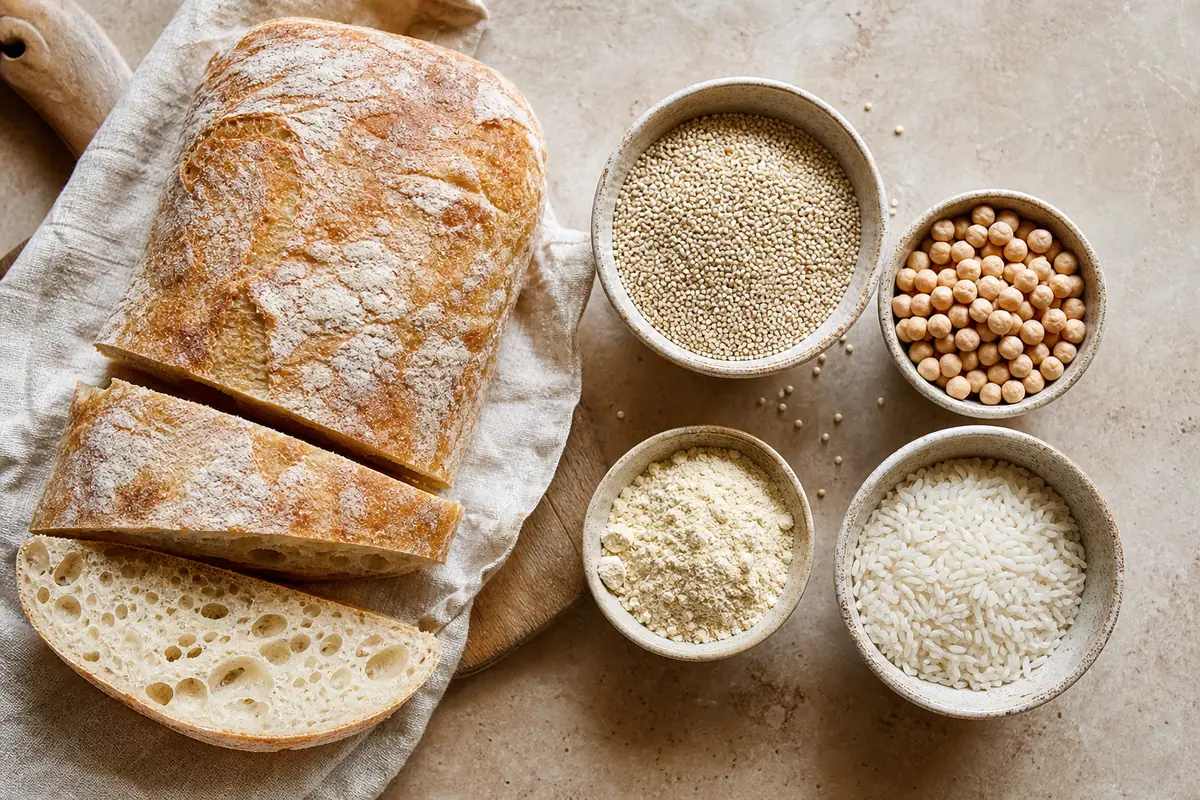
5 Best Ciabatta Substitutes (Tested)
Ingredients
Equipment
Method
- Start by deciding your goal: chewy bite (sandwich), airy crumb (open texture), or crusty toast (heat-and-stack).
- Choose the closest substitute from the table and use the listed ratio (usually 1:1, except rolls).
- If your substitute is softer than ciabatta, toast the cut sides 30–90 seconds per side to firm the crumb.
- If your substitute is denser, slice a bit thicker and let it heat briefly so the interior softens without turning gummy.
- Assemble and serve promptly—ciabatta’s best texture happens right after slicing or toasting.
Notes
- To match ciabatta best, prioritize a crust you can toast and an interior that slices without turning paste-like.
Tried this recipe?
Let us know how it was!
Carrie is a food writer and editor with more than 15 years of experience. She has worked for some of the biggest names in the food industry, including Bon Appétit, Food & Wine, and Martha Stewart Living.
As the Editor in Chief of EpicureDelight, Carrie oversees all of the content on the site. She also manages the team of contributing writers and editors, who help to create delicious recipes, helpful tips, and informative articles that you’ll find on the site.
A native of the Chicago area, Carrie is passionate about all things food. She loves trying new restaurants and experimenting with new recipes in her kitchen. She’s also a graduate of the Culinary Institute of America, so she knows a thing or two about food!



