Thick, almost spoonable coconut cream does two things in a recipe: it adds fat-rich body and a faint sweetness that plays well with both spices and sugar. When the can isn't in the pantry, you need a coconut cream substitute that matches that weight, not just the flavor.
The good news is that thickness is the real target. Coconut flavor is secondary and often optional, especially in baking.
Choose your swap based on texture first, then decide whether you want to keep any coconut character in the finished dish.
Coconut cream is thick, high-fat, and mildly sweet. The best swaps match that body and fat content. Chilled full-fat coconut milk is the closest match. For dairy-based richness, heavy cream works in most recipes. For dairy-free baking, cashew cream is a reliable fallback.
5 Best Coconut Cream Substitutes (That Actually Work)
The table below is your fast reference. Each substitute below it comes with a Skip if note so you can rule out the wrong swap before you even open the fridge.
| # | Substitute | Best For | Ratio | Key Note |
|---|---|---|---|---|
| 1 | Full-fat coconut milk (chilled) | Both | 1:1 | Chill 2+ hours first |
| 2 | Coconut milk powder | Both | 1:1 | Whisk until fully hydrated |
| 3 | Heavy cream | Both | 1:1 | No coconut flavor |
| 4 | Cashew cream | Both | 1:1 | Soak cashews first |
| 5 | Evaporated milk | Both | ¾:1 | Simmer to thicken |
Each section below goes deeper on texture behavior, flavor changes, and when a swap will let you down.
1. Full-Fat Coconut Milk (Chilled)
Canned full-fat coconut milk separates when cold. The thick layer on top is essentially coconut cream, and it behaves almost identically to the canned version.
Chill the can overnight, open it without shaking, and scoop the solid cream from the top.
- Texture cue: The chilled cream layer is thick and scoopable; if it's still pourable, chill longer before using.
- Flavor cue: Identical coconut aroma to canned coconut cream, so no flavor adjustment needed.
- Ratio: Use 1:1 in any recipe calling for coconut cream.
- Best use: Works in both creamy coconut swaps for baking and in curries or soups.
Skip if: You don't have time to chill the can. Without separation, you'll end up with something closer to thin coconut milk, and your sauce or batter will be noticeably looser.
2. Coconut Milk Powder (Reconstituted)
Coconut milk powder is a pantry staple that earns its place here. You mix it with less water than the package suggests, and the result is a thick, creamy liquid that mimics coconut cream well.
Use 4 tablespoons of powder to 3 tablespoons of warm water, then whisk for a full minute before using.
- How to mix: Combine powder with warm water, whisk vigorously, and let it rest 5 minutes to hydrate fully.
- Best for baking: Adds coconut flavor and body to cakes, muffins, and cookie doughs without adding extra liquid.
- Best for sauces: Works in curries and soups when you need coconut flavor fast and don't have a can open.
- Powder tip: If choosing a powder alternative feels simpler, cashew powder is a good neutral backup.
Skip if: Your recipe demands ultra-smooth mouthfeel with zero prep, like a chilled dessert glaze. Powder that isn't hydrated long enough can feel slightly grainy.
3. Heavy Cream (or Whipping Cream)
Heavy cream matches coconut cream's fat content closely, which makes it a strong option whenever you care more about richness than coconut flavor. It holds up in baked goods, thickens sauces without breaking, and whips if you need it to.
The flavor profile of rich dairy cream is neutral and milky rather than tropical, so expect a subtler result in any coconut-forward dish.
Use it at a 1:1 ratio. If the recipe needs a slightly looser pour, add 1 to 2 tablespoons of water and stir before measuring.
You can read about swapping out heavy cream itself if you're also out of that.
Skip if: You need a dairy-free result or you want any coconut aroma in the dish. Heavy cream won't replicate coconut's scent or taste at any ratio.
4. Cashew Cream
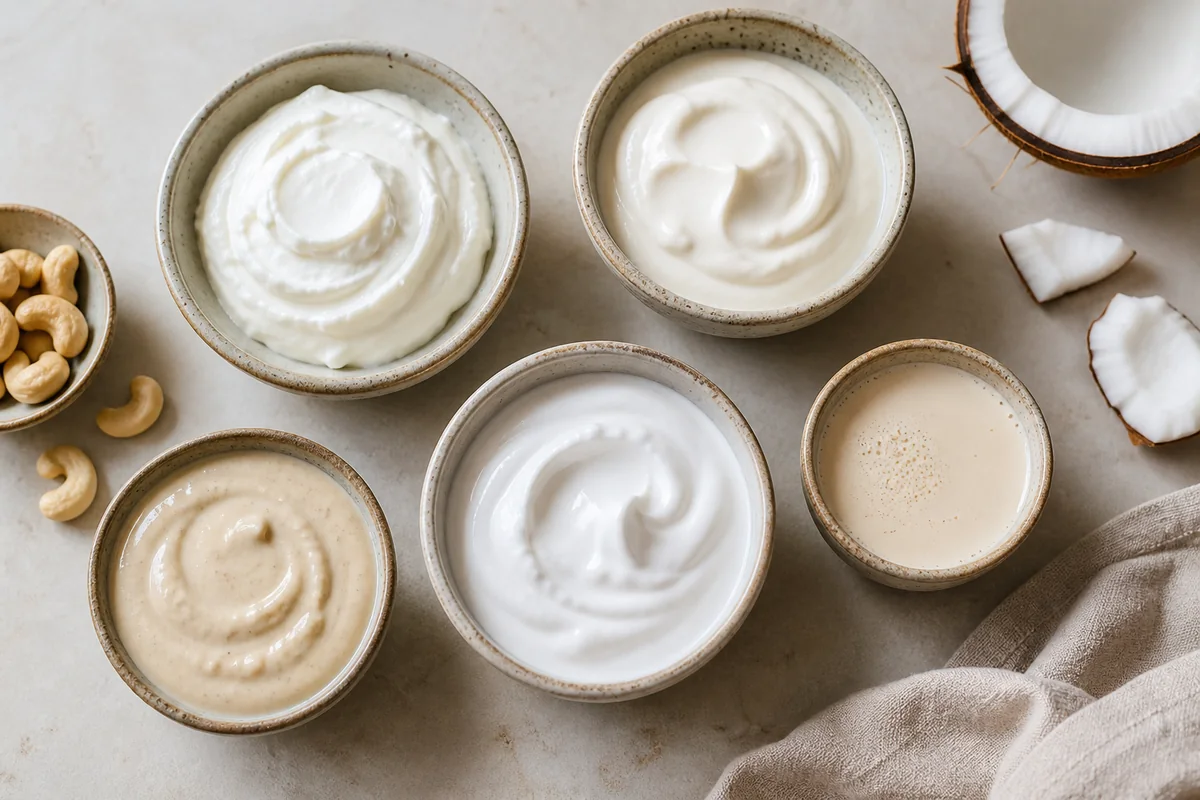
Cashew cream is a blended nut paste thinned with water, and it's the most reliable dairy-free swap for texture. It has a neutral, slightly sweet flavor that won't clash with spices in a curry or sugar in a cake batter.
Soak the cashews for at least 4 hours before blending for the smoothest result.
Cashew Cream
Works for: dairy-free curries, baked desserts, cream-based sauces, and frosting bases where you want body without coconut flavor
Skip if: cashews haven't been soaked, or you're making a recipe sensitive to nutty undertones (like a light coconut pudding)
- Soak time: 4 hours minimum; overnight gives the silkiest blend.
- Blend ratio: Use 1 cup soaked cashews to ¼ cup water for coconut-cream thickness.
- Strain for smoothness: Push through a fine-mesh strainer if the recipe is a dessert or mousse.
- Nut swap option: If cashews aren't available, picking a cashew alternative like macadamias works almost as well.
Skip if: You can't soak. Dry-blended cashews stay gritty and won't give you the silk that coconut cream delivers.
5. Evaporated Milk (Reduced)
Evaporated milk is already concentrated, but it's thinner than coconut cream straight from the can. A short simmer closes that gap.
For a sauce or curry, pour the evaporated milk into your pan first and let it cook for 2 to 4 minutes before adding other ingredients.
| Use | Ratio | Notes |
|---|---|---|
| Curries / Soups | ¾:1 | Simmer 3-4 min to reduce and thicken before adding spices |
| Baking | 1:1 | Use as-is; baking heat will set the texture naturally |
| Dessert sauces | ¾:1 | Reduce by 2 tablespoon on low heat, then cool before using |
- Sauces: Reduce first, then build your curry or sauce on top for the right body.
- Baking: Use at 1:1; the oven does the thickening work for you.
Skip if: Your recipe is sweetness-sensitive. Evaporated milk tastes noticeably sweeter than coconut cream, and in savory dishes that sweetness can be distracting.
Making Coconut Cream Substitutes Work
Two factors decide whether your swap succeeds: thickness and fat content. Get both right and the finished dish behaves as expected.
Get one wrong and you'll end up with a sauce that doesn't coat the spoon or a cake with a denser, gummier crumb.
If your substitute is thinner than coconut cream, chill it (for coconut-based options) or simmer it briefly before using. You can also check how canned coconut milk ages to make sure your base ingredient is still good before you start.
The mild floral note of fresh coconut milk is what you're trying to preserve when you adjust.
- Chill to thicken: Place canned coconut milk or cashew cream in the fridge for 2+ hours before using so the fat rises and sets.
- Simmer to reduce: For evaporated milk or thin dairy cream, reduce on low heat for 2 to 4 minutes before adding other ingredients.
- Smooth before mixing: Whisk or blend any substitute until fully smooth before combining with dry baking ingredients to keep the crumb even.
Frequently Asked Questions
Yes, but chill the can first so the thick cream separates and rises to the top. Use only that solid layer at a 1:1 ratio to keep your batter from going too thin.
Use chilled, separated coconut milk at 1:1. If using un-chilled coconut milk, reduce the amount by about 25% and simmer briefly to concentrate the body.
Both work in curries. Heavy cream holds up to high heat without breaking, and evaporated milk thickens well after a short simmer. Neither will add coconut flavor.
Soak cashews for at least 4 hours, then blend with fresh water and strain through a fine-mesh strainer. Longer soaking reduces the raw nut flavor noticeably.
Simmer the substitute on low heat for 3 to 5 minutes to reduce and concentrate it. This works for evaporated milk and thin dairy cream without changing the flavor much.
5 Best Coconut Cream Substitutes (That Actually Work)
Ingredients
Equipment
Method
- Decide your target behavior: need coconut flavor (use coconut-based) or just creaminess (use dairy/plant cream).
- Start with the listed ratio for your recipe, then adjust thickness: chill (for coconut milk) or reduce/simmer briefly (for thinner liquids).
- For baking, mix substitutions smoothly before adding leavening so the batter texture stays consistent.
- For curries/sauces, simmer 1–3 minutes after adding the substitute to activate thickening and remove any “raw” taste.
- Taste and balance: add a pinch of salt for “creaminess” or a small squeeze of lemon to brighten if the swap tastes flat.
Notes
- If your substitute is thinner than coconut cream, reduce/simmer or chill to thicken.
- If your substitute is stronger in flavor (e.g., dairy), add a tiny pinch of salt or coconut flavor booster to match.
Tried this recipe?
Let us know how it was!
Carrie is a food writer and editor with more than 15 years of experience. She has worked for some of the biggest names in the food industry, including Bon Appétit, Food & Wine, and Martha Stewart Living.
As the Editor in Chief of EpicureDelight, Carrie oversees all of the content on the site. She also manages the team of contributing writers and editors, who help to create delicious recipes, helpful tips, and informative articles that you’ll find on the site.
A native of the Chicago area, Carrie is passionate about all things food. She loves trying new restaurants and experimenting with new recipes in her kitchen. She’s also a graduate of the Culinary Institute of America, so she knows a thing or two about food!