
Few white fish fillets are as forgiving as cod. It bakes evenly, poaches clean, and never fights back with strong flavor.
So when it's not in the case at the fish counter, the swap you pick depends on one question: does your recipe need soft, easy flakes or a fillet that holds a firm edge?
Cod substitute choices break into two camps. Mild, lean fish like haddock and pollock sit close to cod on texture and flavor. Denser options like halibut or catfish need a slight method adjustment. Getting that match right is what separates a successful swap from a watery, overcooked plate.
The best cod substitutes are haddock and pollock for flaky, lean swaps. Use tilapia or catfish for breaded or crispy dishes. Halibut and salmon work too, but both need adjusted cook times and slightly reduced quantities. Match texture first, then season accordingly.
5 Best Cod Substitutes, Ranked by Cook Method
Each fish below swaps 1:1 for cod by weight unless the table notes otherwise. Pick by how your recipe applies heat.
| # | Substitute | Best For | Ratio | Key Note |
|---|---|---|---|---|
| 1 | Haddock | Bake / Poach | 1:1 | Closest flaky match |
| 2 | Pollock | Bake / Steam | 1:1 | Handle gently; softens fast |
| 3 | Tilapia | Pan-fry / Bread | 1:1 | Season well; bland plain |
| 4 | Catfish | Fry / Sauced | 1:1 | Firmer; needs bold seasoning |
| 5 | Halibut | Bake / Sear | ¾:1 | Dense; reduce and watch time |
1. Haddock
Haddock is the most reliable cod replacement for dishes where texture matters most. It has the same mild, clean flavor and breaks into neat flakes at the same gentle temperatures.
When choosing a haddock fillet at the counter, go for pieces that match your cod fillet's thickness as closely as possible.
- Baked fish: Use the same temp and time as cod; check at the 10-minute mark for thin fillets.
- Poached or steamed: Swap directly; haddock holds together cleanly in liquid.
- Light pan cook: Keep heat at medium; it can dry out faster than cod if the pan runs too hot.
- Fish pies and chowder: Haddock breaks down into the same soft chunks cod does-no adjustment needed.
Skip if your recipe calls for a pronounced fish flavor. Haddock is mild and won't add any boldness that cod-forward dishes sometimes rely on.
2. Pollock
Pollock is lean, mild, and cheap, which makes it a natural budget stand-in for cod. The catch is that it has a softer cell structure, so this lean white fish turns mushy faster than cod if heat climbs too high or cook time runs long.
- Baked at moderate heat: 375°F works well; avoid going over 400°F without a coating to protect the fillet.
- Steamed or poached: Pollock handles gentle liquid cooking well; use a slotted spatula to lift it out.
- Fish tacos or bowls: Works fine here because the fillet breaks into chunks anyway.
- Doneness cue: Stop as soon as the center turns opaque; overcooked pollock gets watery and falls to pieces.
Skip if you're cooking at very high heat without a crust or coating. Pollock won't hold an edge the way cod does.
3. Tilapia
Tilapia is almost flavorless on its own, which sounds like a problem but is actually useful in breaded cod recipes. The neutral base takes seasoning well and holds a crust cleanly, especially when you add a hit of lemon or vinegar in the mild freshwater fish swaps category.
- Breaded and fried: Coat thoroughly; the breading adds the texture and flavor the fish itself lacks.
- Pan-seared: Use medium-high heat and press fillets flat for even contact with the pan.
- Season aggressively: Add salt, lemon zest, paprika, or garlic before cooking; plain tilapia reads flat next to seasoned cod.
- Thickness note: Tilapia fillets are often thin and uneven; fold the thin tail end under itself to create uniform thickness.
Skip if your dish depends on an unflavored, uncoated fillet where the fish's natural taste does most of the work.
4. Catfish
Catfish has more chew than cod and takes browning much better, which makes it the right pick when you want crispy edges or a fillet that holds its shape in a sauce. It has a slightly earthy note, so leaning on acid and spice keeps it from veering off-course.
If you're curious about picking a sturdier swap, catfish often tops that list.
Cod
Works for: gentle baking, poaching, delicate plated fish
Skip if: you need a fillet that holds edges when sliced or sauced
Catfish
Works for: fried baskets, crispy coatings, thick tomato or cream sauces
Skip if: you need soft flakes or a neutral, nearly invisible fish flavor
- Southern-style frying: Season the cornmeal dredge with cayenne and black pepper to counter any earthiness.
- Sauced dishes: Catfish won't fall apart in a tomato or butter-based sauce the way a thin cod fillet might.
- Air-frying: Catfish handles the dry high-heat environment well; cod can turn chalky at those temperatures.
- Flavor balance: A squeeze of lemon after cooking pulls it back toward the mild, clean register cod occupies.
Skip if you're serving plain fillets with minimal seasoning. The firmer texture and earthier flavor will be obvious on a clean plate.
5. Halibut
Halibut is denser than cod at nearly every thickness, and that density is where cooks get into trouble. It can survive the same cook time as a cod fillet and end up dry and tight.
When swapping to a denser white fish, pull the fillet from heat 1 to 2 minutes earlier than you would with cod.
| Use | Ratio | Notes |
|---|---|---|
| Baked fillet | ¾:1 | Reduce quantity; check doneness at the 12-min mark for 1-inch pieces |
| Pan-seared steak | ¾:1 | Medium heat; pull when center turns from translucent to white |
| Poached | 1:1 | Gentle liquid slows cooking; standard cod timing works here |
- Check early: A 1-inch halibut fillet is done at around 12 minutes at 400°F; cod at the same size takes closer to 15.
- Basting helps: Brush with butter or oil halfway through to offset halibut's lower fat content.
- Flake test: Press the thickest part with a fork; it should separate into large segments without resistance.
- Thin pieces: If your halibut is under ½ inch thick, match cod timing exactly and watch closely.
Skip if your halibut is very thick and you can't adjust oven time. It won't cook through at cod speed and will be raw in the center.
Making Your Cod Substitute Work
The core swap principle is simple: match the fillet's texture category first, then use doneness cues rather than a timer. Every fish in this list finishes at the same visual signal as cod: flesh that turns opaque from edge to center and separates into clean segments when pressed with a fork.
For mild fish like pollock, lean fish options that cook similarly are worth bookmarking, because they all share that same quick-to-overcook behavior.
- Thaw completely before cooking: Frozen fish with icy pockets at the center will cook unevenly; an outer fillet can be done while the middle is still cold.
- Season mild fish with acid: Add lemon juice, white wine, or a splash of vinegar to replicate cod's natural brightness when using tilapia or pollock.
- Adjust for thickness, not weight: A thicker halibut steak needs less time per ounce than a thin tilapia fillet; the variable is always the thickest point of the fish.
Frequently Asked Questions
Haddock is the best pick. It matches cod's flaky texture and mild flavor at the same oven temperature and time, with no recipe adjustments needed.
Yes, but use medium heat and a light coating. Pollock's softer texture breaks apart quickly at high temperatures without something to hold it together.
Tilapia and catfish are both solid here. Catfish holds edges better; tilapia is thinner and crisps faster under a cornmeal or panko crust.
Pull it 1 to 2 minutes earlier than your cod recipe specifies. Halibut's density retains heat longer and continues cooking off the pan.
Cooking from partially frozen. The outer layer overcooks before the center thaws, leaving a rubbery edge and a cold middle. Thaw fully first.
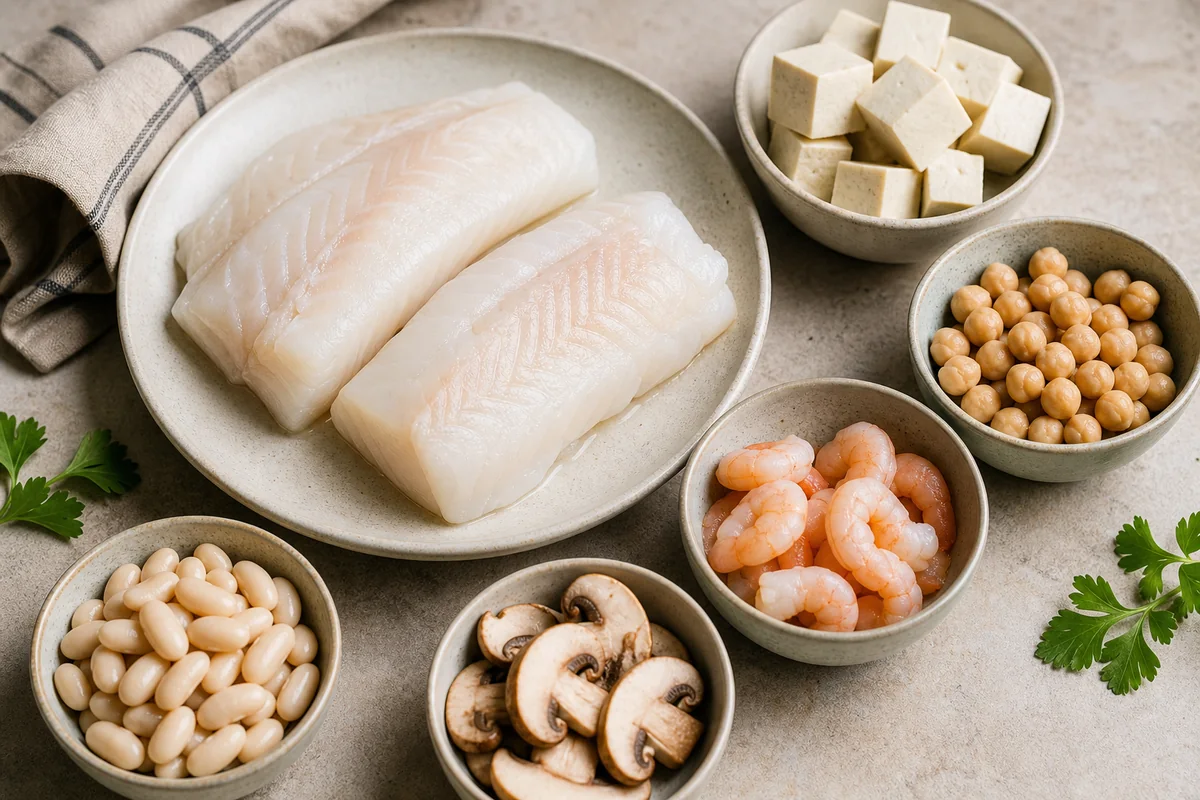
5 Best Cod Substitutes (Quick Swaps)
Ingredients
Equipment
Method
- Identify your cook method: gentle baking/poaching (flaky) vs. high-heat browning (firmer).
- Choose the closest substitute from the list: haddock or pollock for flaky, lean swaps.
- Use the ratio in the table; if your substitute is thicker (like halibut), reduce quantity and shorten time.
- Adjust doneness: stop when the fish flakes with a fork (or reaches opaque centers) rather than cooking by minutes alone.
- Season with extra support: add salt earlier and pair mild fish with acid (lemon or vinegar) to mimic cod’s brightness.
Notes
- Cod is mild, lean, and cooks quickly—most swaps need slightly gentler heat than you think.
- If the substitute is softer (pollock/tilapia), use a shorter cook window and avoid overhandling.
Tried this recipe?
Let us know how it was!
Carrie is a food writer and editor with more than 15 years of experience. She has worked for some of the biggest names in the food industry, including Bon Appétit, Food & Wine, and Martha Stewart Living.
As the Editor in Chief of EpicureDelight, Carrie oversees all of the content on the site. She also manages the team of contributing writers and editors, who help to create delicious recipes, helpful tips, and informative articles that you’ll find on the site.
A native of the Chicago area, Carrie is passionate about all things food. She loves trying new restaurants and experimenting with new recipes in her kitchen. She’s also a graduate of the Culinary Institute of America, so she knows a thing or two about food!



