
That warm, slightly sweet edge cognac leaves on a sauce? It comes from oak aging and a controlled fruit note that plain spirits often miss.
A good cognac substitute does two things: it matches the warmth without tasting harsh, and it keeps the oak-to-sweetness balance close enough that your dish doesn't shift direction. The right swap depends almost entirely on whether you're deglazing a pan, building a simmered reduction, or finishing a sauce at the end.
Cognac's backbone is mostly oak and warm fruit, with a faint vanilla trace. Substitutes that mimic this pair of qualities land closest.
Skip to the table if you need a fast answer. Read the H3 notes if you need to adjust sweetness or alcohol bite once you're already at the stove.
Dry brandy is the closest match for most cooking uses. For more complexity, blend brandy with dry sherry at 2:1. Bourbon works in hearty savory dishes; dry sherry plus a tiny vanilla trace covers aroma. Dry red wine with a pinch of sugar handles reductions when nothing else is available.
5 Best Cognac Substitutes Ranked by Flavor Match
One sentence is all you need to orient yourself here: this table is the fast-selection guide, and the H3 sections below it tell you exactly how to fine-tune each option.
| # | Substitute | Best For | Ratio | Key Note |
|---|---|---|---|---|
| 1 | Dry Brandy (oaked) | Both | 1:1 | Closest flavor family overall |
| 2 | Brandy + Dry Sherry (2:1) | Both | 1:1 | Adds nutty depth and complexity |
| 3 | Bourbon + Splash of Water | Savory | ¾:1 | Dilute to soften the bite |
| 4 | Dry Sherry + Tiny Vanilla | Both | 1:1 | Keep vanilla drop minimal |
| 5 | Dry Red Wine + Pinch Sugar | Savory | 1:1 | Sugar only until rounded |
Use the oak and sweetness notes in each section below to dial in the right adjustment once the substitute hits your pan.
1. Dry Brandy
Dry, oaked brandy is the same family as cognac. Cognac is a regulated type of brandy, so a decent oaked brandy carries most of the same character: warm fruit, a slight oakiness, and a controlled alcohol burn that mellows fast in a reduction.
This is the option we reach for first in sauces and pan deglazing, because the flavor arc after simmering is nearly identical.
If you're already comfortable swapping brandy in recipes, applying that same logic to cognac replacements is straightforward. Most of the technique transfers directly.
Dry Brandy (Oaked)
Works for: sauces, reductions, deglazing, and cream-based dishes where cognac's fruit warmth matters
Skip if: your dish is a delicate light cream sauce and you want only a faint alcohol note-dry sherry plus water is gentler
- Sauces and reductions: Use 1:1. Simmer at least 3 minutes to round the edges.
- Tastes harsher than expected: Simmer 1-2 minutes longer, or add 1-2 teaspoon water per tablespoon.
- Oak depth: If yours is a younger, lighter brandy, add a tiny pinch of brown sugar to nudge warmth.
2. Brandy + Dry Sherry Blend
The 2:1 brandy-to-sherry blend is what we use when we want cognac's complexity without buying a whole bottle of the real thing. Brandy carries the oak and fruit; dry sherry adds a savory, slightly nutty edge that mimics the layered character cognac has after aging.
Together they get closer to cognac's finish than either spirit does alone.
If you find yourself asking about sherry-based swaps more broadly, the same nutty-depth logic applies across many wine-based cooking spirits. Sherry is more versatile than most cooks realize.
- Flavor behavior: The brandy handles oak and fruit; the sherry adds savory, nutty background.
- Simmering note: The sharper sherry edges fade after 3-4 minutes of reduction. Taste then, not before.
- Sweet dessert sauce: Skip the brandy component here. Use dry sherry only, with no added vanilla.
Skip if: you're building a sweet dessert-style sauce where a brandy-forward blend would push it toward boozy and heavy.
3. Bourbon-Style Whiskey
Bourbon works in hearty savory applications: browned meats, tomato-based reductions, and pan sauces built on fond. Its oak and vanilla notes are real, but they read warmer and sometimes sweeter than cognac's cleaner fruit profile.
The solution is simple: start at ¾ of the cognac amount, then add 1-2 teaspoon water per tablespoon if it tastes sharp once it hits the pan.
The warm oak character in bourbon is what makes it a plausible stand-in. That said, it does carry more vanilla and caramel than cognac, so keep that in mind for delicate dishes.
- Best use: Deglazing and simmering over high heat, which softens the stronger alcohol bite quickly.
- Dilution rule: Add 1-2 teaspoon water per tablespoon of whiskey if the first taste reads sharp or boozy.
- Ratio start: Use ¾ of the called-for cognac amount; you can always add more after tasting.
- Avoid: Dairy-forward smooth sauces where whiskey can read more bitter than cognac's cleaner finish.
Skip if: the dish is cream-based and meant to stay smooth and sweet. Bourbon can pull it bitter.
4. Dry Sherry + Tiny Vanilla
Dry sherry alone handles the savory depth and color that cognac adds. What it misses is cognac's soft warm finish, and that's where a minimal vanilla trace comes in.
We're talking a few drops, not a measured pour. The combination is surprisingly accurate for aroma-forward dishes where you notice the cognac in the smell of the pan, not just the final taste.
Add the vanilla only after the sherry has simmered 2-3 minutes. That way you can taste the base first and judge whether the vanilla trace is actually needed.
When storing vanilla extract correctly, a small bottle stays potent for a long time, so a few drops here and there is a reasonable use.
Skip if: your dish is garlic-heavy or strongly savory. Vanilla in that context feels out of place, and you're better off using dry sherry alone.
5. Dry Red Wine + Pinch of Sugar
Dry red wine brings fruit and tannin, two things that genuinely overlap with cognac's flavor in savory reductions. The tannin provides some structure where cognac's oak would sit.
The pinch of sugar is not about making the dish sweet. It lifts the fruitiness so the reduction tastes rounded rather than sharp or thin, which is where wine-only swaps tend to fall short.
For wine-based cooking options more broadly, the same sugar-balance logic applies whenever you reduce an acidic wine in a savory context.
- Sugar rule: Add in micro-steps, a quarter-pinch at a time, until the sauce tastes balanced, not sweet.
- Acid check: If the reduction still tastes sharp, a small splash of lemon or vinegar can lift it without adding sweetness.
| Use | Ratio | Notes |
|---|---|---|
| Pan deglazing | 1:1 | Dry red wine; add sugar only after tasting the deglaze |
| Simmered sauce | 1:1 | Reduce 4-5 min; sugar in pinch-steps until rounded |
| Finishing touch | ½:1 | Half the cognac amount; wine flavor is more assertive when not cooked long |
Skip if: your recipe already includes sweetness (fruit glaze, sweet onions, or sweet wine). The extra sugar step is unnecessary and can tip the dish over.
Making Cognac Substitutes Work in Cooking
Every cognac substitute has three adjustable levers: sweetness, oak depth, and alcohol bite. Sweetness is easiest to fix (a pinch of sugar or a tiny acid splash).
Oak depth is harder to add after the fact, which is why starting with an oaked spirit matters. Alcohol bite is just time.
Nearly every substitute mellows significantly after 3-5 minutes of simmering. If you're working with a lighter cooking spirit, that same reduction principle applies: taste after simmering, not right after you pour.
- Too harsh: Add 1-2 teaspoon water and simmer 2 more minutes. Taste again before adjusting anything else.
- Too flat or thin: Add a pinch of sugar or a small splash of lemon juice to lift the reduction's roundness.
- Missing complexity: Stir in a small amount of dry sherry at the end of cooking, off the heat, to add savory depth without extra alcohol.
For a no-cook finishing sauce, add the substitute at the very last step so the flavors stay bright and don't drift during long cooking.
Frequently Asked Questions
Use 1:1 for most substitutes. Start at ¾ of the amount for bourbon or scotch, since both are more assertive than cognac and can overpower a dish before you've had a chance to taste.
Most substitutes mellow after 3-5 minutes over medium heat. Taste at the 3-minute mark; if it still reads sharp, simmer another 2 minutes before adding any other adjustments.
Dry oaked brandy at 1:1 is the first choice. If you only have bourbon, use ¾ of the cognac amount and add a small splash of water once the fond has lifted.
Avoid it if the sauce reduces significantly. Sweetness concentrates fast during reduction and can push a savory dish into an unintended dessert register.
Too harsh: add 1-2 teaspoon water and simmer 2 more minutes. Too sweet: add a small splash of lemon juice or a drop of vinegar to restore balance without starting over.
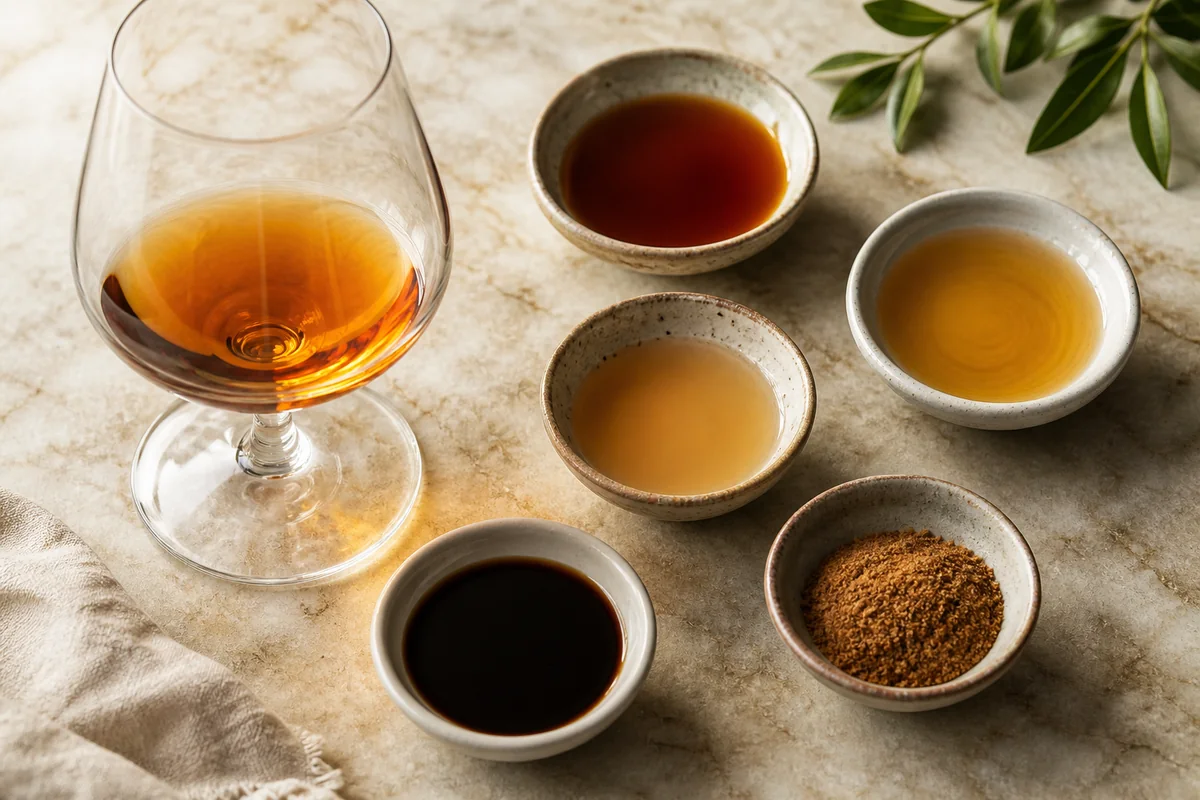
5 Best Cognac Substitutes (Honest Picks)
Ingredients
Equipment
Method
- Choose the substitute that matches your dish: closest match (brandy) or flavor-workarounds (sherry, whiskey, wine).
- Use the listed ratio, then start with a slightly smaller amount if your recipe already tastes sweet or boozy.
- Adjust balance: add 1–2 teaspoon water for harshness, a tiny pinch sugar for flatness, or a small splash vinegar/lemon for lift.
- Add it at the same stage you’d add cognac (for reductions, add early to cook off alcohol; for finishing, use later).
- Taste the sauce after simmering a few minutes—sweetness and oak soften as it reduces.
Notes
- Alcohol bite drops as the liquid simmers—reduce simmer time if you’re using a substitute that’s very intense.
- Avoid overly sweet liqueurs if your recipe is savory; they can turn the sauce cloying.
Tried this recipe?
Let us know how it was!
Carrie is a food writer and editor with more than 15 years of experience. She has worked for some of the biggest names in the food industry, including Bon Appétit, Food & Wine, and Martha Stewart Living.
As the Editor in Chief of EpicureDelight, Carrie oversees all of the content on the site. She also manages the team of contributing writers and editors, who help to create delicious recipes, helpful tips, and informative articles that you’ll find on the site.
A native of the Chicago area, Carrie is passionate about all things food. She loves trying new restaurants and experimenting with new recipes in her kitchen. She’s also a graduate of the Culinary Institute of America, so she knows a thing or two about food!



