
If you love comté's nutty-sweet flavor and its easy, even melt, finding a good comte cheese substitute is less about replacing an exact taste and more about matching the right texture and depth for your dish.
Comté is an aged cow's milk cheese with a savory, lightly fruity profile and a melt that stays smooth rather than greasy. The best swap depends on what the cheese is doing: bubbling in a gratin, shredding over pasta, or sitting on a board.
Gruyère is the closest overall match for comté-same nutty depth, same smooth melt. Jarlsberg works when you need milder flavor. Fontina wins for creamy baked dishes. Aged provolone handles slicing and grating. Asiago or a Swiss blend cover emergency situations.
6 Best Comte Cheese Substitutes to Try
Matching your substitute to the job-melt, grate, or slice-makes a bigger difference than picking by name alone. The table below ranks each option by its strongest use and tells you the swap ratio so you can move fast.
Every option here swaps at 1:1 by weight, which keeps the recipe balanced. If you have a sharper cheese in hand, reduce other salty ingredients by about half before you taste.
For anyone already familiar with gruyere cheese swaps that work, most of these principles will feel familiar.
| # | Substitute | Best For | Ratio | Key Note |
|---|---|---|---|---|
| 1 | Gruyère | Both | 1:1 | Closest nutty melt match |
| 2 | Jarlsberg | Cooking | 1:1 | Milder, creamy melt |
| 3 | Fontina | Cooking | 1:1 | Buttery, not nutty |
| 4 | Aged Provolone | Slicing | 1:1 | Firmer slice, watch salt |
| 5 | Asiago (aged) | Both | 1:1 | Sharp-add fat to balance |
| 6 | Swiss Blend | Cooking | 1:1 | Fast emergency option |
Gruyère
Gruyère is the closest thing to comté you'll find at most grocery stores. It has the same nutty base, melts without graining, and holds up well in gratins, fondues, and cheese toasts.
If your dish already has salty elements-cured meat, olives, seasoned broth-taste before adding extra salt, because Gruyère can run slightly more assertive than comté.
- Gratins and baked pasta: Works perfectly at 1:1; add it in the final 10 minutes for a golden top.
- Fondue: Melts clean and stays smooth; no need to adjust the recipe.
- Cheese boards: Flavor is similar but a touch stronger-pair with mild fruit to balance.
- Watch salt: Taste the dish before seasoning; Gruyère can push salt levels up unexpectedly.
Gruyère
Works for: gratins, fondues, cheese toasts, boards-any dish where comté is the melt star
Skip if: you need a very mild, buttery flavor-Gruyère can be more assertive than comté
Jarlsberg
Jarlsberg is the pick when comté's intensity is more than the dish needs. It's mellow, slightly sweet, and melts into a creamy pool without any graininess.
For lighter sauces or family-friendly baked dishes, it keeps flavors gentle. If you want ideas for how using jarlsberg cheese for creaminess extends beyond substitution, it's worth a look.
- Quiches and light gratins: Use at 1:1; flavor stays soft and doesn't compete with eggs or cream.
- Pasta bakes: Melts evenly and stays creamy even at oven temperature.
- Boost flavor if needed: A teaspoon of Dijon or browned butter brings back some savory depth.
- Skip if: you want the strong nutty-savory punch that defines classic comté dishes.
Fontina
Fontina is a reliable melt cheese-it goes smooth, it bubbles, and it doesn't break into grease under heat. The flavor direction is more buttery than nutty, so it reads differently from comté in a direct taste test, but it handles baked dishes and sauces cleanly.
For a deeper look at what you're working with, the notes on fontina cheese in dairy recipes are helpful before you swap.
- Baked pastas and pizzas: Fontina's stretch and bubble are excellent at high heat.
- Cream sauces: Stir in off heat for the smoothest result without breaking.
- Avoid high-heat scorch: Add cheese in the last few minutes; it melts fast.
- Skip if: the dish depends on comté's nutty character-Fontina won't replicate that note.
Provolone (Aged)
Aged provolone slices cleanly, grates without crumbling, and gives a savory snap that works well in sandwiches and on topping-heavy dishes. It is firmer than comté, so if you need a silky, creamy melt in a sauce, it won't behave the same way.
For more on using provolone cheese for creaminess in cooked applications, that's covered separately.
If the provolone tastes sharper than expected, reduce other salty ingredients by about half and add the cheese at the very end of cooking-heat just until melted and no further.
- Sandwiches and paninis: Slices hold shape and melt just enough under a press.
- Grating over pasta: Use a medium-coarse grate so it distributes evenly without clumping.
- Casserole topping: Add in the last 5 minutes to prevent the edges from turning rubbery.
- Skip if: you need a smooth, creamy melt for fondue or a cheese sauce-provolone will be firmer.
Asiago (Aged)
Aged Asiago brings a nutty, slightly granular bite that works especially well for gratins and toppings where browning is part of the plan. It is sharper and drier than comté, so it can take over a delicately seasoned dish quickly.
For guidance on handling asiago cheese in dairy recipes when you need to temper the sharpness, that resource covers the technique well.
| Use | Ratio | Notes |
|---|---|---|
| Gratin topping | 1:1 | Asiago browns well; add in last 8-10 min |
| Pasta grating | 1:1 | Grate fine; a little goes a long way |
| Cheese sauce | 1:1, then adjust | Add 1 tablespoon cream to soften sharpness |
| Snack board | 1:1 | Pair with mild crackers or honey to balance |
- Gratin and oven dishes: Asiago develops savory, caramelized edges-that's where it shines.
- Too sharp? Stir in a small knob of butter or a splash of cream during cooking.
- Grate fine: A coarser grate can create uneven melting and concentrated sharp spots.
- Skip if: the dish is light and delicate-Asiago can overpower subtle flavors fast.
Swiss Cheese Blend
A pre-shredded Swiss blend is the fastest emergency swap when you need comté for melting and nothing else is in the fridge. It melts evenly and predictably, and using swiss cheese for creaminess in a pinch is a proven approach for gratins and quick bakes.
- Quick weeknight gratins: Works fine at 1:1; keep heat at medium to avoid graininess.
- Mac and cheese: Adds a mild Swiss note; boost with a pinch of dry mustard for depth.
- Skip if: flavor complexity matters-a Swiss blend will taste noticeably flatter than comté.
Making the Swap Taste Like Comté (Quick Method)
Start by picking your substitute based on what the cheese is doing in the recipe: choose a melt-friendly Swiss-style cheese for gratins and fondues, and an aged, firmer cheese for slicing or grating. Swap at 1:1 by weight as your baseline, then taste.
If you're working with a sharper substitute, a small knob of butter or a spoon of cream pulls the edge off. If the swap is milder than comté, reach for a touch more mustard, garlic, or black pepper before you add more cheese.
For comparison, the approach mirrors what works when using gruyere cheese for creaminess in cooked dishes.
- Match by use first: melt-friendly Swiss for hot dishes, aged firm cheese for boards and sandwiches.
- Adjust sharpness, not quantity: add fat (butter, cream) for sharp swaps; add seasoning (mustard, pepper) for mild ones.
- Time the melt: shred for even coverage, then add cheese in the final 5-8 minutes of cooking to preserve texture.
Frequently Asked Questions
Gruyère is the closest match for melting-same nutty depth, same smooth, grain-free melt. Use it at 1:1 by weight and add it in the final minutes of cooking.
Yes, the 1:1 swap works well, but Jarlsberg is milder and less nutty than comté. Add a teaspoon of Dijon or browned butter to recover some savory depth.
Aged Asiago browns and caramelizes the best for gratin tops. Gruyère is a close second if you also want nutty flavor under the browned crust.
Sharp substitutes amplify when other salty ingredients are present. Stir in a small knob of butter or a tablespoon of cream to round the edge during cooking.
Yes, it melts reliably at 1:1, but expect noticeably less flavor depth. Keep heat at medium and avoid boiling after the cheese is added to prevent graininess.
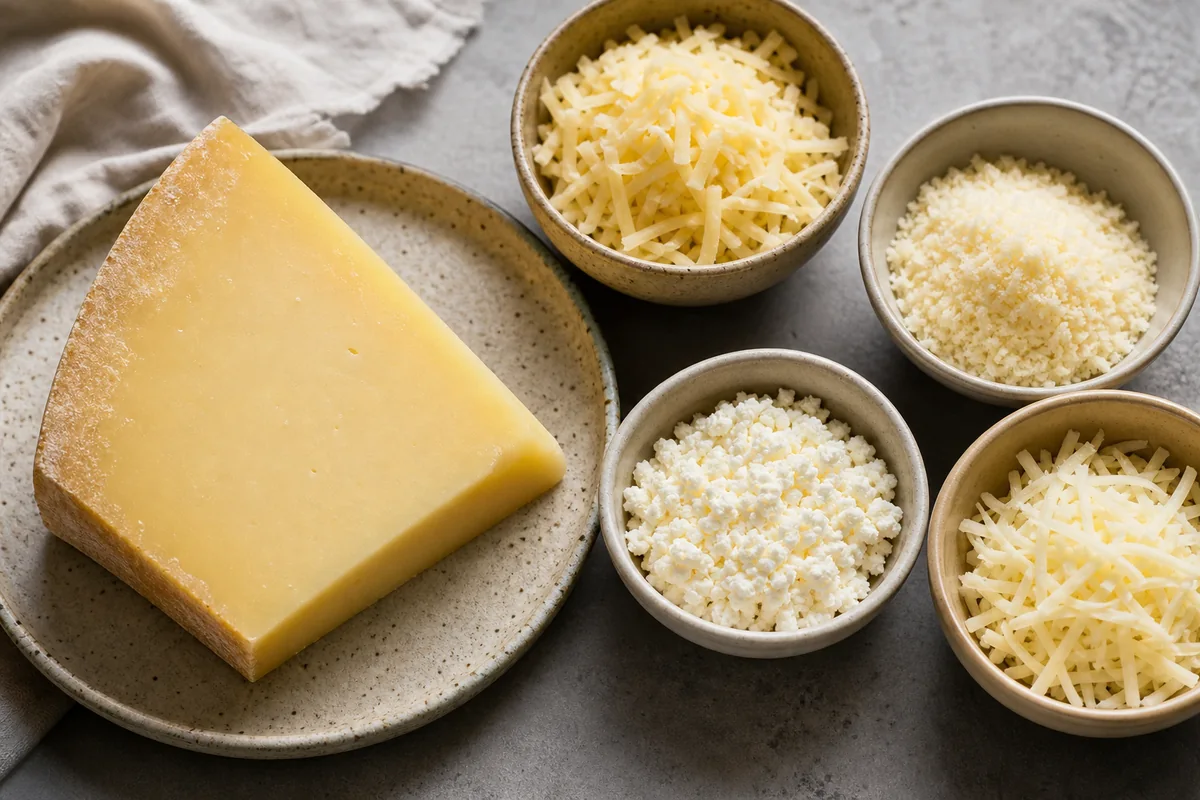
5 Best Comte Cheese Substitutes (Closest Match)
Ingredients
Equipment
Method
- Match your use first: choose a “melt-friendly Swiss” for gratins/fondue, or a “slice/grate-friendly aged cheese” for boards and sandwiches.
- Swap comte using the 1:1 ratio by weight, then taste after adding other salty ingredients (broth, seasoning, cured meats).
- If the substitute tastes sharper than comte, add a small knob of butter or a spoon of cream to round it out during cooking.
- If the substitute is too mild, increase flavor with a touch more garlic, mustard, or black pepper rather than adding more cheese.
- For best texture: shred for even melting, and let melty cheeses warm 1–2 minutes before serving.
Notes
- Comté is typically nuttier and slightly fruity than most mild Swiss cheeses; pick a nuttier or aged Swiss when possible.
- Most swaps melt best when shredded and added to a warm base (sauce, béchamel, or hot pan).
Tried this recipe?
Let us know how it was!
Carrie is a food writer and editor with more than 15 years of experience. She has worked for some of the biggest names in the food industry, including Bon Appétit, Food & Wine, and Martha Stewart Living.
As the Editor in Chief of EpicureDelight, Carrie oversees all of the content on the site. She also manages the team of contributing writers and editors, who help to create delicious recipes, helpful tips, and informative articles that you’ll find on the site.
A native of the Chicago area, Carrie is passionate about all things food. She loves trying new restaurants and experimenting with new recipes in her kitchen. She’s also a graduate of the Culinary Institute of America, so she knows a thing or two about food!



