
That snap when you bite into a fried chicken coating or a casserole topping is almost always crushed cereal doing the work. A good corn flakes substitute holds that crunch through heat, binds well in egg washes, and doesn't turn to paste the moment moisture hits.
When the box is empty, the right swap depends on what job the flakes are doing.
Corn flakes work in three main situations: crispy coatings for meat or fish, baked toppings on casseroles, and crumb-based baking structure. Each one demands a different texture priority.
A coating needs irregular crumbs that brown fast; a topping needs to stay dry on the surface; baking needs enough body to hold shape without going chewy.
Particle size and toasting level are the two levers you can actually control. Get those right, and almost any dry, crunchy substitute will perform.
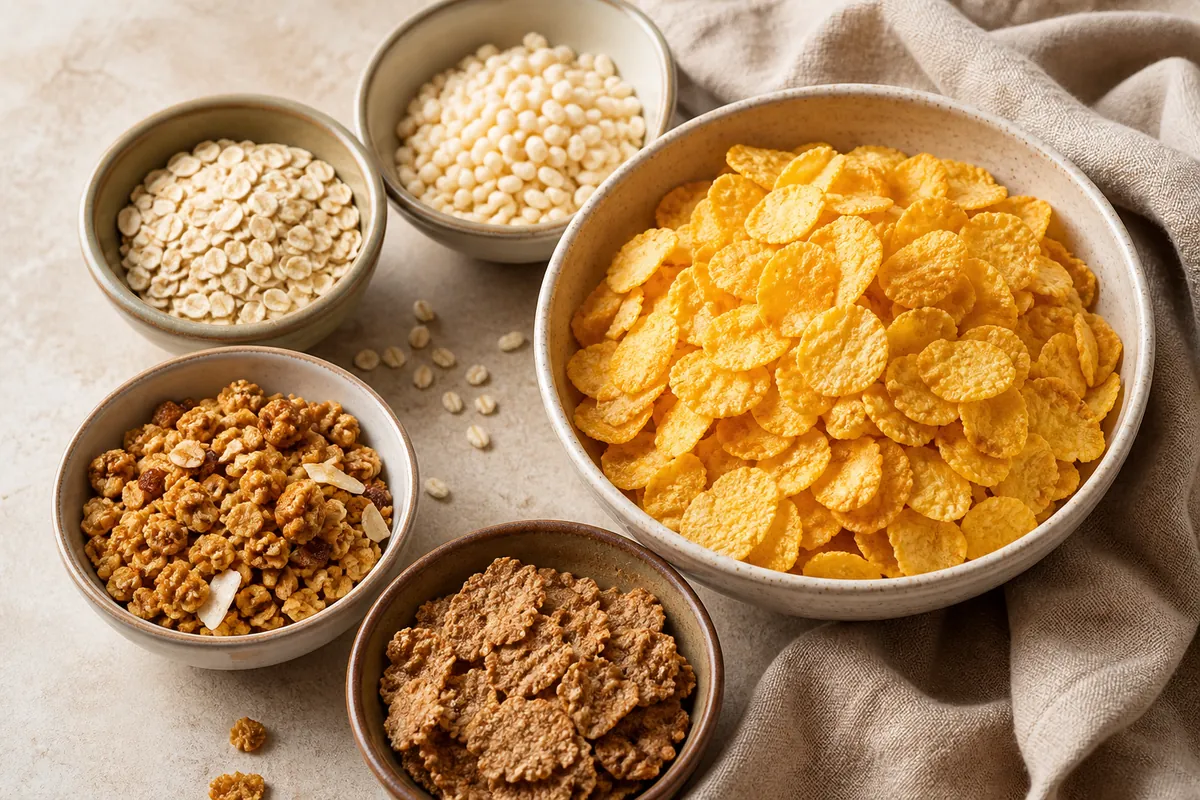
For most recipes, bran cereal or plain rice cereal (1:1 crushed) are the closest matches to corn flakes in crunch and texture. Panko works at ¾ the amount for breaded coatings. Rolled oats and dry cornbread crumbs both cover baking and casserole needs at a 1:1 ratio. Plain crackers are a fast backup for any crunchy topping.
5 Best Corn Flakes Substitutes Ranked by Texture
Each substitute below is matched to a specific use case. The table gives you the fast answer; the sections below give you the how.
| # | Substitute | Best For | Ratio | Key Note |
|---|---|---|---|---|
| 1 | Bran Cereal, Crushed | Both | 1:1 | Toast for extra crispness |
| 2 | Rice Cereal, Crushed | Both | 1:1 | Mild; great for seafood |
| 3 | Panko Breadcrumbs | Coating | ¾:1 | Browns faster; use less |
| 4 | Rolled Oats, Pulsed | Baking | 1:1 | Keep crumbs coarse |
| 5 | Dry Cornbread Crumbs | Both | 1:1 | Corny flavor; toast dry |
1. Bran Cereal, Crushed
Bran flakes are the closest cereal match to corn flakes in structure. They crush to the same irregular-crumb texture, brown at a similar rate, and hold their crunch through oven heat without going rubbery.
Use them at a 1:1 ratio in any recipe that calls for crushed corn flakes, from chicken coatings to green bean casserole toppings. If your bran cereal is more than a week past opening, a quick 2-3 minute dry toast in a skillet brings the crispness back.
Bran does carry a light wheat note, which is barely noticeable under seasoning. You can read more about how toasted cereal flavor holds up in coatings when comparing similar grains.
- Ratio: 1:1 crushed, matched to your target particle size
- Best use: Chicken coatings, casserole toppings, crispy baked fish
- Prep: Crush in a zip-lock bag or pulse briefly; aim for irregular crumbs, not powder
- Adjust: Toast 2-3 minutes dry if the cereal feels soft or slightly stale
Skip if: your recipe needs a neutral flavor (bran adds a mild wheat note that plain corn flakes don't).
2. Rice Cereal, Crushed
Rice cereal (puffed squares or crisp puffed rice) crushes to an almost identical flake size as corn flakes. The flavor is genuinely neutral, so it works well anywhere a cereal taste would feel out of place.
Use it at 1:1 for seafood coatings, chicken tenders, or light baked toppings. For cereal stored past peak crispness, a brief dry toast before crushing makes a real difference.
- Ratio: 1:1 crushed for coatings and toppings
- Best use: Seafood, chicken, or any dish where corn flavor would distract
- Prep: Crush to irregular crumbs; keep them coarser for a flakier bite
- Moisture tip: Pat meat dry before coating so rice crumbs stick and don't clump
Skip if: you need a strong corn-forward flavor or a darker, deeply browned crust.
3. Panko Breadcrumbs
Panko is not a crushed cereal, which is exactly what makes it behave differently. The crumbs are lighter and more uniform, so they brown faster and produce a finer crust than corn flakes.
That isn't a bad thing. For recipes that need reliable coating, panko delivers a very consistent crunchy shell.
The key is using less.
Panko Breadcrumbs
Works for: oven-baked chicken, fish fillets, crispy casserole tops, any dish where even browning matters
Skip if: your recipe needs thick, irregular flakes that stay chunky, or you want that cereal-specific bite
- Ratio: ¾ cup panko for every 1 cup corn flakes called for
- Browning speed: Panko browns 1-2 minutes faster than cereal crumbs; check early
- Texture boost: Toast panko dry 1-2 minutes before using for a crunchier, more cereal-like bite
- Best use: Oven or air-fried coatings, crumb crusts, any recipe needing even breading
4. Rolled Oats, Pulsed
Pulse rolled oats 4-5 times in a food processor. Stop before they turn to flour.
You want coarse, chunky crumbs that look more like rough rubble than fine powder.
At 1:1, pulsed oats work well for baked crumble toppings and crumb crusts. They brown heartily and add a slightly nutty note.
If you also cook with swapping neutral oils in baking, oat crumbs pair naturally with those adjustments.
- Ratio: 1:1 pulsed to coarse crumbs
- Best use: Baked crumble toppings, crumb-based pie crusts, baked casserole layers
- Prep: Pulse briefly; coarse is better than fine here
- Crispness tip: Bake oat-coated items 3-5 minutes longer than corn-flake versions
Skip if: you need a light, papery crunch. Oat crumbs brown well but feel heartier on the palate.
5. Dry Cornbread Crumbs
Cornbread crumbs bring the one thing other substitutes don't: actual corn flavor. That matters in casseroles and baked toppings where the cereal note is part of the dish's character.
Dry them thoroughly before using. If your crumbs have any moisture, they'll soften fast and skip choosing a starchier option altogether.
Toast 2-4 minutes on a dry skillet until the crumbs feel dry to the touch.
| Crumb Size | Ratio | Notes |
|---|---|---|
| Coarse crumbs | 1:1 | Best for casserole toppings; holds visible texture |
| Fine crumbs | ¾:1 | Better for coatings; reduce slightly to avoid dense crust |
- Ratio: 1:1 dry coarse crumbs; reduce to ¾:1 if crumbs are fine
- Flavor note: Cornbread crumbs are often slightly sweet or salted; taste before seasoning your recipe
- Best use: Baked casseroles, Southern-style toppings, baked chicken coatings
- Prep: Toast crumbs dry 2-4 minutes so they hold crispness longer in the oven
Skip if: your dish needs a neutral or unseasoned topping (cornbread crumbs can tilt sweet or salty depending on the batch).
Making Corn Flakes Substitutes Work (Crunch, Bake, or Coat)
The biggest mistake people make is using too-fine crumbs or skipping the drying step. Whether you're working with swapping dried flake seasonings or switching your cereal coating, the same logic applies: dry crumbs crisp faster, and uniform particle size means even browning.
If your substitute soaks up moisture and goes soft, a short toast session before use fixes the problem almost every time.
- Particle size: Crush or pulse to match the original flake size; too-fine crumbs create a sandy, dry crust rather than a satisfying crunch
- Moisture control: Pat proteins dry before coating and work quickly; wet surfaces dissolve crumbs before they set in the oven
- Crisping method: For soft or questionable crumbs, dry-toast 2-3 minutes in a skillet first; for finished dishes that lost crunch, air-fry at 375°F for 3-4 minutes
Frequently Asked Questions
Use a straight 1:1 ratio. Crush the rice cereal to the same irregular-crumb size as your corn flakes for even browning and consistent coating thickness.
No. Use ¾ cup panko for every 1 cup of corn flakes. Panko is lighter and crisps faster, so the full amount creates an overly dry or dense crust.
Keep the oat crumbs coarse and bake 3-5 minutes longer than the recipe specifies. Fine oat crumbs absorb moisture quickly and go soft before they have a chance to crisp.
Yes, if you choose plain unsalted crackers. Seasoned or buttery crackers add strong flavors that overpower most dishes where corn flakes are used as a neutral crunch layer.
Air-fry at 375°F for 3-4 minutes. The circulating dry heat pulls surface moisture out quickly without overcooking the dish underneath.
5 Best Corn Flakes Substitutes (with Ratios)
Ingredients
Equipment
Method
- Decide the job: cereal topping (needs light crunch) vs coating/breading (needs good clinging) vs baking (needs structure).
- Choose the substitute based on texture: bran/rice for similar cereal crunch, panko for even breaded crunch, oats for body, crackers/cornbread crumbs for emergency structure.
- Use the listed ratio; for coatings, match particle size (crush cereal/crackers, or pulse oats) so everything browns at the same rate.
- If your substitute looks wet or clumps, toast it dry 2–4 minutes (or bake the coated item slightly longer) to restore crispness.
- Taste and adjust: if the result tastes bland, increase seasoning in your binding (egg/marinade) rather than adding more crumbs.
Notes
- For best crunch, pulse/crumb to match corn flakes particle size, then toast briefly if needed.
- For coatings, prioritize particle consistency so the crust browns evenly.
Tried this recipe?
Let us know how it was!
Carrie is a food writer and editor with more than 15 years of experience. She has worked for some of the biggest names in the food industry, including Bon Appétit, Food & Wine, and Martha Stewart Living.
As the Editor in Chief of EpicureDelight, Carrie oversees all of the content on the site. She also manages the team of contributing writers and editors, who help to create delicious recipes, helpful tips, and informative articles that you’ll find on the site.
A native of the Chicago area, Carrie is passionate about all things food. She loves trying new restaurants and experimenting with new recipes in her kitchen. She’s also a graduate of the Culinary Institute of America, so she knows a thing or two about food!



