
Acorn squash has that specific combination of sweetness and nuttiness that feels hard to replace-but the right swap depends entirely on what your recipe is actually doing with it. Roasting wedges is a different problem than blending a soup, and the best acorn squash substitute for one job can be the wrong call for the other.
Acorn Squash Substitutes That Taste Like the Real Thing
Most winter squashes share enough DNA to work in each other's place, but texture is where the differences show up. Some get mushy fast, some hold a roasted edge beautifully, and some are almost too creamy once cooked.
The five substitutes below are matched by cooking behavior first, flavor second. Each one is rated for how well it handles the heat.
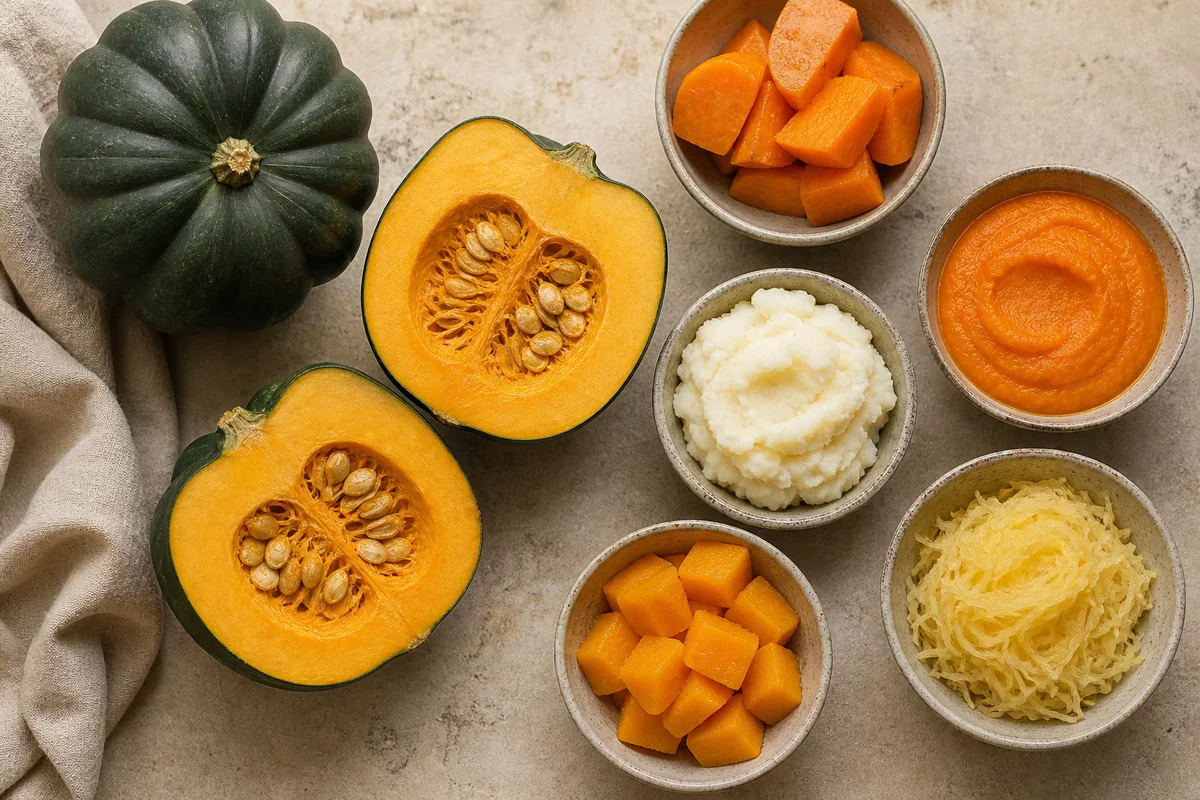
When you need an acorn squash substitute, reach for butternut squash or delicata for roasting, kabocha or sugar pumpkin for mash and soup, and sweet potato as an easy emergency swap. Each option below is matched for either texture, flavor, or both.
Reference Table: Best Acorn Squash Substitutes
Use this table to match your recipe style to the right swap at a glance. If you're working through a dish that calls for roasted wedges specifically, delicata or butternut are your first stops-and if your dish is a soup or puree, skip straight to kabocha or sugar pumpkin.
For anyone who regularly swaps winter squashes, knowing about swapping out butternut squash keeps your options wide open.
| # | Substitute | Best For | Ratio | Key Note |
|---|---|---|---|---|
| 1 | Butternut Squash | Roasting Cubes/Wedges | 1:1 | Sweeter; watch glaze amounts |
| 2 | Delicata Squash | Quick Roasting | 1:1 | Skin-on, fast cook |
| 3 | Kabocha Squash | Mash & Soup | 1:1 | Denser, buttery flesh |
| 4 | Sugar Pumpkin | Puree & Soup | 1:1 | Use canned for speed |
| 5 | Sweet Potato | Roasting & Mashing | ¾:1 | Sweeter; cut sugar in recipe |
5 Substitutes Matched for Roasting, Mashing, and Blending
1. Butternut Squash
Butternut squash is the closest all-purpose swap for acorn squash, especially when you're roasting cubes or building a sheet-pan side dish. The flesh softens at the same oven temperature-usually 400°F-and picks up caramelized edges in about the same time window.
The one thing to watch: butternut is naturally a bit sweeter than acorn, so pull back any brown sugar or maple glaze in your recipe by about a tablespoon. Understanding butternut squash's flavor and uses helps you calibrate that balance before it tips too sweet.
- Cut size: Aim for 1-inch cubes so they match acorn's typical roasted texture.
- Season early: Toss with oil, salt, and pepper before the oven-not halfway through.
- Flip once: At the 20-minute mark, flip cubes to get even browning on two sides.
- Doneness cue: A fork should slide in with light resistance, not collapse through.
- Optional glaze: If you want sweetness back, add a thin honey drizzle in the last 5 minutes only.
Skip if: your recipe needs acorn's firmer, slightly drier bite-butternut goes creamier as it cooks longer.
2. Delicata Squash
Delicata is the substitute we reach for when time is short. Its skin is thin enough to eat, so there's no peeling, and its mellow sweetness lands very close to acorn's without any of the bulk.
It also cooks noticeably faster than most winter squash, which matters on a weeknight.
For anyone who cooks delicata regularly, the article on delicata squash in cooking covers its full flavor character and how it handles heat.
- How to slice: Halve lengthwise, scoop seeds, then cut into half-moon rounds about ½ inch thick.
- Best seasoning: Olive oil, thyme, and a pinch of smoked paprika complement its mild sweetness without overwhelming it.
- Doneness cue: Edges should be golden and slightly curled-pull it before they brown fully or the flesh softens too much.
- Avoid mushiness: Spread slices in a single layer with space between each piece; crowding causes steaming, not roasting.
Skip if: you need deep caramelized edges-broil for the last 2 minutes to force more color.
3. Kabocha Squash
Kabocha delivers a denser, more buttery flesh than acorn squash, and that difference is exactly what makes it ideal for mash and creamy soups. It breaks down smoothly, holds its body after blending, and doesn't turn watery the way some squashes do when you purée them.
The sweetness is slightly earthy rather than bright, which works well in savory preparations. For dishes where you'd explore replacements for kabocha squash itself, the flavor profile comparison is useful to understand first.
Kabocha vs. Acorn Squash
Works for: creamy soups, blended sides, thick mash, roasted halves stuffed with grains
Skip if: your recipe depends on acorn's lighter, nuttier sweetness-kabocha reads richer and more starchy
- Roast or steam first: Cut into wedges, roast at 400°F for 30-35 minutes, or steam cubes for 15 minutes until fully soft.
- Blending tip: Scoop flesh into a blender with warm broth; start on low to avoid splattering hot liquid.
- Thinning: Add broth 2 tablespoons at a time until you hit soup consistency-kabocha thickens fast.
- Seasoning pairing: Miso, ginger, and a touch of sesame oil work well with kabocha's earthier sweetness.
- Sugar balance: Cut any brown sugar in the recipe by 25%-kabocha is plenty sweet on its own.
4. Sugar Pumpkin
Sugar pumpkin is the right call when your recipe is headed toward a puree, a blended soup, or a mashed side rather than roasted wedges. It has a sweetness level very close to acorn squash and a smooth texture after cooking that fills a bowl beautifully.
It's also one of the few substitutes where canned works nearly as well as fresh. If you're already thinking about sweet potato swaps that work for other parts of a meal, sugar pumpkin fills a very similar role in the squash column.
- Canned vs. fresh: Use canned pure pumpkin purée (not pie filling) when speed matters; roast a halved fresh sugar pumpkin at 375°F for 45-50 minutes for a deeper flavor.
- Blending: Scoop roasted flesh and blend with a splash of stock until completely smooth before adding cream or butter.
- Sweetness adjustment: Taste before adding any sugar-most sugar pumpkin is sweet enough without it in savory dishes.
- Prevent watery texture: If the purée is too loose, simmer it uncovered in a saucepan for 5-8 minutes to reduce and tighten.
Skip if: your recipe needs whole roasted wedge presentation-sugar pumpkin breaks apart at the edges and won't hold that shape reliably.
5. Sweet Potato
Sweet potato is the pantry substitute that's almost always available. It's softer and sweeter than acorn squash, so it needs a ratio adjustment-use about ¾ cup of sweet potato for every 1 cup of acorn squash called for-and the seasoning needs balancing.
A solid grasp of sweet potato's flavor and uses makes it easier to know when to lean into that sweetness and when to dial it back with salt or acid.
| Use | Ratio | Notes |
|---|---|---|
| Roasted cubes (sheet pan) | ¾:1 | Roast at 400°F for 20-25 min; toss with salt and smoked paprika |
| Mashed side dish | ¾:1 | Mash with butter and a squeeze of lemon to cut sweetness |
| Soup/purée base | ¾:1 | Blend with unsweetened stock; skip any added sugar entirely |
- Reduce added sugar: If your recipe uses brown sugar or maple syrup, cut that amount in half or skip it entirely.
- Roasting texture tip: Cut sweet potato into ¾-inch cubes, not larger-they soften faster and smaller pieces develop better edges.
- Balance with acid: A splash of lemon juice or a light drizzle of apple cider vinegar at the end keeps the dish from tasting one-dimensional.
- Mash consistency: If the mash is too thick, thin with 1-2 tablespoons of warm broth rather than milk to keep it savory.
Skip if: you want the specific nutty squash flavor-sweet potato is sweeter and softer, not nuttier.
Making Acorn Squash Substitutes Work (Roast, Mash, or Blend)
Every substitute above maps to one of three cooking paths: roasting (where caramelization and edge texture matter most), mashing (where density and butter absorption determine success), or blending (where smooth body and sweetness balance carry the dish). Butternut and delicata belong in the roasting column.
Kabocha and sugar pumpkin are built for mash and blend. Sweet potato crosses all three but needs consistent seasoning correction.
Knowing which delicata squash swaps that work for different recipe contexts keeps your winter squash cooking flexible.
- Adjust your ratio first: Use 1:1 for all squash substitutes and ¾:1 for sweet potato; scale seasoning proportionally after.
- Check tenderness early: Winter squash substitutes can vary in density-test with a fork at the 20-minute mark and pull when just tender, not falling apart.
- Fix sweetness at the end: Add a pinch of salt plus a few drops of acid (lemon or vinegar) if the substitute tastes flat or too sweet before plating.
Frequently Asked Questions
Butternut squash is the closest 1:1 swap for roasting-it caramelizes at the same temperature and holds its shape well. Cut it into 1-inch cubes and reduce any added sweetener slightly.
Yes, but use a ¾:1 ratio and skip any added sugar the recipe calls for. A small squeeze of lemon juice at the end keeps the sweetness from dominating.
Kabocha squash or sugar pumpkin are both excellent-they blend to a thick, creamy consistency without turning watery. Kabocha gives a slightly earthier result; sugar pumpkin is sweeter and smoother.
No-delicata's skin is thin enough to eat after roasting and softens completely. Just seed it, slice it, and roast as-is.
Test with a fork at the 20-minute mark regardless of the substitute. Denser options like kabocha may need 5-10 extra minutes; smaller cuts like delicata half-moons often finish sooner.
5 Best Acorn Squash Substitutes (Flavor-Matched)
Ingredients
Equipment
Method
- Decide your end goal: roasted wedges, roasted cubes, or a puree/mashed texture for soup and sides.
- Pick the closest match from the list: butternut or delicata for roasting, kabocha or sugar pumpkin for rich mash/puree.
- Use the listed ratio, then adjust seasonings: add salt early if the substitute tastes flat; add a pinch more cinnamon or brown sugar only if needed.
- If the substitute is wetter (like sweet potato or pumpkin puree), roast longer or reduce in the pan to thicken before serving.
- Taste and fine-tune texture: mash smooth for puree recipes, keep it chunkier for sides, and add a splash of stock or butter to loosen if required.
Notes
- For roasting, cut into similar-sized pieces so cook time and texture match.
- For puree soups, prioritize substitutes with similar fiber/body (kabocha or sugar pumpkin) and blend smooth.
Tried this recipe?
Let us know how it was!
Carrie is a food writer and editor with more than 15 years of experience. She has worked for some of the biggest names in the food industry, including Bon Appétit, Food & Wine, and Martha Stewart Living.
As the Editor in Chief of EpicureDelight, Carrie oversees all of the content on the site. She also manages the team of contributing writers and editors, who help to create delicious recipes, helpful tips, and informative articles that you’ll find on the site.
A native of the Chicago area, Carrie is passionate about all things food. She loves trying new restaurants and experimenting with new recipes in her kitchen. She’s also a graduate of the Culinary Institute of America, so she knows a thing or two about food!



