
That sour pop cranberries bring to a muffin or a holiday sauce is hard to replace exactly. But the right cranberries substitute comes down to one question: does your recipe need fruit pieces, a liquid, or something spreadable?
The answer changes everything about which swap works.
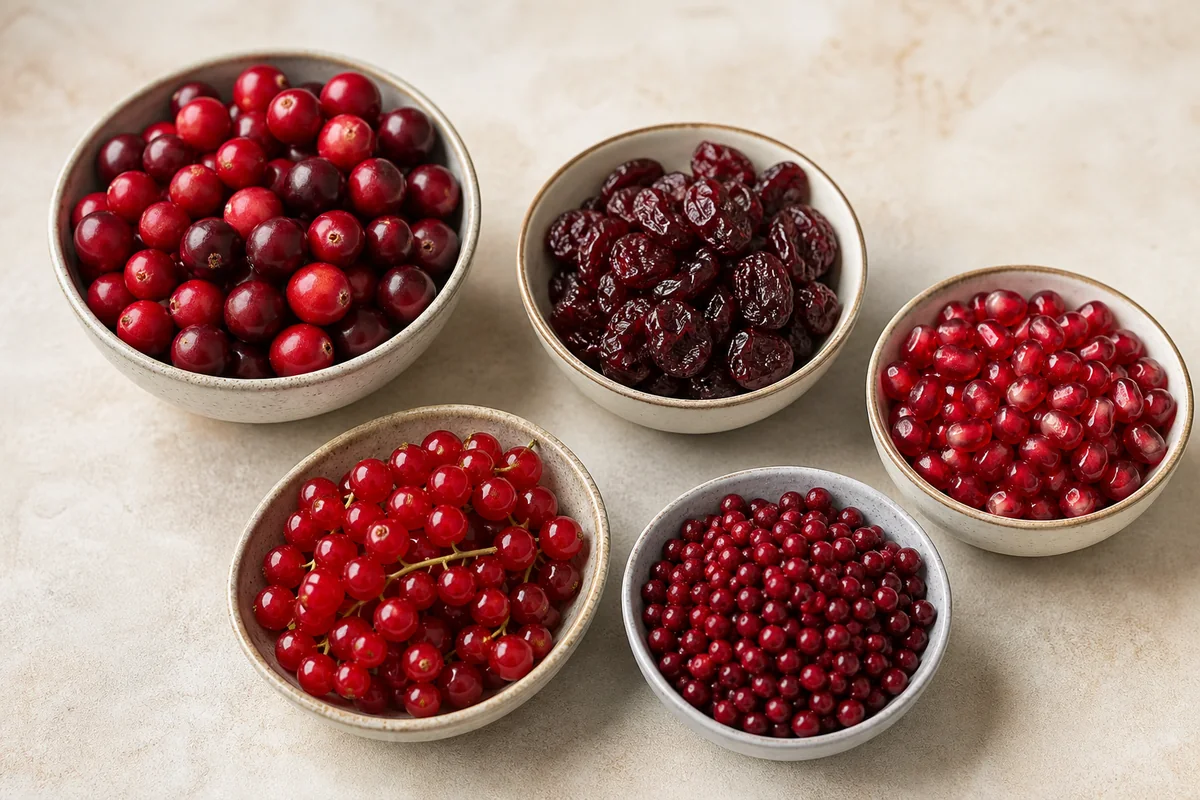
Cranberries add tartness, fruit texture, and a deep red color. The best swap depends on your recipe's role for them. Use frozen cranberries for fruit pockets, unsweetened juice for sauces and glazes, and raspberry jam with acid for thick, spreadable fillings.
Best Cranberries Substitute Options (Quick Picks)
| # | Substitute | Best For | Ratio | Key Note |
|---|---|---|---|---|
| 1 | Unsweetened Cranberry Juice | Sauces & Glazes | 1:1 | Liquid role only |
| 2 | Frozen Cranberries (thawed) | Both | 1:1 | Drain before mixing |
| 3 | Dried Cranberries (rehydrated) | Both | 1:1 | Reduce added sugar |
| 4 | Pomegranate Arils + Lemon | Baking | 1:1 | Add lemon for tartness |
| 5 | Raspberry Jam + Acid | Fillings | ¾:1 | Correct sweetness with acid |
Use the Ratio column to get amounts right, then use the Best For column to check the texture role. For baking, sauce-style swaps generally need an acid correction before folding in.
For savory glazes and drinks, any liquid substitute slots in cleanly with no further adjustment.
5 Best Cranberries Substitutes Ranked by Role
1. Unsweetened Cranberry Juice
Cranberry juice without added sugar keeps the tart, berry-forward flavor that makes cranberries useful in sauces and glazes. It works wherever cranberries play a liquid role, though you lose any fruit texture entirely.
If you want to know how pure juice compares to sweetened cocktail versions, the flavor difference matters in savory recipes especially.
- Ratio: Use 1:1 for any liquid-based application.
- Texture gap: If the recipe needs soft fruit pockets, stir in a small handful of diced apple or tart cherries alongside the juice.
- Thin batters: Juice integrates cleanly; thick batters may need 1-2 tablespoon less total liquid to compensate.
- Savory sauces: Reduce the juice by simmering 3-5 minutes to concentrate flavor before using.
Skip if: your recipe depends on spoonfuls of whole berry texture, like a chunky cranberry relish or a studded muffin.
2. Frozen Cranberries
Frozen cranberries are the closest fresh-like swap available, and they behave nearly identically in most bakes and sauces. The only real risk is extra moisture after thawing, which can loosen a batter or make a filling too wet.
Baking (Muffins, Scones, Breads)
Works for: fruit pockets, color bursts, and tart bites inside a baked crumb
Skip if: batter is already very wet-thawed berries release more juice as they bake
Savory Sauces & Sides
Works for: cranberry sauce, chutneys, and roasted meat glazes at 1:1
Skip if: you need the sauce to hold a thick gel-thawed berries may thin it slightly
- Thaw time: About 20-30 minutes at room temperature, or overnight in the fridge.
- Drain note: Pat dry or drain in a colander for 2-5 minutes if the bag releases visible liquid.
- Folding: Stir frozen cranberries into batter last and gently-overworking breaks the berries and bleeds red throughout.
- Ratio: 1:1 direct replacement for fresh cranberries in all uses.
Skip if: you need to skip the thaw step entirely and want a pantry-ready swap with no prep.
3. Dried Cranberries
Dried cranberries are concentrated and noticeably sweeter than fresh, so they need a short rehydration step and possibly a sugar reduction in your recipe. They still carry that cranberry flavor, just in a softer, more candy-like package.
- Rehydration: Soak in warm water for 5-10 minutes, then drain well and pat dry before mixing in.
- Ratio: Use 1:1 by volume, but taste as you go-sweetness is higher than fresh or frozen.
- Folding: Add at the very end of mixing to keep distinct pieces rather than a jammy smear.
- Acid correction: A small squeeze of lemon juice in the batter can restore some of the tart edge that drying removes.
For a reference on brightening without fresh lemon, there are several pantry options that work just as well in baked goods.
Skip if: your recipe specifically needs the sharp, almost mouth-puckering tartness of fresh cranberries-dried won't get there even after rehydration.
4. Pomegranate Arils
Pomegranate arils match the size and visual pop of whole cranberries better than almost anything else. They burst with juice in a similar way, and that deep red color stays consistent in baking.
The flavor is less tart, though. Pomegranate leans more toward sweet-fruity than sour-berry, so a small squeeze of lemon juice alongside the arils brings the profile much closer to cranberries.
Use them in cakes, muffins, and fruit-forward sauce alternatives where visual appeal matters as much as flavor.
- Ratio: 1:1 by volume for the arils, then add a small lemon squeeze to taste.
- Tartness lever: Start with a teaspoon of lemon juice per cup of arils and adjust from there.
- Best uses: Muffins, salads, spoonable compotes, and cakes where fruit bursts are welcome.
- Color note: Arils bleed less than cranberries, so baked goods may look slightly less pink inside.
Skip if: the recipe depends on cranberry-level acidity, like a tart glaze or a sauce meant to cut through rich meat.
5. Raspberry Jam
Raspberry jam steps in well when a recipe needs a thick, fruity, spreadable element-think filled bars, layer cakes, or spoonable sauces. It is sweeter and more voluminous than whole cranberries, so you use slightly less and add acid to balance it.
Before baking jam into bars, stir in a small splash of lemon juice or a tiny dash of white vinegar. That acid step is what separates a cloying result from a genuine cranberry-like tang.
| Use | Ratio | Notes |
|---|---|---|
| Muffin or quick bread swirl | ¾:1 | Add 1 teaspoon lemon juice per ¼ cup jam; fold in gently |
| Cranberry-style sauce | ¾:1 | Thin with 1-2 tablespoon water; stir in lemon juice until tangy |
| Dessert bar filling | ¾:1 | Use as-is with vinegar correction; check early for browning |
- Too thick: Loosen with a teaspoon of water or lemon juice until it spreads easily.
- Too sweet: Add acid in small increments-a quarter teaspoon at a time-until the jam tastes tart rather than fruity.
- Liquid in batter: Reduce another wet ingredient by 1-2 tablespoon to account for jam's density.
Skip if: your recipe calls for whole berry texture, like a rustic cranberry tart where visible fruit chunks are part of the presentation.
Making Any Cranberries Substitute Taste Right
The fastest way to correct a substitute that tastes off is to reach for acid first. Lemon juice and white vinegar both pull sweetness back toward cranberry's natural sharpness, and a small amount goes a long way.
For wetter substitutes like thawed frozen berries or rehydrated dried fruit, draining before mixing is what keeps your batter from turning loose and your filling from going soggy. If you want to explore acid alternatives beyond lemon, a few pantry staples work equally well for tartness correction.
- Acid first: Add lemon juice or vinegar in small increments, taste after each addition, and stop when the swap reads tart rather than sweet.
- Drain wet substitutes: Give thawed frozen cranberries or rehydrated dried ones 2-5 minutes in a colander before folding them into batter or filling.
- Fold last: Whether you use arils, jam, or rehydrated dried fruit, stir it into the batter at the very end to preserve texture and avoid color bleed.
Frequently Asked Questions
Cranberry juice works in liquid-role recipes like glazes and thin batters, but it won't create fruit pockets. Add diced apple or tart cherries if the recipe needs visible fruit pieces.
Frozen cranberries thawed and drained are the closest match. They hold their shape in baking and deliver the same tart pop at a 1:1 ratio.
Add lemon juice or a small splash of white vinegar in quarter-teaspoon increments. Stop when the flavor reads tart rather than fruity or jammy.
Yes, soak them in warm water for 5-10 minutes, then drain well. Skipping this step leaves them too chewy and concentrates their sweetness further in baked goods.
Jam is sugar-dense, so baked goods may brown faster. Start checking 3-5 minutes before the recipe's stated time and tent with foil if the top is coloring too quickly.
5 Best Cranberries Substitutes (Honest Picks)
Ingredients
Equipment
Method
- Identify what your recipe needs: tart fruit pieces (baking), sweet-tart bursts (muffins/cookies), or a cranberry-colored liquid (glazes/sauces).
- Choose the substitute that matches that role from the list, then apply the ratio for fruit or jam/sauce equivalents.
- If your substitute is wetter (frozen/diluted rehydrated fruit), drain 2–5 minutes or reduce by simmering briefly so batter doesn’t loosen.
- If your substitute is sweeter (jam, pie filling, rehydrated dried fruit), add a small splash of lemon juice or vinegar to restore cranberry-like tang.
- Bake or simmer as directed, then taste once cooked—adjust with acid first, sweetness second.
Notes
- Use acid (lemon juice or vinegar) to mimic cranberry tang when substituting jam/pie filling.
- Drain thawed frozen cranberries and rehydrated dried cranberries to keep baking texture predictable.
Tried this recipe?
Let us know how it was!
Carrie is a food writer and editor with more than 15 years of experience. She has worked for some of the biggest names in the food industry, including Bon Appétit, Food & Wine, and Martha Stewart Living.
As the Editor in Chief of EpicureDelight, Carrie oversees all of the content on the site. She also manages the team of contributing writers and editors, who help to create delicious recipes, helpful tips, and informative articles that you’ll find on the site.
A native of the Chicago area, Carrie is passionate about all things food. She loves trying new restaurants and experimenting with new recipes in her kitchen. She’s also a graduate of the Culinary Institute of America, so she knows a thing or two about food!



