
Tartness is the first thing cranberry sauce brings to a plate. It cuts through fatty turkey, offsets sweet glazes, and holds a jammy body that spreads or scoops cleanly.
When you're looking for a cranberry sauce substitute, start there: find something tart, then layer in the sweetness and spoonable thickness.
Most jam-based swaps work at a 1:1 ratio. Thicker preserves may need loosening with a tablespoon of water, and sweeter jams almost always need a squeeze of lemon.
If tartness is the target, acidity is the adjustment tool.
Cranberry sauce substitutes work best when they match tartness first. Red currant jelly and lingonberry preserves are the closest in flavor. Raspberry compote is the best DIY option. Cherry preserves and strawberry jam need lemon juice added. Pomegranate molasses covers tart depth at a reduced ratio.
5 Best Cranberry Sauce Substitutes Ranked by Flavor Fit
Each substitute below is rated by how closely it matches cranberry's tart-first profile. The ratio column tells you how much substitute to use in place of cranberry sauce.
A 1:1 ratio means equal amounts; a ¾:1 means use slightly less. Thickness adjustments are noted separately because they depend on the dish.
| # | Substitute | Best For | Ratio | Key Note |
|---|---|---|---|---|
| 1 | Red Currant Jelly | Both | 1:1 | Tart, glossy, minimal fix |
| 2 | Raspberry Compote | Both | 1:1 | Simmer 3-5 min to thicken |
| 3 | Lingonberry Preserves | Both | 1:1 | Best for baked goods |
| 4 | Cherry Preserves | Both | 1:1 | Add lemon; sweeter profile |
| 5 | Pomegranate Molasses | Both | ¾:1 | Dilute; strong tang |
Knowing storing cranberry sauce properly matters too if you're rationing what's left before reaching for a swap.
1. Red Currant Jelly
Red currant jelly is the closest shelf-stable substitute cranberry sauce has. It hits tart first, with a glossy body that spoons or glazes almost identically.
If you're choosing picking a less common jelly seems unlikely, this one is worth stocking specifically for cranberry emergencies.
- Flavor: Tart and lightly sweet, similar berry brightness to cranberry
- Ideal uses: Turkey sides, glazed pork, thumbprint cookies, tart fillings
- Texture fix: Already smooth and glossy; no thinning needed for most uses
- Too sweet? Stir in 1 teaspoon lemon juice per ¼ cup jelly, then taste again
Skip if: You need the chunky, sauce-like texture of whole-berry cranberry sauce.
2. Frozen Raspberry Compote
Frozen raspberries, simmered for 3-5 minutes, come closer to cranberry sauce's tart-fruit character than almost any jarred product. The acidity is there already, and you can control the sweetness from the start.
If citrus-based acidity swaps are already on your counter, this is the moment to use them for fine-tuning.
- Flavor: Bright and tart with a fruity top note; not as earthy as cranberry
- How to thicken: Simmer thawed raspberries over medium heat 3-5 minutes, stirring; mash lightly
- Best uses: Spooning alongside meat, muffin centers, quick tart fillings
- Acidity fix: Taste first; only add sugar if raspberries are very sharp
Skip if: You need a no-cook substitute with zero prep time.
3. Lingonberry Preserves
Lingonberry preserves are the substitute you reach for when you want tartness without tinkering. The berry is a close flavor cousin to cranberry, and the fruit pieces give it a texture that reads almost identical in baked goods.
Use picking the right berry base as a guiding principle here: the closer the fruit, the less adjustment you need.
Lingonberry Preserves
Works for: Bars, muffins, pies, spooning; closest tartness match with fruit texture
Skip if: You need a completely smooth, chunk-free sauce or spread
- Flavor: Tart with a slightly different berry note; less sweet than cherry, less earthy than cranberry
- Thickness: If too firm, loosen with 1-2 tablespoon water before folding into batter
- Baking behavior: Fruit pieces hold shape in bars and muffin centers without bleeding excessively
4. Cherry Preserves
Cherry preserves are fruit-forward and accessible, but they read sweeter than cranberry and need a tartness correction before they work as a clean swap. The fix is simple: lemon juice, added gradually.
Start with 1 teaspoon per ½ cup preserves, taste, and go from there.
Cherry works well when spooned alongside richer dishes or stirred into a glaze. It also holds up in baking fillings where some sweetness is welcome.
The flavor profile is distinctly cherry, so it's a substitute, not a disguise. If your dish leans on cranberry's specific tang, add lemon juice and don't skip tasting before you use it.
- Ratio: 1:1 for spooning and baking fillings
- Acidity fix: Add lemon juice starting at 1 teaspoon per ½ cup; adjust up to taste
- Best for: Pork glazes, sweet roll fillings, muffin centers, quick condiment swaps
Skip if: You need the flavor to stay strictly cranberry-like. Cherry reads as its own fruit.
5. Pomegranate Molasses
Pomegranate molasses brings serious tang and a deep red color that makes it a natural stand-in for cranberry's bold tartness. It's more concentrated than sauce, so use about ¾ cup in place of 1 cup cranberry sauce.
If swapping pomegranate syrup is new to you, start with less and build up.
- When to dilute: Always for spooning; mix with a little water and a pinch of sugar
- Baking use: Works in glazes and dark fillings; avoid light-colored batters where color transfer shows
- Bitterness fix: Add a pinch of sugar rather than more molasses; too much intensifies the bitter edge
Skip if: You don't want a dark color transfer in light baked goods like vanilla muffins or white cake.
Making Cranberry Sauce Substitutes Work
The goal with any swap is to match cranberry's tartness first, then bring the texture in line with how you're using it. A spooning substitute needs to be soft and thick enough to stay on a plate.
A baking substitute needs to handle heat without turning watery or overly sweet.
- Tartness control: Add lemon juice in 1 teaspoon increments for any jam or preserve that tastes sweeter than expected
- Thickness control: Simmer fruit compotes 3-5 minutes over medium heat; loosen thick preserves with 1-2 tablespoon water before measuring
- Baking vs. serving: For baking, favor lingonberry or red currant; for the table, raspberry compote or cherry preserves work beautifully
Frequently Asked Questions
Lingonberry preserves are the top pick for baking. Their fruit pieces hold shape in bars and muffins, and the tartness stays close to cranberry without any adjustment.
Yes, at a 1:1 ratio, but most jams are sweeter than cranberry sauce. Add lemon juice in small amounts to restore tartness before baking or serving.
Stir in lemon juice, starting with 1 teaspoon per ¼ cup of substitute. Taste after each addition and stop when the tartness matches what you need.
Red currant jelly is the best spoonable option. It has the right glossy body and tart flavor without any simmering or adjusting required.
Yes. Thinner substitutes like raspberry compote may spread more in muffins. Simmer them first to match cranberry sauce's thicker, more set consistency before folding in.
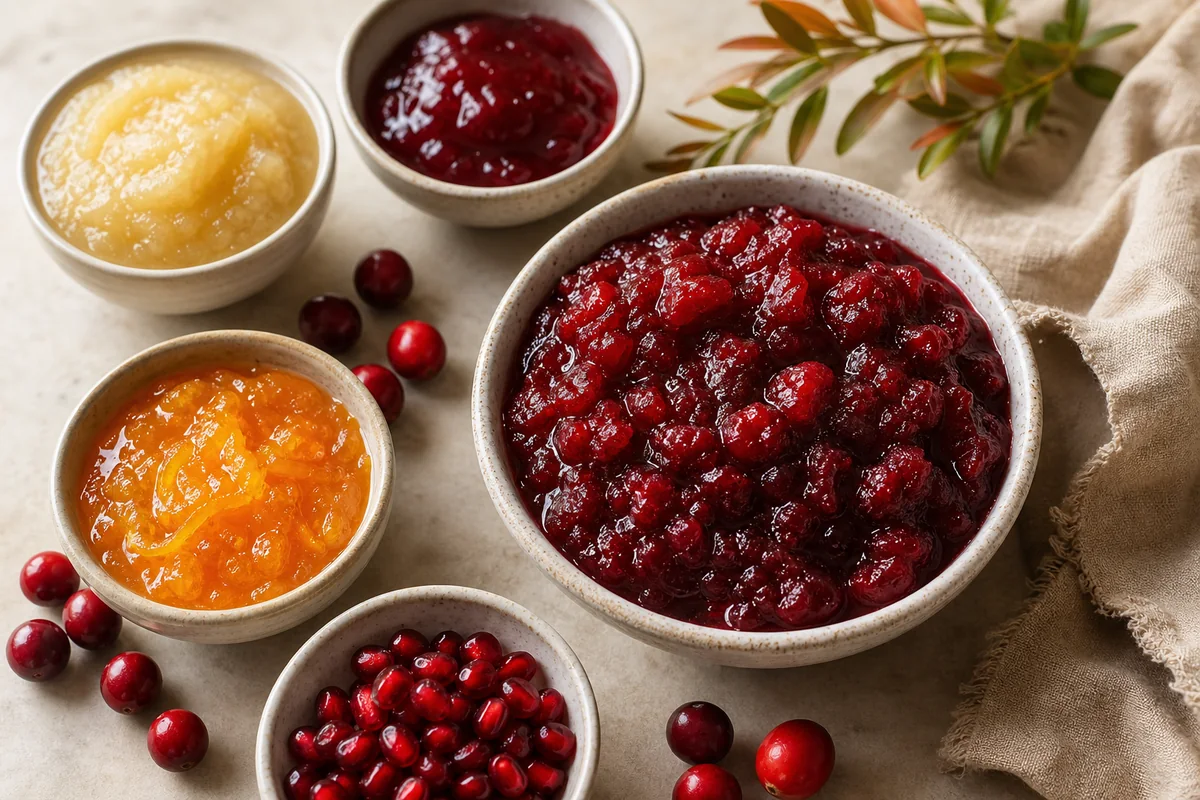
5 Best Cranberry Sauce Substitutes for Home Cooks
Ingredients
Equipment
Method
- Decide how you’re using cranberry sauce: as a spoonable side, or as an ingredient in baking (bars, muffins, stuffing glazes).
- Choose the closest tart-sweet match: red currant/lingonberry for tart fruit spread, raspberry compote for fresh-style tartness.
- Use the listed ratio; then adjust tartness with lemon juice (jam) or thickness with a quick simmer (fruit).
- If the substitute is runnier than cranberry sauce, simmer 3–5 minutes until spoonable; if it’s too thick, loosen with 1–2 tablespoon water.
- Taste before serving or baking—cranberry sauce should read tart first, sweet second.
Notes
- For baking, thickness matters: target a spoonable jam consistency to avoid extra moisture.
- When using sweet preserves, lift acidity with lemon juice to mimic cranberry tang.
Tried this recipe?
Let us know how it was!
Carrie is a food writer and editor with more than 15 years of experience. She has worked for some of the biggest names in the food industry, including Bon Appétit, Food & Wine, and Martha Stewart Living.
As the Editor in Chief of EpicureDelight, Carrie oversees all of the content on the site. She also manages the team of contributing writers and editors, who help to create delicious recipes, helpful tips, and informative articles that you’ll find on the site.
A native of the Chicago area, Carrie is passionate about all things food. She loves trying new restaurants and experimenting with new recipes in her kitchen. She’s also a graduate of the Culinary Institute of America, so she knows a thing or two about food!



