
That cool, watery crunch is hard to fake. A cucumber substitute needs to do at least one of three things well: hold its texture, keep moisture in check, or land close to cucumber's mild green flavor.
Get the wrong swap and your salad sits in a puddle, or your sandwich tastes like you grabbed the wrong vegetable entirely.
The choice comes down to what you're actually asking cucumber to do. Raw salads want crispness and mild juice.
Quick pickles need something firm enough to survive vinegar. If cucumber is just adding bulk and freshness, you have more room to work.
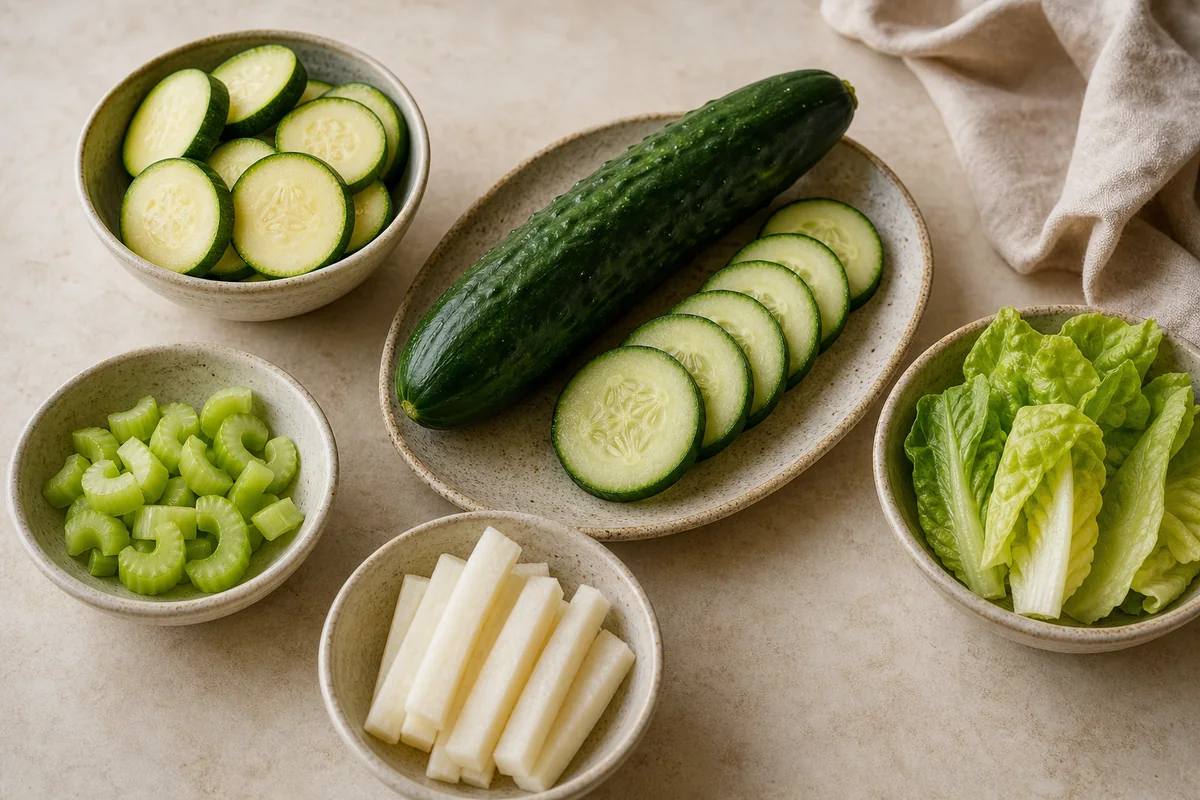
English cucumber is the closest raw-slice match. Pickling cucumber (Kirby) wins for quick pickles. Jicama holds crunch longest. Zucchini works only after salting and blotting. Bell pepper is your emergency crunch option when nothing else is on hand.
5 Best Cucumber Substitutes for Crunch, Freshness, and Pickling
Match crispness and water content first, then flavor second. The table below gives you a fast reference before the full breakdowns.
| # | Substitute | Best For | Ratio | Key Note |
|---|---|---|---|---|
| 1 | English Cucumber | Both | 1:1 | Slice paper-thin |
| 2 | Pickling Cucumber (Kirby) | Both | 1:1 | Best for vinegar |
| 3 | Jicama | Raw | 1:1 | Peel thoroughly first |
| 4 | Zucchini | Raw | 1:1 | Salt and blot first |
| 5 | Bell Pepper | Raw | ¾:1 | Less water, season more |
1. English Cucumber
English cucumber is the swap you reach for first. It has the same thin skin, mild flavor, and high water content as a standard garden cucumber, making it nearly invisible in salads and sandwiches when sliced right.
Slice it paper-thin for the closest texture match. Thicker cuts start to read as a different vegetable altogether. For baking or mixed recipes where cucumber adds moisture, thin rounds work better than chunks because they distribute their water evenly rather than pooling in one spot.
- Salads: Slice at ⅛ inch or thinner; no salting needed unless your dressing is very light
- Sandwiches: Keep slices uniform so one bite isn't watery and the next is dry
- Baking note: If cucumber is in your recipe for freshness or light bulk, English cucumber works 1:1 with no moisture adjustments needed
- Flavor tip: A touch of white wine vinegar or choosing a Persian-style option can sharpen the mildness if your dish needs more brightness
Skip if: you're pickling. English cucumber is a slicer variety and softens quickly in brine.
2. Pickling Cucumber (Kirby)
Kirby cucumbers are shorter, bumpier, and denser than standard slicers. That density is exactly what keeps them crisp when they hit vinegar.
If you're making quick pickles, this is the swap without any real compromise.
Kirby / Pickling Cucumber
Works for: quick pickles, vinegar-based slaws, refrigerator pickles lasting up to 2 weeks
Skip if: you want the absolute mildest raw bite or need something that blends into a delicate salad
Standard Slicer Cucumbers
Works for: raw salads, light sandwiches, garnish
Skip if: you're pickling-they go soft and lose their snap within hours in brine
For anyone exploring small pickling cucumber options, Kirby is also the benchmark they're measured against.
- Thickness: Cut into ¼-inch rounds or thin batons for faster, more even pickling
- Brine tip: They're ready in 30-60 minutes for a quick refrigerator pickle
- Vinegar choice: Works well with white vinegar or rice vinegar; if you're swapping pickling vinegars, keep acidity at 5% for food-safe results
- Raw use: Totally fine sliced raw, just expect a slightly thicker skin and more defined crunch than a slicer
Skip if: your recipe calls for a purely mild, watery bite. Kirby is firmer and slightly more assertive.
3. Jicama
Jicama is a crunchy root vegetable with a neutral, slightly sweet flavor and a satisfying water content that makes it one of the better raw cucumber swaps. It doesn't have cucumber's green freshness, but it holds its texture far longer in a dressed salad.
When swapping out this root vegetable in raw applications, cut into matchsticks or thin half-moons for the most cucumber-like mouthfeel.
- Peel fully: Remove both the outer skin and the fibrous layer just beneath it-both can taste bitter
- Blotting: Jicama is juicy but not as wet as cucumber; no salting needed unless your dressing is oil-heavy
- Cut shape: Matchsticks work best in slaws; thin rounds work best in salads and dips
- Crunch longevity: Jicama stays crisp for hours in a dressed bowl where zucchini would soften
Skip if: you need cucumber's specific green, grassy flavor. Jicama is neutral-sweet, not green.
4. Zucchini
Zucchini is the most available cucumber stand-in, but it requires one non-negotiable step: salt it for 10 minutes and blot it dry. Skip that step and you get a watery, limp result that ruins texture.
Use a firm, unripe zucchini for the best crunch. Overly ripe ones are spongy and release even more water.
Thin slices matter here; anything thicker than ¼ inch won't mimic cucumber's bite.
- Watery pooling fix: Sprinkle ½ teaspoon salt per medium zucchini, wait 10 minutes, then press between paper towels until nearly dry
- Softness fix: If your zucchini still feels limp after blotting, cut thinner and add at the last minute before serving
- Flavor gap fix: A splash of lemon juice or freshly stored crisp zucchini gets you closer to cucumber's cool flavor
- Baking note: Zucchini works in small amounts for moisture support; use no more than half the called-for cucumber amount and blot it thoroughly first
- Salad timing: Add zucchini right before serving, not ahead of time
Skip if: you have no time to salt and blot. Unsalted zucchini in a salad goes soft and waterlogged within minutes. For other swaps, see zucchini-based alternatives if you need a different direction.
5. Bell Pepper
Bell pepper is the emergency cucumber replacement. It has real crunch and holds up in any raw application, but it lacks cucumber's water content and carries a sweeter, more aromatic flavor.
You'll need to season around it.
- Best colors: Green bell pepper is the least sweet and reads closest to cucumber's mild flavor; red is sweetest
- Thickness: Slice no thicker than ⅛ inch; thin cuts reduce the "peppery" punch
- Seasoning adjustment: Add an extra pinch of salt and 1 teaspoon lemon or lime juice per cup of sliced pepper
- Water gap: Bell pepper is drier than cucumber; if your recipe needs moisture, add 1-2 tablespoon cold water to your dressing
- Avoid: Using thick chunks in sandwiches-they compress and push other fillings out
Skip if: you want cucumber's cool, neutral wateriness. Bell pepper always registers as pepper first, cucumber never.
Making Cucumber Substitutes Work (Without Watery or Soft Results)
Two things drive cucumber-like results in any substitute: moisture control and cut thickness. Thin cuts increase surface area and make milder substitutes feel lighter and more neutral.
Blotting or salting removes excess water before it can pool in your bowl. A bit of picking the right pickling acid also matters when you're working with brine, since the acidity level affects how firm your substitute stays after soaking.
- Moisture control: Salt and blot zucchini for 10 minutes; drain and rinse pickles before adding to salads; pat jicama dry if it seems very wet
- Cut and thickness: Paper-thin for English cucumber and bell pepper; ¼-inch max for Kirby; matchsticks for jicama; thinner than ¼ inch for zucchini
- Seasoning and acid balance: Add a small squeeze of lemon or a splash of light vinegar to any swap that lacks cucumber's natural brightness-about 1 teaspoon per cup of sliced substitute is enough
Frequently Asked Questions
English cucumber is the closest match for raw crunch and mild flavor. Slice it paper-thin for the most cucumber-like bite in salads or sandwiches.
Yes, but only if you salt it first. Sprinkle with salt, wait 10 minutes, then blot thoroughly before adding to your salad.
Pickling cucumber (Kirby) is the best option. It stays firm in vinegar brine and is ready in 30-60 minutes for a refrigerator pickle.
Yes. A quick rinse reduces brine intensity so the pickles don't overpower your dish. Pat them dry after rinsing for the cleanest result.
Zucchini is the most practical baking swap. Use half the called-for amount, blot it dry first, and it provides moisture without adding bulk.
5 Best Cucumber Substitutes (Tested)
Ingredients
Equipment
Method
- Identify your use case: raw crunch (salads/sandwiches) vs quick pickles vs mixed into sauces.
- Choose the substitute by texture: English/pickling cucumber for closest bite, jicama for maximum crunch, zucchini only if you can salt + blot.
- Prep for the right moisture: salt then blot zucchini; drain and rinse pickles; peel jicama for the cleanest mouthfeel.
- Season to match cucumber’s mildness: add a little extra salt for zucchini/pepper, or add a touch of sugar if your swap is too sharp.
- Use thinner cuts for the closest cucumber experience—aim for matchsticks or paper-thin slices depending on your dish.
Notes
- For raw dishes, prioritize crispness and water content.
- For pickles, prioritize thick skins and pickle-friendly varieties (pickling/Kirby).
- If the substitute is less watery, thin-slice and season slightly more to keep the dish balanced.
Tried this recipe?
Let us know how it was!
Carrie is a food writer and editor with more than 15 years of experience. She has worked for some of the biggest names in the food industry, including Bon Appétit, Food & Wine, and Martha Stewart Living.
As the Editor in Chief of EpicureDelight, Carrie oversees all of the content on the site. She also manages the team of contributing writers and editors, who help to create delicious recipes, helpful tips, and informative articles that you’ll find on the site.
A native of the Chicago area, Carrie is passionate about all things food. She loves trying new restaurants and experimenting with new recipes in her kitchen. She’s also a graduate of the Culinary Institute of America, so she knows a thing or two about food!



