
That clean, watery crunch is what jicama does best-and it's surprisingly hard to fake. The good news is that a few vegetables and one fruit come close enough that most recipes won't suffer.
The key is knowing which swap suits your method, because a jicama substitute that works beautifully in a slaw may turn soggy in a warm stir-fry.
Jicama itself is mostly water, mildly sweet, and completely neutral in aroma. That combination is rare.
So when you're choosing a replacement, aim to match the crunch first, then adjust moisture and seasoning to close the gap.
The best jicama substitutes are cucumber, radish, water chestnuts, chayote, and green apple. Match crunch first, then control moisture by draining or patting dry. For raw dishes, cucumber or radish work well. For cooked dishes, water chestnuts hold their bite under heat.
5 Best Jicama Substitutes for Any Recipe
Every option below is ranked by how closely it mimics jicama's crunch and mild flavor. Drain or pat dry any substitute that holds extra moisture before mixing it in.
| # | Substitute | Best For | Ratio | Key Note |
|---|---|---|---|---|
| 1 | Cucumber | Raw | 1:1 | Peel and pat dry |
| 2 | Radish (daikon) | Raw | 1:1 | Soak to tame heat |
| 3 | Water Chestnuts | Cooked | ¾:1 | Drain, rinse well |
| 4 | Chayote | Both | 1:1 | Julienne thin |
| 5 | Green Apple | Raw | ¾:1 | Add lime to balance |
1. Cucumber
Cucumber is the easiest jicama swap for raw recipes. Peeled and cut into matchsticks, it delivers an immediate snap that reads very close to jicama's juicy crunch.
The main risk with cucumber is moisture. Watery salads happen fast if you skip the prep step, so always peel fully and press the cut pieces between paper towels before adding them.
- Best uses: Tacos, raw slaws, fresh spring rolls, and citrus salads
- Cut size: Thin matchsticks (about 2 inches long) mimic jicama strips most closely
- Prep step: Pat dry after cutting; skip seeded varieties, which release more water
- Flavor note: Cucumber is slightly more vegetal than jicama, but lime juice closes that gap
Keeping this crisp salad vegetable fresh in the fridge until you're ready to cut matters too-older cucumbers release far more liquid than fresh ones.
Skip if: you need mild sweetness. Cucumber is neutral and can taste flat without added seasoning.
2. Radish
Daikon is the better pick here. It has a cleaner, less aggressive bite than small red radishes, and its size makes matchstick cutting easy.
Watermelon radish works too, and it adds a quiet visual pop.
This sharp-edged root carries more peppery heat than jicama, but a 10-minute soak in cold water pulls that edge back noticeably. After soaking, drain and press dry before using.
- Best uses: Slaws, tacos, grain bowls, and cold noodle dishes
- Soak rule: 10 minutes in cold water reduces peppery bite by roughly half
- Cut size: Thin julienne strips; thick cuts stay too assertive in flavor
- Flavor note: Daikon is mildest; small red radishes stay sharp even after soaking
For dishes where you want a range of peppery root options, daikon and watermelon radish sit at the gentler end of the spectrum.
Skip if: your dish needs pure neutral sweetness. Even soaked daikon has a faint bite that some recipes don't need.
3. Water Chestnuts
Canned water chestnuts are the best cooked-dish swap on this list. They hold their crunch through heat far better than cucumber or radish, making them ideal for stir-fries and warm noodle bowls.
Understanding nut versus water-vegetable differences helps set the right flavor expectation before you start cooking.
Fresh Jicama
Works for: raw salads, slaws, tacos, warm dishes-mild sweetness throughout
Skip if: unavailable; no real shelf-stable equivalent
Canned Water Chestnuts
Works for: stir-fries, dumplings, warm grain bowls-holds crunch under heat
Skip if: you need sweet, juicy freshness; canned product tastes more neutral and starchy
Handling the moisture from the can is the only real prep task. Drain, rinse under cold water, then spread on a paper towel for 2 minutes before cooking.
- Drain step: Rinse twice; canning liquid can add a mild metallic aftertaste
- Cut size: Slice into thin rounds or quarter them for matchstick-style pieces
- Best uses: Stir-fries, spring rolls, dumpling fillings, and warm noodle dishes
Check flavor notes on this crunchy aquatic vegetable if you're unsure how much starchy neutrality the swap will add.
Skip if: your recipe is raw and relies on jicama's juicy sweetness. Canned water chestnuts are drier and more starchy than fresh jicama.
4. Chayote
Chayote is underused as a jicama stand-in, and that's a mistake. It stays mild and firm, especially when sliced thin, and it handles both raw and lightly cooked preparations without getting mushy.
This pale, firm squash has almost no assertive flavor of its own, which is exactly what jicama substitution needs. Peel it fully, remove the seed, and julienne it into strips about the same length as your jicama would have been.
- Best uses: Raw slaws, fresh tacos, stir-fries, and grain bowls
- Cut size: Thin julienne (⅛ inch or less) keeps the bite light and jicama-adjacent
- Prep note: Peel under running water; the skin is slightly sticky when raw
- Flavor note: Milder than cucumber; add a squeeze of lime to lift its natural blandness
Skip if: you want that specific watery, almost juicy chew jicama has. Chayote is crisper but slightly drier, so the mouthfeel is close but not identical.
5. Green Apple
A firm, tart apple like Granny Smith brings surprising crunch, and its mild sweetness is closer to jicama's profile than most vegetables. The trick is keeping it from tasting like dessert.
Toss peeled, matchsticked apple immediately in lime or lemon juice with a small pinch of salt. That acid hit keeps the flavor sharp and prevents browning.
When choosing an acid balance for this swap, lime works better than lemon in most slaw and taco contexts.
- Best uses: Slaws, tacos, fresh salads, and grain bowls with citrus dressing
- Acid ratio: 1 teaspoon lime juice per cup of apple; more if your dressing is already sweet
- Cut size: Thin matchsticks; thicker pieces taste more "apple" and less "jicama"
Skip if: your recipe depends on jicama's neutral, earthy sweetness. Apple shifts the overall flavor fruity, and some savory dishes notice that shift clearly.
Making Jicama Substitutes Work
The biggest mistake people make with jicama swaps is ignoring moisture. Cucumber and water chestnuts both carry extra liquid that dilutes dressings and softens textures you want to keep crisp.
Pat everything dry before it goes into the bowl. For keeping a cooked stir-fry at its best after the fact, drier ingredients also help the dish hold up longer in the fridge.
- Ratio: Use 1:1 for cucumber, radish, and chayote; drop to ¾:1 for water chestnuts and apple, which are denser or sweeter
- Cut size: Matchsticks of 2 inches by ⅛ inch are the target; thicker cuts taste too assertive, thinner ones go limp fast
- Seasoning: Add 1 teaspoon lime juice and a small pinch of salt per cup of substitute; this mimics jicama's subtle brightness without overpowering the dish
Frequently Asked Questions
Peeled, matchsticked cucumber is the top pick for raw salads. Pat it dry first, and add lime juice to mimic jicama's mild brightness.
Yes-use canned water chestnuts, drained and rinsed. They hold their snap under heat better than any fresh vegetable on this list.
Cucumber releases liquid quickly once cut. Peel fully, cut into matchsticks, then press between paper towels for 2 minutes before adding to your recipe.
For radish, soak 10 minutes in cold water to reduce pepper heat. For apple, toss with lime juice and a pinch of salt to pull sweetness back toward neutral.
Aim for 2-inch matchsticks at ⅛-inch thickness. That size replicates jicama's light, snappy bite without the pieces tasting too assertive or going limp.
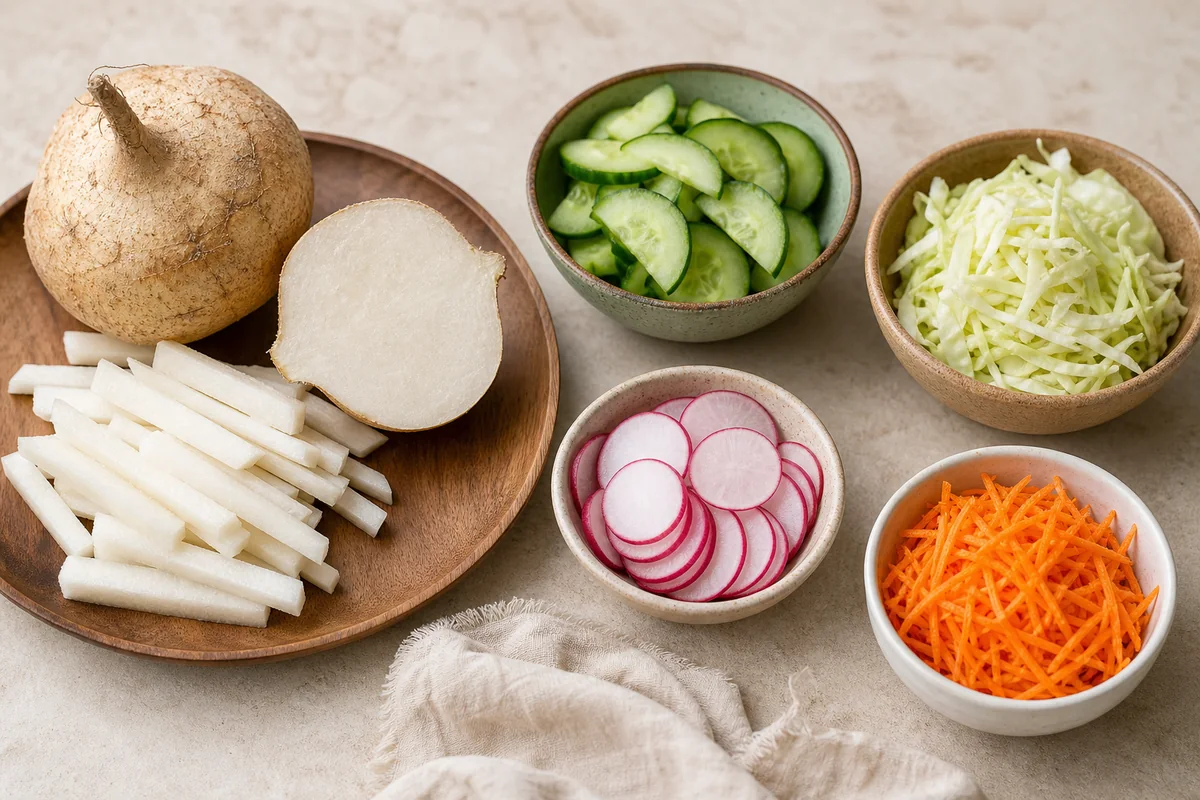
5 Best Jicama Substitutes for Any Recipe
Ingredients
Method
- Choose your target use: raw crunch (salads, slaws) vs. cooked crunch (stir-fry or warm sides).
- Pick the substitute with the closest texture: cucumber/radish for raw, water chestnuts for cooked, chayote/apple for mild flavor.
- Cut into similar sizes (matchsticks or thin slices) so the bite feels like jicama.
- If your swap releases extra liquid (cucumber or canned water chestnuts), peel and pat dry (or drain and rinse) before using.
- Season to mimic jicama: add lime/lemon and a small pinch of salt; for sweeter profiles, lightly add sugar or honey only if needed.
Notes
- For best “jicama-like” texture, use peeled and thin-cut pieces.
- To reduce strong bite, soak radish in cold water 10 minutes before using.
Tried this recipe?
Let us know how it was!
Carrie is a food writer and editor with more than 15 years of experience. She has worked for some of the biggest names in the food industry, including Bon Appétit, Food & Wine, and Martha Stewart Living.
As the Editor in Chief of EpicureDelight, Carrie oversees all of the content on the site. She also manages the team of contributing writers and editors, who help to create delicious recipes, helpful tips, and informative articles that you’ll find on the site.
A native of the Chicago area, Carrie is passionate about all things food. She loves trying new restaurants and experimenting with new recipes in her kitchen. She’s also a graduate of the Culinary Institute of America, so she knows a thing or two about food!



