
Dolcelatte has a particular quality that's hard to pin down without tasting it. It's creamy enough to spoon, sweet enough to stop you reaching for honey, and just tangy enough to remind you it's a blue cheese.
Losing it mid-recipe matters.
A good dolcelatte cheese substitute needs to cover three things: a soft, spreadable body, some salt-sweet balance, and at least a hint of blue-vein tang. Get all three right and most diners won't notice the swap.
Gorgonzola dolce is the closest match for dolcelatte's creamy, sweet-salty profile. For milder dishes, blend cream cheese with a small crumble of blue. Use roquefort at a ¾ ratio when you want bold blue and can mellow it with cream. Stilton softened with a splash of milk works well for sauces.
5 Best Dolcelatte Cheese Substitutes for Better Results
The table below maps each substitute to how you'll use it. Creaminess, tang level, and ratio are all different, so scan the Key Note column before deciding.
| # | Substitute | Best For | Ratio | Key Note |
|---|---|---|---|---|
| 1 | Gorgonzola Dolce | Both | 1:1 | Closest flavor match |
| 2 | Cream Cheese + Blue | Both | 1:1 | Control tang level yourself |
| 3 | Stilton (creamy) | Both | 1:1 | Soften with milk first |
| 4 | Roquefort | Both | ¾:1 | Cut with cream to mellow |
| 5 | Ricotta + Salt | Both | 1:1 | Creamy body, no blue tang |
When choosing a milder blue option matters for your dish, the table above is your fastest guide to picking the right intensity.
1. Gorgonzola Dolce
Gorgonzola dolce and dolcelatte are related, and the flavor gap between them is small. Both are soft, sweet-salty Italian blues that soften further with warmth.
- Spreading: Let it sit at room temperature for 10 minutes, then spoon straight onto bread or crackers.
- Pasta or risotto: Crumble in off-heat and stir - it melts within seconds without going grainy.
- Flavor note: Slightly sweeter than dolcelatte in some batches, but the difference is minor in cooked dishes.
Understanding the tangy spread that makes dolcelatte distinctive helps you judge how close your gorgonzola dolce batch actually is before committing it to a sauce.
Skip if: you want a punchier, more aged blue flavor - gorgonzola dolce stays gentle and sweet.
2. Cream Cheese + Tiny Blue Cheese
This is the best option when you need dolcelatte's soft body but your guests are sensitive to strong blue flavor. Full-fat cream cheese gives you the spoonable, smooth base.
A small crumble of any mild blue cheese brings just enough tang to signal something more interesting than plain dairy.
The trick is restraint. Start with 90% cream cheese and 10% blue, taste, then add more blue in small pinches.
For dips and sauces, this mild dairy base holds well in the fridge for several days once blended.
- Ratio: 3 tablespoon cream cheese to 1 teaspoon crumbled blue cheese as a starting point.
- Best uses: Dips, sandwich spreads, and cream-based pasta sauces.
- Boost flavor: Add a small squeeze of lemon or a drop of white wine vinegar if the mix tastes flat.
Skip if: your dish needs the actual blue-cheese flavor to carry the whole taste - this blend stays deliberately mild.
3. Stilton (Creamy)
Creamy stilton has more tang and salt than dolcelatte, but the body is close enough to work in most cooked applications. The key word is "creamy" - a dry, crumbly block of stilton will feel grainy in a sauce and taste harsher than you want.
Creamy Stilton
Works for: sauces, spreading, risotto, pasta - soften with 1 teaspoon milk per 2 tablespoon cheese
Skip if: you want a sweeter, gentler blue and can't mellow the tang with cream
Dry/Crumbly Stilton
Works for: crumbled salad topping where texture doesn't need to melt
Skip if: melting or blending is required - it turns grainy and sharp
For creamy blue-vein options, stilton is actually the stronger candidate once you've softened it properly.
- Softening method: Crumble stilton into a bowl, add 1-2 teaspoon of milk or cream, and stir firmly until smooth.
- Flavor balance: Stilton is saltier - taste before adding more seasoning to the dish.
- Ratio: Use 1:1 for sauces, but reduce slightly if serving on a cheese board alongside mild items.
Skip if: your only stilton is a very dry, aged block - it won't smooth out well and will overpower the dish.
4. Roquefort
Roquefort hits harder than dolcelatte on every front: saltier, sharper, and more intensely blue. That's not a disqualifier.
It means you use less of it and give it a creamy partner.
Knowing this sharp sheep's milk cheese helps you predict how much to cut back before it overwhelms the other flavors in your dish.
- Ratio: Use ¾ of the dolcelatte quantity called for, then increase only if needed.
- Mellow it: Stir into 1-2 tablespoon of cream cheese or sour cream before adding to sauces or dips.
- Best applications: Robust pasta, steak sauce, or baked dishes where bold blue flavor is welcome.
Skip if: you're making a delicate dish where blue flavor should stay in the background.
5. Ricotta + Salt
Drained ricotta won't fool anyone who's looking for blue cheese. It has no tang, no veining, and no funk.
What it does have is a creamy, spoonable body that matches dolcelatte's texture almost exactly when drained well.
This is the emergency swap for when creaminess is the priority and blue flavor is secondary. Using fresh ricotta promptly makes a real difference here - older ricotta can taste sour rather than clean, which throws off the whole dish.
- Drain first: Scoop ricotta into a fine sieve and leave for 20-30 minutes to remove excess liquid.
- Season it: Add a pinch of salt and stir until smooth - plain ricotta is too flat without it.
- Optional tang: A few drops of lemon juice or a small amount of white wine vinegar lifts the flavor noticeably.
- Best uses: Pasta fillings, spreading on flatbreads, blending into cream sauces for body.
Skip if: blue cheese flavor is the main point of the dish - ricotta won't deliver it.
Making Dolcelatte Cheese Substitutes Work
Adding a cheese substitute to heat is where most swaps go wrong. Creamy blue cheeses, including most of the options above, split or go grainy when they hit a hot pan directly.
The fix is simple: take the pan off the heat first, then stir the cheese in while the residual warmth does the work. For this tangy dairy companion used to mellow roquefort or stilton, the same rule applies - stir it in off-heat to keep the sauce smooth.
When working with firmer substitutes, softening before blending prevents grainy texture in finished sauces.
- Off-heat rule: Remove the pan from heat before adding any creamy blue substitute, then stir constantly for 30-40 seconds.
- Firm substitutes: Soften stilton or roquefort by blending with 1-2 teaspoon of cream or milk per 2 tablespoon of cheese before adding.
- Strong substitutes: Cut roquefort's intensity by mixing it with cream cheese or sour cream in a 1:1 ratio before incorporating into a sauce.
Frequently Asked Questions
Gorgonzola dolce is the closest match - same creamy body and mild-blue sweetness. Let it reach room temperature before spreading so it softens fully.
Yes, use it at a 1:1 ratio. It melts cleanly and doesn't release excess liquid, so it behaves well in tarts, stuffed pastry, and baked pasta.
Use ¾ of the quantity and stir it into an equal amount of cream cheese or sour cream first. That blend brings the intensity close to dolcelatte's level.
Gorgonzola dolce melts the most smoothly. Add it off-heat and stir - it blends into a sauce in under a minute without separating.
Wrap tightly in wax paper then foil and refrigerate. Creamy blue substitutes keep 5-7 days; ricotta-based blends should be used within 2-3 days.
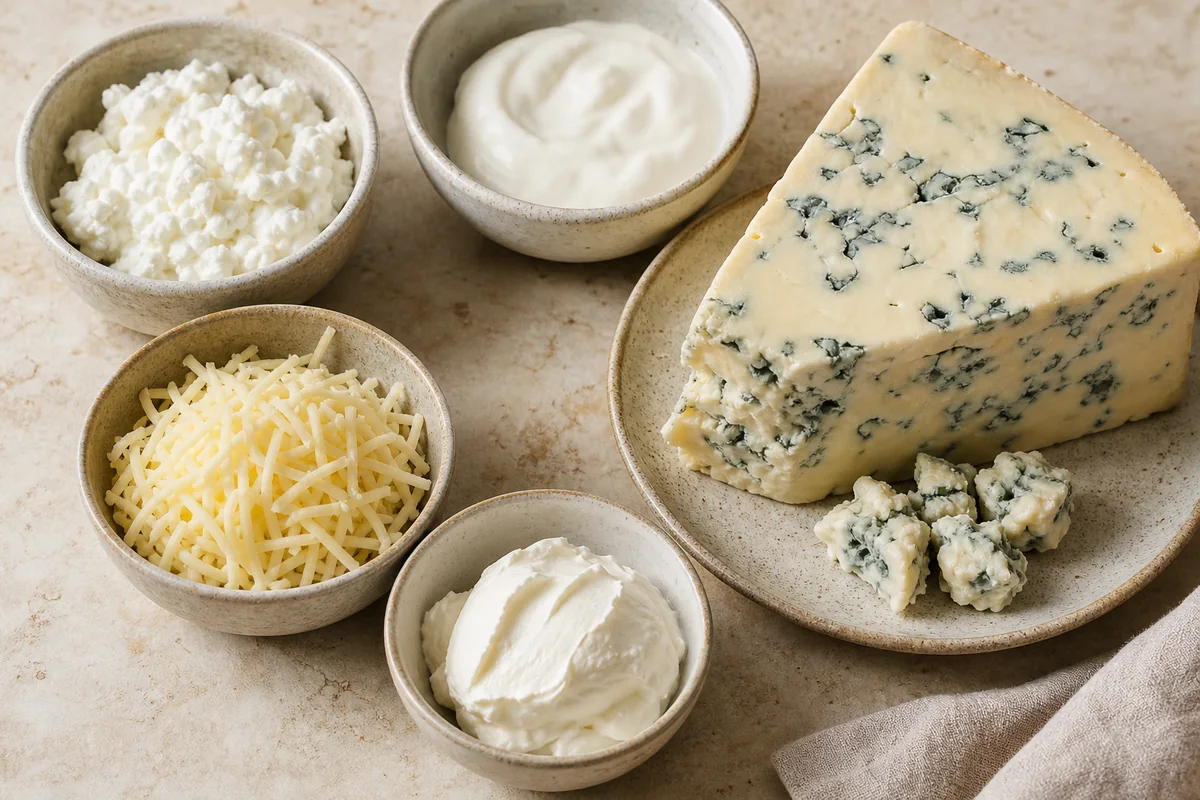
5 Best Dolcelatte Cheese Substitutes for Better Results
Ingredients
Equipment
Method
- Decide your use-case: spread/topping, melting into a sauce, or baking/folding into a dish.
- Choose the closest match: gorgonzola dolce first; then stilton if you can soften it; reserve roquefort for bold flavor.
- Use the listed ratio; if your substitute is firmer than dolcelatte, soften it by stirring with 1–2 teaspoons of milk/cream per portion.
- Taste and balance: add a small pinch of salt only if the substitute feels mild; add lemon or a drop of vinegar if it tastes flat.
- For sauces and warm dishes, add the substitute off-heat and stir until smooth to prevent graininess.
Notes
- Dolcelatte is a creamy, sweet-salty blue—avoid very sharp, very dry, or strongly aged cheeses unless you reduce and mellow them.
- If you’re substituting in baking, pre-soften firm cheeses for smoother texture.
Tried this recipe?
Let us know how it was!
Carrie is a food writer and editor with more than 15 years of experience. She has worked for some of the biggest names in the food industry, including Bon Appétit, Food & Wine, and Martha Stewart Living.
As the Editor in Chief of EpicureDelight, Carrie oversees all of the content on the site. She also manages the team of contributing writers and editors, who help to create delicious recipes, helpful tips, and informative articles that you’ll find on the site.
A native of the Chicago area, Carrie is passionate about all things food. She loves trying new restaurants and experimenting with new recipes in her kitchen. She’s also a graduate of the Culinary Institute of America, so she knows a thing or two about food!



