
Emmental's nutty-sweet character comes from a slow aging process that also gives it one of the smoothest melts in the cheese world. That combination is hard to replicate exactly, but the right emmental cheese substitute gets close enough that most dishes won't miss a beat.
The swap that works best depends on what you're making. A gratin needs slow, even melt with some depth of flavor.
A sandwich just needs easy sliceability and a quick creamy melt.
The best emmental cheese substitutes are Gruyère, Comté, Swiss cheese, Havarti, and Mozzarella. Gruyère is the closest match for baking and gratins, while Havarti or Mozzarella work well for sandwiches and quick stovetop melts. Use a 1:1 ratio for most recipes.
5 Best Emmental Cheese Swaps for Melting & Flavor
Scan the table below first to pick a substitute by use-case, then read the section that matches your dish.
| # | Substitute | Best For | Ratio | Key Note |
|---|---|---|---|---|
| 1 | Gruyère | Both | 1:1 | Closest nutty melt |
| 2 | Comté | Both | 1:1 | Deeper, caramel flavor |
| 3 | Swiss Cheese | Both | 1:1 | Milder, easy backup |
| 4 | Havarti | Cooking | 1:1 | Creamy, less nutty |
| 5 | Mozzarella | Cooking | 1:1 | Mild stretch, add seasoning |
1. Gruyère
Gruyère is the go-to swap for any baked dish that calls for emmental. It has that same slow, creamy melt, and its flavor, which you can read more about in this guide to aged alpine cheese, sits in almost the same nutty-sweet range as emmental does.
- Best dishes: Gratins, croque monsieur, fondue, French onion soup
- Flavor vs. emmental: Slightly more intense and earthier, but the nut-sweet note is the same
- Melt behavior: Smooth and slow; shred it for the most even coverage in baked dishes
- Usage tip: Use the same weight as emmental; no need to adjust bake time
- Ratio: 1:1 by weight, shredded or sliced
Skip if: you need a milder, less nutty profile for a delicate cream sauce or a light dessert-adjacent dish.
2. Comté
Comté has a deeper flavor than emmental, leaning toward caramel and toasted nut rather than just sweet-nutty. That extra depth is a plus for toast, open-faced gratins, and any dish where the cheese is the star.
For everyday swapping, swapping into aged Comté works at a straight 1:1 ratio by weight. Younger Comté is milder; aged Comté (12 months or more) adds complexity that can tip a recipe from good to very good.
- Flavor profile: More caramel and savory than emmental; less sweet overall
- Melt behavior: Smooth and consistent; behaves like emmental under heat
- Serving idea: Excellent on a cheese board alongside fruit and mustard
- Tip: If the dish is already bold, use younger Comté to keep it balanced
Skip if: your recipe is already heavily seasoned or you want the cheese to stay neutral in the background.
3. Swiss Cheese
"Swiss cheese" in most grocery stores is an emmental-adjacent style: same signature holes, similar mild-nutty flavor, and a melt that handles heat well. Think of this mild holey cheese as a slightly softer, less aged version of emmental that works wherever the original would go.
Swiss Cheese vs. Emmental
Works for: gratins, sandwiches, stovetop melts, everyday baking-anywhere emmental would go
Skip if: the dish depends on bold nutty-sweet depth; generic Swiss is noticeably flatter in flavor
- Best uses: Melted sandwiches, casseroles, quiche, burger toppings
- Melt behavior: Slightly softer melt than emmental; shred for cleaner results
- Sliced vs. shredded: Slice for sandwiches; shred for gratins and baked dishes
- Ratio: 1:1; no adjustments needed
Skip if: you're making a dish where aged, nutty complexity is the main flavor driver.
4. Havarti
Havarti is an easy-to-find cheese with a buttery, mild flavor and one of the most cooperative melts you'll find. It doesn't have emmental's nutty character, but it makes up for that with a creamier texture that works well in sandwiches and quick stovetop applications.
If you're weighing your options, picking a different creamy cheese might give you more flexibility for cold uses too.
Havarti's creaminess can read as slightly bland next to emmental's depth. A small pinch of nutmeg or dry mustard in the sauce or filling closes that gap without much effort.
- Best dishes: Grilled cheese, quesadillas, pasta bakes, stovetop mac
- Flavor adjustment: Add a pinch of nutmeg or white pepper to mimic emmental's warmth
- Thickness tip: Slice thin for even melt; thick slices can pool grease under high heat
- Ratio: 1:1 by weight
Skip if: the recipe calls for classic emmental character in a gratin or a roasted potato dish where nutty depth matters.
5. Mozzarella
Whole-milk mozzarella is the most reliable fallback when you just need good melt and a clean stretch. It is noticeably milder than emmental, so flavor is where you'll need to compensate.
For a comparison of how mozzarella behaves in melted applications versus other cheeses, toasted sandwich melt behavior is a useful reference point.
- Best uses: Casseroles, pizza-style bakes, pasta dishes, any recipe where stretch is the goal
- Avoid high heat too long: Mozzarella can turn rubbery if overbaked; pull it 2-3 minutes early
- Flavor pairing: Nutmeg, cracked pepper, or a small splash of white wine vinegar in the dish base helps
- Shred, don't slice: Sliced mozzarella releases too much water in baked dishes
- Ratio: 1:1 shredded by volume
Skip if: you're serving a cold cheese board where mozzarella's neutral flavor won't stand in for emmental's character.
Making Your Emmental Cheese Substitute Work
The single biggest factor in how well a substitute performs is preparation. Shredding opens up more surface area, which means faster, more even melt-and that matters more than which cheese you picked.
If you want to understand the base flavor you're trying to match, the notes on nutty aged alpine character give a clear benchmark, and if Gruyère is your first pick but you're unsure it's available, reviewing choosing a Gruyère-adjacent swap can help you narrow it down fast.
- Choose by purpose: Gruyère or Comté for slow baked melt and flavor depth; Havarti or Mozzarella for quick stovetop melt and sandwiches
- Prep the cheese correctly: Shred for gratins and casseroles; slice thin for sandwiches and toast-never use thick cold slabs straight from the fridge
- Adjust seasoning last: If the substitute tastes flat, add a pinch of nutmeg, a grind of black pepper, or 1 teaspoon of Dijon mustard to the dish before serving
Frequently Asked Questions
Gruyère is the closest match. It has the same slow, creamy melt and a similar nutty-sweet flavor, and it swaps in at a 1:1 ratio without any adjustments.
Yes, both work 1:1 by weight. Gruyère gives more flavor depth; Swiss cheese is milder but still melts smoothly and behaves the same way under oven heat.
Mozzarella has very little aging, so it lacks emmental's nutty depth. Add a pinch of nutmeg or black pepper to the dish to compensate for the flavor gap.
Use mild provolone and pair it with herbs or a small amount of Dijon mustard. Avoid using provolone in already-acidic dishes, where its tang compounds quickly.
Comté is the best choice for a cheese board. Its caramel-nut depth is impressive at room temperature, and it pairs well with fruit, honey, and mustard.
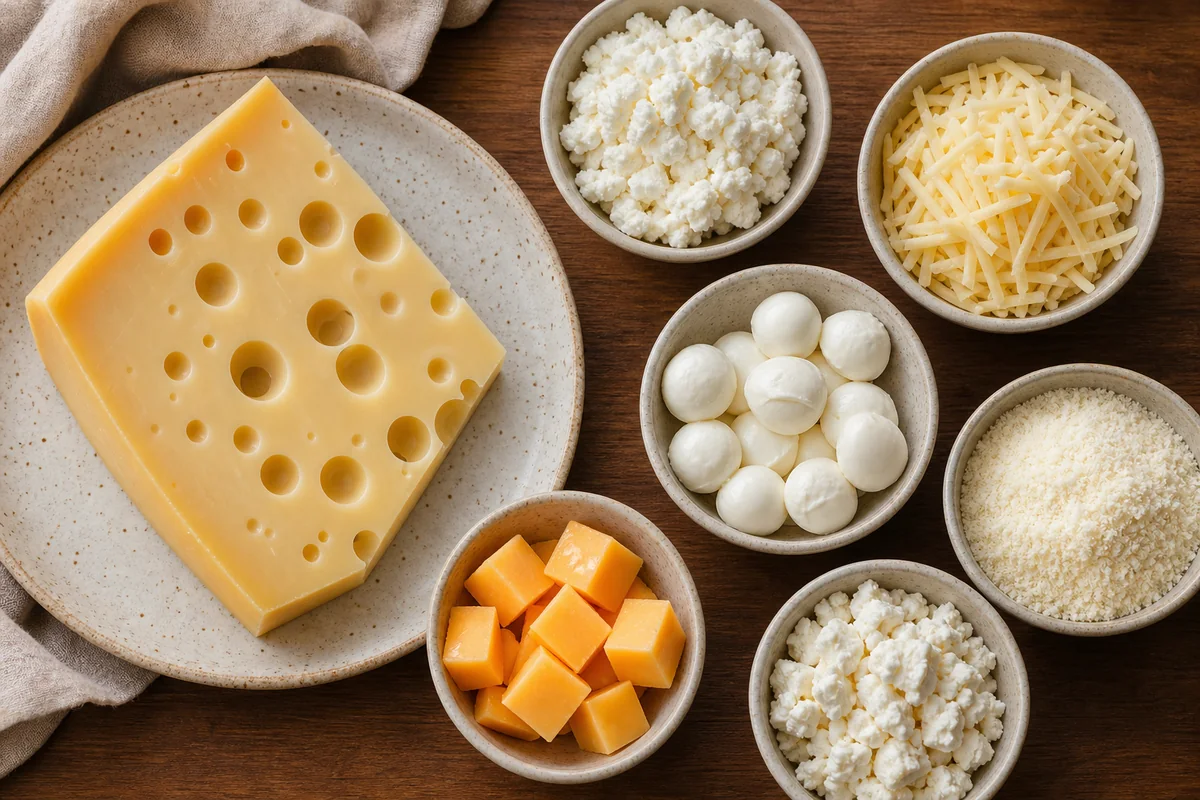
5 Best Emmental Cheese Substitutes (Pantry Swaps)
Ingredients
Method
- Decide your use-case: gratin/baking (needs slow, creamy melt) vs. sandwich/topping (needs easy melt and sliceability).
- Start with the 1:1 substitute ratio listed; use shredded/sliced cheese to reduce uneven melt.
- If your swap tastes flatter (common with mozzarella/provolone), add a pinch of nutmeg, black pepper, or a small splash of vinegar to mimic emmental’s nuance.
- If your swap looks too greasy, reduce cheese thickness or bake time slightly so it melts without pooling.
- Taste and adjust at the end: salt carefully, and if you’re serving cold, let the cheese sit 5–10 minutes for fuller flavor.
Notes
- For best results, match melt behavior: aged Swiss-style cheeses melt smoothly; fresher or mozzarella swaps melt fast and taste milder.
Tried this recipe?
Let us know how it was!
Carrie is a food writer and editor with more than 15 years of experience. She has worked for some of the biggest names in the food industry, including Bon Appétit, Food & Wine, and Martha Stewart Living.
As the Editor in Chief of EpicureDelight, Carrie oversees all of the content on the site. She also manages the team of contributing writers and editors, who help to create delicious recipes, helpful tips, and informative articles that you’ll find on the site.
A native of the Chicago area, Carrie is passionate about all things food. She loves trying new restaurants and experimenting with new recipes in her kitchen. She’s also a graduate of the Culinary Institute of America, so she knows a thing or two about food!



