
Feta has a specific personality: salty, milky-sharp, and crumbly enough to scatter across a salad without turning to paste. When it's missing from your fridge, most substitutes fall short in at least one of those three areas.
Knowing which gap to close first makes the swap work.
A good feta cheese substitute depends on what your recipe needs most. Crumble behavior matters most for salads and grain bowls.
Tang matters most for dips and spreads. Bake-friendliness matters most for pastries and pizza.
No feta? Halloumi and goat cheese are the closest all-round swaps. Use ricotta salata for dry, salty crumble. Reach for queso fresco when you want mild and crumbly. Cottage cheese and cream cheese work best as last-resort options with a quick texture fix.
5 Best Feta Cheese Substitutes (That Actually Work)
Choosing comes down to three priorities: texture first, then flavor, then how the dish is cooked. The table below gives you a fast reference before you commit.
| # | Substitute | Best For | Ratio | Key Note |
|---|---|---|---|---|
| 1 | Halloumi | Both | 1:1 | Sear first, then crumble |
| 2 | Goat Cheese | Both | 1:1 | Add salt and lemon zest |
| 3 | Queso Fresco | Cold | 1:1 | Drain well before using |
| 4 | Ricotta Salata | Both | 1:1 | Dry, salty, grates well |
| 5 | Cottage Cheese | Cold | 1:1 | Drain 10-15 min first |
If your dish needs a firm, dry crumble, skip the creamy options and go straight to ricotta salata or a quick-seared halloumi.
1. Halloumi
Halloumi behaves differently from most cheeses under heat. It firms up instead of melting, which makes it the only substitute that can hold a crumble in a hot pan without going gummy.
To use it as a feta swap, slice it thin and sear it in a dry pan for 30-60 seconds per side. Once cooled slightly, crumble or chop it into small pieces.
That firm-bodied brined cheese keeps its shape far better than any soft alternative once the heat hits.
Halloumi
Works for: baked pastries, roasted vegetable trays, hot grain bowls, and any dish where feta would be added mid-cook
Skip if: you need a soft, delicate crumble or the dish is served fully cold with no cooking step
- Prep step: Sear in a dry non-stick pan until golden on each side, then rest for 2 minutes before crumbling
- Saltiness: Halloumi is salty on its own; taste before adding extra salt to the dish
- Texture note: A coarser chop gives better crumble behavior than trying to break it into fine pieces
2. Goat Cheese
Goat cheese has the sharpest natural tang of any substitute here. It is softer than feta, but the flavor profile is the closest match for cold dishes like salads and pasta.
The texture gap is manageable. Press the goat cheese between two layers of paper towel for 3-4 minutes, then use your fingers to break it into rough crumbles rather than letting a fork smear it flat.
If it tastes less briny than feta, mix in a small pinch of salt and a light squeeze of lemon juice before adding it to the dish. If you frequently swap tangy soft cheese options, this is the one to keep on hand.
- Texture fix: Chill for 15 minutes before crumbling if it feels too soft to work with
- Tang boost: Add ¼ teaspoon lemon zest plus a small pinch of flaky salt per 60g of cheese
- Best dishes: Greek salads, grain bowls, flatbreads, spinach pies
- Skip if: You need a completely dry garnish; goat cheese softens and smears more than feta
Also worth noting: storing soft cheese properly extends its window significantly, since goat cheese goes off faster than feta.
3. Queso Fresco
Queso fresco has mild, slightly milky flavor and a crumble texture that looks like feta in a bowl. The problem is moisture.
It holds more whey than feta and releases it fast once heat or dressing hits.
If you want to know more about its base flavor before committing to a swap, read about its mild, fresh taste and decide if that suits your dish. When it works, it works well, but the prep step is non-negotiable.
- Drain method: Crumble onto a paper towel and press gently; let sit for 5-8 minutes before using
- Flavor fix: Add a pinch of salt and a small amount of lemon zest to close the tang gap
- Best dishes: Cold salads, tacos, roasted pepper dishes, grain bowls (added at the end)
- Skip if: Your recipe is hot and saucy; use ricotta salata or halloumi instead
For situations where queso fresco still isn't quite right, choosing a drier alternative is usually the smarter call.
4. Ricotta Salata
Ricotta salata is pressed, salted, and aged until firm. It has no creamy interior and very little moisture, which makes it the most structurally similar substitute to a dry, aged feta.
The flavor is less tangy than feta. It's salty but lacks the lactic sharpness that makes feta taste bright.
Add a small squeeze of lemon juice at the end if that gap is noticeable. For baked dishes, scatter it on at the last 5 minutes of cooking rather than early so it doesn't dry out completely.
- Crumble: Break by hand into small pieces for salads and pasta
- Grate: Use the coarse side of a box grater for pizza, flatbreads, and baked eggs
- Ratio: Use 1:1 in any recipe calling for crumbled feta
- Skip if: Your dish needs brine-forward tang; ricotta salata is salty but not acidic like feta
5. Cottage Cheese
Cottage cheese is the most accessible substitute in most fridges. The moisture level is high, though, and using it straight from the container will leave puddles in whatever you add it to.
Knowing its mild, slightly acidic flavor helps set expectations before you start.
| Use | Ratio | Notes |
|---|---|---|
| Crumbled topping (salads, bowls) | 1:1 | Drain 10-15 min; press with paper towel for firmest result |
| Blended spread (dips, wraps) | 1:1 | Blend smooth, add lemon juice + salt; texture mimics whipped feta |
Draining is the step most people skip, and it ruins the result. Line a sieve with a paper towel, add the cottage cheese, and wait at least 10 minutes before using.
Monitor how long it's been open too; checking freshness before using avoids a wasted dish.
- Crumble route: Drain, press, use cold; works on salads and grain bowls as a loose topping
- Blend route: Blitz with a small blender, 1 tablespoon lemon juice, and ½ teaspoon salt per cup; use as a feta-style spread
- Skip if: You're serving it cold straight from the container; undrained cottage cheese will taste and feel far wetter than feta
Making Feta Substitutes Work (Without Losing Flavor or Texture)
The single most common mistake is swapping in a substitute without adjusting for either moisture or tang. Most of these cheeses are milder and wetter than feta, and a 1:1 swap without any correction usually tastes flat.
Drain wetter options before they hit the bowl and always taste before finishing the dish.
- Match texture first: If feta's dry crumble is essential, reach for ricotta salata or seared halloumi; avoid cottage cheese or cream cheese for garnish roles
- Restore tang: Add a small pinch of flaky salt and ¼ teaspoon lemon zest per 60g of substitute to recreate feta's brine-bright flavor
- Time your addition: For hot dishes, add the substitute in the last 2-3 minutes; for cold dishes, add just before serving so texture holds
Frequently Asked Questions
Goat cheese or ricotta salata are the strongest picks for cold salads. Both crumble well and hold their shape once dressed, with goat cheese offering the closest tang match.
Halloumi is the most reliable option for baking; it holds its structure and doesn't turn watery. Add it in the last 5 minutes for the best texture.
Add a small pinch of flaky salt plus a squeeze of lemon juice or a little lemon zest. That combination mimics feta's briny, slightly acidic character closely.
Yes, at a 1:1 ratio. Chill it first so it crumbles rather than smears, and add a pinch of salt if it tastes less briny than expected.
Drain cottage cheese for 10 minutes, then crumble it cold. For cream cheese, soften it and mix with lemon juice and salt before spreading or crumbling over the dish.
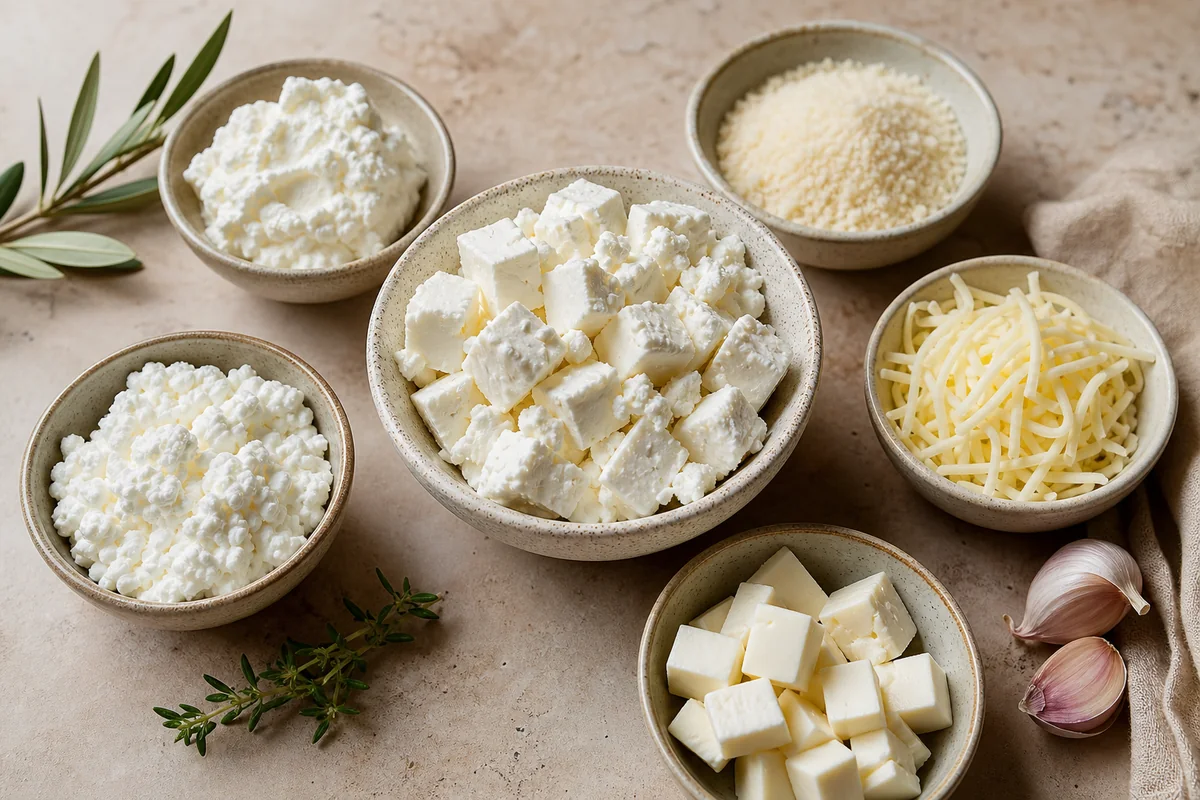
5 Best Feta Cheese Substitutes (That Actually Work)
Ingredients
Equipment
Method
- Identify your use: finishing crumble (salads/pasta), baking (pizza/pie), or spreading (sandwiches).
- Choose the closest behavior: crumble-like dryness (ricotta salata, halloumi), tangy cream (goat cheese), or mild crumb (queso fresco).
- Apply the listed ratio. If the substitute is wetter (cottage cheese, queso fresco), drain or pat dry first to prevent watery pooling.
- If your swap tastes less briny than feta, add a tiny pinch of salt and a brief lemon zest/squeeze to restore the “bright tang.”
- For best texture in hot dishes, add the substitute at the end (or quick-sear halloumi first) so it doesn’t turn rubbery or gummy.
Notes
- If you’re substituting in a salad, prioritize crumbling and briny tang.
- In baked recipes, pick substitutes that hold shape and don’t release too much moisture.
Tried this recipe?
Let us know how it was!
Carrie is a food writer and editor with more than 15 years of experience. She has worked for some of the biggest names in the food industry, including Bon Appétit, Food & Wine, and Martha Stewart Living.
As the Editor in Chief of EpicureDelight, Carrie oversees all of the content on the site. She also manages the team of contributing writers and editors, who help to create delicious recipes, helpful tips, and informative articles that you’ll find on the site.
A native of the Chicago area, Carrie is passionate about all things food. She loves trying new restaurants and experimenting with new recipes in her kitchen. She’s also a graduate of the Culinary Institute of America, so she knows a thing or two about food!



