
That smoky-sweet depth in a bowl of chili or pasta sauce usually comes from one can: fire roasted tomatoes. When you're mid-cook and the pantry is bare, the right swap keeps the dish on track.
What that char contributes is more than heat. Fire roasting adds caramelized sweetness, a mild smokiness, and a softer tomato bite that plain canned tomatoes simply don't have. The substitutes below match those qualities as closely as possible, with exact ratios so you're not guessing.
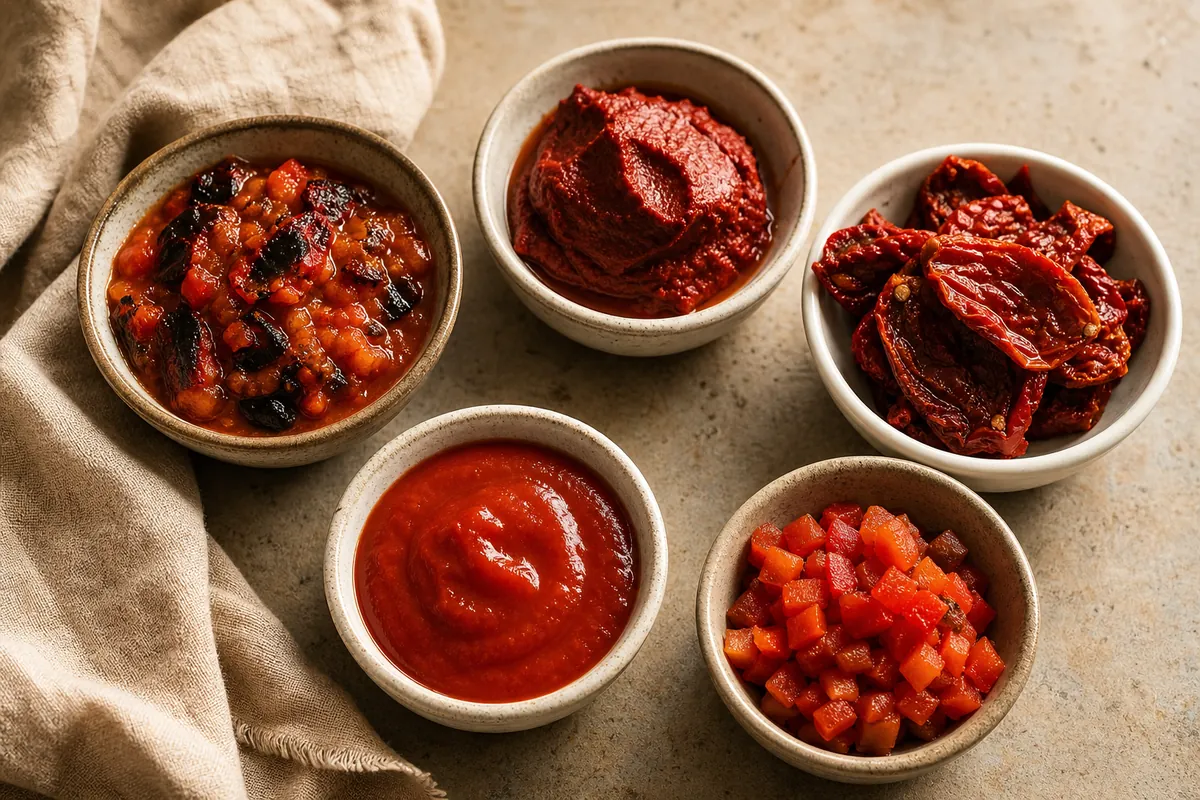
The best fire roasted tomato substitute is regular diced canned tomatoes plus smoked paprika. Use a 1:1 ratio and add ¼-1/2 teaspoon paprika per can. For thicker dishes, tomato paste loosened with broth works well. Crushed tomatoes with a quick broil are the best texture match when you have a few extra minutes.
5 Fire Roasted Tomato Substitutes Ranked by Use
| # | Substitute | Best For | Ratio | Key Note |
|---|---|---|---|---|
| 1 | Drained fire roasted (no-salt) canned | Both | 1:1 | Closest flavor match |
| 2 | Diced tomatoes + smoked paprika | Both | 1:1 | Easiest pantry swap |
| 3 | Crushed tomatoes + broil/char | Cooking | 1:1 | Best texture result |
| 4 | Tomato paste + smoked paprika | Cooking | ¾:1 | Bloom before adding |
| 5 | Roasted red peppers + crushed tomatoes | Both | ½:1 | Sweeter, thicker base |
1. Drained Canned Fire Roasted Tomatoes
If you can find no-salt-added canned fire roasted tomatoes, this is the simplest path. Drain a little liquid before adding them so your dish doesn't go watery, but keep that liquid nearby.
You can stir it back in if you need more body later.
When deciding between brands, picking the right canned tomato matters more than most people expect.
Drained Canned Fire Roasted Tomatoes
Works for: Any recipe calling for fire roasted tomatoes, especially soups, chili, and pasta sauce
Skip if: Your store doesn't carry fire roasted versions at all - then move to option 2 or 3 below
- Ratio: 1:1 with fire roasted tomatoes called for in the recipe
- Drain tip: Pour off about 2 tablespoon of liquid per can to tighten texture
- Save the liquid: Stir it back in near the end if the dish looks too thick
- Flavor check: Taste at the 10-minute simmer mark; no adjustment usually needed
2. Diced Tomatoes + Smoked Paprika
Regular diced canned tomatoes are in almost every pantry, and smoked paprika is the fastest way to close the flavor gap. The paprika blooms into the tomatoes during the first simmer, so it doesn't taste sharp or dusty.
Add the paprika at the start of cooking, not at the end. That 10 to 15 minutes of simmer time makes the smoke taste integrated rather than added-on.
- Ratio: 1:1 diced tomatoes for fire roasted tomatoes
- Paprika amount: ¼ teaspoon per can for mild smoke; up to ½ teaspoon for a deeper hit
- Timing: Add paprika when you add the tomatoes, not as a finishing touch
- Optional boost: A pinch of sugar (¼ tsp) mimics the caramelized sweetness
- Skip if: Your recipe needs a silky, blended texture - use crushed tomatoes instead
3. Crushed Tomatoes + Quick Broil
Fire roasting is really just caramelization plus smoke. A short broil on a baking sheet can do the same job.
It takes about 8 minutes and the result is a noticeably sweeter, slightly charred tomato base that behaves almost identically in the pot.
If you want to understand how that char changes flavor, storing roasted tomatoes correctly after this step matters when you make a big batch.
- Ratio: 1:1 crushed tomatoes for fire roasted tomatoes
- Broil step: Spread crushed tomatoes on a foil-lined sheet, broil on high for 7-9 minutes until edges darken
- Stir once: Pull at the halfway mark and stir so the edges don't burn unevenly
- Add to pot: Fold in right after broiling while still hot so the char carries into the sauce
- Skip if: You're making a no-cook topping or a very quick 5-minute sauté
4. Tomato Paste + Smoked Paprika
Tomato paste is concentrated, so the ratio shifts. Use about ¾ the volume called for, then loosen it with 3-4 tablespoon of water or broth per every 2 tablespoon of paste.
Blooming the paste first removes the raw, tinny edge that can make a sauce taste flat.
The best paste-forward choice depends on how much liquid is already in your dish. This swap works best in drier braises and thick chilis.
Tomato Paste + Smoked Paprika
Works for: Thick chili, braised meats, concentrated pasta sauce, shakshuka
Skip if: Your recipe already has a lot of liquid - paste will over-concentrate the tomato flavor
- Ratio: ¾:1 (use 3 tablespoon paste where ¼ cup fire roasted tomatoes are called for, then loosen)
- Bloom it: Stir paste in a dry pan over medium heat for 60-90 seconds before adding other ingredients
- Loosen with: 3-4 tablespoon broth or water per 2 tablespoon paste
- Smoke: Add ¼ teaspoon smoked paprika when blooming the paste
- Acidity fix: Paste can taste sharp; a pinch of sugar or a small splash of balsamic balances it
Check the thick concentrated paste expiry if yours has been sitting in the fridge - opened paste goes off faster than most people expect.
5. Roasted Red Peppers + Crushed Tomatoes
Jarred roasted red peppers bring sweetness and body that neither plain tomatoes nor paprika fully replicate. They work best pureed and combined with crushed tomatoes so the dish stays tomato-forward.
On their own, peppers make the sauce taste more like romesco than marinara.
| Use | Ratio | Notes |
|---|---|---|
| Pasta sauce | ½ pepper puree : ½ crushed tomatoes | Even split keeps tomato flavor present |
| Chili | ⅓ pepper puree : ⅔ crushed tomatoes | More tomato base suits chili spice profile |
| Soup | ½ pepper puree : ½ crushed tomatoes | Puree both together for smooth texture |
- How to puree: Drain jar peppers, blend until smooth, then measure out your portion
- When to add: Early in the simmer so the pepper sweetness melds with the tomato
- Smoke boost: Add ¼ teaspoon smoked paprika to the mix for a closer fire-roasted profile
- Skip if: You need a classic tomato-forward flavor - use crushed tomatoes plus smoked paprika instead
Making Your Fire Roasted Tomato Substitute Taste Right
Two things drive whether a substitute works: smoke depth and liquid body. Get those two right, and the dish tastes like you used the real thing.
Smoke integrates during a simmer, so adding paprika or liquid smoke at the start beats adding it at the end.
For smoke options that go beyond paprika, smoky flavoring swaps cover a wider range of pantry-friendly solutions.
- Simmer timing: Let any smoke flavoring (paprika or liquid smoke) cook with the tomatoes for at least 10-15 minutes before tasting; smoke tastes harsh when raw
- Thickness fix: If the substitute is too thin, simmer uncovered for 5-8 minutes; if too thick, add broth 2 tablespoon at a time
- Final seasoning: Taste for both salt and acidity at the end - a small squeeze of lemon juice or a splash of red wine vinegar lifts the whole dish if it tastes flat
Frequently Asked Questions
Yes, use them at a 1:1 ratio. Add ¼-1/2 teaspoon smoked paprika per can to replace the missing smokiness and a pinch of sugar to mimic caramelized sweetness.
Use ⅛ teaspoon liquid smoke per can of tomatoes, added early in cooking. A chipotle pepper in adobo sauce, minced finely, also works and adds mild heat.
Bloom the paste first, then loosen it with broth rather than water for better body. Simmer uncovered for 5 minutes after adding to reach the right consistency.
They add sweetness and body, so keep the pepper portion to one-third or less of the total tomato volume. The sauce stays tomato-forward at that ratio.
Simmer uncovered for 5-8 more minutes to reduce and concentrate. Then add a small squeeze of lemon juice or a splash of red wine vinegar to lift the flavor.
5 Best Fire Roasted Tomato Substitutes (with Ratios)
Ingredients
Equipment
Method
- Select a substitute based on your dish type and the flavor match you need.
- Measure using the recommended ratio from the table above.
- Adjust for sweetness, acidity, or texture differences -- taste as you go.
- Add the substitute at the same stage you would add fire roasted tomato in the original recipe.
- Taste the finished dish and correct seasoning if needed.
Notes
- Start with less smoke than you think you need—smoky flavors concentrate as the dish reduces.
- For texture parity, drain slightly or simmer longer if the substitute is watery.
Tried this recipe?
Let us know how it was!
Carrie is a food writer and editor with more than 15 years of experience. She has worked for some of the biggest names in the food industry, including Bon Appétit, Food & Wine, and Martha Stewart Living.
As the Editor in Chief of EpicureDelight, Carrie oversees all of the content on the site. She also manages the team of contributing writers and editors, who help to create delicious recipes, helpful tips, and informative articles that you’ll find on the site.
A native of the Chicago area, Carrie is passionate about all things food. She loves trying new restaurants and experimenting with new recipes in her kitchen. She’s also a graduate of the Culinary Institute of America, so she knows a thing or two about food!



