
Flaxseed oil has a short shelf life, a low smoke point, and a flavor that divides people. Some love its faint nutty edge.
Others just want the omega-3 boost without tasting anything at all.
The right flaxseed oil substitute depends almost entirely on one thing: heat. Flaxseed oil breaks down fast under temperature, which is why it's mostly used cold.
If your recipe involves a pan or an oven, you need something stable. If it's a dressing or a cold drizzle, you can prioritize flavor instead.
For cold use, light olive oil or toasted sesame oil matches flaxseed oil's mild nuttiness. For baking or cooking, canola oil or avocado oil are the safest 1:1 swaps. Butter works when the recipe needs richness. Match your substitute to heat level first, then flavor.
5 Best Flaxseed Oil Substitutes (Ranked)
Every swap below is ranked by how well it handles flaxseed oil's two main jobs: cold finishing and heated cooking. The sub-table gives you the fast answer.
The sections below explain when each one falls short.
| # | Substitute | Best For | Ratio | Key Note |
|---|---|---|---|---|
| 1 | Canola Oil | Both | 1:1 | Neutral, heat-stable |
| 2 | Light Olive Oil | Cold | 1:1 | Mild, avoid extra-virgin |
| 3 | Avocado Oil | Both | 1:1 | High smoke point |
| 4 | Toasted Sesame Oil | Cold | ¾:1 | Strong, finish only |
| 5 | Butter (melted) | Baking | 1:1 | Rich, not dairy-free |
1. Canola Oil
Canola is the go-to swap when a recipe uses flaxseed oil for moisture or as a general cooking fat. It has almost no flavor of its own, handles oven temperatures without issue, and costs less than most specialty oils.
For anyone wondering about neutral oil alternatives, canola sits at the top of that list for a reason.
Canola Oil
Works for: sautéing, baking, marinades, any recipe using flax for fat rather than flavor
Skip if: the recipe calls for a cold nutty drizzle-canola has no finish flavor to offer
- Ratio: 1:1 in all applications
- Smoke point: Around 400°F, well above flaxseed oil's danger zone
- Flavor impact: Nearly zero, which is the point
- Best recipes: Muffins, stir-fries, roasted vegetables, salad dressings where oil is a base, not a feature
2. Light Olive Oil
Light (or extra-light) olive oil is pressed and filtered to remove most of the grassy, peppery notes that make extra-virgin so polarizing in baking. It gives you the mild, slightly smooth character that sits close to flaxseed oil without drawing attention to itself.
If you want to understand how swapping olive oil affects a recipe, the short answer for light styles is: very little.
- Ratio: 1:1 for dressings and baking
- Cold use: Works well in vinaigrettes and cold grain bowls
- Baking use: Fine in muffins and quick breads; stick to light style
- Flavor: Faintly buttery at most; nothing grassy
Skip if your dish is very flavor-sensitive to any green or grassy notes. Canola is the cleaner call there.
3. Avocado Oil
Avocado oil handles heat better than almost any other common oil, with a smoke point around 520°F. That makes it the strongest choice when the recipe goes into a hot oven or a screaming-hot pan.
The flavor is this smooth, lightly grassy oil that mostly disappears into food once cooked.
Avocado Oil
Works for: high-heat roasting, sautéing, pancakes, muffins, any baking that runs above 375°F
Skip if: you want the nutty cold-finish aroma of flaxseed oil-avocado oil won't replicate it
- Ratio: 1:1 in all uses
- Texture in baking: Keeps crumb moist without weighing it down
- Flavor: Very mild, slight green note that disappears when baked
- Best pairing: Works especially well in savory baked goods and roasted sheet-pan dishes
4. Toasted Sesame Oil
Toasted sesame oil is the one substitute that actually brings a nutty finish. That's the good news.
The complication is that the flavor is strong, and the oil burns fast under direct heat. Think of it as a seasoning, not a cooking fat.
Use it only at the end of cooking or in cold applications. For anyone considering choosing a milder sesame swap instead, light (untoasted) sesame oil is a gentler option that still adds depth.
- Ratio: Start at ¾ of what the recipe calls for; taste before adding more
- When to add: Stir into dressings cold, or drizzle over a finished dish just before serving
- Flavor intensity: High-a little goes a long way in grain bowls, noodles, and slaws
- Heat limit: Skip it for any cooking above 350°F; it turns bitter quickly
Skip if your recipe requires the oil to go into a hot pan or oven.
5. Butter (Melted)
Butter works when flaxseed oil is doing a specific job in baking: adding moisture and fat so the crumb stays tender. It's not a flavor match, but most baked goods don't need that.
What they need is the right fat-to-liquid balance, and butter handles that well.
Comparing oil types for baking often overlooks butter, but melted butter is one of the most reliable emergency swaps for any liquid oil in a muffin or quick bread recipe.
| Use | Ratio | Notes |
|---|---|---|
| Muffins | 1:1 | Melt butter fully; thin batter with 1 teaspoon milk if too thick |
| Quick breads | 1:1 | Adds richness; reduce sugar by 1 teaspoon to balance |
| Pancakes | 1:1 | Batter may thicken slightly; add 2 teaspoon water to loosen |
| Cookies | ¾:1 | Butter adds more spread; reduce by 2 tablespoon if cookies flatten |
- Dairy-free? Use refined coconut oil or vegan butter instead
- Texture impact: Crumb is slightly denser and richer than with neutral oil
- Best for: Muffins, banana bread, pancakes, waffles
Skip if the recipe needs a neutral oil profile or explicitly calls for dairy-free.
Making Flaxseed Oil Substitutes Work
The biggest mistake is treating all oil substitutes as interchangeable. They aren't.
Knowing the nutty, faintly grassy character of flaxseed oil helps you decide whether your swap needs to approximate that taste or simply replace the fat. For most heated recipes, flavor replication isn't the goal-stability is.
For cold uses, it's the opposite, which is where light olive oil or a measured drop of sesame oil earns its place.
- Match heat first: If the recipe involves cooking, choose canola or avocado oil. Don't use sesame or unrefined oils under direct heat.
- Match flavor intent second: If the oil is a finishing element (drizzle, dressing), lean toward light olive oil or reduced sesame oil for a closer flavor profile.
- Adjust for richness: When swapping butter for flax oil in baking, check batter consistency after mixing and thin with 1-2 teaspoon of liquid if it tightens up.
Frequently Asked Questions
Canola oil is the easiest 1:1 swap for baking. It has no competing flavor and stays stable at oven temperatures. Melted butter works too if you want a richer crumb.
Yes, but choose light or extra-light olive oil. Extra-virgin can turn bitter in baked goods and may overpower cold dressings.
Flaxseed oil has a very low smoke point (around 225°F) and degrades quickly under heat. It is best used cold in dressings or as a finishing drizzle.
Both have a nutty quality, but toasted sesame is much bolder. Use about ¾ of what the recipe calls for and add it cold or at the finish only.
It can, but avocado oil won't replicate the mild nutty finish of flax. It works fine as a base oil in dressings where other ingredients carry the flavor.
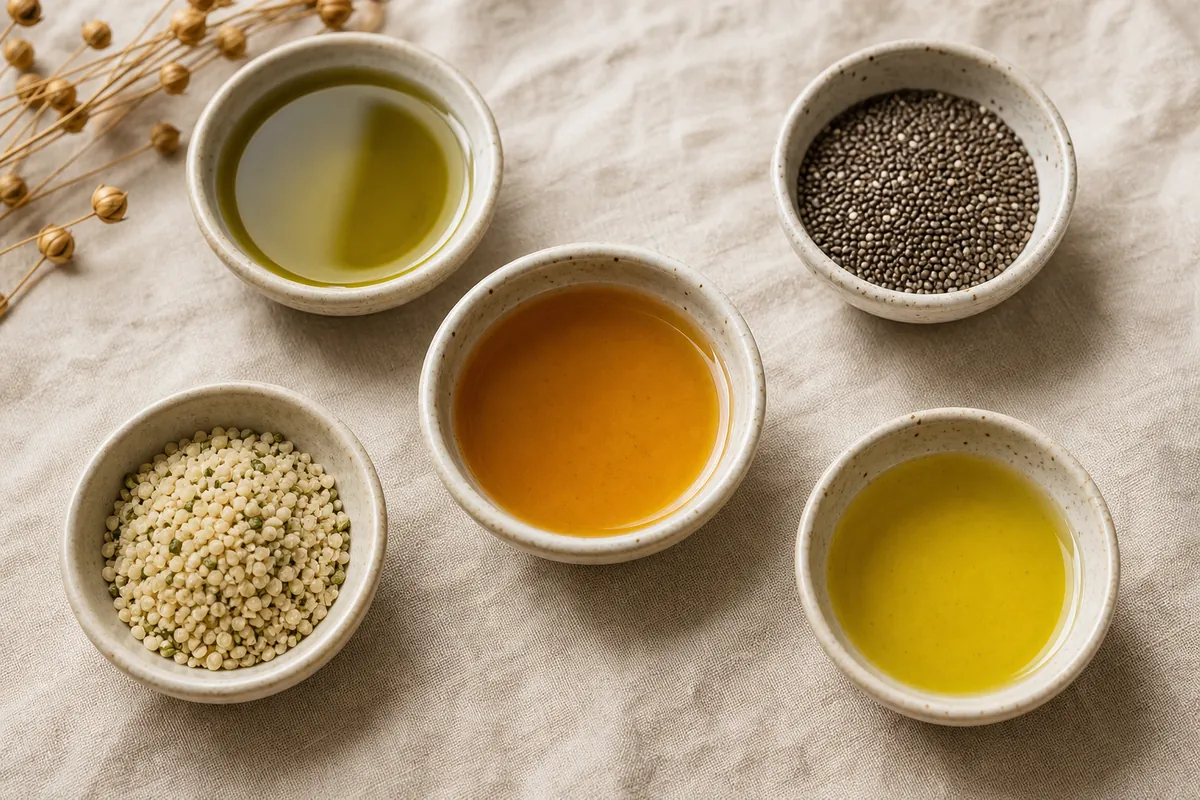
5 Best Flaxseed Oil Substitutes (Ranked)
Ingredients
Method
- Decide your use-case: cold dressing/drizzle (flavor matters) vs cooking/baking (heat stability matters).
- If the recipe needs a neutral oil for cooking or baking, choose canola oil or avocado oil as a direct 1:1 swap.
- If you want a mild flavor closer to flax’s light nuttiness, choose light olive oil 1:1 and keep flavor-dominant ingredients balanced.
- If you’re finishing with a nutty profile, use toasted sesame oil at the reduced ratio; stop short of high heat to avoid bitterness.
- For baking emergencies, melt butter first and swap 1:1; check batter thickness and thin with a teaspoon of water or milk if needed.
Notes
- Flaxseed oil’s delicate flavor and fatty acids are more sensitive to heat—substitute accordingly based on whether your recipe is heated.
- If you’re substituting for nutrition (not just flavor), prioritize minimal heat and shorter bake times.
Tried this recipe?
Let us know how it was!
Carrie is a food writer and editor with more than 15 years of experience. She has worked for some of the biggest names in the food industry, including Bon Appétit, Food & Wine, and Martha Stewart Living.
As the Editor in Chief of EpicureDelight, Carrie oversees all of the content on the site. She also manages the team of contributing writers and editors, who help to create delicious recipes, helpful tips, and informative articles that you’ll find on the site.
A native of the Chicago area, Carrie is passionate about all things food. She loves trying new restaurants and experimenting with new recipes in her kitchen. She’s also a graduate of the Culinary Institute of America, so she knows a thing or two about food!



