
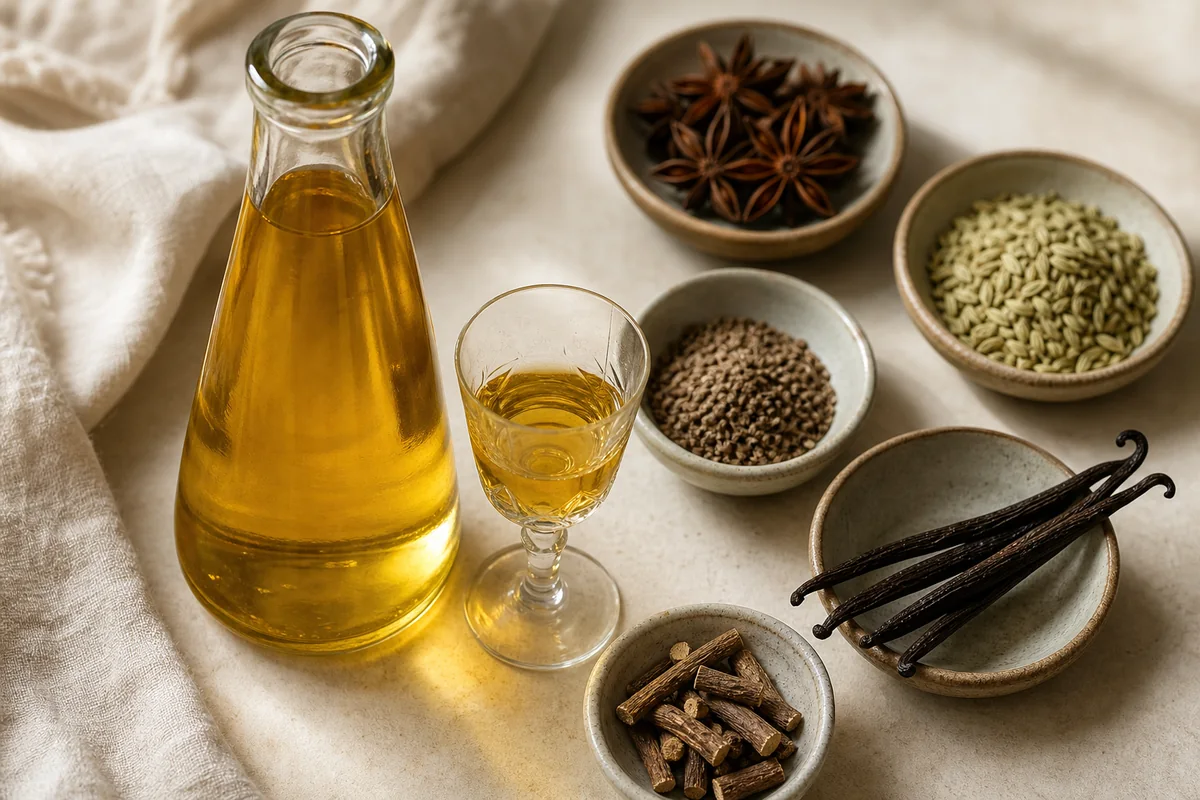
Galliano sits in a narrow flavor lane: sweet, herbal, and unmistakably anise-forward, with a vanilla thread that softens the whole thing. Most people don't stock it, yet recipes quietly call for it in Harvey Wallbangers, dessert glazes, and cream-based cocktails.
The right galliano substitute depends less on what you have and more on what role Galliano is playing in the dish.
Galliano is sweet, vanilla-forward, and anise-herbal. For cocktails, sambuca is the closest match. For baking without alcohol, mix vanilla syrup with a small amount of anise extract. Herbal liqueurs cover the aromatic-herb angle when licorice isn't the priority.
5 Best Galliano Substitutes Ranked by Flavor Closeness
Whether you're fixing a cocktail or a baked cream, the table below maps each substitute to its best use case. Start here, then read the H3 section for the one you choose.
| # | Substitute | Best For | Ratio | Key Note |
|---|---|---|---|---|
| 1 | Sambuca | Cocktails + Baking | 1:1 | Strong anise, reduce if sweet |
| 2 | Vanilla Syrup + Anise Extract | Baking + Desserts | ¾:1 | No alcohol, full control |
| 3 | Anisette / Pastis | Cocktails + Drinks | 1:1 | Reduce for delicate pastries |
| 4 | Herbal Liqueur (Bénédictine) | Baking + Cocktails | 1:1 | Less licorice, add vanilla |
| 5 | Dry Sherry + Vanilla | Desserts + Sauces | 1:1 | Depth without anise |
1. Sambuca
Sambuca is the single closest swap for Galliano in cocktails. It carries the same anise-licorice backbone, a noticeable sweetness, and just enough herbal lift to feel familiar in a glass.
If you want to know more about how sambuca's flavor behaves on its own, the sambuca flavor profile is worth a read before you substitute.
Sambuca
Works for: Harvey Wallbangers, cream-based cocktails, anise-forward baked goods
Skip if: your dessert can't handle a strong licorice note, choose vanilla-forward instead
- Starting ratio: Use 1:1 as a first pass, then taste before adding more.
- Sweetness check: Sambuca is often sweeter than Galliano; reduce by 1-2 teaspoon in already-sweet recipes.
- Best contexts: Cocktails and cream sauces first, baked goods second (the anise sharpens under heat).
- Anise adjustment: If it reads too licorice-heavy, stir in a few drops of vanilla extract to soften the edge.
2. Vanilla Syrup + Anise Extract
This DIY pairing is the best non-alcohol path to Galliano's character. Vanilla syrup carries the sweetness and the perfume-like top note, while the seed-versus-extract tradeoff makes clear why extract is the right call here: it dissolves instantly and lets you control intensity drop by drop.
- Blend ratio: Start with ¾ tablespoon vanilla syrup plus 1-2 drops of anise extract per tablespoon of Galliano called for.
- Anise starting point: One drop is conservative. Taste, then add a second drop only if the licorice note is too faint.
- Best uses: Cakes, cupcakes, panna cotta, and pudding where alcohol body isn't needed.
- Sweetness note: If your recipe already has added sugar, cut vanilla syrup by 1 teaspoon to avoid over-sweetening.
Skip if your recipe specifically needs alcohol volume, such as a flambé or a booze-forward cocktail. Use a liqueur-based substitute in those cases.
3. Anisette or Pastis
Anisette and pastis-style liqueurs are anise-forward by design, so they slot into Galliano's spot with minimal fuss. They tend to be lighter in herbal complexity than Galliano, but for most drinks that difference is barely noticeable.
If you're also working through anise-liqueur swaps more broadly, pastis and anisette often appear on the same shortlist.
- Starting ratio: 1:1 for cocktails and mixed drinks.
- Delicate pastries: Reduce to ¾:1 and taste; anise intensity can overpower subtle cream flavors.
- Mixed drinks: Works well in anything that already tolerates an anise note, such as a spritz or cream cocktail.
- Sweetness balance: Pastis can be less sweet than Galliano, so add 1 teaspoon simple syrup if the drink tastes sharp.
Skip if you need the vanilla-forward profile to lead; anisette puts licorice front and center.
4. Herbal Liqueur (Bénédictine-Style)
A Bénédictine-style herbal liqueur brings sweetness and botanical complexity that genuinely echoes Galliano's perfumed quality. It won't land the same licorice punch, but it covers the "something herbal and sweet" territory that Galliano provides when used as a finishing pour or a background note in baked goods.
The aromatic staying power of your vanilla extract matters here too, since you'll often add a touch of vanilla to round out this swap.
| Use | Ratio | Notes |
|---|---|---|
| Cocktails | 1:1 | Herbal liqueur + a few drops vanilla extract |
| Baked goods | ¾:1 | Reduce to avoid over-herbing; add vanilla to compensate |
| Cream desserts | 1:1 | Works well; vanilla addition is optional but recommended |
- Add vanilla: Stir in ¼ teaspoon vanilla extract per tablespoon of herbal liqueur to steer flavor toward Galliano's profile.
- Licorice gap: Accept that licorice intensity will be lower; this swap works best when the recipe doesn't depend on it.
- Cocktail tip: Works in drinks where Galliano is more about herbal sweetness than anise punch.
Skip if the recipe is built around strong anise or licorice notes. Sambuca or anisette will serve you better.
5. Dry Sherry + Vanilla
Dry sherry is a pantry-friendly fortified wine that contributes boozy warmth and mild nuttiness. Vanilla pushes the flavor toward sweetness and aromatic lift, together making something that mimics Galliano's "finishing pour" quality in desserts and sauces.
If you ever consider swapping the sherry itself, fortified wine alternatives follow similar logic.
Dry Sherry + Vanilla
Works for: tiramisù, custards, cream sauce reductions, warm baked desserts
Skip if: you need a licorice or anise note - this combo won't replicate it
- Starting ratio: 1:1 sherry by volume, then add ¼ teaspoon vanilla extract per tablespoon of sherry used.
- Avoiding sherry-forward taste: Don't exceed 1 tablespoon per serving; sherry's nuttiness becomes dominant above that point.
- Best contexts: Tiramisù, custard, and sauce reductions where boozy depth matters more than anise character.
- Sweetness note: Dry sherry is not sweet; add 1 teaspoon simple syrup if the recipe needs Galliano's sugar contribution.
Making Galliano Substitutes Taste Right
The two levers in any Galliano swap are sweetness and anise intensity, and they don't always move together. Sambuca, for example, brings both at once, while dry sherry brings neither, so you build them back in separately.
Understanding anise versus star anise differences also helps when you're tuning the licorice note in a baked or steeped substitute.
- Sweetness adjustment: If your substitute tastes thin or sharp, add simple syrup in 1 teaspoon increments until the sweetness matches Galliano's level.
- Anise intensity: Dial licorice down by using less of the anise component; dial it up with a single extra drop of anise extract before rescaling.
- When to add it: For cocktails, stir in last. For baking, add with wet ingredients. For finishing pours, drizzle after plating so the aroma stays bright.
Frequently Asked Questions
Sambuca is your first choice. It matches Galliano's anise-forward sweetness and alcohol body at a 1:1 ratio.
Yes. Mix vanilla syrup with 1-2 drops of anise extract, or steep star anise in hot water and blend with vanilla extract.
Use less of the anise component and add more vanilla. A small increase in vanilla syrup softens licorice intensity quickly.
Start at 1:1 for liqueur-based substitutes, then taste and adjust. Non-alcohol blends start at ¾:1 to avoid over-flavoring.
It can work in glazes and warm drinks, but you'll need extra vanilla to steer flavor away from citrus and back toward Galliano's sweetness.
5 Best Galliano Substitutes (Closest Match)
Ingredients
Equipment
Method
- Choose your use case: baking (flavor-first, less alcohol), cocktails (flavor + alcohol body), or finishing (sweet aromatic pour).
- Start with the closest ratio listed for your first pick, then adjust for sweetness and licorice strength.
- If your substitute tastes too licorice-forward, cut back anise intensity (less sambuca/anise extract) and add a touch more vanilla.
- If it tastes flat, brighten it: stir in a small splash of vanilla syrup (or a few drops of vanilla) to better mimic Galliano’s perfume-like sweetness.
- Taste-test before scaling: simmering or baking mutes top notes, so you may need a slight bump in aroma for baked goods.
Notes
- Galliano’s signature is sweet vanilla + herbal-anise/licorice notes, so matching both matters more than matching only one profile.
- For baking, alcohol evaporates but aromatic notes remain—concentrated non-alcohol swaps can still work well.
Tried this recipe?
Let us know how it was!
Carrie is a food writer and editor with more than 15 years of experience. She has worked for some of the biggest names in the food industry, including Bon Appétit, Food & Wine, and Martha Stewart Living.
As the Editor in Chief of EpicureDelight, Carrie oversees all of the content on the site. She also manages the team of contributing writers and editors, who help to create delicious recipes, helpful tips, and informative articles that you’ll find on the site.
A native of the Chicago area, Carrie is passionate about all things food. She loves trying new restaurants and experimenting with new recipes in her kitchen. She’s also a graduate of the Culinary Institute of America, so she knows a thing or two about food!



