
Garlic paste disappears fast. One recipe uses half a jar, and suddenly the next dish has nothing.
The right garlic paste substitute depends on two things: how much garlic punch you need and whether the texture matters. A marinade needs something spreadable.
A stir-fry can take a rougher mince.
Cooking stage matters too. Sharp, raw garlic flavor peaks when added late.
Mellow garlic flavor builds when cooked long and slow. Pick your swap based on both the texture requirement and the heat it will face.
For a quick swap, blend fresh minced garlic with a teaspoon of water or oil for the closest texture and flavor. Garlic powder slurry works when fresh is unavailable. Roasted garlic suits creamy dishes. Jarred minced garlic is the easiest shelf-stable option. Garlic chives add aroma when pungency would overpower.
5 Garlic Paste Substitutes Ranked by Flavor Match
Every substitute below earns its place by doing at least one thing garlic paste does: even flavor distribution, spreadable texture, or reliable garlic bite. Some hit all three.
Some nail just one, and that can be exactly enough.
| # | Substitute | Best For | Ratio | Key Note |
|---|---|---|---|---|
| 1 | Blended Fresh Minced Garlic | Both | 1:1 | Closest texture and punch |
| 2 | Garlic Powder Slurry | Both | 1:1 | Milder, even garlic flavor |
| 3 | Jarred Minced Garlic | Cooked | 1:1 | Drain brine before using |
| 4 | Roasted Garlic (Mashed) | Cooked | ¾:1 | Sweet, no raw sharpness |
| 5 | Garlic Chives (Minced) | Both | ¾:1 | Gentle aroma, less bite |
1. Blended Fresh Minced Garlic
This is the swap we reach for first. Mince fresh garlic finely, then blend it with 1-2 teaspoons of water or neutral oil until smooth, and you have something texturally and flavor-wise almost indistinguishable from store-bought paste. It carries the same raw punch.
If you want a two-ingredient combo that handles ginger-forward dishes too, the same blending technique applies to compound paste swaps worth knowing.
- Ratio: 1:1 by volume; one teaspoon paste = one teaspoon blended garlic
- Texture fix: Add water for a thinner, more spreadable paste; add oil if the recipe already has fat
- Stir-fry timing: Add 30 seconds later than paste to avoid harsh burned notes
- Marinade use: Works directly as a 1:1 drop-in with no adjustment needed
Skip if: you can't blend and the dish needs completely smooth, grain-free paste.
2. Garlic Powder Slurry
When fresh garlic is gone, garlic powder mixed with water or oil to a paste consistency is the fastest shelf-stable fix. The slurry hydrates the powder and rounds out the flavor, making it less dusty and more garlic-forward than dry powder alone.
If you're deciding whether powder is worth keeping stocked for situations like this, picking the right powder alternative is a useful next step.
- Mix ratio: ¼ teaspoon garlic powder + 1 teaspoon water = roughly 1 teaspoon paste
- Texture: Stir until fully dissolved; let sit 30 seconds so it thickens slightly
- Intensity fix: Powder is milder, so increase by 10-20% if the dish needs strong garlic presence
- Cook timing: Add 30-60 seconds earlier than fresh paste for deeper flavor development
- Storage: Mix only what you need; slurry doesn't hold well past a day
Skip if: your dish depends on raw, sharp garlic bite that powder simply cannot deliver.
3. Jarred Minced Garlic
Jarred minced garlic is convenient and genuinely garlicky, but it comes packed in brine or citric acid that can dull the flavor. Drain it on a spoon for 10-20 seconds before use and it behaves much closer to fresh paste. For dishes where you want bold heat alongside the garlic, spicy garlic sauce options are worth a look.
Jar Flavor vs Fresh Bite
Works for: stir-fries, soups, slow-cooked sauces, braised dishes where long heat mellows any brine
Skip if: delicate butter sauces or raw dressings where the preserved tang will be noticeable
- Drain method: Rest the spoon over the jar for 15 seconds; don't press or you lose volume
- Ratio: 1:1 by volume with garlic paste
- Browning watch: Jarred garlic browns faster due to residual sugar from the brine; lower heat slightly
- Flavor boost: Add a tiny pinch of salt after cooking if the garlic notes seem flat
4. Roasted Garlic (Mashed)
Roasted garlic is softer, sweeter, and much calmer than raw paste. It works best in creamy pasta sauces, soups, and spreads where that mellow depth is an asset rather than a compromise. The sharpness is gone entirely after roasting, so this is the right call when you want garlic flavor without bite.
If you need sharpness, this is not your swap.
- Ratio: ¾:1; roasted garlic is more concentrated by volume but sweeter, so slightly less reads right
- Mash method: Squeeze roasted cloves onto a board and press flat with the back of a fork until smooth
- Balance tip: Add a small pinch of salt and a few drops of lemon juice to bring garlic forward without adding sharpness
- Best dishes: Garlic bread, white bean soup, cream-based pasta, roasted vegetable mash
Skip if: your recipe needs raw, pungent garlic added at the end of cooking.
5. Garlic Chives (Minced)
Garlic chives deliver gentle garlic aroma without the concentrated punch of paste. They are best used when you want garlic in the background, not the front of the dish.
Before using them as your main garlic note, it helps to understand how they differ from regular chives. The chive variety comparison breaks that down clearly.
- Ratio: ¾:1; chives are milder so using less keeps the overall flavor balanced
- Mince finely: Rough chops leave grassy texture; a fine mince disperses the aroma evenly
- Early vs late: Add early for deeper cooked garlic flavor; add at the end for fresh, herb-like aroma
- Pairs well with: Eggs, mild stir-fries, light broths, tofu dishes
| Use | Ratio | Notes |
|---|---|---|
| Light stir-fry | ¾:1 | Add with aromatics at start; chives soften fast |
| Broth / soup | ¾:1 | Stir in last 2 minutes to keep aroma fresh |
| Egg dishes | ¾:1 | Works as a finish; no need to pre-cook |
Skip if: you need concentrated garlic intensity in a sauce where paste is the lead flavor.
Making Garlic Paste Substitutes Taste Like the Real Thing
The biggest mistake is treating every substitute like a drop-in and not adjusting cook time. Sharp swaps (fresh minced, jarred garlic) can go harsh if cooked too long at high heat.
Mellow swaps (roasted garlic, chives) can disappear into the background without a little help from salt or acid. Knowing how dry garlic flavor behaves at different temperatures helps you time the addition correctly.
- Sharp substitutes: Add 20-30 seconds later than the recipe says to avoid bitterness from over-browning
- Mellow substitutes: Stir in a pinch of salt and 2-3 drops of lemon juice or white vinegar to pull garlic flavor forward
- Texture substitutes (slurry or blended): Taste before adding more; they coat evenly and the flavor builds after a minute on heat
Frequently Asked Questions
Yes, minced garlic works 1:1 in most cooked dishes. For smooth texture, blend it with a teaspoon of water or oil first so it disperses evenly like paste.
Jarred minced garlic (drained) or blended fresh minced garlic both work well. Add either slightly later than you'd add paste to prevent burning at high heat.
No. Garlic powder is milder and lacks raw sharpness. Mixed into a slurry it comes closer, but increase the amount by 10-20% to compensate for the intensity gap.
Use ¾:1 instead of a full replacement, then add a pinch of salt and a few drops of lemon juice. That brings garlic forward without adding more sweetness.
It can, but use roughly double the amount since oil carries aroma without garlic solids. Add a pinch of salt or a few drops of vinegar to sharpen the flavor.
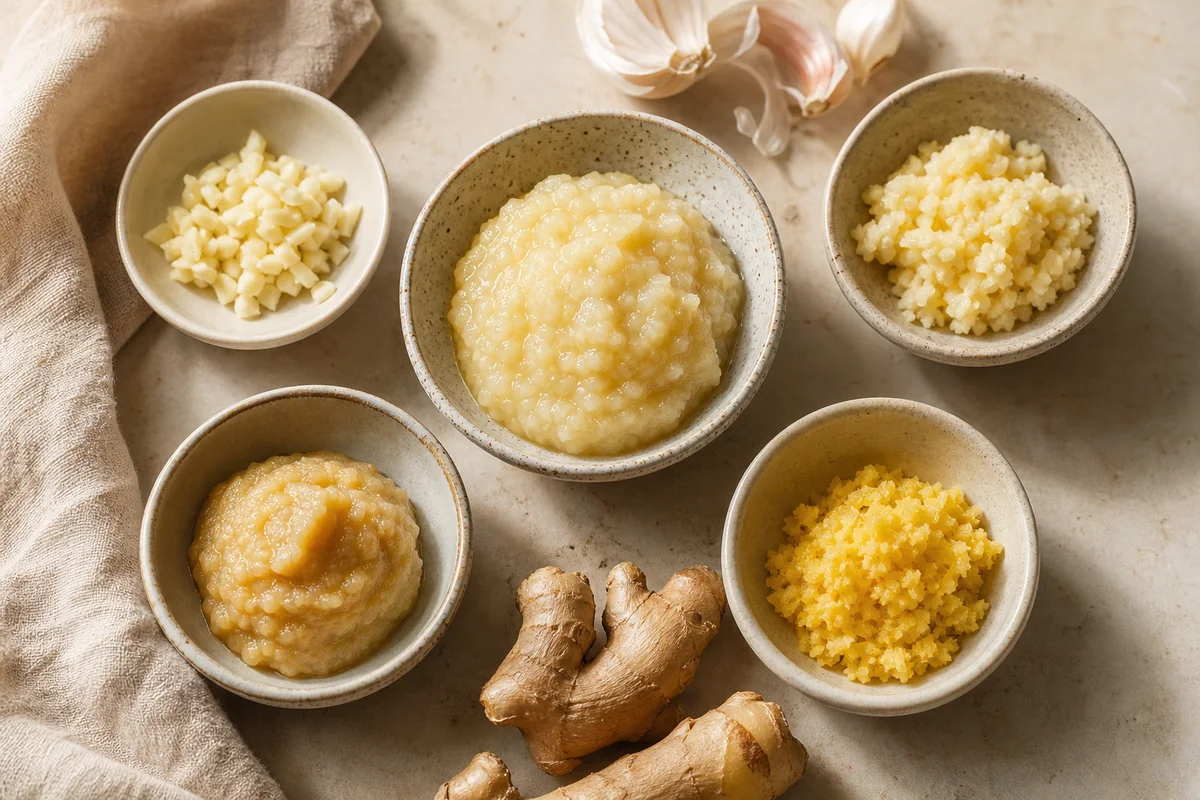
5 Best Garlic Paste Substitutes (Flavor-Matched)
Ingredients
Equipment
Method
- Match your goal: if you need smooth texture for marinades/sauces, blend fresh minced garlic; if you need quick flavor, use a garlic powder slurry.
- Use the listed ratio (paste-like swaps: 1:1; aromatic-only swaps like garlic-infused oil: use the higher amount).
- Adjust thickness: add 1–2 teaspoons water or neutral oil at a time until it spreads like paste.
- Adjust intensity: for sharper flavor, add the substitute later in the cook; for mellow flavor, cook longer or use roasted garlic.
- Taste and correct: add a pinch of salt or a few drops of lemon/vinegar to bring garlic forward if needed.
Notes
- Garlic intensity changes with cooking time—use shorter cooking for sharper swaps.
- Texture matters most when the recipe blends or marinates; otherwise, smaller mince works.
Tried this recipe?
Let us know how it was!
Carrie is a food writer and editor with more than 15 years of experience. She has worked for some of the biggest names in the food industry, including Bon Appétit, Food & Wine, and Martha Stewart Living.
As the Editor in Chief of EpicureDelight, Carrie oversees all of the content on the site. She also manages the team of contributing writers and editors, who help to create delicious recipes, helpful tips, and informative articles that you’ll find on the site.
A native of the Chicago area, Carrie is passionate about all things food. She loves trying new restaurants and experimenting with new recipes in her kitchen. She’s also a graduate of the Culinary Institute of America, so she knows a thing or two about food!



