Geoduck tastes mildly sweet and briny, with a clean clam flavor rather than a strong fishy one. Its siphon has a crisp firm snap, while the body meat is softer and becomes tough when cooked too long.
Thin raw slices show the clearest crunch, but raw shellfish carries foodborne illness risk. Brief heat changes the aroma and surface without requiring the long cooking that makes geoduck rubbery.

The unusual appearance does not predict a strong flavor. Cut and heat matter more because the crisp siphon and tender body respond at different speeds.
What Does Geoduck Taste Like?
A thin piece begins with a faint sea aroma and a small natural sweetness. Salinity follows, then the texture becomes more memorable than the short mineral finish.
The aroma should stay quiet
Fresh geoduck smells like clean cold seawater rather than oily fish. Sour, muddy, strongly fishy, or ammonia-like odor does not belong in the expected profile.
The siphon snaps before it chews
Thin siphon slices resist the teeth for a moment and then break cleanly. A thick piece stretches that resistance into a longer chew, even before cooking.
The body meat is softer and fuller in clam flavor. It lacks the sharp snap that makes the siphon popular for thin slices.
The finish stays short
Geoduck has less richness than an oyster and less dense sweetness than a scallop. Mussels also bring a fuller cooked shellfish aroma.
Acid, sesame, chili, or a light sauce remains easy to notice after the geoduck flavor fades.
Strong smoke, heavy cream, or much sugar can cover the mild sweetness completely. Seasoning should support the cut rather than prove how much sauce the dish can hold.
How Do the Geoduck Siphon and Body Differ?
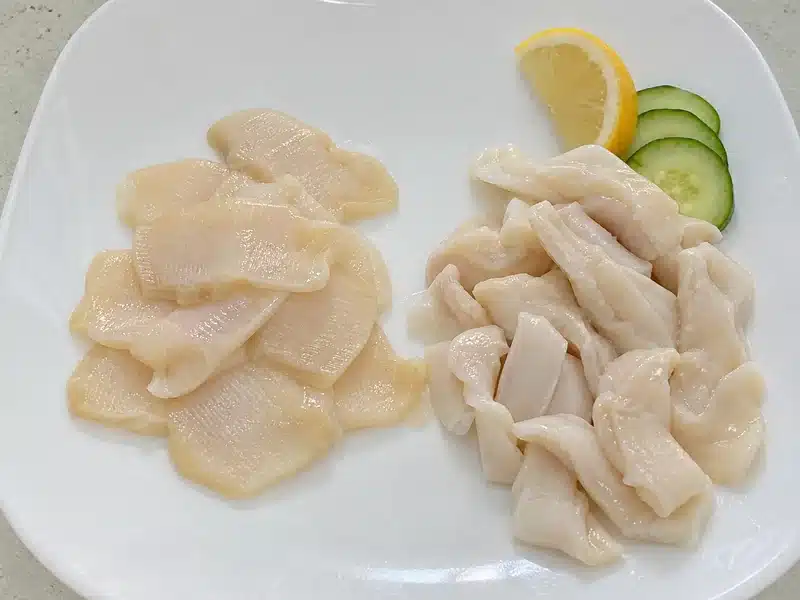
Geoduck has a long muscular siphon outside the shell and softer meat around the body. These parts contain different structures, so one cut and one cooking time cannot serve both well.
| Part | Texture | Useful cut | Heat response |
|---|---|---|---|
| Siphon | Firm and crisp | Thin slices across the fibers | Toughens quickly |
| Mantle edge | Springy and chewy | Small narrow strips | Stays firm |
| Body meat | Soft and tender | Bite-size pieces | Handles gentle cooking |
Cutting across the siphon shortens the fibers that the teeth must break. Long strips or thick coins can feel hard even when the product is fresh.
The tough outer siphon skin is normally removed during cleaning. The pale meat underneath provides the clean snap described in raw and briefly cooked dishes.
Keeping the parts separate also avoids waste. The siphon can provide crisp slices while the body goes into a warm dish near the end of cooking.
How Does Heat Change Geoduck?
The useful window between warmed and tough is narrow, especially for thin siphon pieces. Thickness and cut matter more than one universal cooking time.
Raw keeps the cleanest snap
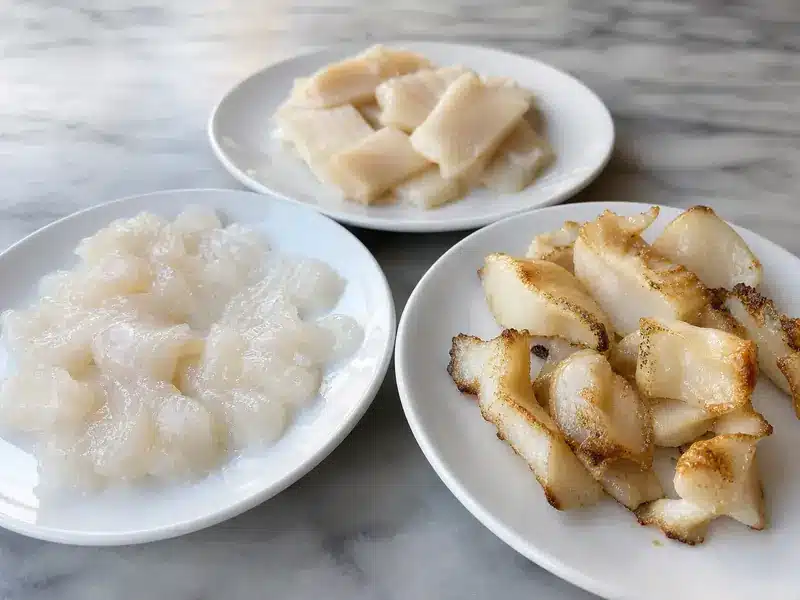
Thin raw siphon slices give the strongest contrast between mild brine and crisp texture. This option belongs only to properly handled shellfish from a certified source and does not remove the normal risk of raw molluscan shellfish.
Brief heat firms the surface
A quick blanch or short sear turns the surface more opaque and adds warmth without cooking the thin center for long. The body can take gentle heat and still remain tender.
Watch the edges and remove the piece once it firms. A thick slice needs a different judgment from a thin cross-cut piece.
Long heat makes the siphon rubbery
Muscle tightens as heat continues. Several extra minutes can turn the pleasant snap into a dense chew that more cooking will not reverse.
In soup, add small body pieces close to the end instead of boiling them for the whole pot. A tough siphon should be sliced thinner before the next cook rather than simmered longer.
How Can You Tell Whether Geoduck Is Fresh?
Large size does not guarantee quality. Source records, temperature control, clean aroma, and resilient flesh matter more than the length of the siphon.
- Clean sea aroma: Reject sour, ammonia-like, or strongly fishy odor.
- Firm moist flesh: Avoid dried dark edges, slime, or a surface that has lost tension.
- Cold handling: Refrigerated shellfish should still be cold when purchased and transported home.
- Shellfish tag or processor label: Source information supports traceability to an approved growing and handling system.
- Intact package: Reject leaking, torn, swollen, or badly damaged packs.
A live whole clam may show movement and a responsive siphon, while cleaned meat cannot. Once the shell and skin are gone, rely on cold condition, aroma, firmness, and seller records.
Pacific geoduck, Panopea generosa, naturally has a siphon too large to retract fully into the shell. The unusual shape is normal and does not signal damage by itself.
Can You Eat Geoduck Raw Safely?
Geoduck is a molluscan shellfish and a filter feeder. Hazards in growing water and handling can reach a raw serving even when the meat looks clean and smells fresh.
Buy raw geoduck only from a commercial source that provides required shellfish identification and maintains cold storage. An attractive plate cannot prove where the clam grew or how it was handled.
People at higher risk of severe foodborne illness should avoid raw or undercooked shellfish. Thorough cooking is the safer choice, and freezing does not remove every microbial hazard.
Keep raw juices away from ready-to-eat food, boards, knives, and serving dishes. Wash hands, tools, and surfaces before they touch cooked food.
A certified source lowers risk through controlled harvest and handling, but it does not make raw shellfish safe for every person. Choose cooked geoduck when safety matters more than maximum snap.
What Flavors Pair Well with Geoduck?
Pairings work best when they brighten the clean brine or echo the texture. Heavy sauces suit the softer body better than the delicate sweetness of a thin siphon slice.
| Preparation | Pairing | What it adds | Failure to avoid |
|---|---|---|---|
| Thin raw siphon | Lemon, yuzu, or rice vinegar | Bright acid | Long marinating that changes texture |
| Raw or blanched siphon | Cucumber and radish | Cool matching crunch | Watery dressing |
| Quick sear | Chili and scallion | Heat and fresh aroma | Sauce that hides browning |
| Siphon or body | Sesame and light soy sauce | Nutty savory depth | Too much salt |
| Body meat | Clear broth | Warmth without a heavy coating | Long boiling |
Start with less seasoning than you would use for strong fish. Taste the dressed piece before adding more salt or acid.
Cream can carry the softer body in a restrained warm dish, but a thick coating hides the sweetness and makes the cut harder to recognize.
How Should You Taste Geoduck for the First Time?
When a reliable restaurant or supplier offers several preparations, begin with the least changed bite. A thin plain siphon slice establishes the brine and snap before sauce alters the comparison.
The snap is firmer than prepared jellyfish and cleaner than the dense chew of octopus.
It is also less soft than cooked sea cucumber and lacks the earthy richness found in cooked snails.
Move next to a lightly dressed piece with citrus or sesame. The added aroma should frame the clam rather than become the only flavor left in the mouth.
Finish with briefly warmed body meat or a quick-seared piece. That bite shows the softer texture and the small increase in cooked shellfish aroma.
Strong chili, smoke, cream, or sweet sauce belongs last because it can carry into the next sample. The order reveals more about geoduck than trying one heavily seasoned plate.
If raw service is not appropriate, compare blanched siphon, quick-seared siphon, and gently warmed body instead. The cut and heat contrast still answers the texture question.
Sources
- Washington Department of Fish and Wildlife Pacific geoduck profile
- FDA guidance for selecting and serving seafood safely
- FDA shellfish safety resources
Frequently Asked Questions
Does geoduck taste fishy?
Fresh geoduck tastes clean and lightly briny. A strong fishy, sour, or ammonia-like odor is a rejection cue.
What seafood tastes closest to geoduck?
Clams share the mild brine, while razor clams offer a partial texture comparison. Geoduck siphon remains crisper than most clam meat.
Why is geoduck pronounced gooey-duck?
The English spelling came from a Lushootseed word. The common pronunciation sounds like gooey-duck even though the animal is a clam.
Can you eat the whole geoduck?
The cleaned siphon, mantle, and body meat are edible. The shell, tough outer skin, and internal waste are removed during cleaning.
Is farmed geoduck different from wild geoduck?
Both can be the same Pacific species. Growing area, handling, size, and preparation often affect the experience more than the farmed or wild label alone.

Carrie is a food writer and editor with more than 15 years of experience. She has worked for some of the biggest names in the food industry, including Bon Appétit, Food & Wine, and Martha Stewart Living.
As the Editor in Chief of EpicureDelight, Carrie oversees all of the content on the site. She also manages the team of contributing writers and editors, who help to create delicious recipes, helpful tips, and informative articles that you’ll find on the site.
A native of the Chicago area, Carrie is passionate about all things food. She loves trying new restaurants and experimenting with new recipes in her kitchen. She’s also a graduate of the Culinary Institute of America, so she knows a thing or two about food!