
Ginger paste is doing two jobs in your recipe at once: delivering sharp, fresh-ginger heat and blending smoothly into the dish without visible chunks. When you run out, the best ginger paste substitute is whichever option matches the job your recipe needs most.
Texture matters more than people expect. A swap that's too wet thins a sauce fast, and one that's too dry can leave hot, grainy pockets in a marinade.
Ratios and a little prep work solve both problems. The options below cover every situation, from a 1:1 fresh-ginger swap to a pantry-staple emergency fix.
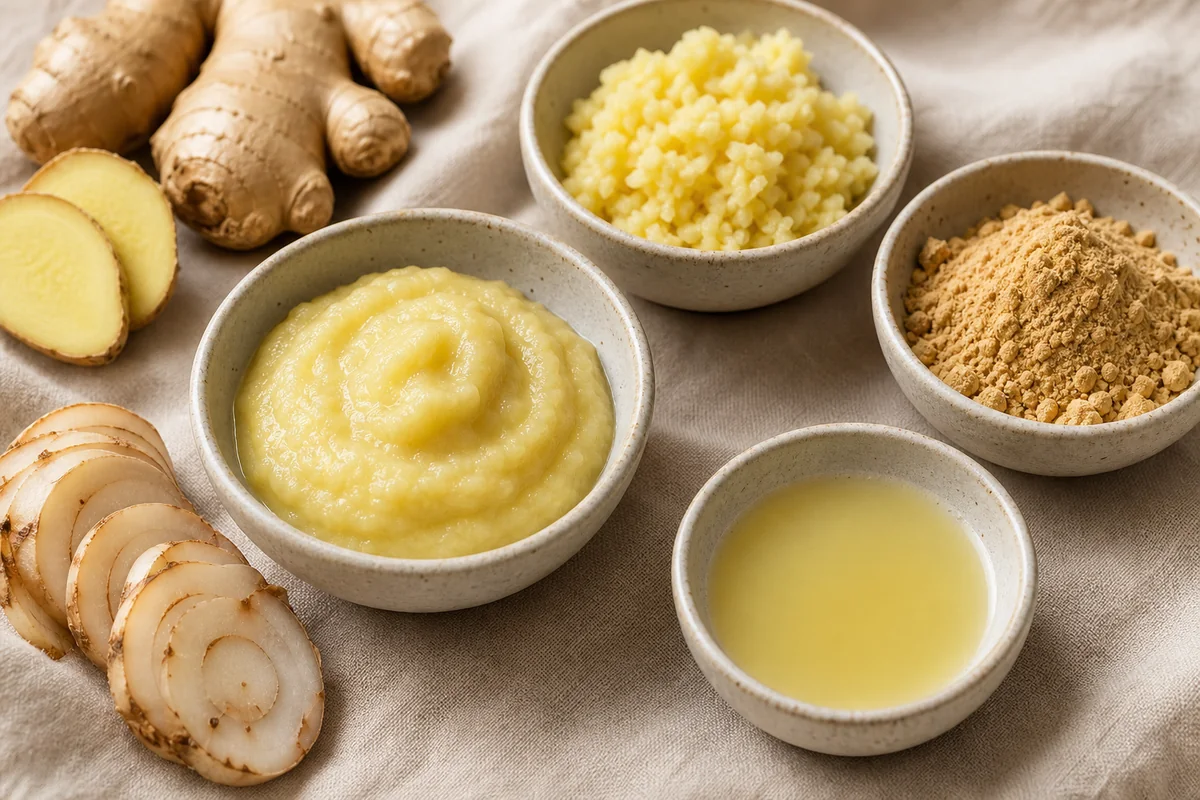
The five best substitutes for ginger paste are fresh grated ginger (squeezed), minced ginger, jarred ginger (drained), ground ginger (rehydrated), and ginger powder (bloomed in warm water). Fresh options work 1:1. Dried forms need less volume and a splash of water to mimic paste texture.
The Best Ginger Paste Substitutes (Plus Easy Ratios)
The ratios below are starting points. A 1:1 swap works for fresh forms, but dried ginger is more concentrated per unit, so you use less of it.
If your substitute is sweeter than expected (jarred ginger, for example), reduce any added sugar in the recipe by the same small amount.
| # | Substitute | Best For | Ratio | Key Note |
|---|---|---|---|---|
| 1 | Fresh ginger (grated, squeezed) | Both | 1:1 | Squeeze out excess liquid |
| 2 | Minced ginger (very fine) | Both | 1:1 | Chop finer than you think |
| 3 | Jarred ginger (drained) | Savory | ¾:1 | Drain well, reduce sweeteners |
| 4 | Ground ginger (rehydrated) | Baking | 1:2 | Mix with warm water first |
| 5 | Ginger powder (bloomed) | Baking | 1:3 | Add gradually and taste |
Dried substitutes always need a little water to cling properly. A paste that pools or evaporates too fast usually means the swap was added without any moisture adjustment.
1. Fresh Ginger (Grated and Squeezed)
Grated fresh ginger is the closest thing to ginger paste you can make without a blender. The grating breaks down the fibers fast, and squeezing out the excess liquid is what makes it behave like paste rather than a watery shred.
If you want to understand flavor profile details before committing to this swap, that comparison covers the sensory differences clearly. Use a microplane for the finest texture, then wrap the grated ginger in a small piece of cheesecloth or just press it hard against a strainer.
- Grate: Use a microplane or the finest side of a box grater; aim for a pulpy, fibrous result
- Squeeze: Press firmly over a bowl to remove excess juice, leaving a drier, denser mass
- Measure after squeezing: Use the same volume as the ginger paste the recipe calls for
- Add the reserved juice separately if the dish needs extra ginger brightness at the end
Skip if: You need a shelf-stable, no-prep option. Fresh ginger requires a minute of work and won't last more than a few days refrigerated.
2. Minced Ginger (Very Finely Chopped)
Finely minced fresh ginger delivers the same sharp bite as paste, and it softens into the dish during cooking. The key word is *finely*: a rough chop leaves noticeable chunks, but a very fine mince distributes flavor almost as evenly as a blended paste.
When swapping in fresh ginger for paste, take the mince down to almost a paste consistency by rocking the knife back over it several times. Adding a small pinch of salt while you mince draws out moisture and helps the pieces break down further.
- Chop size: Target pieces smaller than 1mm; re-chop twice if needed
- Salt trick: Add a pinch of salt during mincing to soften fibers and release juice
- Distribution: Spread it across the pan or bowl evenly so no one bite is overwhelmingly sharp
- Standing time: In a marinade, 10 minutes of contact softens the mince further
Skip if: Your sauce needs to be completely smooth, like a silky restaurant-style curry base. Even fine mince leaves detectable texture there.
3. Jarred Ginger (Drained)
Jarred ginger is a real time-saver, but it almost always comes packed in syrup or a light brine that adds sweetness and extra moisture. That liquid, left in, will both thin your dish and push it slightly sweet.
For choosing a milder swap in a drink-based recipe, the liquid from the jar is sometimes fine. In a savory stir-fry or marinade, drain it thoroughly and pat the pieces dry before measuring.
- Drain first: Press jarred ginger pieces against a strainer for 30 seconds
- Blend if needed: A 10-second pulse in a small blender or food processor gives it a paste-like texture
- Reduce sweeteners: Cut any added sugar or honey in the recipe by 1 teaspoon to compensate
- Ratio: Use ¾ the amount called for, then taste and adjust up
Skip if: You're keeping the dish strictly savory with no added sugar at all. Even well-drained jarred ginger carries some residual sweetness.
4. Ground Ginger (Rehydrated)
Ground ginger has a rounder, warmer flavor than fresh ginger paste. It lacks the sharp, almost citrusy brightness you get from fresh, but in baked goods and slow-cooked dishes that difference is barely noticeable.
To mimic paste, mix ground ginger with just enough warm water to form a loose, clinging paste, about ½ teaspoon water per ¼ teaspoon ground ginger. That step matters because dry ground ginger disperses unevenly and can hit certain bites hard.
The paste-versus-powder comparison goes deeper on where each form performs better. Use half the volume of ground ginger that the recipe asks for in ginger paste, then rehydrate that measured amount before adding.
Skip if: You want the same punchy, fresh-ginger bite in a raw preparation or quick sauce. Ground ginger reads duller in those contexts.
5. Ginger Powder (Bloomed in Warm Water)
Ginger powder is the gentlest of the five options. It is more refined than ground ginger in texture but still lacks the sharpness of fresh.
Add too much and the dish goes flat and earthy; add too little and you lose ginger flavor entirely.
Blooming it first in this smooth paste approach prevents powdery specks and helps the flavor distribute evenly throughout the dish.
Use Less, Not More
Works for: baked goods, slow braises, spiced sauces where ginger is background flavor
Skip if: ginger is the dominant flavor or the dish is served fresh without cooking time
- Bloom ratio: Mix ¼ teaspoon ginger powder with ½ teaspoon warm water; let it sit for 2 minutes
- Start small: Use ⅓ the volume of ginger paste the recipe calls for, then taste
- Add mid-cook: Stir the bloomed paste in during cooking so heat rounds the flavor out
- Lift if flat: A small squeeze of lemon juice or a pinch of salt sharpens a muted result
Making Ginger Paste Substitutes Work in Real Recipes
The swap you pick is only half the work. Applying it at the right moment and controlling moisture are what keep your dish on track.
When replacing fresh ginger in a cooked dish, early addition rounds the flavor while late addition keeps it bright.
- Timing: Add fresh-form swaps (grated, minced) early in cooking to mellow sharpness; add dried-form swaps mid-cook so they have time to hydrate and bloom
- Texture control: Squeeze or drain any substitute before measuring so you're replacing paste volume, not liquid volume; this prevents sauces from thinning
- Taste adjustment: If the swap tastes flat, stir in a pinch of salt first, then a small splash of rice vinegar or lemon juice to restore brightness
Frequently Asked Questions
Fresh grated ginger that has been squeezed dry is the closest 1:1 swap. It matches both the flavor intensity and the thick, paste-like consistency when excess liquid is removed.
Drain the jarred ginger well and reduce other sweeteners in the recipe by about 1 teaspoon. Use ¾ the amount the recipe calls for and taste before adding more.
Yes, but use half the volume and rehydrate it with a small splash of warm water first. Ground ginger reads warmer and less sharp, so it works best in baked or slow-cooked dishes.
Yes. Squeezing removes excess juice that would thin your sauce. Save the juice separately and add it at the end if you want brighter ginger flavor.
Mix ginger powder with just enough warm water to form a loose paste, then let it sit for 2 minutes before using. This blooming step prevents dry, powdery pockets in the finished dish.
5 Best Ginger Paste Substitutes (That Actually Work)
Ingredients
Equipment
Method
- Identify what the ginger paste must do in your dish: bright flavor, thick texture, or quick convenience.
- Start with the closest ratio from the table (1:1 best matches). If your substitute is wetter, drain/squeeze to prevent thinning.
- If using dried ginger (ground ginger or ginger powder), re-hydrate with a small splash of warm water until it forms a loose paste.
- Adjust at the end: add a pinch of salt to lift flavor, or a small splash of vinegar/acid if the swap tastes dull.
- Taste before serving and fine-tune—ginger substitutes vary a lot in sharpness and sweetness.
Notes
- For the closest match in stir-fries and marinades, squeeze grated ginger to reduce extra liquid.
- For sauces where texture matters less, minced ginger or jarred ginger often works better than relying on ground ginger alone.
Tried this recipe?
Let us know how it was!
Carrie is a food writer and editor with more than 15 years of experience. She has worked for some of the biggest names in the food industry, including Bon Appétit, Food & Wine, and Martha Stewart Living.
As the Editor in Chief of EpicureDelight, Carrie oversees all of the content on the site. She also manages the team of contributing writers and editors, who help to create delicious recipes, helpful tips, and informative articles that you’ll find on the site.
A native of the Chicago area, Carrie is passionate about all things food. She loves trying new restaurants and experimenting with new recipes in her kitchen. She’s also a graduate of the Culinary Institute of America, so she knows a thing or two about food!



