
Green peppercorns have a two-part flavor that's easy to miss until it's gone. They bring peppery heat, yes, but also a fresh, slightly tangy brightness that black pepper alone can't deliver.
That tang comes from harvesting peppercorns early, before they dry and mellow into the familiar black version. The result is something softer in heat but livelier in flavor, with a light briny lift that works especially well in pan sauces and cream reductions.
When you can't find them, you need a solid green peppercorn substitute that covers both sides: the pepper base and the tang. The five ranked options below each address both, with clear guidance on when to use them and when to skip.
Green peppercorns offer peppery heat plus a tangy, slightly briny lift. No single spice replicates both at once, so the best swaps pair a pepper base (black or pink peppercorns) with a tang source (brine, vinegar, or capers). The closest match is jarred green peppercorns; the fastest is black pepper plus a small vinegar splash.
5 Best Green Peppercorn Substitutes Ranked
A quick note before the table: most of these work by splitting the job in two. One ingredient handles the pepper heat; another handles the tang.
Matching those two elements is the key to getting close.
| # | Substitute | Best For | Ratio | Key Note |
|---|---|---|---|---|
| 1 | Jarred Green Peppercorns + Brine | Both | 1:1 | Add brine to taste |
| 2 | Black Peppercorns + Vinegar/Citrus | Both | 1:1 + ¼ teaspoon acid | Add acid off-heat |
| 3 | Dried Green Peppercorns (rehydrated) | Both | ¾:1 | Soak 5-10 minutes |
| 4 | Capers (chopped) + Black Pepper | Both | ¾:1 | Drain well first |
| 5 | Pink Peppercorns + Vinegar Splash | Both | 1:1 | Lighter, floral heat |
1. Jarred Green Peppercorns
This is the obvious first choice if you have a jar but are running low. The peppercorns themselves are a 1:1 swap; the real bonus is the brine sitting in the jar.
A splash of that brine, about 1 teaspoon, adds the exact tangy-salty note that fresh green peppercorns bring to a sauce. It's worth knowing how those brined jarred peppercorns age and change over time, especially if yours have been open a while.
- Where to use it: Pan sauces, cream reductions, steak au poivre, or any recipe calling for whole green peppercorns
- How to measure: Use the same quantity of peppercorns as the recipe calls for, then add brine 1 teaspoon at a time
- Timing tip: Stir the brine in at the very end, off-heat, to preserve its brightness without cooking away the tang
Skip if: You've actually run out of jarred green peppercorns entirely. In that case, move to option 2 or 4.
2. Black Peppercorns + Tang Boost
Black peppercorns cover the heat side cleanly. What they miss is the brighter, fresher note, so you add that separately with a small splash of white wine vinegar, apple cider vinegar, or fresh lemon juice.
This combo works well when crushing whole peppercorns into a sauce because you still get the visual specks plus the flavor lift.
- Ratio: Use black pepper 1:1 by volume, then add ¼ teaspoon of white wine vinegar per tablespoon of pepper
- When to add the acid: Always add vinegar off-heat first; if the dish simmers after, reduce it to just 30 seconds or the acid sharpens
- Cream sauces: Use lemon juice instead of vinegar; it integrates more gently without curdling risk
- Tomato-based sauces: Apple cider vinegar blends well here since the sauce already carries acidity
Skip if: You need visible whole peppercorn specks as a garnish. Ground black pepper won't deliver that look.
3. Dried Green Peppercorns
Dried green peppercorns are the shelf-stable version of the real thing. They taste sharper and less tangy straight from the jar, but a short soak changes that significantly.
Rehydrated (soaked 5-10 min)
Works for: whole-peppercorn sauces, pan reductions, and any dish where you want the speck and the burst of flavor intact
Skip if: you need the substitute ready in under 2 minutes
Ground Dry (no soaking)
Works for: dry rubs, spice blends, or baked coatings where moisture is unwelcome
Skip if: you want the full tangy flavor profile-dry grinding loses most of the brightness
The flavor profile of these early-harvest peppercorns comes through much better after rehydration than when ground from dry.
- Soaking method: Cover with hot water or hot stock for 5-10 minutes, then drain and use whole or lightly crushed
- Timing: Add rehydrated peppercorns in the last 3-4 minutes of cooking so they don't turn mushy
- Texture note: They won't be as plump as jarred, but the flavor is close enough for most sauces
Skip if: You're in a hurry. The soak takes time. Use option 2 instead.
4. Capers + Black Pepper
Capers are not a pepper substitute on their own. They're a briny-tang add-in that pairs with cracked black pepper to rebuild the two-part character of green peppercorns.
For recipes where salty swaps work, briny caper alternatives follow the same logic: a little goes a long way. Drain and chop capers finely before adding so they distribute evenly rather than landing in clumps.
- How to chop: Drain well, then mince or rough-chop to about half the size of a whole green peppercorn
- When to add: Last 1-2 minutes of cooking only; long heat kills the bright tang and softens the texture too much
- Ratio: Use ¾ of the volume capers compared to green peppercorns called for, plus an equal volume of cracked black pepper
- Salt adjustment: Capers carry a lot of sodium; hold back any added salt until you've tasted with them in the dish
Skip if: Your recipe needs a neutral, clean tang. Capers have a distinctive brine edge that can read as "fishy" or "pickled" in delicate sauces.
5. Pink Peppercorns + Vinegar Splash
Pink peppercorns are softer in heat and carry a slightly floral, warm note that reads differently from green peppercorn's cleaner bite. They're the most visually similar option and work well as finishing specks in cream sauces.
Choosing a pepper with a floral edge suits some dishes more than others, so this swap works best when you want brightness without intensity.
- Ratio: Use 1:1 by volume, crushed lightly just before adding
- Vinegar splash: Add ¼ teaspoon of white wine vinegar per tablespoon of pink pepper to restore the green-peppercorn-like brightness
- Avoid over-crushing: A rough crack, not a fine grind, keeps the texture visible and the flavor from turning dusty
- Best dishes: Steak, butter-pan sauces, mild chicken dishes, and cream reductions
Skip if: You dislike floral or mildly sweet pepper notes. Use option 2 (black pepper + vinegar) for a cleaner result.
Making Green Peppercorn Substitutes Taste Right
The core rule is simple: match the pepper heat first, then add the tang in small amounts after heating. Most mistakes happen when cooks add acid early and let it cook down too long, turning it sharp instead of bright.
When picking your best pepper base, keep in mind that whole cracked pepper holds up in long simmers better than pre-ground. For the vinegar side, knowing how to store and use this sharp white acid properly matters too, since old or oxidized vinegar can taste flat.
- Add tang last: Stir in vinegar, brine, or capers in the final 1-2 minutes, or off-heat entirely, so the acid stays bright rather than cooking into sharpness
- Manage salt carefully: Brine and capers both add sodium; season the rest of the dish lightly and taste with the substitute already in before salting further
- Preserve texture: If you want visible specks (like in steak au poivre), use whole or rough-cracked peppercorns, not ground; rehydrated dried green peppercorns and pink peppercorns both hold their shape well
Frequently Asked Questions
Jarred green peppercorns with their brine are the closest match. If unavailable, black peppercorns plus a small splash of white wine vinegar added off-heat is the next best option.
Yes, but the result will taste flatter and miss the tangy lift. Black pepper alone covers the heat; the tang is what makes green peppercorn sauces taste bright.
Add it off-heat or in the last 30 seconds. Lemon juice is gentler than vinegar in cream sauces and integrates without sharpening.
They can in delicate sauces. Use them finely chopped and in smaller amounts, about ¾ of the volume called for, then taste before adding more.
Rehydrated dried green peppercorns or pink peppercorns both hold their shape well. Chopped capers also work as visible texture pieces in finished sauces.
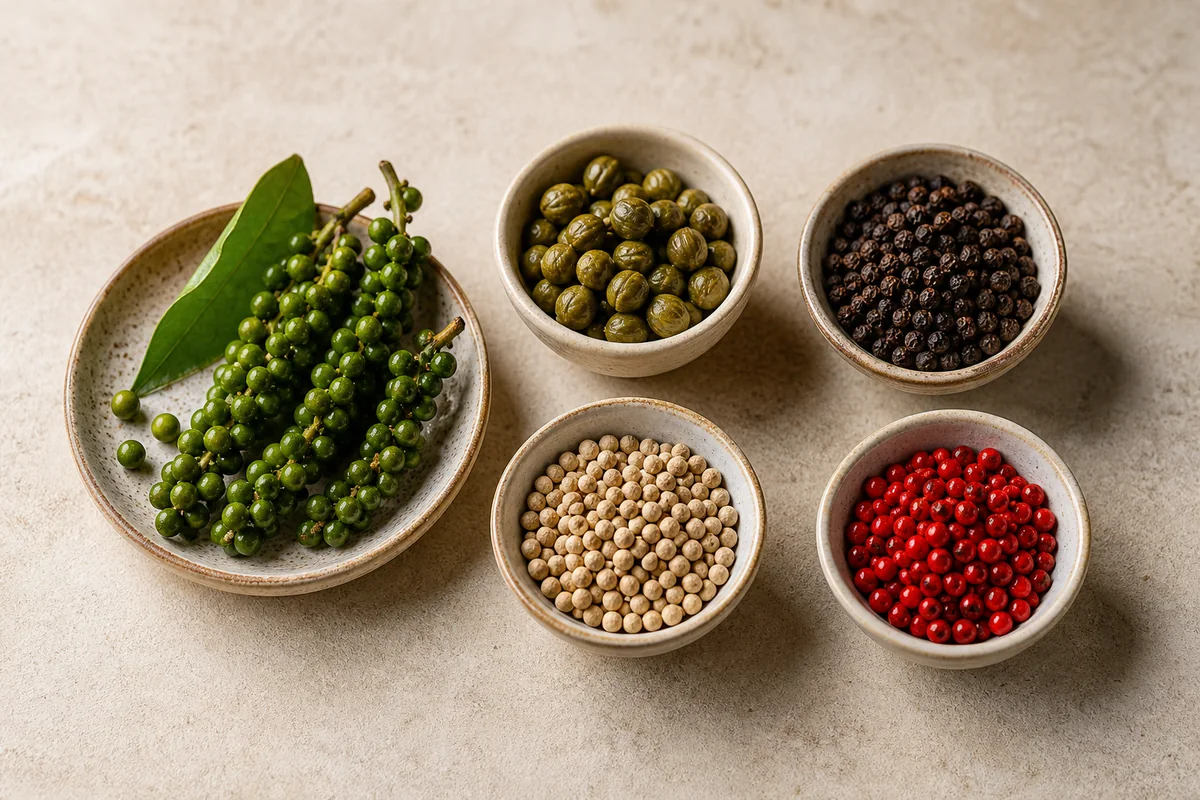
5 Best Green Peppercorn Substitutes (Ranked)
Ingredients
Equipment
Method
- Decide your texture need: whole specks for pan sauces vs. smooth tang for cream/butter sauces.
- Choose a “pepper base” (black or pink peppercorns) and a “tang source” (brine-like vinegar, capers, or rehydrated green peppercorns).
- Use the listed ratio, then taste: add tang in small increments (vinegar/capers/brine) to match the original bite.
- For sauce use, simmer gently 30–60 seconds after adding tang so the flavor rounds, not sharpens.
- If using chopped capers or crushed peppercorns, adjust salt only after tasting—briny items change overall seasoning.
Notes
- If your recipe specifically calls for whole green peppercorns for texture, avoid only using ground pepper—add capers or rehydrated dried green peppercorns for similar “bursts.”
- Add tang off-heat when possible; heat intensifies acidity and can make vinegar taste sharper.
Tried this recipe?
Let us know how it was!
Carrie is a food writer and editor with more than 15 years of experience. She has worked for some of the biggest names in the food industry, including Bon Appétit, Food & Wine, and Martha Stewart Living.
As the Editor in Chief of EpicureDelight, Carrie oversees all of the content on the site. She also manages the team of contributing writers and editors, who help to create delicious recipes, helpful tips, and informative articles that you’ll find on the site.
A native of the Chicago area, Carrie is passionate about all things food. She loves trying new restaurants and experimenting with new recipes in her kitchen. She’s also a graduate of the Culinary Institute of America, so she knows a thing or two about food!



