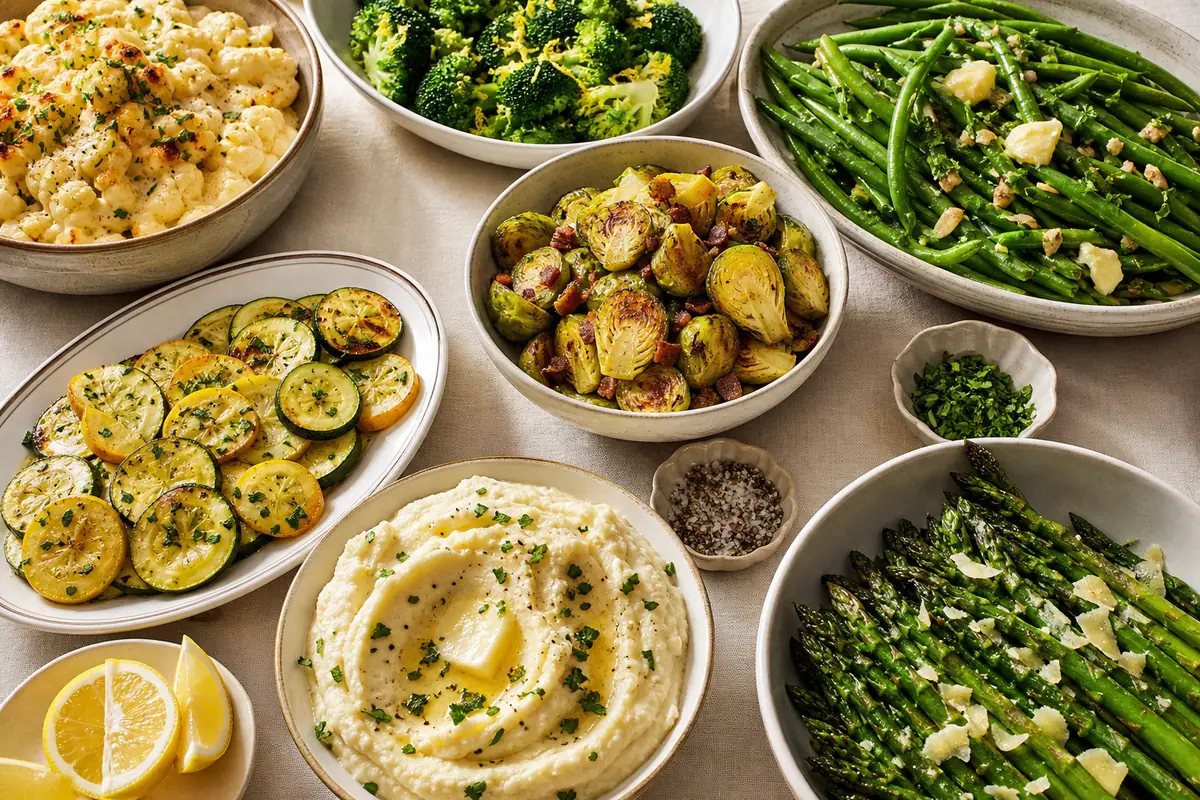
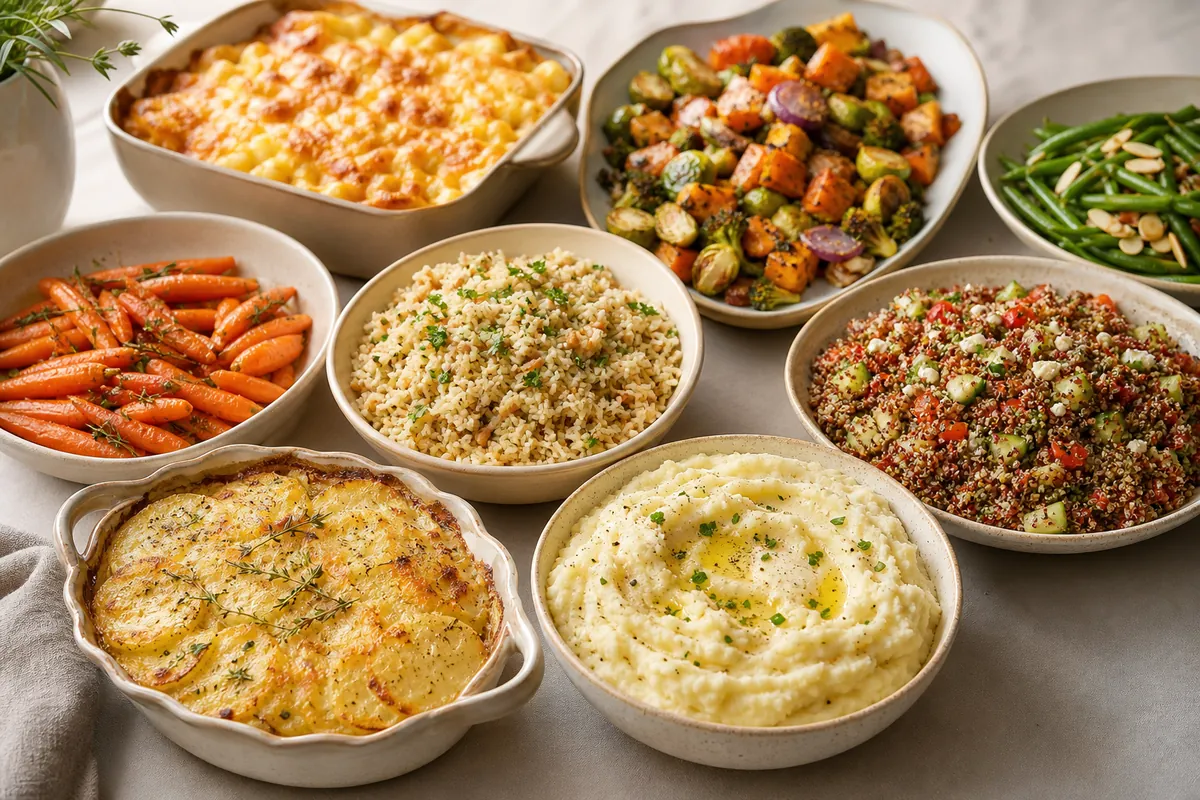
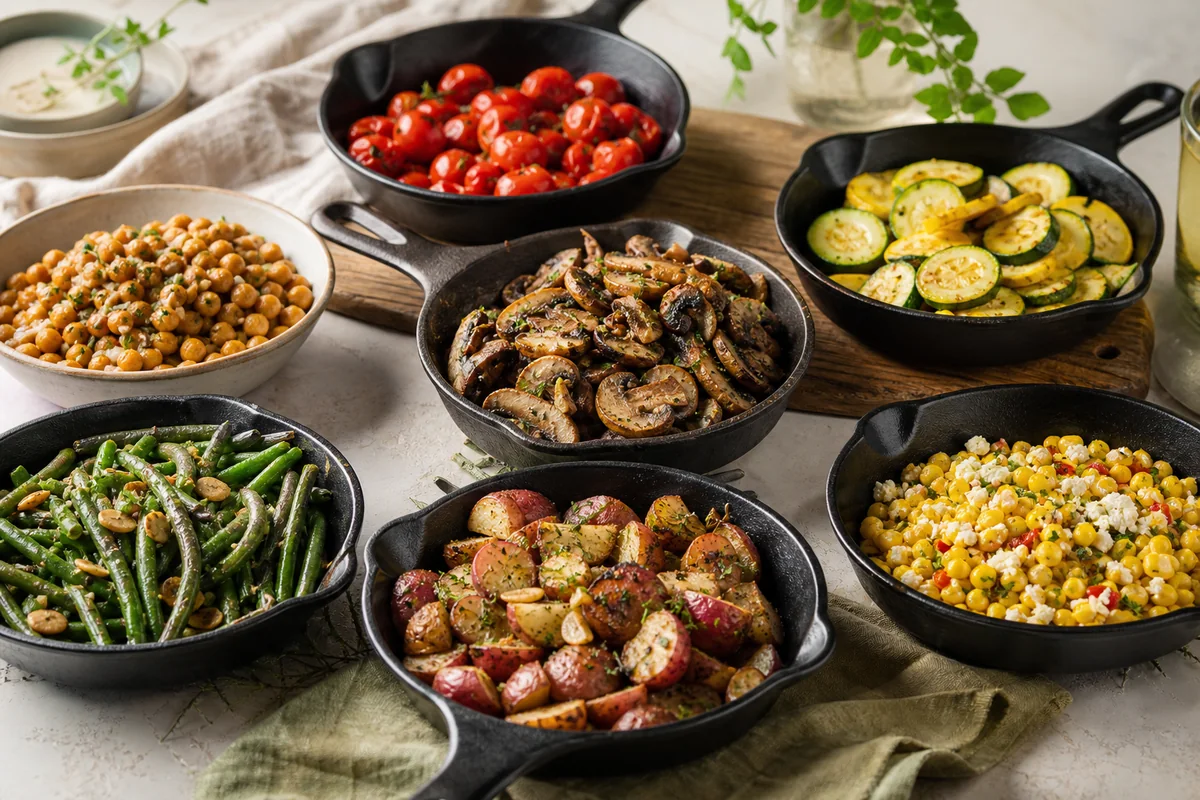
Ham steak works best with mustard green beans, warm vinegar potatoes, sauteed cabbage, or eggs. These sides cook quickly and balance the salty, smoky meat without turning a small skillet dinner into a holiday spread.
Choose one vegetable and one modest starch for dinner. At breakfast, eggs and fresh fruit can replace both.
Taste the browned ham before salting anything else. A cured steak can season potatoes or greens through its pan juices with no extra salt.

Mustard green beans are the best overall side for ham steak. Their snap and sharp dressing balance cured salt while staying fast enough for a weeknight skillet meal.
What Are the Best Sides for Ham Steak?
A ham steak is smaller and faster than a whole ham, so the strongest sides share that scale. Pick foods that finish in 25 minutes or can wait while the meat browns.
| Rank | Side | Best for | Prep |
|---|---|---|---|
| 1 | Mustard green beans | Any ham steak | Easy |
| 2 | Warm vinegar potatoes | Skillet dinner | Medium |
| 3 | Sauteed cabbage | Smoky ham | Easy |
| 4 | Roasted broccoli | Weeknight meal | Easy |
| 5 | Apple celery slaw | Sweet glaze | Easy |
| 6 | Buttered peas | Family dinner | Easy |
| 7 | Skillet sweet potatoes | Plain ham steak | Medium |
| 8 | Tomato cucumber salad | Warm weather | Easy |
| 9 | Soft polenta | Pan sauce | Medium |
| 10 | Roasted Brussels sprouts | Maple glaze | Easy |
| 11 | Corn and pepper saute | Summer dinner | Easy |
| 12 | Fried or poached eggs | Breakfast | Easy |
| 13 | Pineapple salsa | Spicy glaze | Easy |
| 14 | Small dinner rolls | Extra pan sauce | Easy |
1. Mustard Green Beans
Green beans keep a firm snap beside tender ham, and mustard gives the plate needed sharpness. A quick skillet saute or steam keeps this side inside the ham steak's short dinner clock.
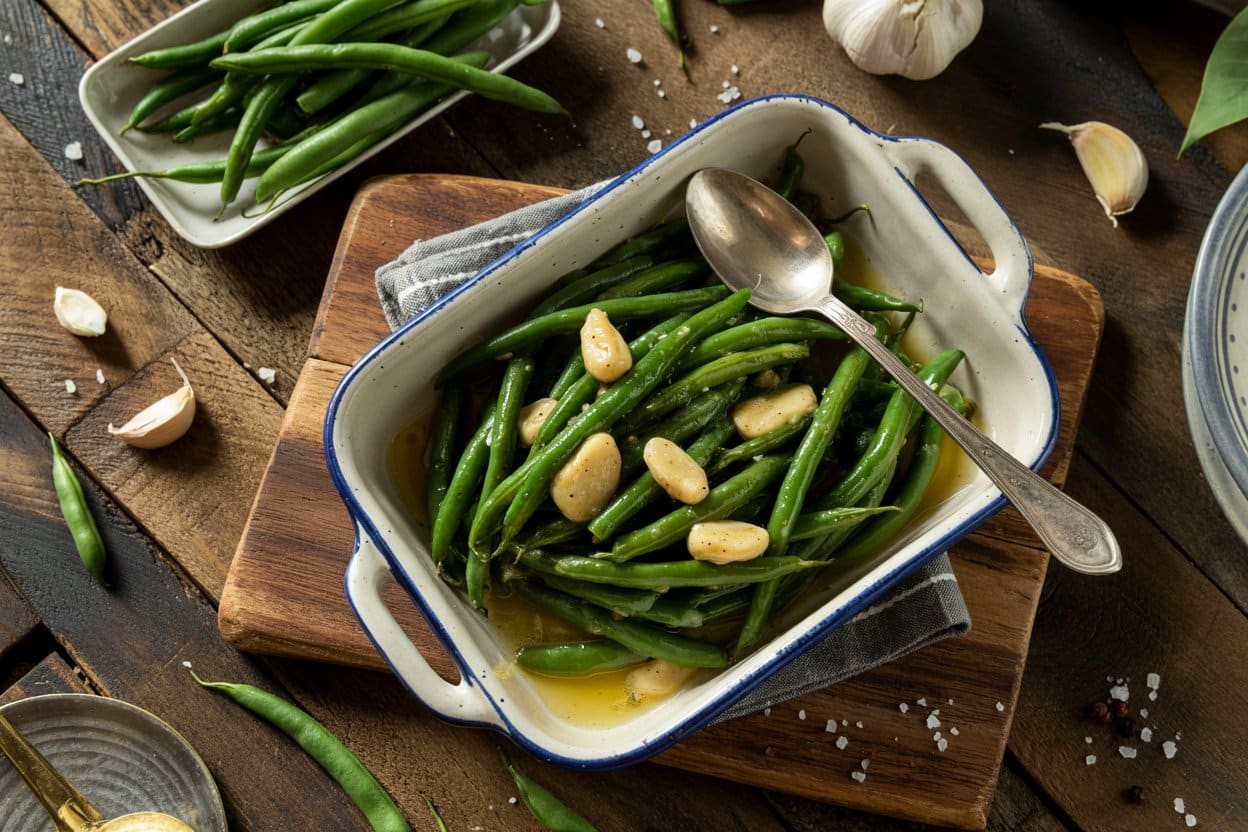
Use a vinaigrette or grainy mustard finish instead of cream sauce. Hold the salt until the beans and meat meet on the plate.
2. Warm Vinegar Potatoes
Warm potatoes catch the ham's browned juices, while vinegar stops the starch from feeling flat.
Waxy potatoes hold their shape better than a loose mash during quick skillet service.

Boil or steam them before the ham enters the pan.
Dress them while warm so the vinegar reaches the center.
3. Sauteed Cabbage
Cabbage turns sweet at its browned edges but keeps enough bite to stand beside cured meat. Apple cider vinegar brings the finish back toward savory.

Cook it in the ham pan after moving the steak to a plate. A spoon of water loosens the fond and helps the cabbage soften without extra fat.
4. Roasted Broccoli
Broccoli adds char and a dry, crisp top that contrasts with a glazed steak.
Lemon or red pepper flakes give it more lift than a cheese sauce.
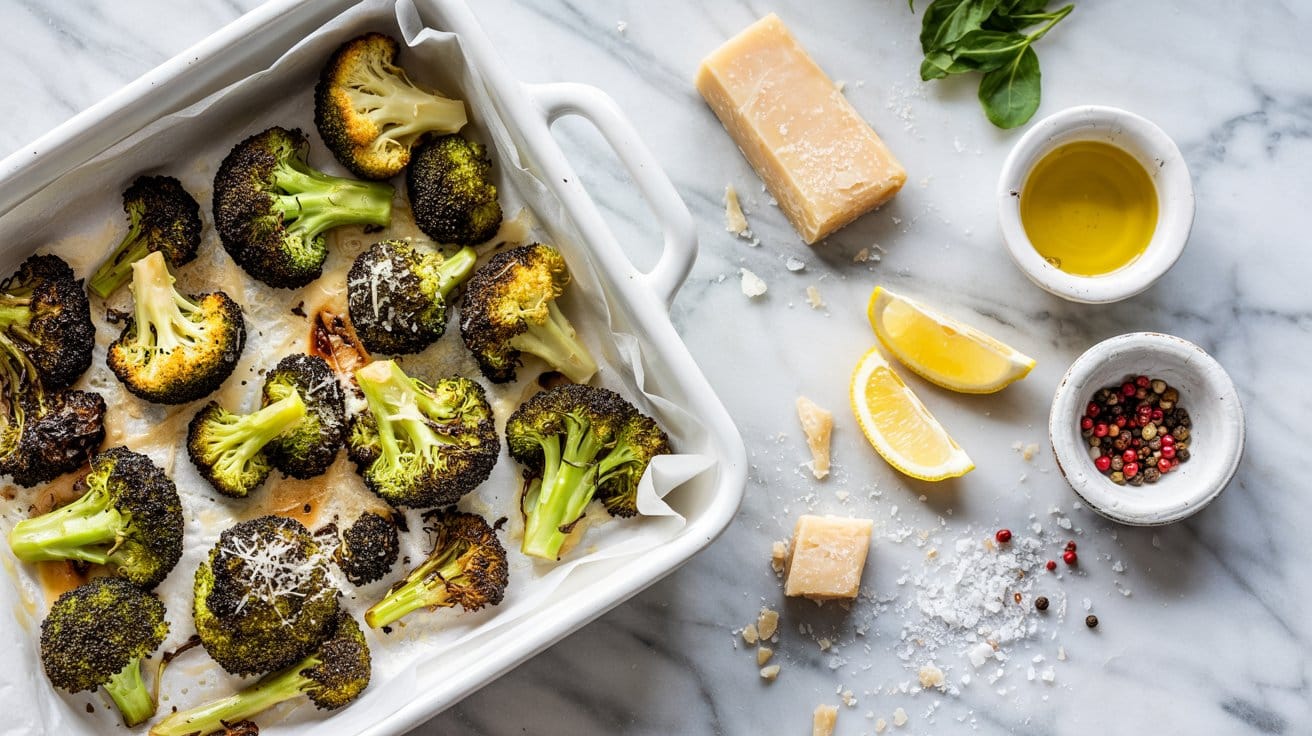
Start the tray before heating the ham because the vegetable needs more time.
The cooked florets can wait five minutes without losing their shape.
5. Apple Celery Slaw
Apple and celery bring cold crunch to a warm skillet meal.
A mustard vinegar dressing keeps the fruit fresh and avoids stacking sugar onto a maple or brown sugar glaze. Slice the apple shortly before serving or coat it with lemon.
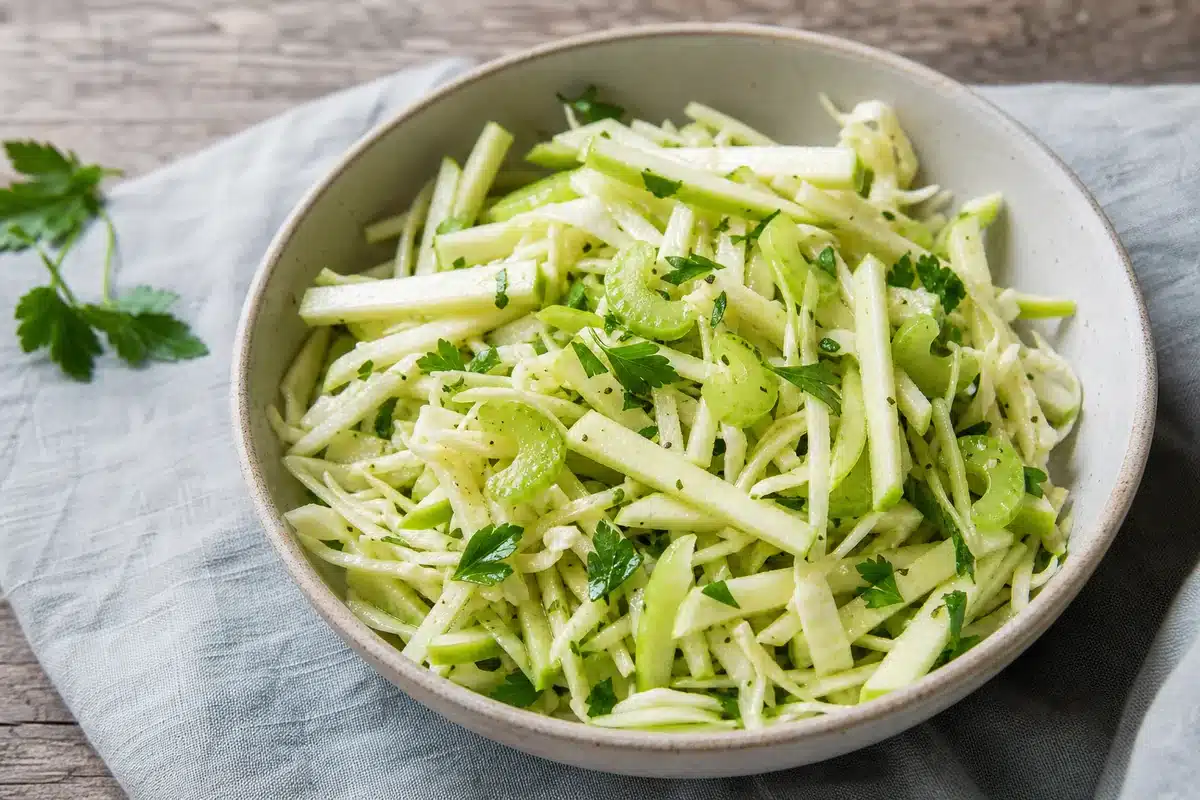
Keep the slaw chilled until the steak rests.
6. Buttered Peas
Peas offer a mild sweet note and take only minutes to warm. Mint or parsley keeps them fresh enough for a salty steak.

Use a small amount of unsalted butter. Bacon, cream, and a heavy cheese topping would repeat the richest parts of the main dish.
7. Skillet Sweet Potatoes
Sweet potatoes brown well in a covered skillet and make a plain smoked ham steak feel complete. Smoked paprika or black pepper steers their sweetness toward dinner.

Cut the cubes small and start them first.
Skip a sugary glaze unless the ham has no sweet finish of its own.
8. Tomato Cucumber Salad
Tomato and cucumber cool a hot plate and provide clean juice without cream. This side works especially well when the ham has a spicy mustard or pepper glaze.
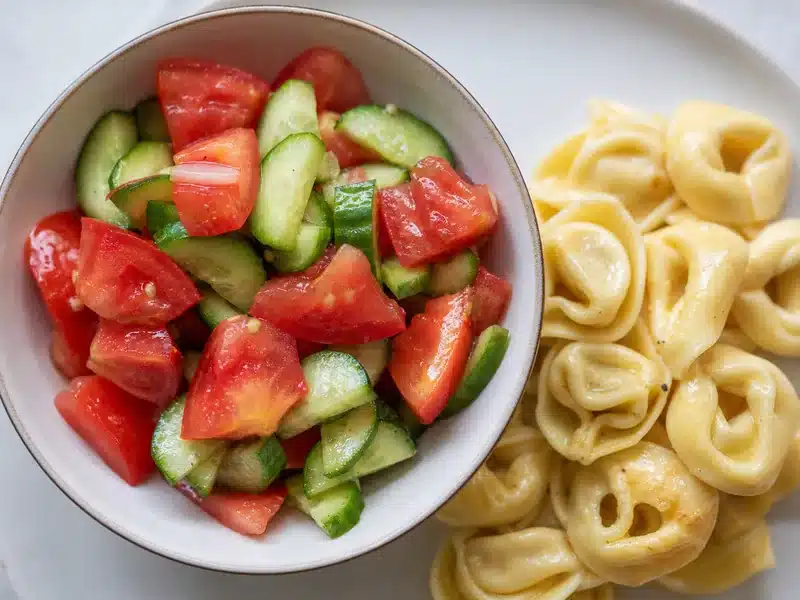
Salt it only at the table so the vegetables do not release a pool of liquid. Serve it in a small bowl if the plate holds pan sauce.
9. Soft Polenta
Polenta creates a mild base for savory ham juices and a few sauteed greens. Its soft texture suits a thicker steak with a deeply browned surface.

Keep the portion small because cornmeal and ham can make a filling meal. Use water or low-salt broth so the pan sauce controls the seasoning.
10. Roasted Brussels Sprouts
Brussels sprouts have bitter leaves and caramelized centers that work against a sweet glaze.
A splash of vinegar after roasting makes that contrast clearer.

Do not add maple syrup when the steak already has it.
The meal needs one sweet surface, not two.
11. Corn and Pepper Saute
Corn, bell pepper, and scallion form a colorful side in one skillet. Lime and black pepper prevent the corn's sweetness from taking over.
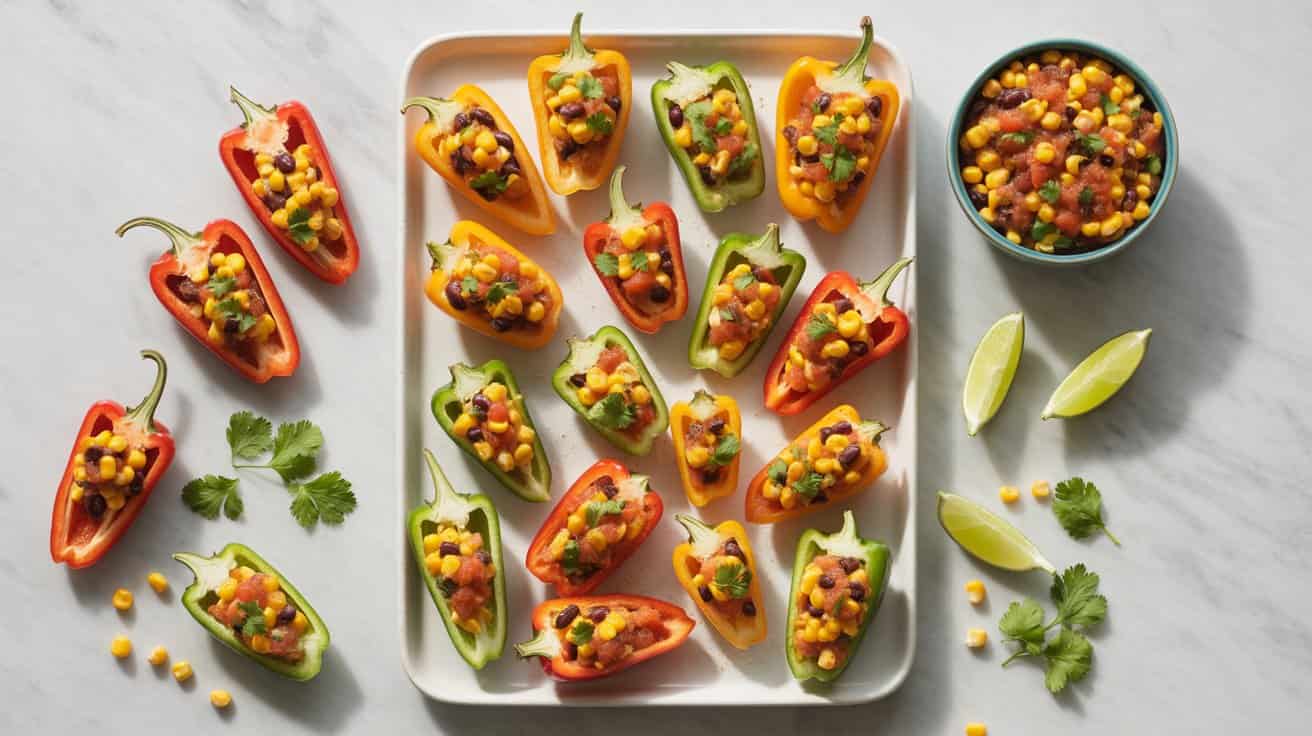
Cook the vegetables first and keep them warm in a bowl. The empty skillet is then ready for the ham steak.
12. Fried or Poached Eggs
Eggs turn ham steak into breakfast or a simple breakfast-for-dinner plate. Their soft yolks act like sauce, so toast and gravy are optional.
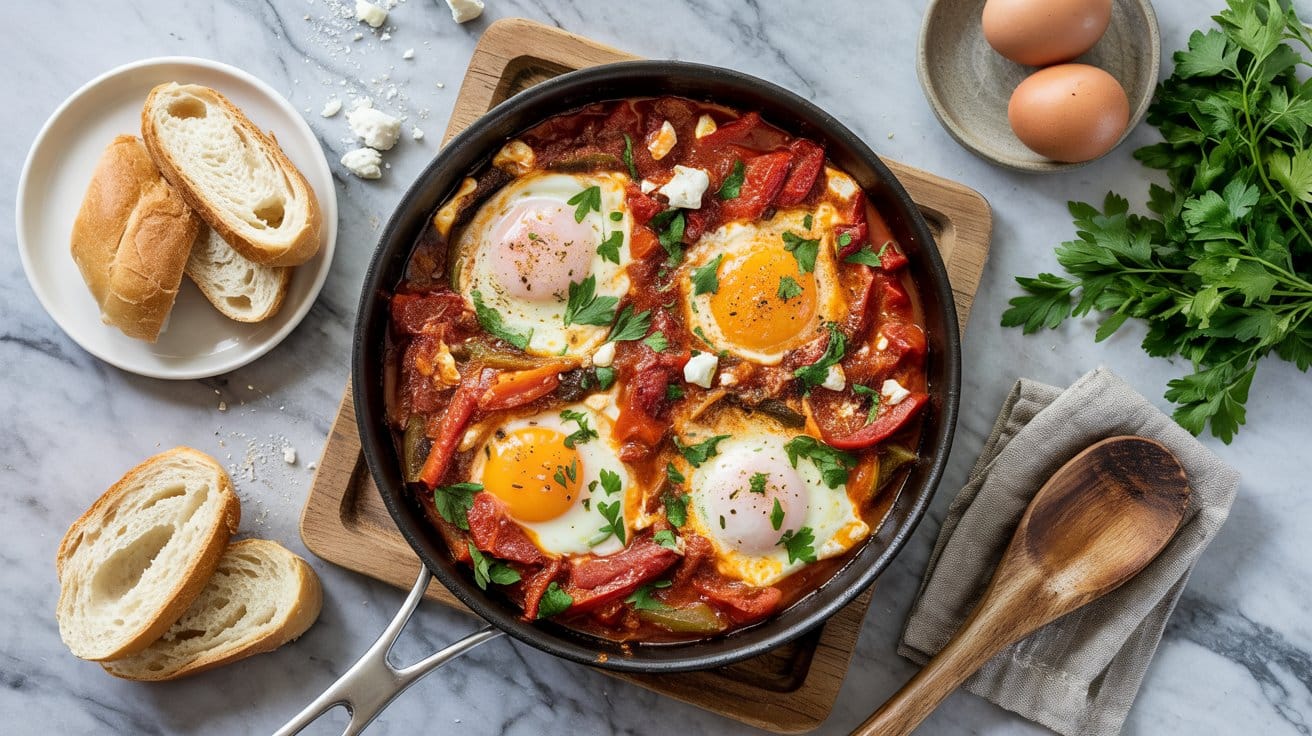
Add tomatoes or fresh fruit for a cool side. Fried potatoes are fine when the steak has no sweet glaze and the portion stays modest.
13. Pineapple Salsa
Pineapple salsa fits a peppery or chile-glazed steak because fruit cools the heat. Red onion, lime, and cilantro give the salsa enough savory structure.

Use two or three spoonfuls rather than a large fruit pile. Pair it with cabbage or green beans instead of another sweet side.
14. Small Dinner Rolls
A soft roll can collect mustard or savory pan juices when the meal has no potato or polenta. It also helps stretch one large steak across two plates.

Skip rolls when a starch already appears. Bread beside potatoes adds volume but no new balance.
Does the Ham Steak Have a Sweet Glaze or a Savory Pan Sauce?
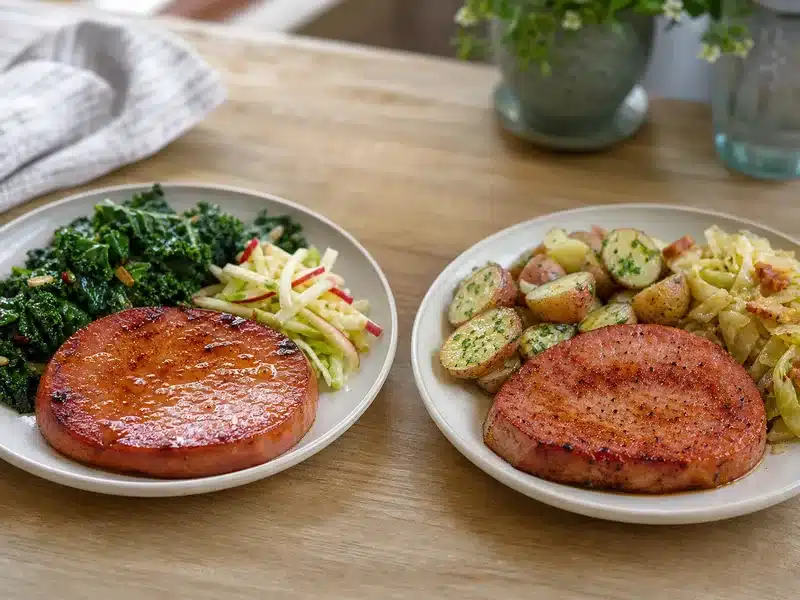
Sweet Maple or Brown Sugar Glaze
Choose a bitter vegetable plus a vinegar-led side. Brussels sprouts with apple slaw work because one side controls sweetness and the other resets the palate.
Avoid glazed carrots, candied sweet potatoes, and sweet rolls on the same plate. Each one makes the next bite of ham taste less distinct.
Savory Mustard or Pan Sauce
Use a mild starch such as vinegar potatoes or polenta to catch the sauce. Green beans or cabbage then add the crisp or leafy part of the meal.
Pan sauce concentrates cured salt as it reduces. Taste it before seasoning the starch, and loosen it with water if the flavor becomes too strong.
Plain Smoked Ham Steak
A plain browned steak gives you the widest choice. Pair it with sweet potatoes and broccoli for dinner or eggs and tomato for breakfast.
Fruit can appear as apple slaw or pineapple salsa because no glaze competes with it. Keep a sharp ingredient in the meal so smoke does not feel dull.
How Do You Time a Fast Ham Steak Dinner?
A thin ham steak may need only a few minutes per side to heat and brown. Most vegetables and potatoes take longer, so the meat belongs near the end of the schedule.
Cold salad can be prepared first and chilled. Potatoes, broccoli, or sweet potatoes start next, followed by any quick skillet vegetable.
- Prepare the cold side. Mix slaw or chop salad, then hold its final salt.
- Start the slow side. Cook potatoes or roast broccoli before heating the meat pan.
- Brown the ham steak. Move it to a warm plate once both sides color.
- Use the skillet once more. Saute cabbage, green beans, corn, or eggs in the fond.
- Taste and finish. Add acid first, then decide whether the sides need salt.
Let the steak sit for the few minutes needed to finish the skillet vegetable. Cover it loosely so the surface stays browned instead of steaming.
For breakfast, reverse the final two jobs. Cook the ham first, then fry eggs in the same pan while the steak stays warm.
Thickness changes the schedule. A thin boneless slice warms almost at once, while a thick center-cut steak gives potatoes or cabbage a few extra minutes before the meat leaves the pan.
When one steak feeds two people, slice it after resting and divide the lean center and browned edge between both plates. A larger vegetable serving makes the smaller meat portion feel planned rather than short.
Frozen vegetables can keep this meal fast, especially peas, green beans, or broccoli. Cook away surface water before adding pan juices so the side tastes concentrated instead of washed out.
Leftover ham steak changes the next meal because it is already fully seasoned. Dice a small amount into eggs or cabbage, then make the vegetable the main volume instead of serving another full cured-meat portion.
If the pan glaze begins to burn, move the meat and wipe the skillet before cooking the side. Bitter burnt sugar cannot be fixed with more mustard or vinegar.
Warm plates help the short schedule because a small steak cools faster than a roast. Heat them briefly while the slower side finishes, then plate the ham last.
Save These Ham Steak Sides
Keep the quick rankings, glaze guide, and skillet timing plan ready for a fast meal.
Ham Steak Side Dish FAQ
What is the best side for ham steak?
Mustard green beans are the strongest all-purpose side because they cook fast and balance cured salt with acid and crunch.
What goes with ham steak for breakfast?
Serve eggs, tomatoes, fresh fruit, or a small portion of skillet potatoes for a complete breakfast plate.
How many sides do you need with ham steak?
Two sides are enough for dinner. Choose one vegetable or salad and one modest starch unless the steak is very small.
What should you serve with glazed ham steak?
Pair a sweet glazed steak with Brussels sprouts, mustard green beans, cabbage, or vinegar slaw rather than another sweet dish.
Can you cook the sides in the same pan?
Yes. Brown the ham, move it to a warm plate, then cook quick cabbage, beans, corn, or eggs in the skillet.

Carrie is a food writer and editor with more than 15 years of experience. She has worked for some of the biggest names in the food industry, including Bon Appétit, Food & Wine, and Martha Stewart Living.
As the Editor in Chief of EpicureDelight, Carrie oversees all of the content on the site. She also manages the team of contributing writers and editors, who help to create delicious recipes, helpful tips, and informative articles that you’ll find on the site.
A native of the Chicago area, Carrie is passionate about all things food. She loves trying new restaurants and experimenting with new recipes in her kitchen. She’s also a graduate of the Culinary Institute of America, so she knows a thing or two about food!