Hazelnut flour has a specific job in a recipe: it contributes nut fat for tenderness, a fine grain for even crumb structure, and a faintly sweet, toasty aroma. No single hazelnut flour substitute nails all three at once, but several come close enough that your bake won't suffer.
The key is matching texture and fat level before worrying about flavor.
Most substitutes fall into two groups. Nut-based flours (almond, pecan, ground almonds) stay close in fat and grind.
Seed and grain flours (pumpkin seed, oat, all-purpose) need a moisture tweak to prevent a tight crumb.
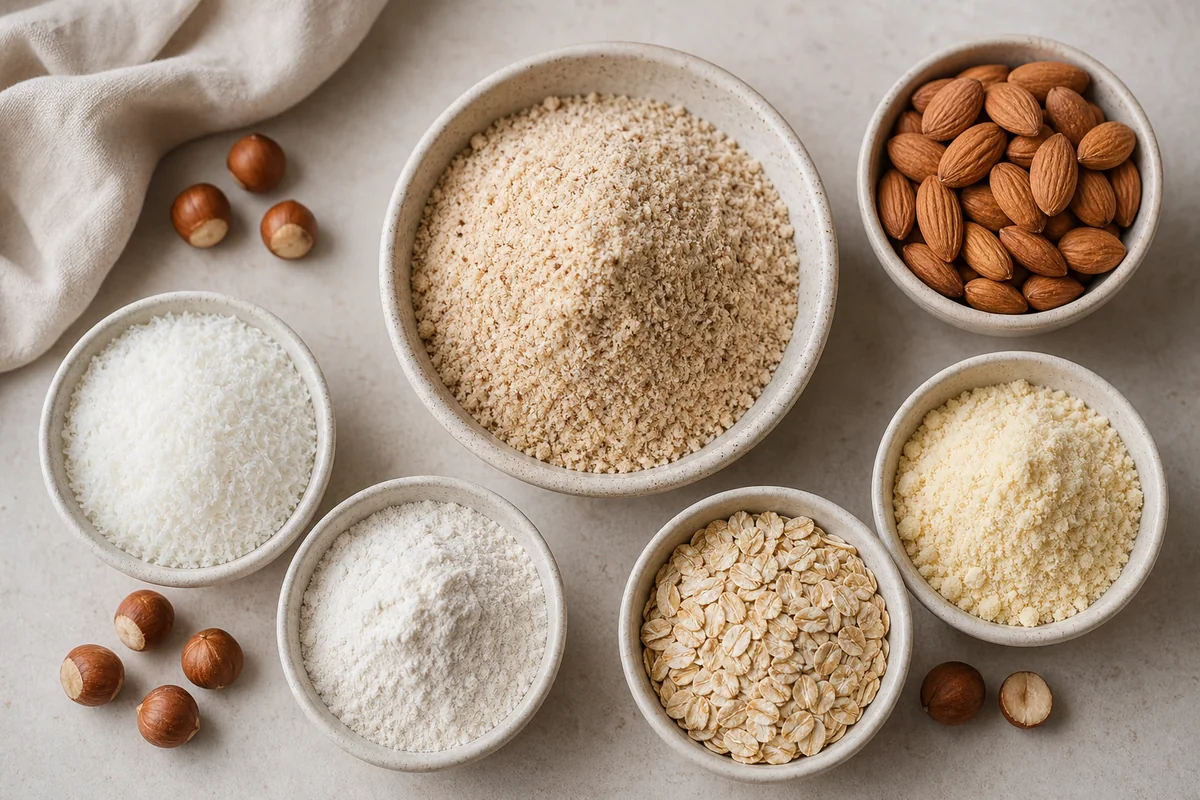
Almond flour is the closest 1:1 swap for hazelnut flour in most bakes. Ground toasted almonds work when you grind fine. Pecan flour adds buttery warmth. Pumpkin seed flour suits nut-free needs. Oat flour at ¾ ratio handles soft bakes. All-purpose flour is an emergency bind only.
5 Best Hazelnut Flour Substitutes for Baking
| # | Substitute | Best For | Ratio | Key Note |
|---|---|---|---|---|
| 1 | Almond Flour (fine, blanched) | Both | 1:1 | Closest crumb and fat match |
| 2 | Ground Toasted Almonds | Both | 1:1 | Grind fine; sieve once |
| 3 | Pecan Flour | Baking | 1:1 | Sweeter, buttery flavor shift |
| 4 | Pumpkin Seed Flour | Baking | 1:1 | Nut-free; rest batter first |
| 5 | Oat Flour | Soft Bakes | ¾:1 | Add 1-2 teaspoon liquid per cup |
Nut flours swap closest because fat content stays similar. Grain and seed options need small hydration corrections to keep the crumb from reading dense.
1. Almond Flour
Fine blanched almond flour is the nearest thing to hazelnut flour in most baked goods. The fat content is comparable, the grind is similarly fine, and it produces a tender crumb in cookies, cakes, and tart bases without major changes to baking time.
The flavor difference is real but subtle. Almond flour has a milder, less toasty aroma, and it lacks the slightly earthy note that makes hazelnuts distinctive.
For details on how that flavor profile plays in baked goods, mild nut flour baking covers the specifics well.
- Ratio: 1:1 by weight for cookies, cakes, brownies, and crusts
- Texture fix: If your almond flour feels coarser, pulse 10-15 seconds before measuring
- Browning: Almond flour browns quickly; check the oven 3-4 minutes early on thinner bakes
Skip if: You need a pronounced hazelnut aroma as a feature of the dish, such as a hazelnut dacquoise where the flavor is central.
2. Ground Toasted Almonds
Toasting whole almonds before grinding adds a deeper aroma than pre-made almond flour, and it gives you control over grind size. It won't perfectly replicate hazelnut flour's character, but the toasty warmth closes some of the flavor gap.
The grinding step matters more than most people expect. If you stop too early, the texture is coarse and the batter will feel gritty after baking.
When exploring other crushed nut swap options, the same fineness rule applies.
- Grind method: Pulse in a food processor in 5-second bursts until flour-like; stop before it turns to paste
- Sieve step: Sieve once after grinding and re-grind any larger bits that don't pass through
- Ratio: 1:1 by weight, same as store-bought almond flour
- Storage: Use within 3 days or freeze; freshly ground nut flour goes rancid faster than commercial flour
Skip if: You only have almond meal rather than whole almonds. Coarse meal won't grind fine enough without turning oily first.
3. Pecan Flour
Pecan flour brings a buttery, slightly sweeter note that works well in dense cookies, pie crusts, and tart shells. It is not quite as neutral as almond flour, but for recipes where warm nut flavor is welcome, it reads as a natural fit rather than a compromise.
Pecan Flour vs. Hazelnut Flour
Works for: tart crusts, shortbread-style cookies, brownie bases, and streusel toppings where richness is wanted
Skip if: The recipe needs a neutral or specifically earthy nut profile; pecan sweetness will read through
Pecan flour is slightly higher in fat than almond flour, so it can produce a richer crumb. Watch the edges of thin cookies or crusts, since higher fat content means faster browning.
- Ratio: 1:1 by weight works for most applications
- Flavor tweak: A small pinch of salt in the dry mix balances the extra sweetness
- Bake time: Reduce by 2-3 minutes for shallow pans or thin cookies
4. Pumpkin Seed Flour
Pumpkin seed flour is the best nut-free option on this list. It has an earthy, mildly savory note that is not identical to hazelnut, but it carries enough richness to keep baked goods from tasting flat.
For quick breads, muffins, and crumb toppings, it does a solid job.
The one thing to manage is moisture. Pumpkin seed flour can feel slightly drier than hazelnut flour in the finished bake.
Knowing the oily texture profile of hazelnut flour helps you understand exactly what you're compensating for.
- Ratio: 1:1 by weight for most recipes
- Hydration fix: Rest batter 5 minutes after mixing; if it still looks stiff, loosen with 1 teaspoon liquid per cup of flour used
- Color note: Pumpkin seed flour can add a faint green tint to a light-colored batter
- Best for: Crumb toppings, quick breads, and dense muffins where a subtle earthy note suits the recipe
Skip if: You are making delicate meringue-based layers or macarons where moisture control is extremely tight.
5. Oat Flour
Oat flour is the right fallback when you need structure and no nuts are available. It produces a softer, slightly more bread-like crumb than hazelnut flour, so it works best in muffins, pancakes, and soft drop cookies rather than crisp tart shells or fine-crumb cakes.
When you understand how oat flour absorbs liquid, storing nut-based flours properly becomes a useful parallel reference for keeping homemade oat flour fresh too.
- Ratio: Use ¾ cup oat flour for every 1 cup hazelnut flour called for
- Liquid adjustment: Add 1-2 teaspoon water or milk per cup of batter if the mix looks dry after resting
- Rest step: Let the batter sit 5 minutes before baking so the oats hydrate fully
- Flavor boost: Add 1 teaspoon toasted ground hazelnut or a drop of hazelnut extract to bring back some nuttiness
Skip if: You need a very fine, buttery crumb. Oat flour tends to make soft bakes feel slightly bready, not tender in the hazelnut-flour way.
Making Hazelnut Flour Substitutes Taste Right
The biggest mistake people make when swapping nut flours is skipping a moisture check. Hazelnut flour carries natural oil that keeps batters loose and crumbs tender.
When you replace it with a drier flour, that fat disappears and the batter tightens. Resting the batter 5 minutes before baking gives seed and oat flours time to absorb liquid evenly.
If you're curious how the original flour behaves in detail, the page on its dense, oily character is worth a read before you start adjusting.
- Grind matters: A coarser substitute than hazelnut flour will make the crumb gritty; pulse briefly and sieve for a finer result
- Fat compensation: If you use oat or seed flour, add ½ teaspoon neutral oil per cup to partially replace the lost nut fat
- Flavor recovery: A pinch of extra salt plus a small amount of toasted nut meal stirred into the dry mix pulls flavor forward without changing the structure
Frequently Asked Questions
Yes, fine blanched almond flour swaps 1:1 by weight in most cakes. The crumb and fat content are comparable, though the hazelnut aroma will be absent.
Pumpkin seed flour at a 1:1 ratio is the strongest nut-free option for cookies. Rest the batter 5 minutes and add a small splash of liquid if the dough looks dry.
It can, because oats absorb more moisture than nut flours. Use a ¾:1 ratio and add 1-2 teaspoon liquid per cup of batter if the mix looks stiff after resting.
Grind until the texture resembles fine sand, not powder. Sieve once and re-grind anything that doesn't pass through to avoid a gritty crumb.
Only as a structural swap, not a flavor one. Use half the amount, and stir 1-2 teaspoon toasted nut meal into the dry mix to recover some nuttiness.
5 Best Hazelnut Flour Substitutes (Tested)
Ingredients
Equipment
Method
- Identify your goal: fine crumb (cookies/cake), crust structure (tarts), or binding (batter/crumb topping).
- Pick the closest match from the table below and swap by the stated ratio.
- If the substitute is drier (oat or seed flour), let batter rest 5 minutes; if it looks tight, loosen with 1–2 teaspoon liquid per cup.
- If the substitute is more oily (finer nut flours), watch browning; reduce bake time by 2–4 minutes for shallow pans.
- Taste after baking: if flavor is muted, add a small pinch of salt next time or increase toasted-nut aromatics in the dry mix.
Notes
- For best texture, use fine-ground nut flour (pulse to match hazelnut flour granularity).
- Moisture behavior differs: oat/seed flours often need a small liquid adjustment.
Tried this recipe?
Let us know how it was!
Carrie is a food writer and editor with more than 15 years of experience. She has worked for some of the biggest names in the food industry, including Bon Appétit, Food & Wine, and Martha Stewart Living.
As the Editor in Chief of EpicureDelight, Carrie oversees all of the content on the site. She also manages the team of contributing writers and editors, who help to create delicious recipes, helpful tips, and informative articles that you’ll find on the site.
A native of the Chicago area, Carrie is passionate about all things food. She loves trying new restaurants and experimenting with new recipes in her kitchen. She’s also a graduate of the Culinary Institute of America, so she knows a thing or two about food!