
Herbs de Provence has a specific job in a recipe: it brings dried thyme and rosemary together, softens both with oregano or marjoram, and sometimes adds a faint floral edge from lavender. The herbs de provence substitute you pick should cover at least the first two of those roles.
Get the thyme and rosemary character right, and the dish will still taste intentional.
Most swaps live in your pantry already. The key is knowing which ones lean oregano-heavy and which ones nail the savory backbone.
Once you know that, adjusting a blend takes about 30 seconds.
For the best herbs de Provence replacement, reach for Italian seasoning (1:1, convenient) or a thyme + rosemary mix (1:1, closest savory core). For a full DIY blend, combine thyme, rosemary, oregano, and marjoram in equal parts. Always bloom dried herbs briefly in oil for the best aroma.
5 Herbs De Provence Substitutes Ranked by Flavor Match
The table below maps every swap in this article to a ratio and use case. Start here, then read the section for your pick.
| # | Substitute | Best For | Ratio | Key Note |
|---|---|---|---|---|
| 1 | Italian Seasoning | Both | 1:1 | May run oregano-heavy |
| 2 | Thyme + Rosemary | Both | 1:1 | Best savory backbone |
| 3 | DIY Blend | Both | 1:1 | Most control over flavor |
| 4 | Oregano + Marjoram | Cooking | 1:1 | Misses piney rosemary depth |
| 5 | Oregano + Garlic Powder | Cooking | ¾:1 | Use less; can overpower |
1. Italian Seasoning
Italian seasoning is the easiest swap because it already combines dried herbs in a balanced blend. It has oregano, basil, and usually thyme, which gets you close to the savory herb character of herbs de Provence without mixing anything.
The difference is that many Italian seasoning blends are oregano-forward. If yours smells strongly of oregano at the jar, start with ¾ of the called-for amount and taste before adding more.
Choosing between these two blends is worth understanding, and a side-by-side at the blend comparison lays out the key differences clearly.
- Flavor match: Good thyme and oregano character; lighter on rosemary and lavender
- How to measure: Use 1:1 as a starting point, then pull back by ¼ teaspoon if your blend smells very pungent
- Adjustment tip: Add a small pinch of dried rosemary if you want more piney depth
Skip if: Your blend already includes garlic or is strongly oregano-forward and the recipe needs a clean thyme/rosemary aroma.
2. Thyme + Rosemary Mix
Equal parts dried thyme and rosemary hit the core of what herbs de Provence actually does in savory cooking. Thyme brings the warm, grassy note; rosemary adds the piney depth.
Together they cover the backbone that the blend is known for.
What you miss is the floral edge. If your dish needs that lavender softness (say, a Provençal chicken), you can add a small pinch of dried culinary lavender.
A quick look at dried thyme form differences is worth it before measuring, since ground thyme hits much harder than crumbled dried leaves.
Thyme + Rosemary (DIY)
Works for: lamb rubs, roast chicken, potato dishes, any recipe where thyme/rosemary aroma is the point
Skip if: You don't have both herbs on hand, or your recipe relies on the softer oregano/marjoram body in the blend
Store Blend (Herbs de Provence)
Works for: any Provençal recipe; flower note included; no mixing required
Skip if: You've run out and need to cook now
- Assembly: Mix equal parts dried thyme and rosemary; crush rosemary slightly between your fingers first
- Optional add-ins: A pinch of dried oregano rounds the flavor; a tiny pinch of dried lavender adds the floral note
- Blooming tip: Stir the mix into 1 teaspoon of warm olive oil for 15 seconds before adding to the pan
Skip if: You're missing one of the two main herbs and can't approximate the pair.
3. DIY Herbs de Provence Blend
Building your own blend gives you the most control over how the final dish tastes. The base is straightforward: combine equal parts dried thyme, rosemary, oregano, and marjoram.
If you want to see how marjoram fits here and what works in its place, that's worth a read before you start measuring.
To match the intensity of a commercial blend, keep your total dried herb amount equal to what the recipe asks for. Don't over-measure just because you're mixing from scratch.
A note on basil: some home cooks add a small amount, and knowing your options for swapping basil is useful if you want to tweak the sweetness of the profile.
- Basic ratio: 1 teaspoon thyme + 1 teaspoon rosemary + ½ teaspoon oregano + ½ teaspoon marjoram per 1 tablespoon needed
- For floral note: Add ¼ teaspoon dried lavender if you have it
- Intensity check: Rub a pinch between your fingers and smell it; it should be herby, not flat or dusty
Skip if: You want a zero-measure emergency swap and have a ready-made Italian seasoning or similar blend available.
4. Oregano + Marjoram
This pair gets you the dried Mediterranean herb character quickly. Oregano handles the punchy savory note; marjoram softens it with a slightly sweeter, more delicate edge.
Together they approximate the oregano/marjoram body that herbs de Provence relies on.
- Best uses: Roasted vegetables, chicken rub, slow-cooked tomato dishes
- Keeping it from tasting flat: Add a small pinch of dried thyme if you have it; it lifts the whole blend
- Adjustment tip: Use equal parts of each and avoid letting oregano dominate by more than 2:1
If you want a lighter dish to test this blend, thyme-roasted carrots are a good starting point for seeing how these herb notes behave with sweetness.
Skip if: Your recipe is a lamb rub or any dish that specifically depends on rosemary's piney character.
5. Oregano + Garlic Powder
This is the last-resort blend, not the first choice. Dried oregano gives you the savory herb body, and garlic powder adds depth.
But both ingredients are assertive, and together they can easily overpower a dish that needs a more balanced herb note.
- What to use: ½ teaspoon dried oregano + ¼ teaspoon garlic powder per 1 teaspoon of herbs de Provence called for
- How much less: Start at ¾ of the original measure; add more at the end if the dish tastes flat
- Rebalancing: If the blend tastes sharp, add a pinch of salt or a small squeeze of lemon at the end to soften the edge
Knowing how different oregano forms compare helps here too, since ground oregano releases even faster than dried and can make this blend sharper. Skip if you're making a light fish dish or anything yogurt-based where garlic will read as a dominant note.
Making Your Substitute Taste Right
The goal with any swap is to match the thyme/rosemary body first, then worry about the floral note second. A blend that nails the savory character but skips lavender will still taste correct in almost every recipe.
If you're working with piney herb alternatives, the same principle applies: get the backbone right and adjust from there. Also consider how old your dried herbs are.
Checking how long rosemary keeps can save you from wondering why a substitute tastes muted.
- Bloom first: Stir your substitute into 1-2 teaspoon of warm olive oil for 10-20 seconds before adding to the dish; this wakes up dried herb aroma fast
- Start small: Use ¾ of the called-for amount if your blend is oregano-heavy or garlic-forward, then taste and add more
- Balance at the end: If the substitute tastes sharp or bitter, a small pinch of sugar or a few drops of lemon juice brings it back into balance
Frequently Asked Questions
Italian seasoning works at a 1:1 ratio and is the most convenient swap. If your blend is very oregano-forward, pull back by about ¼ teaspoon and add a small pinch of dried rosemary.
Use equal parts dried thyme and rosemary at a 1:1 ratio to the original amount. Crush the rosemary slightly before measuring so it blends evenly with the thyme.
Yes, but use very little. A ¼ teaspoon of dried culinary lavender per tablespoon of blend is enough; more than that will make the dish taste soapy.
Sharp or bitter flavor usually means too much oregano or garlic powder. Add a small pinch of sugar or a squeeze of lemon to rebalance, and reduce the herb amount next time.
Yes, blooming in warm oil for 10-20 seconds releases more aroma and removes the dusty quality dried herbs can have. It makes a noticeable difference in the finished dish.
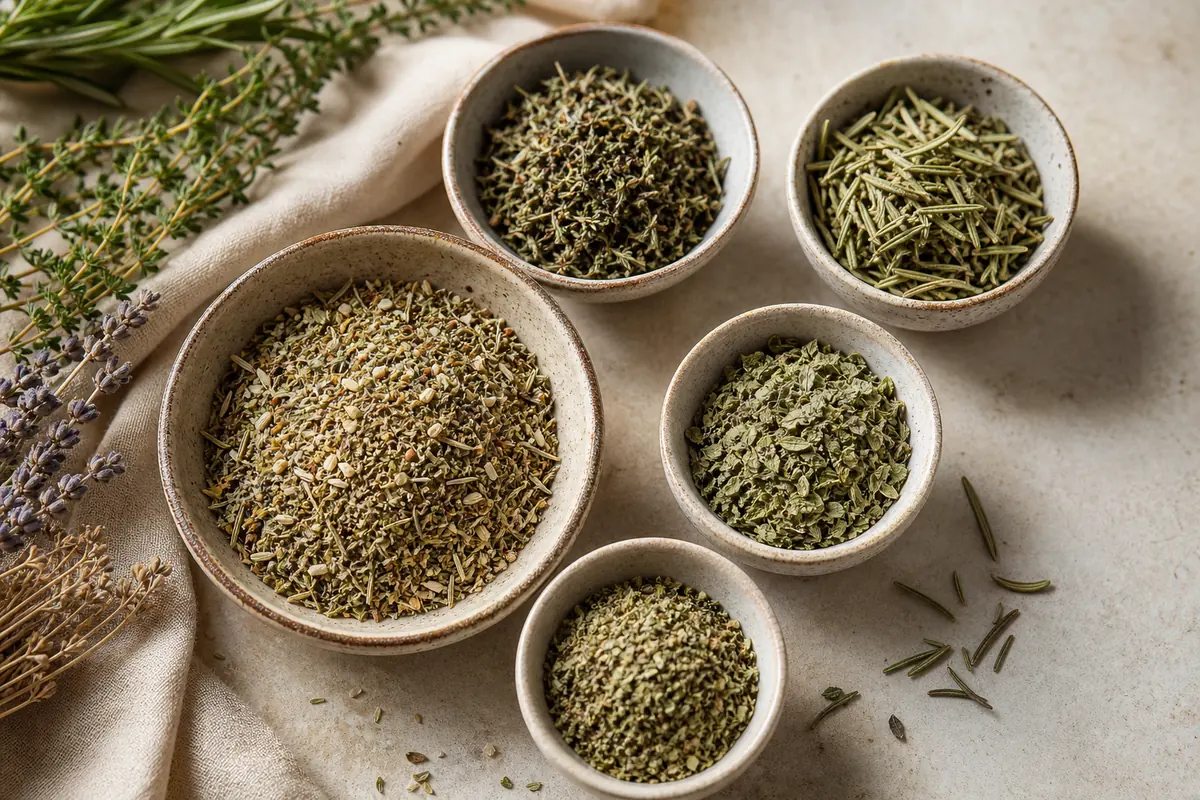
5 Best Herbs De Provence Substitutes That Taste Right
Ingredients
Equipment
Method
- Check your recipe use: marinades and rubs need less and benefit from blooming in oil; finishing mixes can use a fuller pinch.
- Choose the closest substitute from the list (Italian seasoning for convenience; thyme+rosemary for the closest savory core).
- Use the provided ratio, then start with ¼ less if your substitute blend is oregano-heavy.
- If the substitute tastes muted, bloom it in 1–2 teaspoons of hot oil for 10–20 seconds before mixing into the dish.
- Adjust with salt carefully (or add a tiny pinch of sugar if the blend tastes sharp), then taste again.
Notes
- Herbs de Provence often includes thyme/rosemary and sometimes a floral note (lavender). If your blend must be floral, add a pinch of dried culinary lavender only where appropriate.
Tried this recipe?
Let us know how it was!
Carrie is a food writer and editor with more than 15 years of experience. She has worked for some of the biggest names in the food industry, including Bon Appétit, Food & Wine, and Martha Stewart Living.
As the Editor in Chief of EpicureDelight, Carrie oversees all of the content on the site. She also manages the team of contributing writers and editors, who help to create delicious recipes, helpful tips, and informative articles that you’ll find on the site.
A native of the Chicago area, Carrie is passionate about all things food. She loves trying new restaurants and experimenting with new recipes in her kitchen. She’s also a graduate of the Culinary Institute of America, so she knows a thing or two about food!



