
That faint floral scent rising from a pot of jasmine rice is half the reason people reach for it. When it's gone, the good news is that several other grains get surprisingly close-especially if you match the swap to what your dish actually needs.
Jasmine rice lands between fluffy and slightly tender. It separates well, carries a gentle aroma, and doesn't clump aggressively. The best jasmine rice substitute depends on whether you need fragrance, fluffiness, or a little more stick.
Basmati rice is the closest match for fragrance and separate grains. Long-grain white rice is the best everyday swap for fluffiness. For softer, saucier dishes, Calrose or sushi rice works better. Arborio and brown rice are intentional swaps that change texture deliberately.
5 Best Jasmine Rice Substitutes for Any Recipe
Each option below covers ratio, texture behavior, and where it fits best. The table gives you the fast comparison before you commit.
| # | Substitute | Best For | Ratio | Key Note |
|---|---|---|---|---|
| 1 | Basmati Rice | Both | 1:1 | Fragrant, stays separate |
| 2 | Long-Grain White Rice | Both | 1:1 | Fluffy, no aroma |
| 3 | Calrose Rice | Savory | 1:1 | Softer, slight cling |
| 4 | Sushi Rice | Savory | 1:1 | Stickier, rinse well |
| 5 | Arborio Rice | Savory | 1:1 | Creamy, high starch |
1. Basmati Rice
Basmati is the closest match you'll find. It carries its own aroma (drier and nuttier than jasmine's floral note, but still fragrant) and its grains stay beautifully separate after cooking.
For a fuller picture of how that dry, elongated grain behaves differently, it helps to understand how basmati's texture shifts with water ratio.
Use the same 1:1 ratio as jasmine rice.
- Rinse first: Rinse basmati 2-3 times until water runs clear to remove surface starch.
- Water caution: Use the same water ratio as jasmine rice-basmati doesn't need extra.
- Rest time: Pull it off heat and rest, covered, for 8-10 minutes before fluffing.
- Best dishes: Side dishes, rice bowls, pilaf, and anything where grain separation matters.
Skip if: Your recipe needs soft, slightly sticky grains-basmati stays more separate and will feel drier in sticky-style dishes.
2. Long-Grain White Rice
Long-grain white rice won't replicate jasmine's floral aroma, but it nails the fluffy, separate-grain texture in everyday meals. It's the most widely available swap and behaves predictably.
If you want to explore the full range of starchy grain swaps, long-grain sits at the fluffy end of that spectrum.
- Rinse thoroughly: Rinse 2 times-long-grain doesn't need as many rinse cycles as shorter grains.
- Water reduction: Use 2 tablespoon less water per cup compared to what your recipe calls for jasmine rice.
- Rest before serving: 5 minutes covered, then fluff with a fork rather than a spoon.
Skip if: Aroma is part of the dish's appeal-long-grain white rice is neutral and won't add any fragrance.
3. Calrose Rice
Calrose is a medium-grain rice that cooks up softer and slightly more tender than jasmine, with a little natural cling between grains. It isn't gummy, but it doesn't separate as cleanly either.
That makes it a smart pick for saucy stir-fries, rice bowls, or dishes where the rice needs to hold together slightly under toppings.
- Best dishes: Stir-fries, grain bowls, congee-adjacent preparations, and Korean-style rice dishes.
- Water adjustment: Reduce water by 2 tablespoon per cup-Calrose absorbs liquid quickly and can go soft.
- Rest covered: 5-8 minutes off heat keeps the grains from steaming apart too aggressively.
- Fried rice note: Use day-old Calrose for fried rice so the grains firm up overnight.
Skip if: You're making a dry side dish where each grain should sit separately-Calrose leans soft by nature.
4. Sushi Rice
Sushi rice is the right call when your dish benefits from cohesion. It's stickier than jasmine and holds together in rice bowls, under grilled proteins, or in hand-formed rice shapes.
Rinse it well and the stickiness becomes manageable.
Sushi Rice vs Jasmine Rice
Works for: rice bowls, sticky-style sides, dishes with heavy sauces or toppings
Skip if: your dish needs fluffy, individually separated grains
For dishes where starch texture really matters, the stickier grain tradeoff between these two rice types is worth knowing before you cook.
- Rinse well: Rinse sushi rice 4-5 times until water is nearly clear-this reduces tackiness significantly.
- Water ratio: Use a 1:1.1 rice-to-water ratio; sushi rice absorbs a touch more than jasmine.
- Best for: Grain bowls, rice topped with teriyaki or curry, and rolled rice dishes.
Skip if: You want jasmine rice's light, fluffy separation-sushi rice clumps even when rinsed thoroughly.
5. Arborio Rice
Arborio releases starch as it cooks, producing a creamier, more cohesive result than jasmine rice. Used intentionally, that quality works well in saucy, brothy dishes where you want the rice to absorb liquid and bind with the rest of the ingredients.
It's a deliberate texture swap, not a neutral one.
If you're weighing choosing a similar creamy grain instead, several options sit closer to jasmine in starch content.
| Use | Ratio | Notes |
|---|---|---|
| Saucy braises | 1:1 | Arborio absorbs sauce well; stir less to control creaminess |
| Stuffed vegetables | 1:1 | Par-cook before stuffing; it firms up as it bakes |
| Soup base | ¾:1 | Use less Arborio-it swells more than jasmine in broth |
- Don't over-stir: Stirring Arborio constantly releases too much starch and turns it porridge-like.
- Short rest: Pull it off heat early and let residual steam finish cooking for 5 minutes.
- Avoid for fried rice: Arborio goes gluey when stir-fried at high heat.
Skip if: Separate, fluffy grains are essential-Arborio's natural starch release makes individual grain texture impossible.
Making Jasmine Rice Substitutes Work
The core decision is simple: pick a long-grain substitute (basmati or plain long-grain) when you want that light, separate-grain feel, and shift to medium or short-grain when the dish needs something softer. Resting the cooked rice, covered, for at least 5 minutes makes almost every swap perform better.
For dishes where you're storing leftovers, knowing the fridge life of cooked white rice helps you plan ahead without waste.
- Rinse before cooking: All of these substitutes benefit from rinsing-2 rinses for long-grain, 4-5 for sushi rice-to control surface starch.
- Adjust water, not time: Most jasmine rice swaps use the same cook time but benefit from reducing water by 2 tablespoon per cup to avoid over-softening.
- Fluff gently: Use a fork, not a spoon, and fold from the bottom up once or twice-over-fluffing breaks grains and releases starch.
Frequently Asked Questions
Basmati rice is the closest match. It's fragrant, separates cleanly, and uses the same 1:1 ratio and cook method as jasmine rice.
Yes, if you rinse it 4-5 times before cooking. Thorough rinsing removes surface starch and keeps sushi rice from becoming unworkably sticky.
Reduce water by about 2 tablespoons per cup of dry rice. Long-grain white rice doesn't need quite as much liquid as jasmine to stay tender.
It works, but cook it fully the day before and refrigerate overnight. Cold brown rice firms up and won't turn mushy when stir-fried at high heat.
Calrose or sushi rice both hold up well under saucy toppings. Their softer, slightly clingy texture keeps them from sliding around in the bowl.
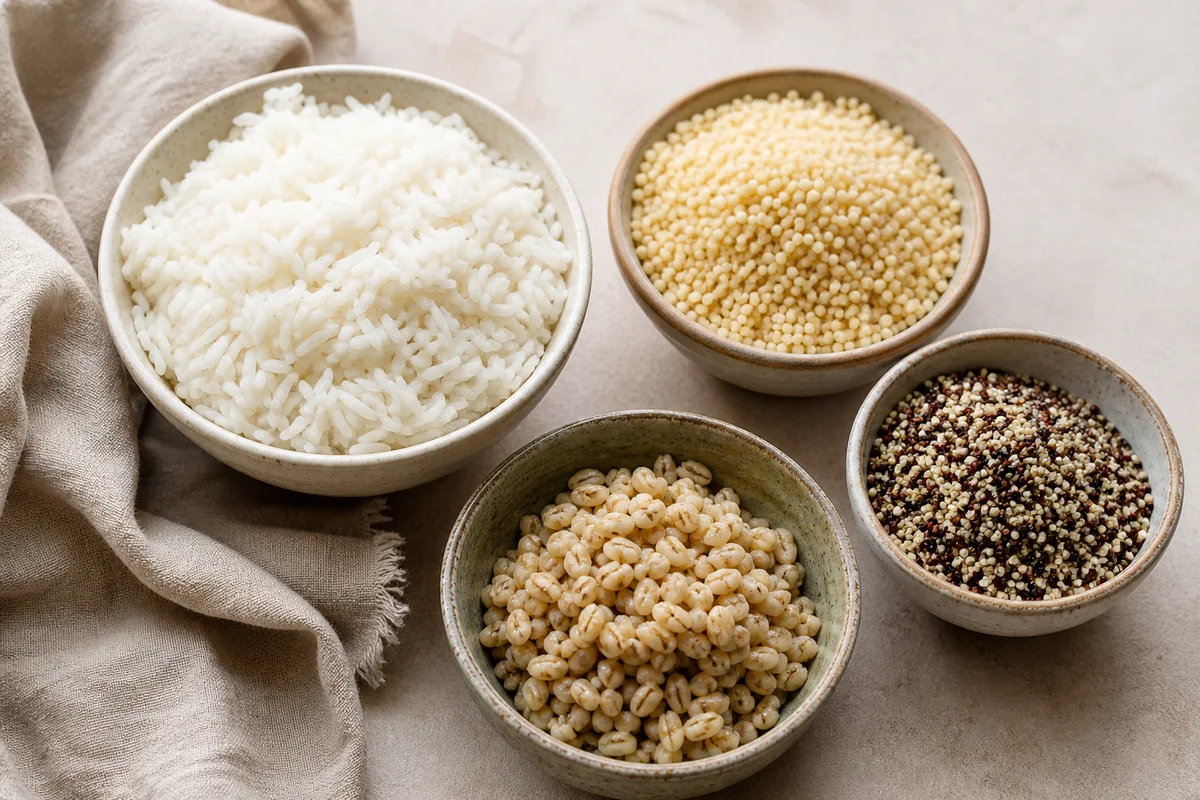
5 Best Jasmine Rice Substitutes for Any Recipe
Ingredients
Equipment
Method
- Identify your dish goal (fluffy side dish vs sticky bowl/fried rice), because jasmine rice’s texture changes what’s “closest.”
- Choose the substitute from the ingredient list based on grain type: basmati/long-grain for fluffy, calrose/sushi for softer or stickier dishes.
- Use the listed substitution ratio; for rice swaps, rinse the rice (especially sushi rice) to reduce excess surface starch.
- Adjust texture in cooking: if your swap tends to soften (medium/short grain), reduce water slightly next time; if it’s chewy (brown), extend cook time until tender.
- Rest 5–10 minutes after cooking and fluff gently to mimic jasmine rice’s light, separate grains.
Notes
- Water adjustments are dish-dependent; the goal is to avoid gummy grains for fluffy sides and avoid crunchy grains for bowl-style textures.
- Resting time matters: letting the rice steam before fluffing improves the “tender, separate” feel.
Tried this recipe?
Let us know how it was!
Carrie is a food writer and editor with more than 15 years of experience. She has worked for some of the biggest names in the food industry, including Bon Appétit, Food & Wine, and Martha Stewart Living.
As the Editor in Chief of EpicureDelight, Carrie oversees all of the content on the site. She also manages the team of contributing writers and editors, who help to create delicious recipes, helpful tips, and informative articles that you’ll find on the site.
A native of the Chicago area, Carrie is passionate about all things food. She loves trying new restaurants and experimenting with new recipes in her kitchen. She’s also a graduate of the Culinary Institute of America, so she knows a thing or two about food!



