
Kasseri has a specific personality: salty, a little tangy, and steady under heat. Finding a good kasseri cheese substitute means matching at least two of those three traits, because a swap that nails the flavor but turns greasy in the oven will still let you down.
The choice shifts depending on your dish. Baking calls for a cheese that browns cleanly and holds its structure.
Stovetop or sandwich work needs smooth, even melt. Knowing which behavior matters most in your recipe cuts the list fast.
The best kasseri substitutes are aged asiago and halloumi for browning dishes, provolone or fontina for smooth melts, and part-skim mozzarella as a quick emergency swap. Use a 1:1 ratio for the top picks; drop to ¾:1 for milder options and add a pinch of salt or a splash of acid.
5 Best Kasseri Cheese Substitutes Ranked by Use
The table below is your quick ratio map. Each substitute is matched to its strongest role so you can decide before you start cooking.
| # | Substitute | Best For | Ratio | Key Note |
|---|---|---|---|---|
| 1 | Asiago (aged, grated) | Both | 1:1 | Closest salty, nutty bite |
| 2 | Halloumi (seared, sliced) | Browning | 1:1 | Firm, won't pool or run |
| 3 | Provolone (shredded) | Melt/Stretch | 1:1 | Medium for more tang |
| 4 | Fontina (shredded) | Baked layers | 1:1 | Creamy, cohesive melt |
| 5 | Mozzarella (part-skim) | Emergency | ¾:1 | Add salt and acid to sauce |
Each substitute behaves differently under heat. Asiago and halloumi give you firm browning.
Provolone and fontina deliver that stretchy, even pull. Mozzarella is the most neutral and needs the most flavor help.
Skip this table if your recipe is cold only, since melt behavior barely matters in no-heat dishes.
1. Asiago (Aged, Grated)
Aged asiago is the closest single-cheese swap for kasseri. Both are salty and firm, and both develop a golden, slightly crisp edge when baked.
Kasseri is a bit tangier overall, but asiago's nutty depth fills that gap better than most alternatives.
In the oven, aged asiago browns at nearly the same rate. It won't pool or turn greasy, which matters in gratins or topped casseroles where you want clean color.
Use it in a thin, even layer for the best result.
Kasseri vs. Aged Asiago
Works for: baked pasta, gratins, topped casseroles, flatbreads
Skip if: you want a delicate, mild flavor without extra saltiness
- Form: Use grated or thinly sliced; avoid thick chunks that won't brown evenly
- Layer: Spread in a thin, even coat so it crisps rather than steams
- Timing: Add in the last 10-15 minutes of baking to protect color
If asiago's salt level is already strong in your recipe, hold back on added salt until you taste. When you want to compare it against other aged options, choosing a similar aged cheese is worth a look before you commit.
2. Halloumi (Pan-Seared)
Halloumi is the right pick when your recipe needs a cheese that browns firmly and keeps its shape. It mimics kasseri's dense, springy texture better than any soft melt-first option.
The key is prep: storing halloumi dry before use makes a real difference in how well it sears.
- Pat dry: Press with paper towels to remove brine moisture before the pan
- Sear first: 1-2 minutes per side in a dry or lightly oiled pan until golden edges form
- Slice after: Let it rest 1 minute, then slice to your desired thickness
- Best uses: Grilled sandwiches, baked flatbreads, or any topping that needs visible color
Expect golden, slightly firm edges with a chewy interior. That's exactly kasseri's lane. Skip this if your dish needs a fully smooth, pooling melt - halloumi holds its structure and won't go liquid.
3. Provolone (Shredded)
Provolone is a melt-first substitute. It doesn't have kasseri's pronounced tang, but it stretches cleanly and layers without breaking into grease.
Medium provolone is worth choosing over mild when you want a bit more flavor presence.
For dishes where kasseri's similar melt-forward swaps are the point, provolone covers most of the ground.
- Best uses: Pizza, baked casseroles, hot sandwiches, stuffed breads
- Shred it: Pre-shredded works, but hand-grated melts more evenly
- Layer evenly: Thin distribution prevents pockets of unmelted cheese
- Broil briefly: 1-2 minutes at the end adds light browning if needed
If you use mild provolone, add a small pinch of salt and consider a few drops of lemon in the sauce to lift the flavor closer to kasseri's range. Skip this if you want kasseri's tangy bite in a cold dish or as a standalone cheese.
4. Fontina (Shredded)
Fontina melts into a smooth, cohesive layer with a gentle tang that reads closer to butter than bite. It won't deliver kasseri's saltiness on its own, but in baked dishes where you want an even, creamy top, it performs well.
The buttery semi-firm cheese is a reliable pick when texture matters more than tang.
| Use | Ratio | Notes |
|---|---|---|
| Baked pasta (top layer) | 1:1 | Fontina; thin layer for clean melt |
| Gratins | 1:1 | Fontina; grate fine for even coverage |
| Stuffed filling | ¾:1 | Fontina + pinch of salt to compensate |
| Pan-melt (stovetop) | 1:1 | Dice small; low heat prevents oil separation |
- Grate fine: Fine shreds melt faster and more evenly than coarse or diced
- Layer thin: A thinner layer stays cohesive; thick piles can go stringy
Add a small pinch of salt to your dish if fontina tastes flat by itself. Skip this if your recipe needs strong browning edges; fontina goes smooth and creamy, not crisp.
5. Mozzarella (Part-Skim, Shredded)
Part-skim mozzarella is the most common emergency swap, and it works, but it needs help. The flavor is much milder than kasseri's salty-tangy character, and it doesn't brown as aggressively on its own.
Part-skim is the better choice over whole-milk here because fresh stretched cheese with lower fat browns more predictably under heat.
Kasseri vs. Part-Skim Mozzarella
Works for: pizza, quick baked dishes, topped flatbreads when you need speed
Skip if: you have an aged cheese nearby and want tang without extra adjustments
- Increase salt: Add ¼ teaspoon more to the dish or sauce before baking
- Add acid: A small splash of lemon juice or white wine vinegar in the sauce lifts the flavor
- Broil at the end: 1-2 minutes under the broiler gives the browning color that mozzarella skips
- Spread thin: An even, thin layer browns better than a heavy pile
Use a thin, even spread and don't skip the broil step. That combination gets mozzarella close to kasseri's visual and textural result.
Making Kasseri Cheese Substitutes Work
The main decision rule is behavior first, flavor second. If your dish browns the cheese on top, pick asiago or halloumi.
If it needs a smooth, stretchy melt underneath, go provolone or fontina. Understanding the tangy firm character of kasseri itself makes that call much easier.
Knowing how this aged sheep's milk cheese ages and firms up also explains why most substitutes need a little flavor nudge.
- Choose by position: Topping a dish? Pick a browning cheese. Filling or layering? Pick a melt-first option.
- Prep for texture: Grate firm cheeses fine, dice fontina small, and always press halloumi dry before heat.
- Adjust flavor last: If the swap tastes flat, add salt in small increments first, then a tiny splash of lemon or vinegar to the sauce.
Frequently Asked Questions
Aged asiago is the closest match for baked dishes. It has a similar salty, firm bite and browns cleanly at oven temperatures without turning greasy or pooling.
Yes, but mozzarella is much milder. Add a small pinch of salt and a splash of lemon juice to the sauce, then broil briefly at the end for better color.
Fontina and medium provolone are the best choices here. Both melt evenly without separating, especially when grated fine and layered thin.
Add salt in small increments first, then a few drops of lemon juice or white wine vinegar to the sauce. Taste after each addition before committing.
Yes, halloumi is one of the best options for pan-searing. Pat it dry, sear briefly until golden, and it holds its shape exactly as kasseri does under direct heat.
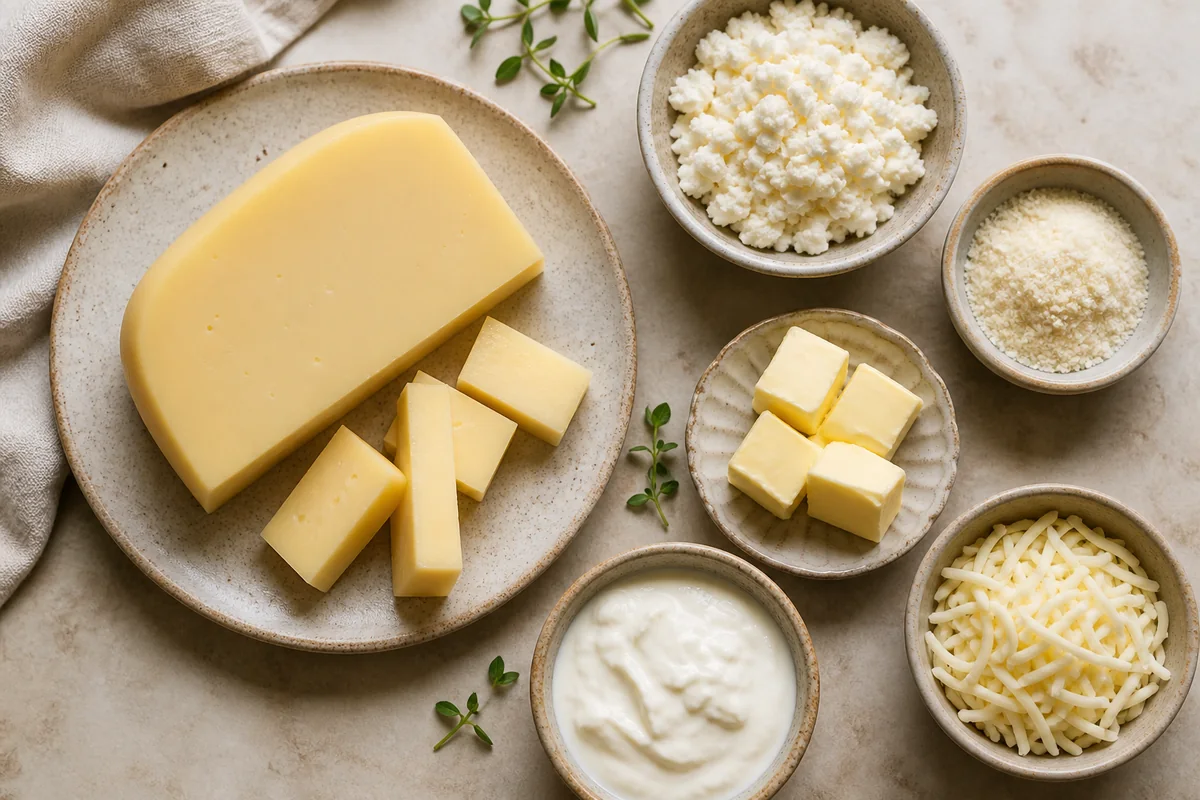
5 Best Kasseri Cheese Substitutes (Easy Swaps)
Ingredients
Equipment
Method
- Identify your use: browning/stacking, smooth melting, or quick melt in baking; pick the substitute with the closest behavior (slice-sear vs. shred-melt).
- Use the ratio from the WPRM table: apply 1:1 for closest matches, and use ¾:1 when the substitute is milder or less tangy.
- Prep for best texture: grate firm cheeses, pat brined/semi-firm options dry, and thin-layer so the dish browns instead of steaming.
- Adjust flavor after swapping: if it tastes flat, add salt in small increments; if it’s too mild, add a tiny splash of lemon or vinegar to the sauce.
- For baking, increase surface browning by broiling 1–2 minutes at the end if your substitute doesn’t naturally color as strongly.
Notes
- Kasseri is typically salty and tangy with a firm, slicable texture and good baking melt—choose substitutes that behave the same way in heat.
- For best browning, use grated or thin slices and spread in an even layer.
Tried this recipe?
Let us know how it was!
Carrie is a food writer and editor with more than 15 years of experience. She has worked for some of the biggest names in the food industry, including Bon Appétit, Food & Wine, and Martha Stewart Living.
As the Editor in Chief of EpicureDelight, Carrie oversees all of the content on the site. She also manages the team of contributing writers and editors, who help to create delicious recipes, helpful tips, and informative articles that you’ll find on the site.
A native of the Chicago area, Carrie is passionate about all things food. She loves trying new restaurants and experimenting with new recipes in her kitchen. She’s also a graduate of the Culinary Institute of America, so she knows a thing or two about food!



