
Kohlrabi sits in a strange spot between apple and cabbage. It's crisp without being watery, mild without being bland, and it holds its shape whether you slice it raw into a slaw or toss it into a hot pan.
Finding a good kohlrabi substitute means asking two questions first: Is the texture crunch or tender? And how much flavor intensity can the dish handle?
Raw applications need something with firm cell structure and low moisture. Cooked dishes are more forgiving, but you still want even softening without mush.
Kohlrabi has a crisp, mild, cabbage-like bite that works raw or cooked. For raw dishes, match the crunch with jicama or broccoli stems. For cooked dishes, celery root or turnip hold shape best. Use a 1:1 ratio for most swaps; reduce by ¼ for napa cabbage stem.
5 Kohlrabi Substitutes Ranked by Texture Match
Texture is the deciding factor here. Watery vegetables collapse under heat; dense roots hold their bite longer.
The table below maps each substitute to its best method and the ratio that keeps your dish on track.
| # | Substitute | Best For | Ratio | Key Note |
|---|---|---|---|---|
| 1 | Celery Root | Both | 1:1 | Add acid to brighten |
| 2 | Broccoli Stems | Both | 1:1 | Peel well before use |
| 3 | Turnip | Cooked | 1:1 | Soak to mellow sharpness |
| 4 | Jicama | Raw | 1:1 | Sweeter; add lime/lemon |
| 5 | Napa Cabbage Stem | Cooked | ¾:1 | Pat dry; cook briefly |
1. Celery Root
Celery root is the sturdiest option on this list. It holds shape when sautéed, roasts evenly when diced, and stays firm enough in thick-sliced salads to give a satisfying bite.
If you want hearty root swaps beyond this one, there are solid options worth knowing.
Raw celeriac is denser than kohlrabi, so slice it no thicker than 2mm for salads. The earthier, more savory flavor needs a hit of lemon juice or white wine vinegar to come close to kohlrabi's cleaner taste.
- Peel: Remove the rough outer skin completely; any brown patches carry bitterness.
- Slice thin for raw: 1-2mm on a mandoline keeps the texture light enough.
- Dice even for cooking: ½-inch cubes cook through in 8-10 minutes over medium-high heat.
- Brighten with acid: Add 1 teaspoon lemon juice per cup to offset the earthy undertone.
Skip if: your recipe depends on kohlrabi's neutral, almost sweet flavor. Celeriac is noticeably more savory.
2. Broccoli Stems
Most people toss the stems, but they are exactly what you want here. The interior of a peeled broccoli stem is pale, dense, and mildly bitter in a way that tracks closer to kohlrabi than the florets ever could.
For a quick stir-fry substitute, broccoli stems are the first thing we reach for.
Broccoli Stems
Works for: stir-fries, slaws, and any raw preparation where mild bitterness is acceptable
Skip if: you need a fully neutral flavor-broccoli stems carry a faint green, earthy note even after peeling
The key is peeling all the way through the outer fibrous layer. Once that's gone, the pale center shreds or dices cleanly.
When you pair broccoli stems with mild cabbage alternatives, you get a slaw base that holds texture longer than most leafy options.
- Peel deeply: Use a vegetable peeler twice; the fibrous ring is thicker than it looks.
- Shred fine for slaw: A box grater or julienne peeler gives even strips.
- Blanch for stir-fry: 1-2 minutes in boiling salted water, then ice bath, keeps bite without rawness.
- Dice for sauté: ¼-inch pieces take 4-5 minutes over high heat to soften evenly.
3. Turnip
Turnip is the most direct flavor swap for cooked kohlrabi, though it comes with a sharper edge. Young, small turnips are notably milder, so size matters when you're at the market.
The sharp, slightly peppery quality that puts some people off fades with heat and acid.
For raw use, turnip can work in a pinch, but it needs 10 minutes in cold water after cutting to shed some bite. Cooked, it softens at roughly the same rate as kohlrabi when diced to the same size.
- Soak for mild flavor: Submerge cut pieces in cold water 10 minutes; drain and pat dry.
- Start earlier when roasting: Add turnip 3-5 minutes before you'd add kohlrabi; it can take slightly longer to caramelize.
- Season boldly: A splash of apple cider vinegar and a pinch of sugar at the end rounds out the sharpness cleanly.
- Choose small turnips: Under 2 inches in diameter; larger ones run more pungent.
For a broader look at what else works in turnip's role, choosing a turnip-friendly swap opens up more options for braises and soups.
Skip if: the dish is delicate or lightly seasoned. Turnip needs assertive seasoning to match kohlrabi's gentleness.
4. Jicama
Jicama is crispier and wetter than kohlrabi, with a sweetness that leans toward water chestnut. In raw salads and slaws, that sweetness is mostly an asset.
It stays crunchy for hours without wilting, which makes it a great make-ahead option. Understanding jicama's sweet profile helps you decide how much acid to add before serving.
The water content is the main thing to manage. Pat jicama dry after cutting and keep your dressing on the tangier side.
- Peel and julienne: Cut matchsticks around 2 inches long; this matches kohlrabi's salad texture closely.
- Add lime or lemon: 1½ teaspoon per cup offsets the natural sweetness and keeps it savory.
- Pat dry first: Press cut pieces between paper towels for 5 minutes before dressing.
- Skip for roasting: Jicama goes rubbery under high heat; it's a raw-only swap here.
Skip if: you need a cabbage-adjacent flavor. Jicama is crisper and sweeter, not brassica-like.
5. Napa Cabbage Stem
The white stem portion of napa cabbage is the fastest swap for quick-cooking applications. It has mild flavor, firm structure, and softens in 3-4 minutes over high heat, which is close to what kohlrabi does in a stir-fry.
If you're already considering mild cabbage-family options, the stem is the most underused part.
| Use | Ratio | Notes |
|---|---|---|
| Quick stir-fry | ¾:1 | High heat, 3-4 min; add at same stage as kohlrabi |
| Steam or braise | ¾:1 | Keep pieces chunky; stop cooking at just-tender |
| Raw slaw | 1:1 | Pat dry well; dress at last minute to avoid wateriness |
The reduced ratio (¾:1) accounts for higher water content. Napa stem releases more liquid under heat than kohlrabi does, so using slightly less keeps your sauce from thinning out.
Skip if: the dish requires long, slow cooking. Napa stem turns limp and stringy with prolonged heat.
Making Kohlrabi Substitutes Taste Right
Matching the texture gets you 70% of the way there. The other 30% is seasoning adjustment, and that depends on which direction your substitute skews.
Sweeter swaps like jicama need more acid up front; earthier ones like celery root or turnip need acid and a little extra salt to reach kohlrabi's clean baseline. When you're working with sharper radish flavors, a short roast pulls the pepper back and makes the swap far more neutral.
- Slice thickness matters: 1-2mm for raw salads, ½-inch dice for sauté, ¾-inch chunks for roasting. Keep it consistent for even cooking.
- For sweeter substitutes: Add 1 teaspoon acid per cup of vegetable, taste, then season with salt. Don't add both at once.
- For earthier substitutes: A light sprinkle of sugar (¼ teaspoon per cup) plus acid can replicate kohlrabi's subtle sweetness without overpowering the dish.
Frequently Asked Questions
Jicama is the best match for raw crunch. It stays crisp for hours without wilting, so julienne it thin, pat it dry, and add extra lime juice to balance the natural sweetness.
Yes. Peel off the tough outer layer completely, then dice into ¼-inch pieces. Blanch for 1-2 minutes first if you want a texture closer to softened kohlrabi rather than raw crunch.
Turnips work 1:1 by weight. To reduce sharpness, soak cut pieces in cold water for 10 minutes, drain well, then cook with a small splash of apple cider vinegar.
Choose jicama for raw salads and slaws where crunch is the priority. Choose celery root when the dish uses heat, since jicama goes rubbery when roasted or sautéed.
For salads, slice daikon at 1-2mm; any thicker and the peppery bite gets sharp fast. For roasting, dice to ½ inch and roast 5-10 minutes to mellow the flavor.
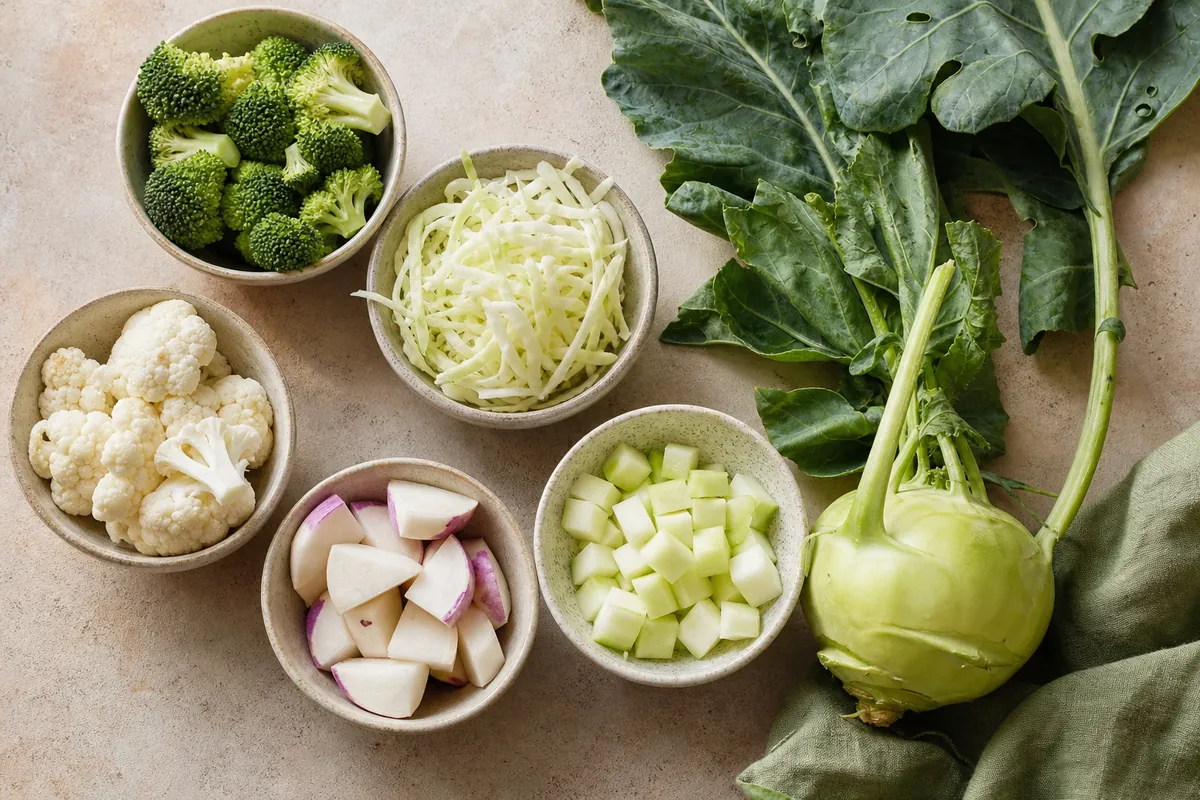
5 Best Kohlrabi Substitutes Worth Trying
Ingredients
Method
- Decide how you’re using kohlrabi (raw crunch vs cooked tender) and pick the closest substitute from the list above.
- Use the listed ratio: measure by weight for the most consistent results in cooked dishes.
- If your substitute is wetter (like cabbage stems), dry it well and reduce cook time to prevent softness.
- Taste after seasoning and adjust: add acid (lemon/vinegar) for sweetness or add salt for a flatter, earthy swap.
- For stir-fries, add the substitute early like you would kohlrabi, then finish quickly to keep some bite.
Notes
- For raw uses, slice or julienne thinly so the substitute matches kohlrabi’s crisp bite.
- For cooked uses, blanch thicker pieces briefly (1–2 minutes) to mimic kohlrabi’s tenderness.
Tried this recipe?
Let us know how it was!
Carrie is a food writer and editor with more than 15 years of experience. She has worked for some of the biggest names in the food industry, including Bon Appétit, Food & Wine, and Martha Stewart Living.
As the Editor in Chief of EpicureDelight, Carrie oversees all of the content on the site. She also manages the team of contributing writers and editors, who help to create delicious recipes, helpful tips, and informative articles that you’ll find on the site.
A native of the Chicago area, Carrie is passionate about all things food. She loves trying new restaurants and experimenting with new recipes in her kitchen. She’s also a graduate of the Culinary Institute of America, so she knows a thing or two about food!



