
Turnips are easy to overlook until you actually need one. They have a mild, slightly sweet flavor and a firm bite that softens into something almost buttery when roasted or simmered long enough.
The right turnip substitute matches that texture first, then worries about flavor.
The swap depends on what your dish needs. A roasted tray wants firm pieces that hold shape.
A mash or purée wants something starchy and creamy.
Turnips are firm, mildly sweet, and starchy. The best swaps are rutabaga (closest match for roasting), parsnip (ideal for mashing), daikon (good for braises), celeriac (deeper flavor, same starch), and potatoes (easiest pantry fix). Use all at a 1:1 ratio by weight.
5 Best Turnip Substitutes (Quick Swaps)
These five swaps cover roasting, mashing, and simmering. The table below maps each one to the dish types it handles best.
| # | Substitute | Best For | Ratio | Key Note |
|---|---|---|---|---|
| 1 | Rutabaga | Roast / Soup | 1:1 | Slightly sweeter; add acid |
| 2 | Parsnip | Mash / Soup | 1:1 | Sweeter; boost salt |
| 3 | Daikon | Braise / Stew | 1:1 | Cut smaller; softens fast |
| 4 | Celeriac | Purée / Gratin | 1:1 | Earthy; stronger flavor |
| 5 | Potatoes | Mash / Stew | 1:1 | Creamier; reduce thickener |
1. Rutabaga
Rutabaga is the closest match you will find. It has a similar firm texture and turns tender at roughly the same rate as turnip in a hot oven or a long braise.
The flavor is a touch earthier and a shade sweeter, so understanding rutabaga's flavor profile before you start helps you season more accurately.
- Ratio: Use 1:1 by weight, peeled and diced the same size as your turnip pieces
- Seasoning fix: Add a small squeeze of lemon or a splash of cider vinegar at the end to balance the sweetness
- Best uses: Roasted sheet-pan dishes, soups, stews, and gratins
- Cook time: Matches turnip almost exactly-check for tenderness at the same point in your recipe
Rutabaga vs Turnip
Works for: roasting, braising, soups, and any dish where you want the swap to go unnoticed
Skip if: the recipe is delicate (quick pickles, raw slaws) where rutabaga's earthiness will stand out
2. Parsnip
Parsnip is a natural fit for mashing. It breaks down into a smooth, creamy texture and carries just enough starch to thicken a purée or soup.
The flavor leans sweeter than turnip, so recipes that already have sugar or sweet vegetables may tip too far in one direction. If you want to explore sweet root swaps beyond parsnip, there are solid options worth knowing.
That sweetness is also why parsnip works well in slow-cooked soups. Long simmering mellows it.
- Ratio: 1:1 by weight; peel and dice as you would turnip
- Cook time: Parsnip softens slightly faster than turnip-start checking for tenderness 3 minutes early
- Flavor tip: A crack of black pepper at the end offsets the natural sweetness well
Skip if: you need the most neutral flavor possible. Parsnip's sweetness is hard to hide in simple, lightly seasoned dishes.
3. Daikon
Daikon is a solid pick for braises and slow stews, where its firm, juicy texture has time to mellow into something genuinely tender. For anyone already familiar with swapping radish-family roots in cooked dishes, daikon will feel familiar.
- Cut size: Dice daikon about 20% smaller than you would turnip-it softens faster and smaller pieces match turnip's final tenderness better
- Cook time: Start checking 4-5 minutes earlier than the recipe states for turnip
- Flavor note: Raw daikon is sharper and more pungent than turnip; that edge fades almost completely with heat
Skip if: you're serving it raw or barely dressed. Daikon's crisp, juicy bite reads very differently from cooked turnip.
4. Celeriac
Celeriac brings a stronger flavor than turnip. It has a celery-forward earthiness that pairs well with cream, butter, and savory herbs, making it a good fit for gratins and purées.
If you want to know what you're working with before buying a whole knob, the earthy knobby root's taste is well worth a quick read first.
| Use | Ratio | Notes |
|---|---|---|
| Purée | 1:1 | Blend with butter and cream; flavor is richer than turnip |
| Gratin | 1:1 | Slice thin; celeriac absorbs dairy well and holds layers |
| Soup | 1:1 | Dice small; simmer longer to soften the fibrous texture |
- Prep: Peel deeply-celeriac's skin is thick and the outer layer can be bitter
- Cook time: Matches turnip in soups; needs 5 extra minutes in gratins for even tenderness
- Pairing: Works especially well with thyme, bay leaf, and a splash of cream
Skip if: you want a mild, background vegetable. Celeriac is noticeable and will shift the flavor direction of any simple dish.
5. Potatoes
Potatoes are the easiest swap in this list. They are starchy, neutral, and available in almost every kitchen already.
Yukon Gold is our preferred pick here-the texture stays creamy without turning gluey, and it mashes more smoothly than a russet. The starchy pantry staple's storage life also means you likely already have one on hand.
Potatoes absorb more liquid than turnip and add more body to soups and stews. Reduce any starch-based thickener by about half when making that swap.
Potatoes vs Turnip
Works for: mashes, thick soups, stews, and any recipe where creaminess is welcome
Skip if: the dish needs distinct, firm cubes that hold their shape through roasting-potatoes can get too soft
- Ratio: 1:1 by weight; dice to the same size as your turnip pieces
- Thickener: Cut any cornstarch or flour in the recipe by half-potatoes thicken on their own
- Salt: Potatoes taste bland without adequate salt; season more aggressively than you would with turnip
Making Turnip Substitutes Work
The key is matching texture first. A firm substitute like rutabaga holds up in a hot oven; a starchy one like potato collapses into soup in the best way.
Once you have the right texture, you can dial in flavor with salt, acid, and herbs. Sweeter swaps like rutabaga and parsnip both benefit from a small acid boost at the end-half a teaspoon of lemon juice or a tiny splash of white wine vinegar is usually enough.
For anyone working with swapping bulb vegetables more broadly, the same texture-first logic applies across the family.
- Control tenderness with cut size: Smaller dice cooks faster and will match turnip's done-point more reliably than larger chunks, especially with daikon and celeriac
- Adjust sweetness: If your substitute is sweeter than turnip (rutabaga, parsnip), balance it with a pinch of extra salt and a small acid hit-lemon juice or cider vinegar-right before serving
- Check early: Most swaps soften 3-5 minutes faster than turnip in soups and braises; start tasting for doneness earlier and pull from heat at the right moment
Frequently Asked Questions
Rutabaga is the best match for roasting. It holds its shape, develops similar caramelized edges, and uses a direct 1:1 swap by weight with no cook-time adjustment needed.
Yes. Parsnip mashes well and has a similar starchy texture. It is sweeter than turnip, so add extra salt and a crack of black pepper to keep the flavor balanced.
Rutabaga is earthier and slightly sweeter. Add a small squeeze of lemon juice or a splash of cider vinegar at the end of cooking to cut through that extra sweetness.
Daikon works well in stews and braises. Cut it about 20% smaller than your turnip pieces and start checking tenderness 4-5 minutes earlier, since daikon softens faster.
Potatoes are the most neutral swap. Yukon Gold is the best choice-it mashes smoothly and adds very little flavor of its own, letting your other seasonings lead.
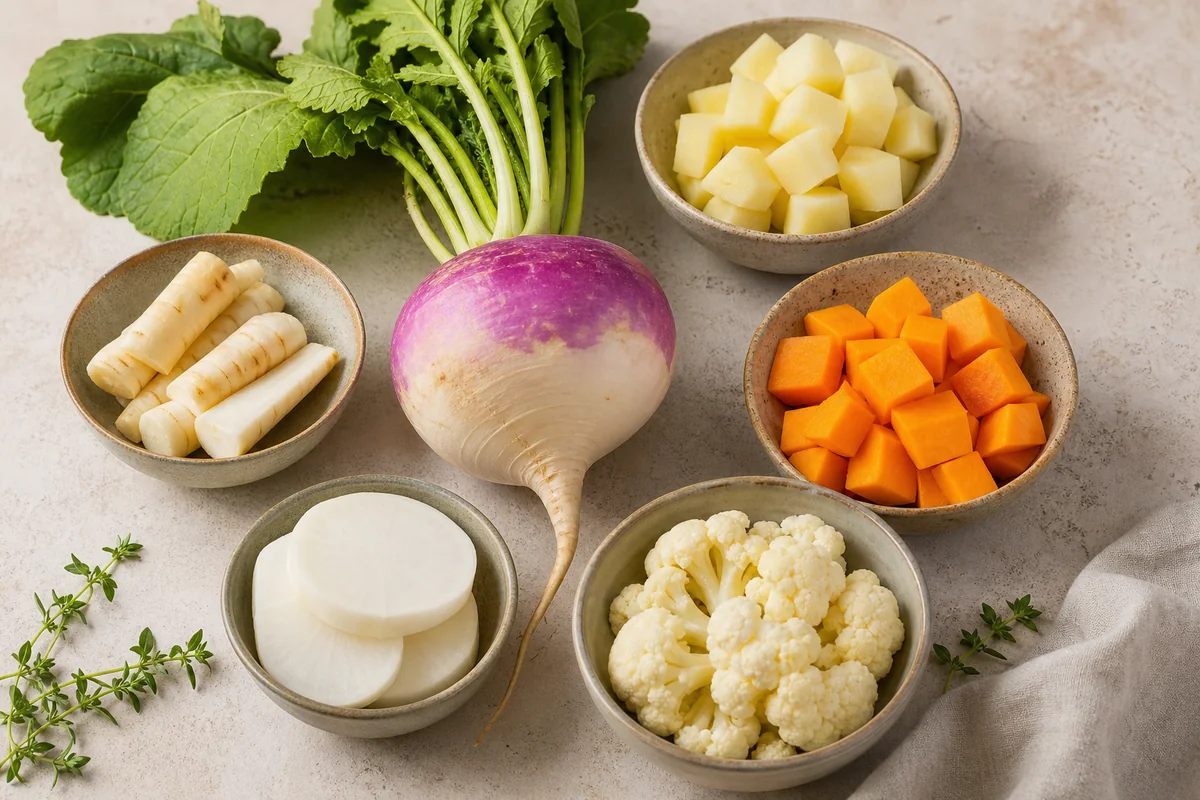
5 Best Turnip Substitutes (Quick Swaps)
Ingredients
Equipment
Method
- Identify your dish type: roasting (needs firm pieces), mashing/purée (needs creamy texture), or soups/stews (needs tender chunks).
- Choose the closest texture match from the table below and use the listed 1:1 ratio for turnip by weight.
- If your substitute is sweeter (rutabaga/parsnip), balance with salt, pepper, and an acid (lemon or vinegar) if the recipe allows.
- If your substitute is wetter/firmer than turnip (daikon/celeriac), cut smaller and start checking for tenderness 3–5 minutes earlier.
- Taste at the end and adjust: add salt for bland swaps or a small splash of acid to brighten earthy alternatives.
Notes
- Use 1:1 by weight unless your recipe specifies a different measurement method.
- For mashes/purée, warm alternatives benefit from a quick boil before mashing to match turnip tenderness.
Tried this recipe?
Let us know how it was!
Carrie is a food writer and editor with more than 15 years of experience. She has worked for some of the biggest names in the food industry, including Bon Appétit, Food & Wine, and Martha Stewart Living.
As the Editor in Chief of EpicureDelight, Carrie oversees all of the content on the site. She also manages the team of contributing writers and editors, who help to create delicious recipes, helpful tips, and informative articles that you’ll find on the site.
A native of the Chicago area, Carrie is passionate about all things food. She loves trying new restaurants and experimenting with new recipes in her kitchen. She’s also a graduate of the Culinary Institute of America, so she knows a thing or two about food!



