
Korean radish has a snap to it that other roots don't quite copy. That firm, watery crunch is what makes dishes like mu-guk and kkakdugi work.
Finding the best korean radish substitute means matching that texture first, then adjusting flavor with seasoning.
The root itself is mild, faintly sweet, and holds its shape when cut thick. It doesn't turn mushy in soup the way some softer vegetables do.
That staying power is what you're trying to preserve when you swap it out.
Daikon is the fastest 1:1 swap for Korean radish in most dishes. Luobo edges ahead for kimchi-style salting. Jicama wins for raw crunch. Turnip and celeriac are solid for cooked applications where mild bitterness can be seasoned out.
Best Korean Radish Swaps (Pick the Closest Texture)
All five substitutes below swap in at a 1:1 ratio by weight or volume. The table is ordered by how closely each one matches Korean radish in both texture and flavor.
If you're swapping in a root vegetable, cut size matters as much as which root you choose. Thicker cuts stay firmer longer, especially in soups and braises.
| # | Substitute | Best For | Ratio | Key Note |
|---|---|---|---|---|
| 1 | Daikon Radish | Raw + Cooked | 1:1 | Cut thicker for crunch |
| 2 | Luobo (Chinese Radish) | Kimchi + Soup | 1:1 | Salt and drain first |
| 3 | Jicama | Raw Only | 1:1 | Pat dry before using |
| 4 | Turnip | Cooked | 1:1 | Soak to cut bitterness |
| 5 | Celeriac | Cooked | 1:1 | Dice small; earthy flavor |
If your recipe specifically needs the "pulling apart" quality of Korean radish cut into thick cubes, avoid jicama and celeriac cut thin. They soften faster and won't give you that satisfying pull.
For colorful radish-forward dishes, the pink-fleshed radish swaps page is worth a look too.
1. Daikon Radish
Daikon is the closest everyday swap you'll find at most grocery stores. It is mild, crisp, and nearly identical in water content to Korean radish, which means it behaves the same way in soups and stir-fries.
The flavor is a touch less sweet, but the difference is small enough that most recipes won't notice.
The key adjustment is cut thickness. Korean radish is usually cut thicker than people assume. Fresh, firm daikon cut into 1-inch cubes will hold its shape through a full braise without turning spongy.
Daikon Radish
Works for: raw banchan, mu-guk soup, stir-fries, quick pickling, kkakdugi-adjacent dishes
Skip if: you need the exact starchy-sweet mouthfeel of Korean radish in raw bites, use luobo or jicama instead
- Thickness: Cut 20-30% thicker than your recipe calls for to preserve snap
- Pickling: Use the same brine ratio as Korean radish; daikon absorbs it at the same rate
- Stir-fry: Add it at the same stage you'd add Korean radish; it needs no extra cooking time
- Soup: Works best added in the last 10-12 minutes so it stays firm, not mushy
2. Chinese White Radish (Luobo)
Luobo is the Chinese version of a large white radish, and it sits very close to Korean radish on the crispness scale. The bite is clean and firm, and it handles salting and draining particularly well.
That makes it a strong pick whenever your recipe relies on drawing out moisture before seasoning.
The skin can be slightly tougher than Korean radish. Peel it fully before using, especially for kimchi-style preparations where texture is everything.
- Salting: Toss cut pieces with 1 teaspoon salt per cup of radish, wait 20 minutes, then rinse and squeeze
- Kimchi-style: Luobo holds its shape through fermentation-adjacent salting better than most substitutes
- Soup: Add it early; it softens a little slower than daikon and benefits from longer cooking
- Thin cuts: Avoid slices thinner than ¼ inch if you need crunch; they collapse fast once salted
Skip if: you cannot cut it to the same thickness as your recipe demands. Thin pieces soften quickly and won't give you the snap Korean radish is known for.
3. Jicama
Jicama is not a radish. But it is one of the crunchiest roots you can buy, and that crunch holds even when sliced thin.
It is the best pick for raw preparations where texture is everything and the dish's seasoning is doing the flavor work.
This crunchy tuber tastes mildly sweet with almost no peppery edge. That's the trade-off. You're borrowing the texture, not the radish flavor.
- Peel: Remove the fibrous brown skin completely before cutting; the flesh is smooth and ready to use
- Pat dry: After cutting, press jicama pieces between paper towels if your dish is salad-style or dressed
- Cut size: Matchstick or ¾-inch cubes work best; larger pieces can feel dense, smaller ones turn watery
- Seasoning fix: Add a small pinch of white pepper and a few drops of rice vinegar to mimic radish sharpness
Skip if: your dish needs cooked radish flavor. Jicama heated in a stir-fry or soup tastes bland and loses most of what makes it useful.
4. Turnip
Turnip is peppery and slightly bitter raw, but it mellows considerably once cooked. In soups, stews, and stir-fries it behaves like a root that belongs there.
It won't fool anyone in a raw radish salad, but that's not where it's trying to compete.
The peppery edge is the main thing to manage. A 10-minute cold water soak on sliced turnip cuts the sharpness enough to use it in most Korean-inspired cooked dishes.
For root vegetable swapping ideas beyond turnip, there are a few good options worth knowing.
- Soak: Submerge sliced turnip in cold water for 10 minutes; drain and pat dry before cooking
- Cut size: Larger chunks (1-inch or more) stay firm in soup; thin slices cook fast and can get mushy
- Stir-fry: Add turnip 2-3 minutes before you'd add Korean radish; it takes slightly longer to reach the same tenderness
- Seasoning: A touch more sesame oil or soy sauce covers the residual bitterness well
Skip if: your dish needs near-radish sweetness in raw form. Daikon or jicama are better calls there.
5. Celeriac (Celery Root)
Celeriac is the emergency swap when nothing else is available. Its flavor is earthy and celery-forward, which is quite different from radish.
But when a dish is built on garlic, gochugaru, soy, or fish sauce, celeriac disappears into the seasoning and holds its shape.
It is dense. That density is actually useful for choosing earthy root alternatives in long-simmered soups, where softer roots would fall apart.
- Dice small: Cut into ½-inch pieces so it cooks through at roughly the same rate as diced radish
- Grating: For quick stir-fries, coarse grating works well and speeds up cook time
- Peeling: The skin is thick and knobbly; use a knife, not a peeler, to remove it cleanly
Skip if: your recipe depends on a clean, mild sweetness and you can't compensate with bold seasoning. Celeriac's celery note will come through in simply dressed or lightly seasoned dishes.
Making the Substitute Taste Like Korean Radish
The three things that matter most are cut thickness, moisture control, and seasoning balance. Cut your substitute at least as thick as the recipe specifies, and go a little thicker if you're using a root that softens fast.
If your swap is releasing a lot of liquid, which this mild, watery root naturally does, salt and drain the pieces for 15-30 minutes before adding them. That step alone closes most of the gap between a substitute and the real thing.
- Salt-and-drain: Toss cut pieces with ½ teaspoon salt per cup, rest 20-30 minutes, then rinse and squeeze out excess water before using
- Seasoning bump: Substitutes often taste blander or sharper; add a small extra pinch of salt or a few drops of rice vinegar to recalibrate
- Cut thickness rule: If your substitute is softer than Korean radish (turnip, celeriac), cut 25% thicker and reduce simmer time by 2-3 minutes
Frequently Asked Questions
Yes, daikon is the closest 1:1 swap in both texture and flavor. Cut it slightly thicker than your recipe calls for to preserve its crunch through cooking.
Luobo (Chinese white radish) is the best pick. It handles salt-and-drain well and holds its crisp bite through fermentation-adjacent preparations.
Jicama holds raw crunch better than any other substitute on this list. Add a pinch of white pepper and rice vinegar to compensate for its milder flavor.
Taste after adding your swap and adjust salt and acid. Most substitutes read either blander or sharper than Korean radish and need a small correction.
Both work well when the dish has bold seasoning. Soak turnip slices in cold water first, and dice celeriac small so it cooks through evenly.
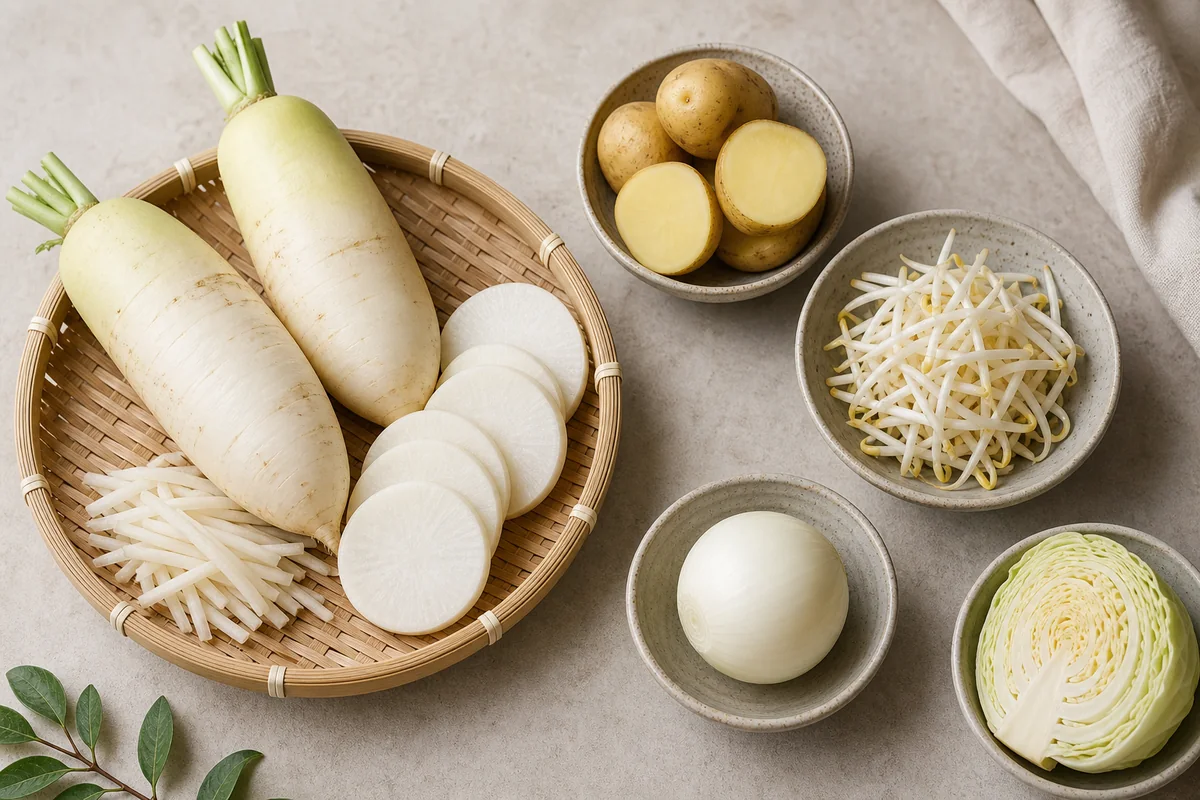
5 Best Korean Radish Substitutes (Honest Picks)
Ingredients
Method
- Identify your use-case: raw/crunchy topping, kimchi-style salting, stir-fry/soup, or quick pickling.
- Choose the closest texture first (firm daikon/luobo for crisp; turnip/celeriac for cooked dishes; jicama for raw crunch).
- Swap using the table’s 1:1 ratio, then match cut size (thicker cuts stay crisper).
- If the substitute is wetter (often jicama/celeriac), pat dry or salt briefly and drain before cooking.
- Taste and adjust seasoning: radish substitutes can read blander or more peppery—add salt/acid to balance.
Notes
- For best crispness, use the firmest radish-like option you can find and keep pieces thick.
- If your recipe relies on salting to firm up Korean radish, salt the substitute similarly and drain after 15–30 minutes.
Tried this recipe?
Let us know how it was!
Carrie is a food writer and editor with more than 15 years of experience. She has worked for some of the biggest names in the food industry, including Bon Appétit, Food & Wine, and Martha Stewart Living.
As the Editor in Chief of EpicureDelight, Carrie oversees all of the content on the site. She also manages the team of contributing writers and editors, who help to create delicious recipes, helpful tips, and informative articles that you’ll find on the site.
A native of the Chicago area, Carrie is passionate about all things food. She loves trying new restaurants and experimenting with new recipes in her kitchen. She’s also a graduate of the Culinary Institute of America, so she knows a thing or two about food!



