
Lemon oil carries something juice alone never can: a fat-soluble citrus "coat" that clings to food and delivers aroma long after plating. When you reach for it and find an empty bottle, the fix isn't to squeeze a lemon and call it done.
The right lemon oil substitute pairs a citrus source with a fat carrier so the finish behaves the same way.
Juice is mostly water and acid. Lemon oil is mostly concentrated aroma molecules that dissolve into fat.
That difference shapes every swap below. The ranked list prioritizes how closely each option recreates the citrus punch and oily texture of the original.
The best lemon oil substitutes pair a citrus source with a fat. Infused zest + olive oil is the closest match for finishing. Lemon extract blended into neutral oil is the most consistent. Lemon juice + olive oil works in a pinch but adds water and acid, so use a lower ratio.
5 Best Lemon Oil Swaps Ranked by Citrus Finish
The table below gives you a fast reference before you read the detail. Ratios are relative to the amount of lemon oil a recipe calls for.
| # | Substitute | Best For | Ratio | Key Note |
|---|---|---|---|---|
| 1 | Olive oil + lemon zest (infused) | Both | 1:1 | Closest fat-soluble finish |
| 2 | Neutral oil + lemon zest (infused) | Both | 1:1 | Cleaner, no olive flavor |
| 3 | Lemon extract + neutral oil | Both | 1:1* | Start at half, taste first |
| 4 | Lemon zest + melted butter | Both | 1:1 | Warm dishes and baking |
| 5 | Lemon juice + olive oil | Both | ¾:1 | Adds water; use less |
1. Olive Oil + Lemon Zest (Infused)
This is the swap that behaves most like the real thing. Olive oil carries fat-soluble citrus molecules pulled from zest, and the result coats food the same way lemon oil does.
When you're grating and storing fresh zest, this method makes good use of every fragrant strip.
Infuse the zest in warm olive oil for 10-15 minutes, then strain if you want a clean finish.
- Best for: Drizzling on fish, pasta, roasted vegetables, and any dish with a fatty finish
- Ratio: 1:1 as a direct swap for lemon oil
- Prep note: Warm the oil gently; do not simmer. Strain through a fine mesh for a clearer result.
Olive Oil + Lemon Zest (Infused)
Works for: Finishing dishes, vinaigrettes, marinades, and light baking where olive flavor fits
Skip if: You need a completely zest-free, ultra-clean finish-or if olive flavor competes with the recipe
2. Neutral Oil + Lemon Zest (Infused)
Same approach as #1, but the fat is avocado oil or canola instead of olive. The flavor is cleaner and lets the citrus lead without any savory undertone.
- Best for: Light glazes, simple cake batters, dressings where olive oil would dominate
- Infusion time: 10 minutes for bright aroma; past 15 minutes, bitterness from the zest's white pith can creep in
- Ratio: 1:1 for lemon oil replacement
- Prep shortcut: Combine zest and oil in a small jar, shake, and let it sit at room temperature for 10 minutes before using
Skip if: You're going for an intentionally olive-forward profile-neutral oil won't give you that savory depth.
3. Lemon Extract + Neutral Oil
Lemon extract is the most shelf-stable option here, and it delivers consistent citrus punch regardless of the season. The catch is concentration.
Most brands pack more intensity per drop than fresh zest does, so you can easily overshoot and end up with a dish that tastes like lemon candy rather than lemon oil.
The fix is simple. Start with half the amount of extract you expect to need, then blend into neutral oil to reach the same volume as the original lemon oil.
The concentrated citrus character of a good extract can get surprisingly close once you dilute it correctly.
- Start here: Mix ½ teaspoon lemon extract into enough neutral oil to match the total lemon oil volume
- Taste before adding more: Extract strength varies widely by brand-one manufacturer's ½ teaspoon equals another's full tsp
- Final ratio: Aim for 1:1 total volume after dilution, but only after tasting
Skip if: You want to avoid any packaged-ingredient flavor. Extract can taste slightly artificial next to fresh zest.
4. Lemon Zest + Melted Butter
Butter carries citrus oils beautifully in warm applications. The fat is richer than olive or neutral oil, which means the finish is more coating and slightly heavier.
That works well for pasta sauces, baked goods, and warm grain dishes.
Add the zest to butter that has just come off the heat. Letting it cool slightly before mixing keeps the aroma bright rather than cooking it off.
For choosing between zest-forward versus juice-forward approaches, butter-zest lands firmly on the aroma side.
| Use | Ratio | Notes |
|---|---|---|
| Pasta or grain sauce | 1:1 | Zest + butter; stir in off-heat |
| Cake or muffin batter | 1:1 | Cool butter first; fold in gently |
| Finishing roasted veg | 1:1 | Toss warm; serve immediately for best aroma |
- Blend method: Stir zest into just-melted, slightly cooled butter and let it sit 2 minutes before using
- Ratio: 1:1 by volume as a starting point; adjust richness after tasting
Skip if: Your recipe is dairy-free, or if you need a thin, non-coating finish.
5. Lemon Juice + Olive Oil
This is the emergency drawer swap. Most home cooks have both on hand, and together they get close enough to save a dish.
The limitation is that freshly squeezed citrus liquid adds water and acid rather than fat-soluble aroma, so the finish is brighter and sharper but also thinner.
Start below the full ratio to avoid making the dish taste tangy rather than lemony.
- Best for: Marinades, pan sauces, and dressings where a little acidity helps
- Ratio: Use ¾ the amount of this blend compared to what lemon oil you'd normally use
- Emulsion method: Whisk juice and oil together briskly, then let the mix rest 2-3 minutes before tasting again
- Adjust if sharp: A tiny extra drizzle of oil rounds the edge without losing the citrus note
Lemon Juice + Olive Oil
Works for: Marinades, pan sauces, salad dressings, and any application where added acidity is welcome
Skip if: You're finishing a dish where you want pure aroma with zero added moisture-juice will dull the finish
Making the Swap Taste Like Lemon Oil
The goal with any of these swaps is the same: get citrus aroma into a fat carrier so it coats food rather than sits on top of it. Juice-only replacements fall short because water and fat don't stay together, and the acid can overpower the dish before the citrus aroma lands.
Understanding the acidity profile of lemon juice helps you judge when to lean on it and when to skip it in favor of a zest-based swap.
- Match the swap to the moment: Use infused zest + oil for finishing (drizzled on after plating) and lemon extract + oil for mixing into batters or sauces where heat will be involved
- Give it a rest: Zest-based blends need at least 5-10 minutes of contact time before using-warm the oil gently if you're short on time, and the citrus oils will transfer faster
- Taste, then adjust: After resting, taste the blend; if it's flat, add a little more zest or a drop of extract; if it's too sharp, add more oil a few drops at a time
Frequently Asked Questions
Lemon zest infused in olive oil is the closest match. It delivers fat-soluble citrus aroma and the same coating finish at a 1:1 ratio.
Yes. Use a neutral oil like avocado or canola as the base, infuse for 10 minutes, and substitute 1:1. Strain the zest out before measuring for batters.
Start at a ¾:1 ratio and whisk well. Rest for 2-3 minutes, taste, then add a small drizzle of extra oil if the acidity is too sharp.
Not directly. Lemon extract is more concentrated, so start at half the amount, blend into neutral oil to match the total volume, then taste before adding more.
Keep it in a sealed jar in the refrigerator and use it within 5 days. Strained versions last a bit longer than those with zest bits still in them.
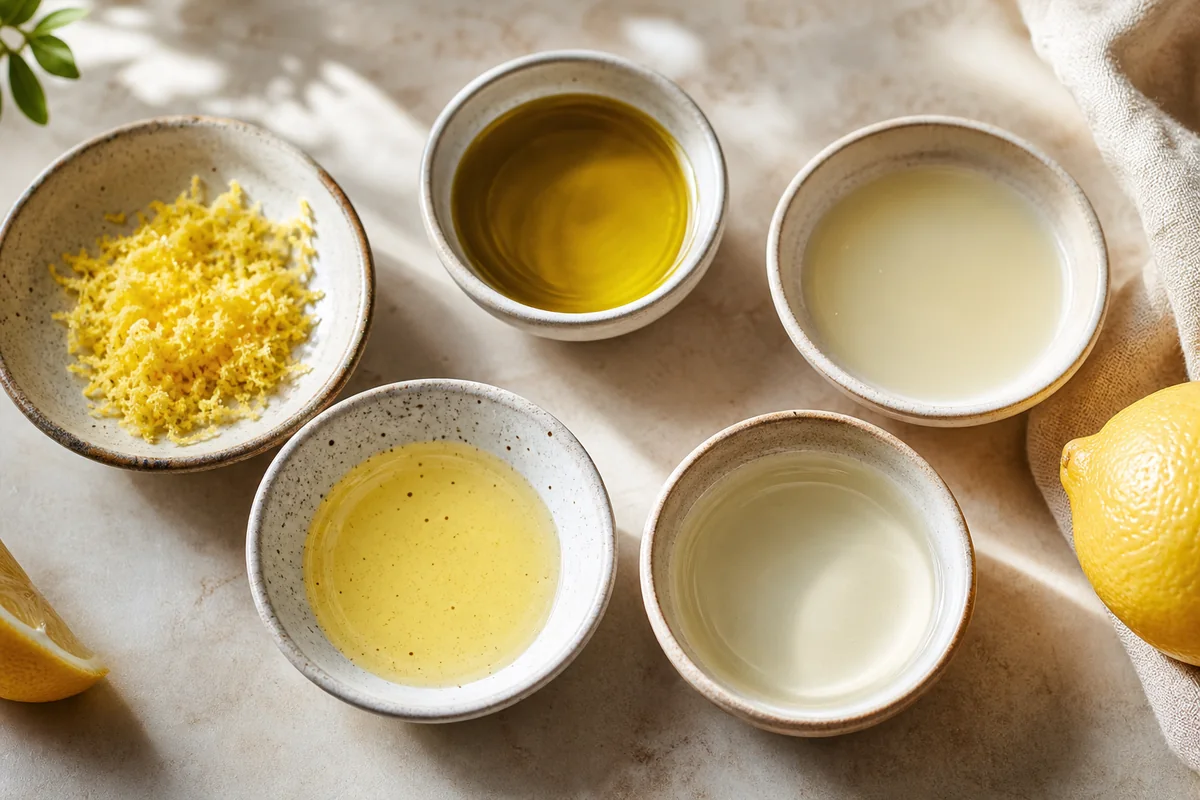
5 Best Lemon Oil Substitutes (Ranked)
Ingredients
Equipment
Method
- Decide how you’ll use it: finishing (needs aroma) or mixing into batter/sauce (needs flavor + fat compatibility).
- Choose the substitute that matches the dish: infused zest + oil for finish, zest + butter for warmth, or lemon extract for the most consistent citrus punch.
- Apply by ratio: use 1:1 for infused oils and extract blends; for lemon juice + oil, start slightly under (¾:1) and adjust after tasting.
- If your substitute is zest-based, let it sit 5–15 minutes (warm gently if needed) so the oils pull more citrus aroma.
- Taste for balance: if it’s dull, add a little more zest; if it’s too sharp, round it out with a touch more oil.
Notes
- Lemon oil’s key job is fat-soluble citrus aroma/finish—substitutes should mimic that coating effect.
- Zest-based swaps improve with short infusion time; juice-based swaps may require a gentler ratio because they add water.
Tried this recipe?
Let us know how it was!
Carrie is a food writer and editor with more than 15 years of experience. She has worked for some of the biggest names in the food industry, including Bon Appétit, Food & Wine, and Martha Stewart Living.
As the Editor in Chief of EpicureDelight, Carrie oversees all of the content on the site. She also manages the team of contributing writers and editors, who help to create delicious recipes, helpful tips, and informative articles that you’ll find on the site.
A native of the Chicago area, Carrie is passionate about all things food. She loves trying new restaurants and experimenting with new recipes in her kitchen. She’s also a graduate of the Culinary Institute of America, so she knows a thing or two about food!



