
That faint citrus-ginger scent is what lemongrass does before anything else hits the pan. Without it, a Thai soup feels flat and a curry loses its top note.
A good lemongrass substitute gets you close by covering both the citrus brightness and the warm, woody undertone that makes lemongrass hard to replace.
Most swaps work well for simmered dishes. A few shine in quick stir-fries.
Knowing which one fits your cooking method saves the dish.
The five best lemongrass substitutes are dried lemongrass, lemongrass paste, lemon zest + ginger, galangal, and rice vinegar + zest. Each one works best in specific cooking methods, so match the swap to how your recipe uses the ingredient.
5 Best Lemongrass Substitutes, Ranked by Use
| # | Substitute | Best For | Ratio | Key Note |
|---|---|---|---|---|
| 1 | Dried Lemongrass | Soups, Curries | 1:1 | Crush before adding |
| 2 | Lemongrass Paste | Stir-Fries, Marinades | 1:1 | Bloom early in oil |
| 3 | Lemon Zest + Ginger | Curries, Broths | 1:1 | Add zest mid-to-late |
| 4 | Galangal | Soups, Braises | ¾:1 | Slice thin, simmer briefly |
| 5 | Rice Vinegar + Zest | Sauces, Dressings | 1:1 | Add vinegar last |
The best swap depends on whether your recipe needs a slow aromatic infusion or a fast citrus punch. For anything that simmers over 20 minutes, dried lemongrass and galangal earn their place.
For bright citrus options in quicker dishes, the zest-based swaps are usually enough.
1. Dried Lemongrass
Dried lemongrass is the most faithful swap for any recipe that simmers. The flavor profile stays close to fresh, though the aroma is more muted at the start.
Crush or grind the dried stalks before adding them so flavor releases into hot liquid faster. Even so, steep for at least 15 minutes to get the full effect.
When you need a confident citrus-ginger base in a long-cook dish, dried lemongrass is the first choice. For anyone exploring ginger-forward dishes, these root spice swaps pair well alongside it.
- Ratio: Use 1 tablespoon crushed dried lemongrass for every fresh stalk called for
- Prep: Crush in a mortar or pulse briefly in a spice grinder before adding to the pot
- Timing: Add at the start of cooking and allow at least 15 minutes of steeping time
- Texture note: Strain or remove pieces before serving; they stay fibrous and chewy
- Skip if: Your dish needs a bright, fresh aroma added right at the end-dried can taste flat without long steeping
2. Lemongrass Paste
Jarred lemongrass paste is the easiest option when you need flavor fast. It dissolves into sauces and stir-fries without any prep, and the 1:1 ratio makes the math simple.
Jarred Paste
Works for: stir-fries, marinades, quick sauces, fried rice
Skip if: you need whole-stalk steeped aroma in a long-simmer soup
Fresh Stalk Infusion
Works for: soups, curries, broths, anything simmered 20+ minutes
Skip if: you're in a hurry or don't have fresh stalks available
Stir paste into hot oil early so it blooms and spreads evenly through the sauce. A cold paste dropped into liquid at the end can taste raw.
For reference, a Thai green curry with jarred paste comes together almost as well as one with fresh stalks, which makes this the go-to for weeknight cooking.
- Ratio: 1 teaspoon paste equals roughly 1 fresh stalk of lemongrass
- Bloom step: Fry paste in oil for 30-60 seconds before adding liquids
- Storage: Paste keeps for weeks in the fridge; check the label for added preservatives
- Skip if: Your dish depends on removing whole stalks before serving-paste distributes throughout and can't be pulled out
3. Lemon Zest + Ginger
This is the best pantry substitute for lemongrass when you need both citrus and warmth. Lemon zest handles the floral brightness; fresh ginger covers the woody, slightly spicy base note.
The two ingredients together get surprisingly close to lemongrass in curries and broths. Neither one alone does the job.
When storing fresh zest ahead of time, keep it sealed and use it within two days for maximum aroma.
Add ginger at the start of cooking so it softens and loses its raw edge. Add zest mid-to-late so the volatile citrus oils stay in the dish rather than cooking off.
- Ratio: 1 teaspoon fresh ginger (grated) + 1 teaspoon lemon zest per lemongrass stalk
- Timing: Ginger goes in with aromatics; zest goes in 5-10 minutes before serving
- Variation: Swap lemon zest for lime zest for a closer match to Thai flavor profiles
- Skip if: Your recipe uses whole stalks for texture or decoration-this swap is flavor only, no structure
4. Galangal
Galangal is the substitute to reach for when you want aromatic depth in a long-simmered dish. It shares lemongrass's woody, resinous quality but reads sharper and more peppery.
Galangal
Works for: Thai soups, bone broths, spice pastes, curries with bold flavors
Skip if: your dish is delicate or lightly citrus-forward-galangal can dominate fast
Use about ¾ of the amount you would use for lemongrass. Slice it thin so the flavor distributes evenly, and pull the slices before serving because galangal stays tough even after long cooking.
If you find yourself needing to replace galangal instead, choosing a comparable swap follows similar logic about woody aromatic depth.
- Ratio: ¾ teaspoon sliced galangal per lemongrass stalk
- Prep: Peel and cut into thin coins; don't grate or it gets too intense
- Timing: Add at the start with other aromatics and simmer for at least 10 minutes
- Flavor note: Galangal is spicier and more medicinal than lemongrass; start low and taste
- Skip if: The dish is meant to be light and citrus-bright-galangal will pull it in a heavier direction
5. Rice Vinegar + Zest
This combination is the emergency swap for sauces and dressings when nothing else is on hand. It won't survive long simmering, but for quick-finish dishes it adds the citrus lift that lemongrass normally provides.
Swapping out the vinegar itself is possible if even rice vinegar is unavailable-a small amount of white wine vinegar works at ¾ the quantity.
| Use | Ratio | Notes |
|---|---|---|
| Dipping sauce | 1 teaspoon zest + ½ teaspoon vinegar | Add vinegar last; taste as you go |
| Marinade | 1 teaspoon zest + 1 teaspoon vinegar | Let meat sit 30+ min for flavor to absorb |
| Stir-fry finish | ½ teaspoon zest + ¼ teaspoon vinegar | Add off heat to preserve brightness |
| Salad dressing | 1 teaspoon zest + 1 teaspoon vinegar | Whisk with oil to soften the acid |
- Ratio: 1 teaspoon lemon or lime zest plus ½ teaspoon rice vinegar per stalk
- Order: Add zest first for aroma, then splash vinegar in at the end
- Skip if: The recipe simmers longer than 15 minutes-vinegar brightness fades and can turn bitter
- Tip: A pinch of fresh grated ginger added alongside makes this combo noticeably more complete
Making Lemongrass Substitutes Work (So They Taste Right)
Timing is the single biggest factor when using any of these swaps. Zest blooms fast and should go in late; paste needs heat early to open up; dried lemongrass needs time to steep, so early addition is non-negotiable.
For dishes where stored Thai curry is being reheated, add a little fresh zest when warming to revive the aroma that faded during refrigeration. Understanding ginger's flavor profile also helps when calibrating how much to use alongside zest-based swaps.
- For simmered dishes: Add dried lemongrass or galangal at the very start; never rely on late additions for these two
- For stir-fries and marinades: Bloom paste in oil first, or add zest during the last 2 minutes of cooking
- Taste and adjust: All substitutes are starting points; a pinch more zest or an extra ¼ teaspoon ginger at the end usually closes the gap
Frequently Asked Questions
Dried lemongrass (crushed) is the closest match for Thai soups. Steep it for at least 15 minutes so the aromatic oils fully release into the broth.
Yes, 1 teaspoon of paste equals roughly 1 fresh stalk. Bloom the paste in hot oil first so it doesn't taste raw in the finished dish.
Add ginger early so it mellows with heat, and hold the zest until the last 5 minutes. This keeps brightness present without it feeling sharp or raw.
Dried lemongrass is more muted than fresh, so crush it first and steep for a minimum of 15-20 minutes to draw out full flavor.
Use 1 teaspoon of zest plus ½ teaspoon of rice vinegar per stalk. This works well in sauces and dressings but fades in dishes that simmer long.
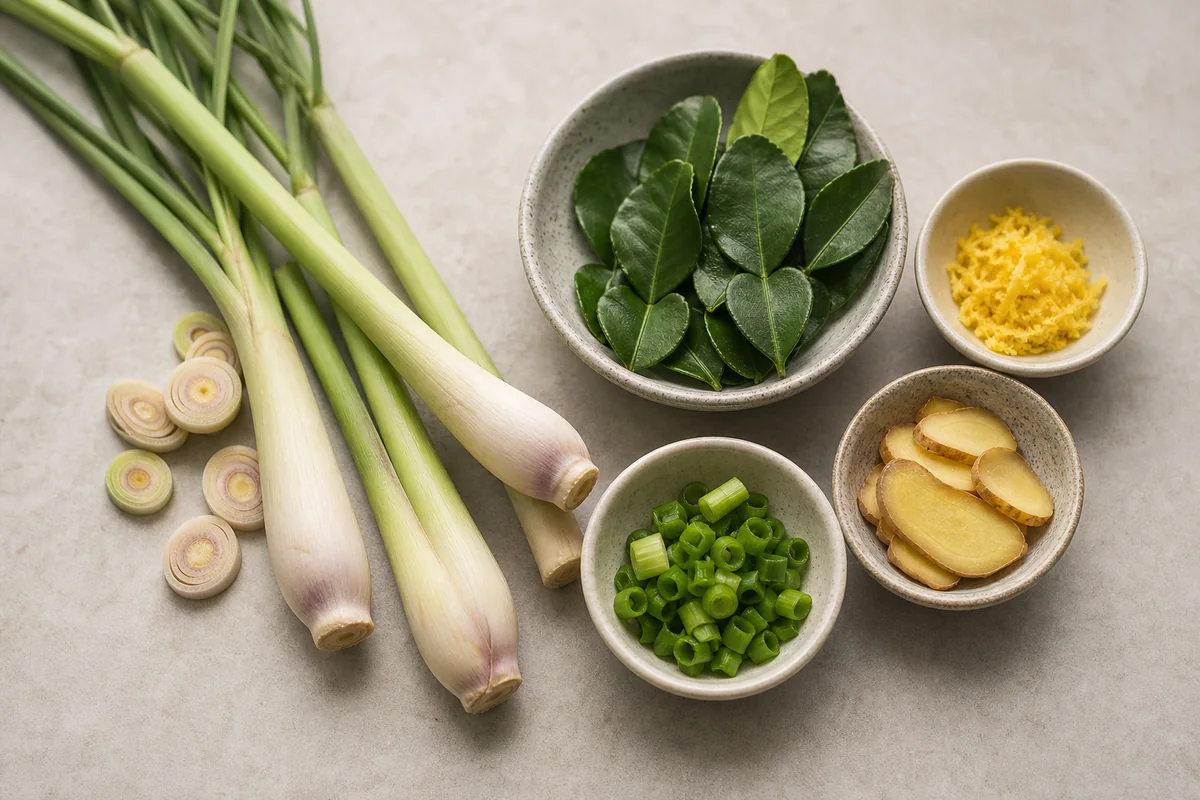
5 Best Lemongrass Substitutes (Ranked)
Ingredients
Equipment
Method
- Decide how your recipe uses lemongrass: simmer/infuse (soups, curries) vs. quick flavoring (stir-fries, marinades, finishing).
- Use the listed substitute ratio as your starting point, then prep it for flavor release (crush dried, grate zest, slice fresh).
- If your substitute is more intense (galangal or vinegar), start slightly low and build flavor in the pot.
- Taste at the end and adjust with a pinch of zest/ginger or a tiny splash of vinegar to nail the citrus balance.
Notes
- For soups/curries, prioritize substitutes that can steep or simmer (dried lemongrass, paste, zest+ginger).
- For marinades and stir-fries, prioritize paste or freshly grated mixes so the flavor hits quickly.
Tried this recipe?
Let us know how it was!
Carrie is a food writer and editor with more than 15 years of experience. She has worked for some of the biggest names in the food industry, including Bon Appétit, Food & Wine, and Martha Stewart Living.
As the Editor in Chief of EpicureDelight, Carrie oversees all of the content on the site. She also manages the team of contributing writers and editors, who help to create delicious recipes, helpful tips, and informative articles that you’ll find on the site.
A native of the Chicago area, Carrie is passionate about all things food. She loves trying new restaurants and experimenting with new recipes in her kitchen. She’s also a graduate of the Culinary Institute of America, so she knows a thing or two about food!



