
Limburger's smell is the point. That sharp, almost barnyardy aroma is what makes a Limburger sandwich work.
Finding a substitute means deciding upfront whether you're chasing the funk, the melt, or just a passable stand-in when Limburger isn't available.
The swap you pick depends on two factors: flavor intensity and melt behavior. Washed-rind cheeses land closest to the original taste.
Softer melting cheeses handle heat better but trade away some pungency.
For maximum funk, use Münster or Époisses. For smooth melt in baking, Taleggio or Raclette are easier to work with. Brie (rind removed) is your milder fallback. Gorgonzola trades washed-rind aroma for blue tang. All swap 1:1 by weight except Gorgonzola, which uses ¾:1.
Best Limburger Cheese Substitutes (Plus Quick Flavor Guide)
| # | Substitute | Best For | Ratio | Key Note |
|---|---|---|---|---|
| 1 | Münster (Munster) | Both | 1:1 | Closest washed-rind funk |
| 2 | Taleggio | Both | 1:1 | Fruity melt, great heat performance |
| 3 | Époisses de Bourgogne | Both | 1:1 | Use less; very intense |
| 4 | Brie (rind removed) | Both | 1:1 | Mild, smooth, low aroma |
| 5 | Raclette | Both | 1:1 | Stretchy melt, moderate funk |
Use this table to match by funk level first. If the dish needs heat stability, look at the melt column.
Washed-rind cheeses deliver the closest pungent profile. If odor is a concern, move down toward Brie.
5 Best Limburger Cheese Substitutes Ranked by Flavor and Melt
1. Münster (Munster) Cheese
Münster is the most direct Limburger swap you'll find outside a specialty cheese shop. It shares the same washed-rind character: tangy, slightly funky, and creamy when warmed.
American Münster is milder than European Munster, so check the label if you want a closer match to this pungent pressed cheese.
It melts smoothly without pooling oil, which makes it reliable in both sandwiches and pan-toasted applications.
Münster (Munster)
Works for: grilled cheese, open-face toast, light gratins, any recipe where washed-rind flavor matters
Skip if: you're sensitive to strong odor - European Munster can approach Limburger's intensity
- Sandwiches: Use slices directly, no prep needed
- Pan toast: Grate coarsely so it melts faster and more evenly
- Gratin: Layer thin slices; it browns without drying out
2. Taleggio
Taleggio sits in a fruity-sour washed-rind lane rather than the barnyard lane of Limburger. The aroma is real but softer.
It melts almost silkily, making it one of the better picks when the recipe needs heat and you can't have the cheese seize or break. If you want to understand choosing between washed-rind options more carefully, that's worth a read before buying.
- Pasta bakes: Taleggio melts into sauce without curdling
- Warm sandwiches: Works well under a broiler; stays creamy
- Toast: Spread directly from the wheel - no extra fat needed
- When to choose it over Münster: Pick Taleggio when the cook time is longer and a stable melt matters more than peak funk
Skip if: you need maximum Limburger-style pungency. Taleggio's aroma reads softer on most palates.
3. Époisses de Bourgogne
Époisses is the closest you get to matching Limburger's intensity in a single swap. The rind is washed in marc de Bourgogne, and the interior is spoonable-soft with an aggressive, fermented smell.
It delivers everything Limburger promises. Understanding the fruity-funk flavor spectrum of washed-rind cheeses helps put Époisses at the far end of that scale.
- Dose control: Start at ¾ of the Limburger amount; taste before adding more
- Blending trick: Mix with equal parts Raclette to moderate the smell without losing funk
- Cooking tip: Add it off heat when possible - high heat can sharpen the ammonia note
- Best format: Spread on toast rather than melted in a closed dish
Skip if: strong washed-rind aroma is a problem for your household. Époisses may overwhelm the dish and the kitchen.
4. Brie (Rind Removed)
Brie won't deliver Limburger's funk. It is the mild end of this list, included because it melts beautifully and works when the recipe needs creamy texture more than pungent flavor.
Removing the rind before use avoids the slight bitterness the white exterior adds. For a clear picture of how the two cheeses compare in texture and fat content, the softer cheese contrast is a useful reference.
Once the rind is off, Brie melts fast and smoothly. It works best in baking where Limburger was chosen for texture rather than taste.
- Baking: Use full-fat Brie; low-fat versions separate under heat
- Sandwiches: Pair with a sharp mustard or pickled onion to add the flavor edge Brie lacks
- Prep note: Chill the wheel briefly before removing the rind - it peels cleanly when firm
Skip if: the whole purpose of the recipe is to capture Limburger's washed-rind intensity. Brie will taste noticeably gentle.
5. Raclette Cheese
Raclette is built for heat. It stretches, stays smooth, and doesn't pool oil the way some pungent cheeses do when overheated.
The flavor is mild-to-moderate, with a faint buttery earthiness. It is a strong melt swap when the pungency of Époisses or Münster is too much.
Understanding melt-forward cheese characteristics helps explain why Raclette performs so consistently in hot applications.
| Use | Ratio | Notes |
|---|---|---|
| Open-face toast | 1:1 | Raclette; slice thin, broil 2-3 min |
| Gratin | 1:1 | Raclette; grate coarsely for even melt |
| Warm sandwich | 1:1 | Raclette; use low-medium heat to keep stretch |
| Cold board | 1:1 | Raclette + pinch of salt; flavor reads flat cold |
- Shred or cube it: Pre-cut pieces melt in under 3 minutes under a broiler
- Add salt: A small pinch brings the flavor closer to Limburger's saline bite
Skip if: your recipe depends on Limburger's fermented intensity. Raclette is the melt champion but not the funk champion.
Making Limburger Cheese Substitutes Work (Bake, Melt, or Serve)
Every swap on this list involves at least one trade-off: either you keep the funk and manage the melt, or you keep the melt and accept a gentler flavor. The good news is that most of these cheeses are forgiving once you control two variables - portion size and heat level.
When using melty washed-rind swaps in gratins or baked dishes, always cut the cheese into small uniform pieces so it distributes evenly before the surface browns.
- Match intensity to use: Stronger cheeses (Époisses, Münster) suit sandwiches and cold boards where aroma is front-and-center; save milder picks for baking where heat modifies flavor
- Blend to calibrate: If a substitute is sharper than expected, mix it 50/50 with Brie or Raclette to pull the intensity down without losing creaminess
- Avoid freezing: Freezing any of these cheeses changes the protein structure and hurts melt behavior - buy fresh and use within a week of opening
Frequently Asked Questions
Münster is the closest 1:1 swap for sandwiches. European Munster delivers the washed-rind funk; American Münster is milder but still melts well on toast.
Yes, full-fat Brie with the rind removed melts cleanly in baking. The flavor will be much milder than Limburger, so add a sharp mustard or seasoning to compensate.
Blend the pungent cheese 50/50 with Raclette or Brie. Reducing the amount by 25% and mixing in a milder cheese brings intensity down without losing creaminess.
Use ¾ the amount of Gorgonzola called for. Its blue tang is more concentrated than Limburger's washed-rind flavor, so a straight 1:1 swap usually over-powers the dish.
Wrap each cheese in wax paper first, then seal it in an airtight container. This blocks odor transfer to other foods and keeps the rind from drying out.
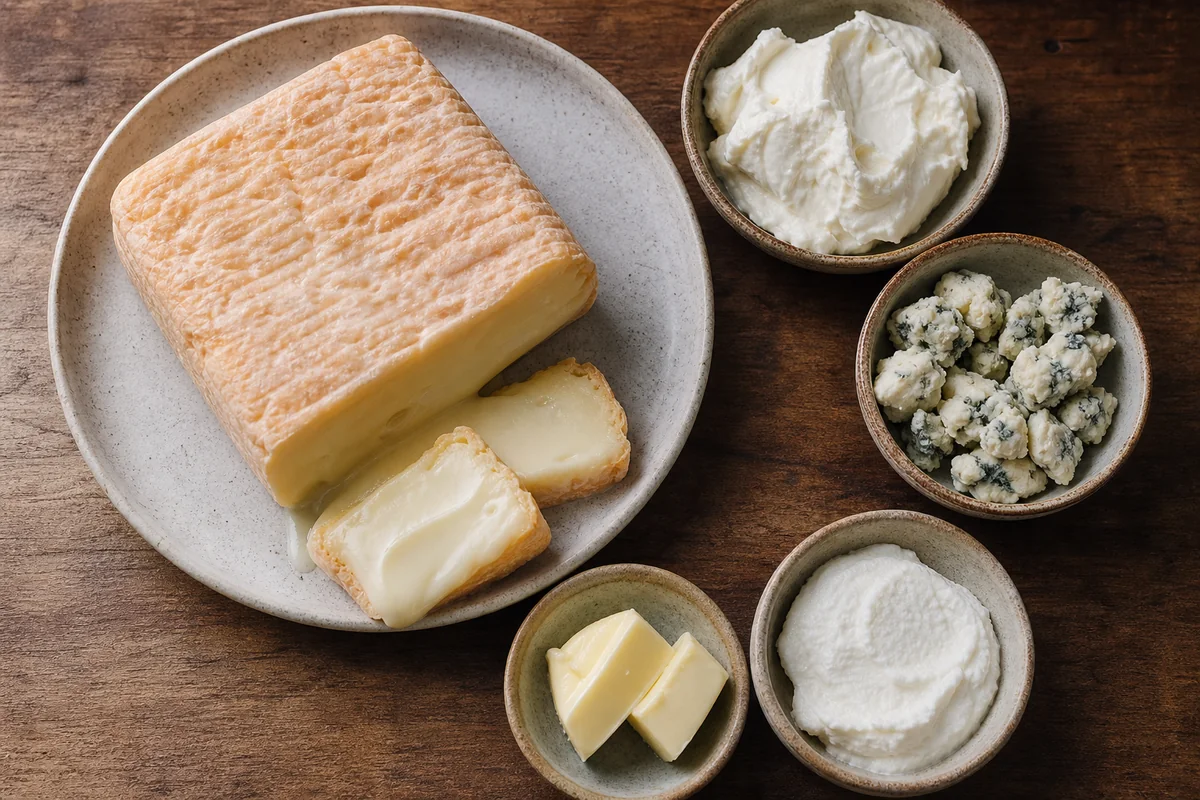
5 Best Limburger Cheese Substitutes That Taste Right
Ingredients
Equipment
Method
- Identify your use: sandwich/toast (need melt + punch) or baking/gratin (need melt stability).
- Start with the closest flavor lane: choose a washed-rind cheese if you want the strongest limburger-style aroma.
- Swap by weight using the table’s ratio (1:1 for washed-rind + raclette; use ¾:1 for gorgonzola).
- If the substitute is stronger than expected (especially Époisses), reduce the amount and/or mix with a milder cheese to level it out.
- For cooking, cut into thin shreds or small cubes so it melts evenly instead of pooling oil.
Notes
- For recipes, measure by weight to keep melt and saltiness consistent.
- Funk level varies by brand/aging—taste before committing, especially for Époisses and Münst er.
Tried this recipe?
Let us know how it was!
Carrie is a food writer and editor with more than 15 years of experience. She has worked for some of the biggest names in the food industry, including Bon Appétit, Food & Wine, and Martha Stewart Living.
As the Editor in Chief of EpicureDelight, Carrie oversees all of the content on the site. She also manages the team of contributing writers and editors, who help to create delicious recipes, helpful tips, and informative articles that you’ll find on the site.
A native of the Chicago area, Carrie is passionate about all things food. She loves trying new restaurants and experimenting with new recipes in her kitchen. She’s also a graduate of the Culinary Institute of America, so she knows a thing or two about food!



