
That stretchy, browned pull of melted raclette cheese is hard to fake. The cheese has a semi-firm body that softens into a glossy, even layer under heat, with a nutty, faintly tangy flavor that most everyday melting cheeses can't quite match.
When you need a raclette cheese substitute, the goal is finding something that hits both marks: smooth melt and at least some of that alpine depth.
Raclette is chosen for melt behavior first. It flows evenly, browns without turning greasy, and stays cohesive.
A replacement that separates into oily puddles or cools into a rubbery slab misses the point entirely.
Gruyère is the closest overall swap for raclette. It melts evenly, browns well, and keeps that nutty Alpine flavor. Fontina gives you a creamier stretch. A cheddar-mozzarella blend works as a reliable emergency option when you need maximum melt fast.
5 Best Raclette Cheese Substitutes (That Melt Like the Real Thing)
The substitutes below are ranked by how closely they match raclette's melt and flavor. The top picks will brown and stretch with minimal adjustment.
The lower picks need a small tweak, usually a seasoning boost or a blend. This list focuses on dairy cheeses.
Skip it if you need a dairy-free swap.
| # | Substitute | Best For | Ratio | Key Note |
|---|---|---|---|---|
| 1 | Gruyère | Both | 1:1 | Best browning + nutty flavor |
| 2 | Fontina | Both | 1:1 | Creamy stretch, smooth melt |
| 3 | Emmental (Swiss) | Cooking | 1:1 | Mild; needs flavor boost |
| 4 | Monterey Jack | Cooking | 1:1 | Very melt-friendly, flat flavor |
| 5 | Cheddar + Mozzarella | Both | 1:1 | Blend for depth and stretch |
1. Gruyère
Gruyère is the substitute we reach for first. It shares raclette's firm body, melts into a smooth glossy layer, and produces those appetizing browned edges when broiled.
The flavor is nuttier and slightly more assertive than raclette, but that's rarely a problem. If you want to understand this aged Alpine wheel before committing to it, the flavor profile is worth a read.
Grate it fine. Finely grated Gruyère caramelizes faster at the surface, which means better browning in less time under the broiler.
- Ratio: Use 1:1 by weight in every application.
- Grating tip: Use the small holes of a box grater for faster, more even melt.
- Best dishes: Raclette-style potato plates, French onion soup, open-faced toasts, and gratin.
- Flavor adjustment: If it tastes too sharp, cut a small portion with mild Emmental.
Skip if: you want a gentle, buttery cheese with almost no nutty edge.
2. Fontina
Fontina melts with a creaminess that raclette doesn't always have, making it the best pick for sandwiches and skillet applications. The stretch is real.
Pull a toastie apart and Fontina gives you that long satisfying string. The flavor is mild and grassy, not as assertive as Gruyère.
If you're curious about buttery Italian melt cheeses in general, Fontina is one of the better-documented options.
- Sandwiches: Slice thin or grate; press at medium heat so it melts before the bread burns.
- Skillet melts: Add a lid for the last minute to trap steam and speed up the melt without direct heat.
- Flavor fix: Add a small pinch of white pepper or a smear of Dijon to the bread for more bite.
- Storage note: storing Fontina properly after opening matters; rewrap in wax paper, not plastic, to prevent moisture loss.
Skip if: you need strong browning and a noticeably nutty flavor. Fontina softens beautifully but won't give you that caramelized edge raclette produces.
3. Emmental (Swiss)
Emmental is widely available and melts with a clean, buttery smoothness. It won't brown as aggressively as Gruyère, but it flows evenly without separating.
The flavor is mild, almost sweet, which means it works well in dishes where you want melt without competition. If you're working on fondue-like applications, Emmental's classic role in swapping out Swiss-style cheeses gives you a solid foundation to build from.
- Flavor boost: Stir in a small pinch of salt and a few drops of white wine or lemon juice to sharpen the taste.
- Fondue-style: Emmental is near-perfect here. Use 1:1 and it melts without graininess.
- Raclette-style plates: Works, but add a small amount of Gruyère alongside it for extra depth.
- Grating: Grate medium-coarse; too fine and Emmental can clump before it melts.
Skip if: you're trying to replicate raclette's tangier, more mineral edge. Emmental is too gentle on its own.
4. Monterey Jack
Monterey Jack is possibly the easiest cheese on this list to melt. It softens quickly, stays smooth under heat, and won't turn greasy.
The flavor is mild, almost neutral, which is a tradeoff worth knowing upfront. It won't produce the nutty, assertive character of raclette without some help.
Monterey Jack vs. Gruyère/Fontina
Works for: quick weeknight melts, quesadilla-style dishes, casseroles, and any application where melt speed matters more than flavor complexity
Skip if: you want a recognizable Alpine taste or strong browning; Monterey Jack stays pale and mild under the broiler
- Flavor fix: Add a pinch of mustard powder or a small sprinkle of smoked salt before serving.
- Browning: Broil at high heat and watch closely; it can melt flat without much color.
- Best dishes: Baked potatoes, creamy gratins, and casual melts where texture is the priority.
- Also consider: mild melt-friendly picks if Monterey Jack is also unavailable.
5. Cheddar + Mozzarella Blend
This is the combination you make when the pantry doesn't cooperate. Cheddar alone can go oily and sharp.
Mozzarella alone is too bland and pulls without flavor. Together, they cover raclette's two main traits: the mozzarella provides the stretch and cohesion, while the cheddar brings the depth.
If you're deciding between a sharp and picking the right cheddar variety, white cheddar is generally the cleaner choice here.
Cheddar + Mozzarella vs. Single Cheese
Works for: broiled toasts, baked dishes, and raclette-style potato plates when you need fast gooey melt with some flavor
Skip if: you want a purely nutty Alpine flavor-this blend will read as cheddar-forward and sharper than raclette
- Ratio: Use roughly 60% cheddar to 40% mozzarella by weight for the best balance.
- Shredding: Grate both cheeses and toss them together before adding to your dish.
- Broiling: Keep the oven rack at mid-height to brown the surface without scorching the edges.
- Flavor tip: A small drop of Worcestershire sauce stirred into the shredded blend adds a savory boost.
Skip if: you need a clean, single-cheese melt or a true Alpine flavor without any cheddar sharpness.
Making a Raclette Cheese Substitute Work (No Grainy Melts, No Flat Flavor)
The biggest variable in any cheese substitution is surface area. Finely grated cheese melts faster and more evenly than slices, which means fewer cold spots and less risk of that greasy, separated layer. Start there, every time.
For browning, make sure your dish is positioned close enough to the broiler element. Most home ovens need the rack 4 to 6 inches from the top for real caramelization.
If the substitute tastes flat after melting, a small seasoning fix goes a long way. If you're also working with aging Alpine cheeses at home, knowing their storage window helps you plan substitutions before they're needed.
- Grate fresh: Pre-shredded bags have an anti-caking coating that interferes with smooth melting. Always grate a block.
- Season after melting: Add a pinch of salt, mustard powder, or white pepper after the cheese melts. Adding before can draw out moisture and make the melt watery.
- Boost mild substitutes: A teaspoon of dry white wine or a few drops of lemon juice stirred into Emmental or Monterey Jack sharpens the flavor without changing the melt.
Frequently Asked Questions
Gruyère is the closest match. It melts evenly, browns under the broiler, and has a similar nutty, alpine flavor at a 1:1 swap ratio.
Mozzarella melts well but barely browns and has almost no flavor. Blend it with cheddar for better results.
Add a small pinch of salt and a teaspoon of dry white wine or lemon juice after melting. This sharpens Emmental without changing its melt behavior.
Use 60% cheddar and 40% mozzarella by weight. Grate both, toss together, then apply as you would raclette.
Always grate from a block using the small holes of a box grater. Pre-shredded cheese has an anti-caking coating that prevents smooth, even melting.
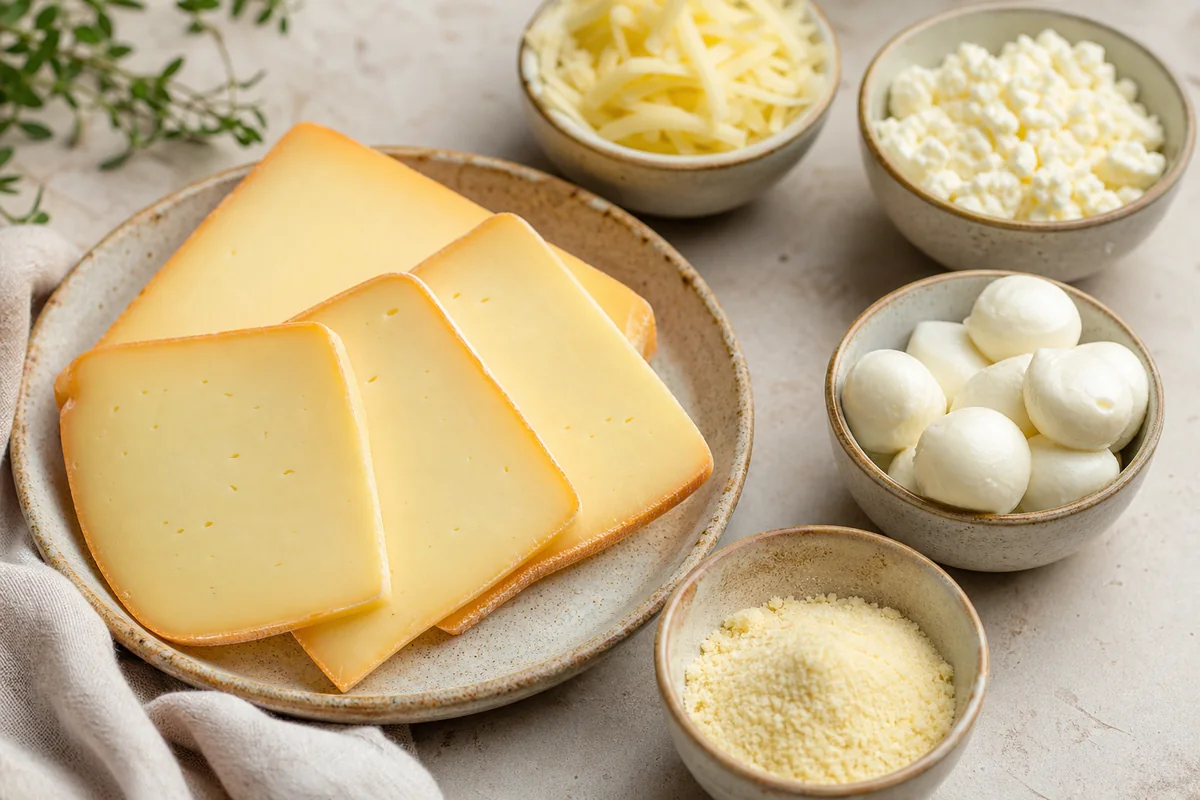
5 Best Raclette Cheese Substitutes in Every Recipe
Ingredients
Equipment
Method
- Decide the vibe: nutty-browned (Gruyère), creamy-stretch (Fontina), mild-melty (Emmental/Monterey Jack), or quick-stretch (cheddar+mozzarella).
- Use the 1:1 swap ratio for most dishes; for a blend, start with 1:1 total cheese by weight (cheddar + mozzarella combined).
- For best browning, shred or grate the cheese so the surface melts and caramelizes faster.
- If the substitute tastes flatter than raclette, add 1–2 small pinches of salt or mustard powder to lift the flavor before serving.
- Taste after melting: if it’s too mild, swap part of it for a sharper cheese (a little more cheddar); if it’s too sharp, add a small portion of mozzarella or a milder Swiss.
Notes
- Grating/shredding improves melt and browning for every option.
- Start with 1:1 by weight unless your dish is unusually moist (then add slightly less or reduce added liquids).
Tried this recipe?
Let us know how it was!
Carrie is a food writer and editor with more than 15 years of experience. She has worked for some of the biggest names in the food industry, including Bon Appétit, Food & Wine, and Martha Stewart Living.
As the Editor in Chief of EpicureDelight, Carrie oversees all of the content on the site. She also manages the team of contributing writers and editors, who help to create delicious recipes, helpful tips, and informative articles that you’ll find on the site.
A native of the Chicago area, Carrie is passionate about all things food. She loves trying new restaurants and experimenting with new recipes in her kitchen. She’s also a graduate of the Culinary Institute of America, so she knows a thing or two about food!



