
That mix of maraschino cherry aroma and a whisper of bitter almond is harder to fake than it looks. Luxardo Maraschino Liqueur pulls off something specific: it's sweet but not cloying, fruity but not jammy.
Finding the right luxardo maraschino liqueur substitute means matching that behavior, not just the color.
The five options below are chosen by flavor function. Some preserve the alcohol, some skip it entirely, and one is a kitchen-pantry combination that works well in baking.
Pick by use-case first, then dial in sweetness and intensity.
Luxardo Maraschino delivers delicate cherry aroma plus a quiet almond/stone-fruit note. For cocktails, the closest swaps are Amarena cherry liqueur or kirsch. For baking, almond extract combined with cherry juice recreates that same two-part flavor. Syrup-based options work in alcohol-free situations but need a sweetness adjustment.
5 Best Luxardo Maraschino Liqueur Substitutes Ranked by Flavor Match
Every substitute below is matched by sweetness level, cherry intensity, and whether alcohol is required. The table gives you a fast scan.
The sections after it show you how to actually use each one.
| # | Substitute | Best For | Ratio | Key Note |
|---|---|---|---|---|
| 1 | Amarena Cherry Liqueur | Both | 1:1 | Closest cherry-almond profile |
| 2 | Kirsch | Both | 1:1 | Drier; add a touch of sugar |
| 3 | Maraschino Cherry Syrup | Baking | 1:2 | No alcohol; reduce sugar |
| 4 | Almond Extract + Cherry Juice | Baking | ¾:1 | Potent; whisk before adding |
| 5 | Dry Sherry + Cherry Juice | Both | ½:1 | Adds depth; not cherry-forward |
1. Amarena Cherry Liqueur
Amarena cherry liqueur lands in the same flavor territory as Luxardo. It has a real-cherry depth and a slight bitterness that keeps it from tasting one-dimensional.
If you're choosing a better cherry option, this family of liqueurs is where to start.
Some Amarena brands run sweeter than Luxardo. If yours is noticeably syrupy, pull back by about 1 teaspoon per 30ml and compensate with a small squeeze of lemon.
- Cocktail use: Swap 1:1; no other adjustment needed in most recipes
- Baking use: Reduce added sugar by 10% if the batter already tastes sweet
- Sweetness fix: Add 3-4 drops of fresh lemon juice to tighten any cloying edge
*Skip if:* you need an alcohol-free substitute. This is still a liqueur.
2. Kirsch
Kirsch is a dry cherry eau-de-vie. It is clear, boozy, and tart where Luxardo is amber and sweet.
That tart brightness is exactly what makes it good in chocolate desserts and spirit-forward cocktails, but it needs a small sweetness correction in most recipes. If you want more background on this sharp eau-de-vie, the flavor profile is worth knowing before you reach for it.
- In cocktails: Use a 1:1 swap and add ¼ teaspoon simple syrup per drink to replace Luxardo's sweetness
- In baking: Works well in dense cakes and fondues; less effective in light frostings where its dryness reads as flat
- Blending tip: Pair with a few drops of cherry juice if you want the fruit aroma back without changing the alcohol level
You can also explore choosing kirsch alternatives if you're working on a fondue and want a non-liqueur route instead.
*Skip if:* your recipe is already acidic and a sharper finish would tip it over.
3. Maraschino-Style Cherry Syrup
This is the go-to alcohol-free swap. The flavor is recognizable, the color is right, and most kitchens already have a jar of it sitting next to preserved cherries.
The trade-off is body and sweetness: syrup is thick and very sweet, while Luxardo is balanced and relatively light.
Alcohol-Free Cherry Syrup
Works for: baking, mocktails, sauces where cherry flavor matters more than alcohol volatility
Skip if: the recipe depends on the liqueur's alcohol for aroma lift or a clean finish in a cocktail
- Starting ratio: Use half the amount called for (1:2) and taste before adding more
- Sweetness fix: Reduce any other sugar in the recipe by 15-20%
- Texture note: Syrup adds viscosity; thin with a teaspoon of water per tablespoon if the batter feels heavy
- Cocktail version: Works in a Shirley Temple-style riff, not in spirit-driven drinks like an Aviation
The syrup versus grenadine comparison is worth a look if you're unsure which red sweet liquid is already in your fridge.
*Skip if:* you need the alcohol's volatility for a cocktail that serves it straight.
4. Almond Extract + Cherry Juice
This combination works because Luxardo's character is actually two things at once: fruit aroma from the cherry and a bitter-almond note from the marasca pit. Almond extract gives you that stony back note, while cherry juice pulls the flavor forward into something recognizably fruity.
The catch is proportion. Almond extract is potent, and a heavy hand will send the whole recipe into marzipan territory.
When using this swap, check how long your extract has been open, because storing almond extract properly affects how strong it actually hits in a recipe.
- Base ratio: For every 1 tablespoon of Luxardo, use 2 teaspoon cherry juice plus ⅛ teaspoon almond extract
- Mixing tip: Whisk the extract into the cherry juice before adding to batter; it disperses more evenly
- Volume gap: If the recipe needs the liquid volume, add a splash of water or extra cherry juice to make up the difference
*Skip if:* you're making a cocktail. This combination works for baking and cooking, not for a clean spirit-driven drink.
5. Dry Sherry + Cherry Juice
Dry sherry adds a nutty, slightly oxidized complexity that approximates the stone-fruit quality in Luxardo without relying on cherry flavor alone. It is a better baking substitute than a cocktail one, mainly because it reads as "wine-adjacent" in clear drinks.
When swapping dry sherry out entirely is also on the table, a fino or manzanilla style works best here since they are drier and less syrupy than cream sherry.
- Ratio: Use half the sherry called for (½:1 vs Luxardo) and add 1 teaspoon cherry juice per tablespoon of sherry
- Best in: Dense baked goods, pan sauces, glazes, and fruit-based fillings
- Flavor balance: Add a pinch of salt if the sherry tastes flat; it sharpens the cherry note immediately
- Avoid: Cream sherry or oloroso styles, which are far too sweet and heavy
*Skip if:* you want a direct cherry-only flavor. Sherry adds wine notes that some recipes don't need.
Making Luxardo Maraschino Liqueur Substitutes Work
The single most common mistake is choosing a substitute by color or sweetness alone rather than by how the liqueur actually behaves in a recipe. Luxardo does two jobs: it brings cherry aroma and it adds a measured sweetness that doesn't tip a cocktail or a cake into candy territory.
Match those two behaviors and the swap is nearly invisible. If you're also working with other specialty ingredients, understanding Japanese rice wine swaps follows similar logic, balancing fermentation-style aromatics against sweetness.
- Match the use-case first: Alcoholic substitutes (Amarena, kirsch, dry sherry) belong in cocktails; syrup and extract blends belong in baking
- Correct sweetness early: Reduce added sugar by 10-25% when using syrup-based swaps; add ¼ teaspoon simple syrup per drink when using kirsch
- Control intensity: Start at the lower end of any ratio, taste, and add more. You can always add; you cannot take it back once it's in the batter
Frequently Asked Questions
Amarena cherry liqueur at a 1:1 ratio is the closest overall. For non-alcohol baking, combine 2 teaspoon cherry juice with ⅛ teaspoon almond extract per tablespoon of Luxardo called for.
No. Cherry syrup is much sweeter; start at half the amount (1:2) and reduce other sugars in the recipe by 15-20% to avoid an overly sweet result.
Use kirsch when the recipe benefits from a drier, more tart cherry note, such as chocolate cake or a spirit-forward cocktail. Add a small amount of simple syrup to compensate for the missing sweetness.
Use no more than ⅛ teaspoon per tablespoon of Luxardo replaced, and always whisk it into the cherry juice first. That dilution spreads the extract evenly and prevents concentrated pockets of almond flavor.
Not directly. Dry sherry reads as wine-forward in clear drinks and lacks the fruit brightness Luxardo provides. Reserve it for baking and cooked sauces where its complexity blends into the background.
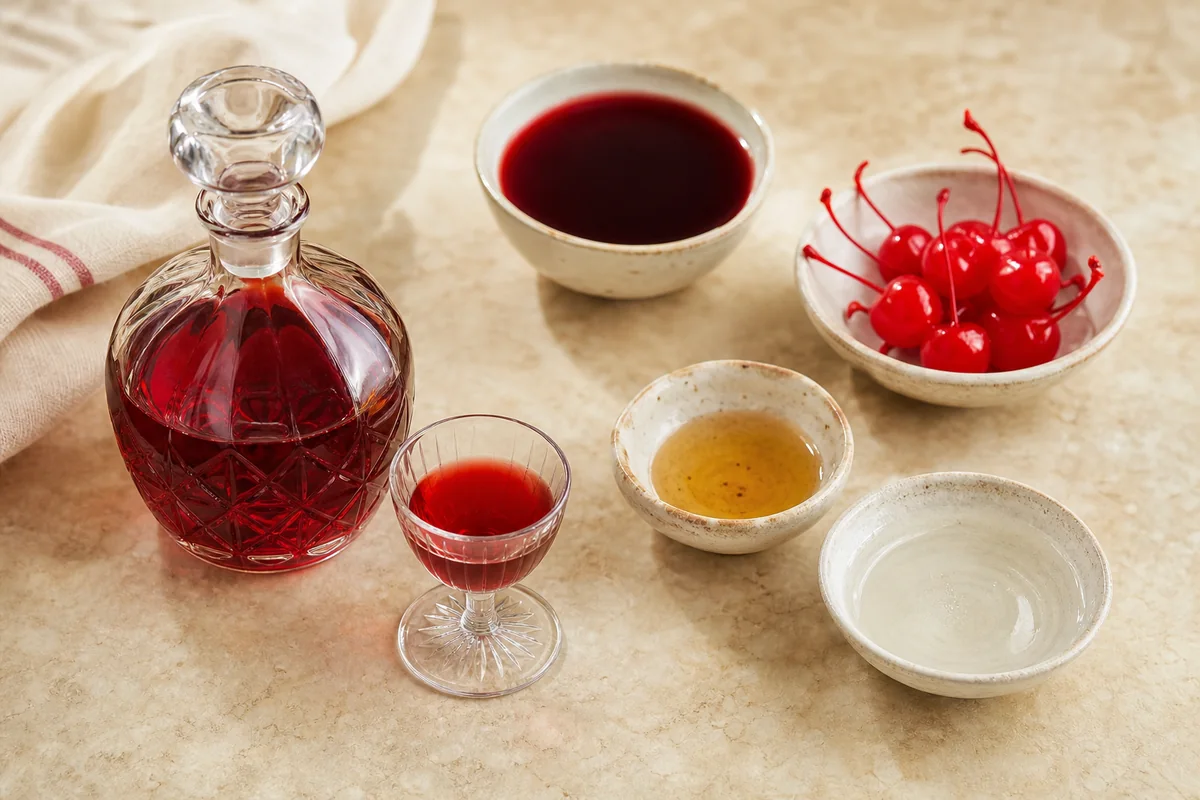
5 Best Luxardo Maraschino Liqueur Substitutes
Ingredients
Equipment
Method
- Identify how the Luxardo is used: cocktails (need aroma and a balanced sweetness) vs baking (need cherry/almond notes more than proof).
- Pick the closest match from the list and apply the ratio (start slightly low for non-alcohol swaps to avoid overt sweetness).
- For syrup-based swaps, account for extra sugar: reduce any added sugar in the recipe by 10–25% if the batter tastes sweet.
- For almond-based swaps, steep/whisk the flavor into the liquid base first so it disperses evenly before mixing into batter.
- Taste and fine-tune at the end: add a few drops of cherry juice for fruit brightness or a pinch of salt to sharpen cherry notes.
Notes
- Luxardo’s standout is delicate cherry aroma with subtle almond/stone-fruit undertones—aim for that balance rather than just cherry sweetness.
- If your substitute is less sweet than Luxardo (e.g., kirsch, dry sherry), add back sweetness with a small amount of cherry juice or syrup.
Tried this recipe?
Let us know how it was!
Carrie is a food writer and editor with more than 15 years of experience. She has worked for some of the biggest names in the food industry, including Bon Appétit, Food & Wine, and Martha Stewart Living.
As the Editor in Chief of EpicureDelight, Carrie oversees all of the content on the site. She also manages the team of contributing writers and editors, who help to create delicious recipes, helpful tips, and informative articles that you’ll find on the site.
A native of the Chicago area, Carrie is passionate about all things food. She loves trying new restaurants and experimenting with new recipes in her kitchen. She’s also a graduate of the Culinary Institute of America, so she knows a thing or two about food!



