Matcha boba tastes creamy, grassy, lightly bitter, and sweet. The green tea brings a fresh vegetal note and gentle savory depth, while milk and syrup soften its astringency.
The tapioca pearls add a dark caramel taste and a springy chew. A balanced cup should still taste like matcha after the sweetness fades, rather than tasting like plain sweet milk with green color.

Matcha boba combines grassy green tea, creamy milk, sweetness, and chewy tapioca. The tea should taste fresh and gently bitter, while the pearls should feel soft at the center and springy at the edge.
What Does Matcha Boba Taste Like?
The first sip usually tastes cool, milky, and sweet. Matcha follows with flavors that people describe as fresh grass, steamed greens, seaweed, or young peas, plus a soft savory quality called umami.
Good matcha also carries a little bitterness and a dry feeling at the sides of your tongue. Milk rounds that edge, while sugar makes the vegetal flavor seem softer and more dessert-like.
The drink feels richer than plain iced green tea because matcha powder stays in the liquid. You consume the fine tea particles instead of removing steeped leaves, so the flavor and body remain through the whole cup.
Plain tapioca pearls do not usually taste like matcha. They get most of their flavor from the brown sugar, honey, or syrup used after cooking, which gives each chew a mild caramel or molasses note.
That creates two taste tracks in one mouthful. The liquid starts grassy and creamy, then the pearl releases a darker sweetness as you chew.
A straw pulls both parts together, so the pearls can make the drink seem sweeter than the liquid tastes by itself. If the shop uses matcha-flavored pearls, the menu should say so because those are a different product.
Matcha boba tastes stronger and more vegetal than most milk teas. It also tastes less roasted than Thai tea and less candy-like than taro drinks when the shop lets the tea remain the main flavor.
Why Does One Cup Taste Sweeter or More Bitter?
The balance between matcha and sweetener changes the cup more than its green color suggests. Two drinks can look alike while one tastes fresh and tea-forward and the other tastes like vanilla sugar.
Matcha itself has grassy, earthy, savory, and bitter compounds. A larger scoop makes those qualities stronger, but an excessive dose can feel chalky and harsh when the powder does not disperse well.
Water temperature matters during mixing. Very hot water can sharpen bitterness, while warm water helps the powder disperse without cooking its fresh aroma.
| Variable | Less of it | More of it |
|---|---|---|
| Matcha | Pale, milky, and mild | Greener, more savory, and more bitter |
| Sweetener | Clearer tea flavor | More dessert-like, with less tea detail |
| Milk fat | Lighter body and sharper tea | Richer body and softer bitterness |
| Ice | Denser and creamier | Colder but more diluted as it melts |
| Pearl syrup | Cleaner green finish | Darker caramel sweetness |
Dairy milk gives a round, creamy finish. Oat milk can add cereal sweetness, while coconut milk adds a clear coconut aroma that may compete with delicate matcha.
Ice changes the drink over time. The first few sips may taste strong, but melted ice thins the milk and tea near the end.
Some shops use a premixed matcha powder that already contains sugar. Asking for less syrup may lower the added sweetener without making that powder fully unsweetened.
If you want to taste the tea, start around half sweetness and keep the normal matcha amount. Add more sweetness on a later order if the green bitterness feels too strong.
What Texture Should the Drink and Pearls Have?
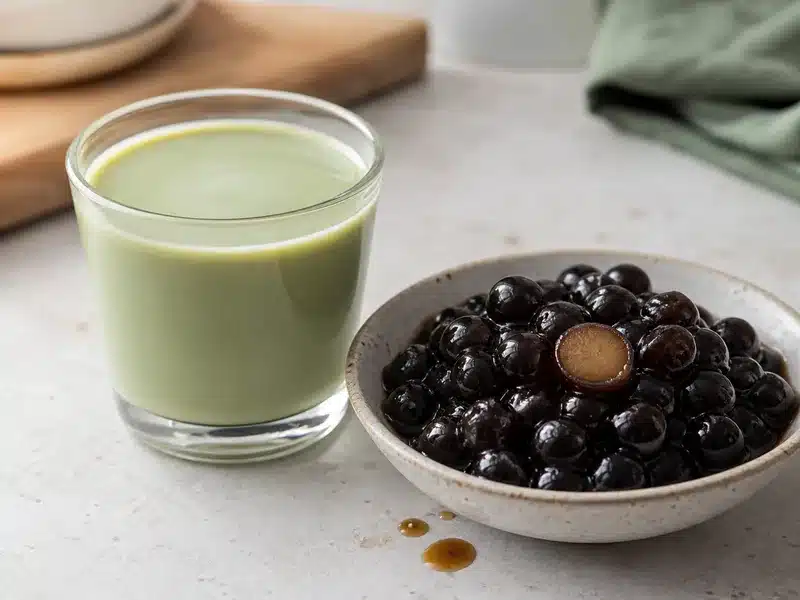
Texture separates a good cup from a merely sweet one. The liquid and the pearls need different checks because they fail in different ways.
The Drink Should Feel Smooth
Well-mixed matcha gives milk a slightly fuller body without leaving dry lumps. A faint fine-powder feel can occur in strong matcha, but large chalky clumps mean the powder was poorly sifted or mixed.
The Pearls Should Bend and Spring Back
A fresh pearl compresses between your teeth, stays soft at the center, and offers a gentle spring at the edge. A hard center, brittle skin, or mushy paste points to poor cooking or long holding.
Cooked tapioca changes quickly after it cools. The starch firms as it sits, and refrigeration can turn the center hard even when the pearl still looks glossy.
Pearls left in syrup too long can move the other way and become swollen or soft. They may break apart in the straw instead of giving a clean chew.
Matcha can settle toward the bottom because it is a suspension. A quick stir restores an even green color, while a thick sour-looking separation with an off smell needs a different judgment.
The best sip carries enough liquid around each pearl to keep the chew comfortable. Too many pearls crowd the straw and make the cup feel heavy before you can taste the tea.
How Can You Adjust Matcha Boba to Your Taste?
Change one main variable on your first order. Cutting sugar, switching milk, removing ice, and adding several toppings at once makes it hard to learn which change helped.
- Choose the sweetness level. Half sweetness keeps more green tea detail than a full-syrup cup.
- Pick the milk. Dairy tastes creamy, oat tastes cereal-sweet, and coconut tastes more aromatic.
- Set the ice. Less ice keeps the drink stronger, while normal ice keeps it colder for longer.
- Decide on pearl quantity. A normal scoop adds chew without turning every sip into a mouthful of starch.
- Add one topping. Red bean deepens the earthy side, while strawberry adds bright fruit and acid.
If you dislike bitterness, ask for a little less matcha before adding a large amount of syrup. Extra sugar covers bitterness, but it can also erase the fresh green finish that makes the drink distinct.
If you enjoy straight green tea, choose less sweetener and a neutral milk. Less ice can help, though the cup will feel richer and may warm faster.
Red bean suits the savory and earthy side of matcha. Vanilla, white chocolate, and sweet cream move the drink toward dessert, while citrus can make dairy taste sharper.
Fruit works best when the shop uses a separate puree or foam with clear flavor. A large amount of acidic puree can split some dairy mixtures or make the tea taste metallic.
When Does Matcha Boba Taste Stale or Wrong?
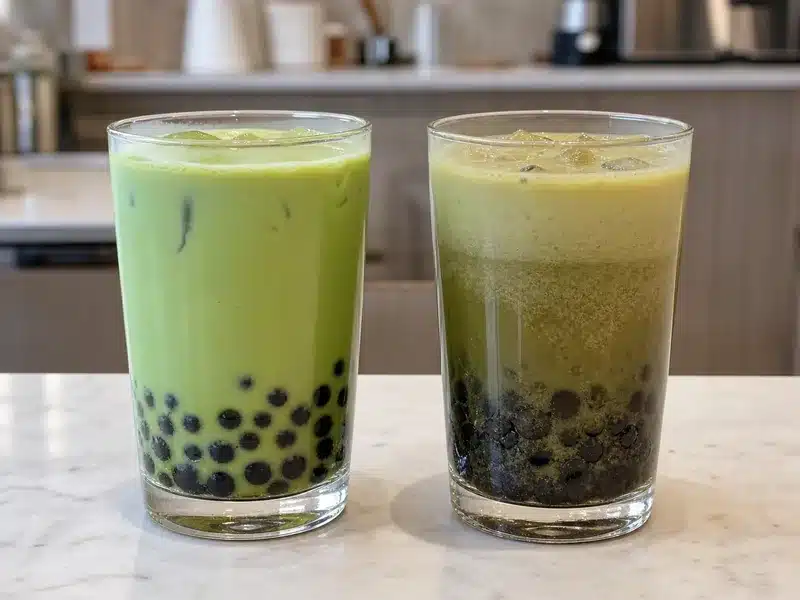
Normal matcha bitterness feels clean and tea-like. Stale tea tastes flat, dusty, or hay-like, and its color often shifts from lively green toward dull olive or brown-green.
Light and air speed that change in dry matcha. A shop can still make a safe drink from older powder, but the cup may lack fresh aroma and savory depth.
- Hard pearl centers show that cooked tapioca has firmed after holding or chilling.
- Mushy or broken pearls have absorbed too much liquid or sat too long.
- Sour dairy odor is a spoilage warning, not normal tea astringency.
- Fermented or fizzy behavior in an uncarbonated milk tea needs rejection.
- Unusual slime or ropy liquid is not normal settling and should not be tasted.
A fresh milk tea can separate slightly as ice melts or matcha settles. Stirring should bring it back together without a sour smell or rope-like texture.
Drink matcha boba soon after purchase because milk needs cold control and pearls lose their best chew within hours. Do not leave the cup in a warm car or carry it around all afternoon.
The FDA advises refrigerating perishable foods within two hours, or within one hour when the air temperature exceeds 90°F. When you cannot tell how long a milk tea stayed warm, replacing it is safer than tasting it for proof.
Sources
- Clemson Cooperative Extension, matcha flavor and latte preparation
- U.S. Food and Drug Administration, refrigeration and safe handling of perishable foods
Yes. Matcha comes from green tea leaves and naturally contains caffeine, though the amount changes with the powder dose and cup size.
Large dry specks usually mean the powder was not sifted or mixed into a smooth slurry first. Strong matcha can feel slightly full-bodied without feeling sandy.
Many shops can make matcha with water or a plant-based milk. A water-based version tastes sharper, less creamy, and more like straight matcha.
No. Popping boba has a thin gel skin and liquid fruit center, while tapioca pearls have a dense chew and absorb syrup.
Shops often hold fresh pearls in warm syrup to preserve their soft chew. They can briefly warm the bottom of an iced drink without making the whole cup unsafe.

Carrie is a food writer and editor with more than 15 years of experience. She has worked for some of the biggest names in the food industry, including Bon Appétit, Food & Wine, and Martha Stewart Living.
As the Editor in Chief of EpicureDelight, Carrie oversees all of the content on the site. She also manages the team of contributing writers and editors, who help to create delicious recipes, helpful tips, and informative articles that you’ll find on the site.
A native of the Chicago area, Carrie is passionate about all things food. She loves trying new restaurants and experimenting with new recipes in her kitchen. She’s also a graduate of the Culinary Institute of America, so she knows a thing or two about food!