
MCT oil has a very specific feel in a recipe: liquid at any temperature, almost no flavor, and a fat profile that blends into batters and smoothies without drama. Finding a good mct oil substitute means matching that behavior as closely as your recipe allows, not just grabbing the nearest oil.
The right swap depends on two things. First, whether the recipe involves heat.
Second, how neutral the flavor needs to be.
Fractionated coconut oil is the closest match overall. Avocado oil wins for heat uses. Extra-light olive oil works for no-heat recipes. Refined coconut oil and ghee are solid-fat options that need melting first. Use a 1:1 ratio for all liquid substitutes.
5 Best MCT Oil Substitutes (Ranked by Fat-Profile Closeness)
Most substitutes swap in at a 1:1 ratio by weight. Solid fats need melting before they behave like MCT oil in a batter or drink.
The table below gives a fast orientation.
| # | Substitute | Best For | Ratio | Key Note |
|---|---|---|---|---|
| 1 | Fractionated coconut oil | Both | 1:1 | Closest liquid-fat behavior |
| 2 | Avocado oil | Both | 1:1 | Best heat stability |
| 3 | Extra-light olive oil | No-heat | 1:1 | Mildest olive flavor |
| 4 | Refined coconut oil | Both | 1:1 | Melt before using |
| 5 | Ghee | Heat | 1:1 | Adds buttery dairy note |
1. Fractionated Coconut Oil
Fractionated coconut oil is the most direct functional match for MCT oil. It stays pourable at room temperature, has almost no coconut flavor, and blends into wet ingredients without clumping or separating.
For baking, the approach is simple. Measure it at a 1:1 ratio, then combine it with your other liquid ingredients before adding dry ones.
If you want to understand more about this pale tropical fat and how its flavor compares to other coconut products, that context helps you decide whether fractionated is worth seeking out.
Fractionated Coconut Oil
Works for: smoothies, salad dressings, baked goods, coffee blending, no-heat recipes
Skip if: you need a strictly coconut-free ingredient list
- Swap ratio: 1:1 by weight; no adjustments needed for most recipes
- In batters: Mix fully into wet ingredients before folding in dry ones to prevent pooling
- Temperature: Stays liquid even in the refrigerator, so it behaves like MCT oil throughout prep
2. Avocado Oil
Avocado oil is the strongest pick when your recipe involves heat. It is very stable at high temperatures and has a flavor that reads as neutral in most dishes, with only a faint green note that most recipes absorb completely.
For baking, use the well-stored, fresh-pressed variety for the cleanest taste. Older avocado oil can carry a grassier edge that shows up in delicate sweet batters.
- Swap ratio: 1:1; emulsify thoroughly in batters so the oil doesn't pool
- Heat limit: Smoke point is around 520°F, so it handles roasting without breaking down
- Skip if: Your recipe is very sensitive to mild green or grassy notes
3. Extra-Light Olive Oil
Extra-light olive oil is the most neutral-tasting olive oil available. It has far less of the grassy or peppery character that standard olive oil carries, which makes it a workable swap when you just need a liquid fat with minimal interference.
It is best suited to no-heat oil swaps like dressings, drizzles, and cold blends. At higher heat it performs adequately, but avocado oil is more reliable there.
- Swap ratio: 1:1; shake or whisk to emulsify in no-heat applications
- Flavor check: Taste a small amount before using; some brands still carry a faint olive edge
- Skip if: You need zero olive flavor, especially in very sweet or delicately flavored recipes
4. Refined Coconut Oil
Refined coconut oil is solid at room temperature, which is the main difference from MCT oil. The flavor is noticeably more coconut-forward than fractionated coconut oil, though much milder than unrefined.
Knowing how this solid tropical fat ages and behaves in storage helps avoid texture surprises.
Melt it fully, then let it cool for two to three minutes before blending into your recipe. If it hits cold ingredients while still hot, it can seize or cause batters to clump.
Refined Coconut Oil
Works for: baking, sautéing, roasting, recipes where mild coconut notes are acceptable
Skip if: your recipe can't tolerate cooling between melting and mixing, or needs strictly coconut-free fat
- Swap ratio: 1:1; melt fully and cool slightly before measuring
- In smoothies: Add it while blending on low so it disperses before it can re-solidify
- Texture watch: If it contacts cold liquid too fast, the fat can solidify into visible specks
5. Ghee (Clarified Butter)
Ghee is a strong choice for savory applications and recipes where a buttery flavor actually improves the dish. It is clarified of milk solids, so it handles heat well and behaves more like a pure fat than whole butter does.
When you want a deeper comparison of dairy-based fats against plant fats, the dairy fat vs. plant oil breakdown is worth a read.
Melt it before measuring so it pours and blends like MCT oil. Sweet baked goods can tolerate ghee, but the buttery note will come through.
| Use | Ratio | Notes |
|---|---|---|
| Savory baking | 1:1 | Ghee pairs naturally; melt first |
| Roasting / sautéing | 1:1 | High smoke point; no dairy burning |
| Sweet baking | 1:1 | Buttery note present; works in spiced recipes |
| Smoothies / cold blends | Avoid | Re-solidifies and creates chunky texture |
- Swap ratio: 1:1; always melt before blending into wet ingredients
- Best pairing: Savory crusts, spiced breads, and roasted vegetables
- Skip if: You need dairy-free fat or a strictly neutral-tasting result
Making an MCT Oil Substitute Work
The biggest mistake people make is dropping a substitute straight in without adjusting for its physical state or flavor weight. For light, flavor-forward oils, always taste before committing to a full batch.
Liquid substitutes behave most like MCT oil in cold or no-heat mixes, and that's where fractionated coconut oil and extra-light olive oil earn their spot. For solid fats, the melt-and-cool step isn't optional; skipping it causes texture failures that can't be fixed later.
- Heat vs. no-heat: Use avocado oil or extra-light olive oil for heated recipes; use fractionated coconut oil for cold blends and dressings
- Solid fat handling: Melt refined coconut oil or ghee fully, then let it cool 2-3 minutes before mixing into batters or drinks
- Emulsification: Blend or whisk the substitute into wet ingredients first; adding it after dry ingredients increases the risk of greasy pockets or grainy texture
Frequently Asked Questions
Yes, at a 1:1 ratio. Use extra-light olive oil for the most neutral result; standard olive oil may add a grassy note that shows up in delicate sweet batters.
It can, if it contacts cold ingredients too fast. Melt it fully, cool it 2-3 minutes, then blend on low speed to disperse it before it re-solidifies.
Fractionated coconut oil is the top pick since it stays pourable and nearly flavorless. Extra-light olive oil is a solid second if coconut oil isn't available.
Yes. Refined coconut oil is solid at room temperature, so it must be melted and cooled slightly before measuring and mixing into your recipe.
It works at 1:1, but ghee adds a noticeable buttery note. It suits spiced or caramel-forward recipes better than neutral or delicately flavored sweet batters.
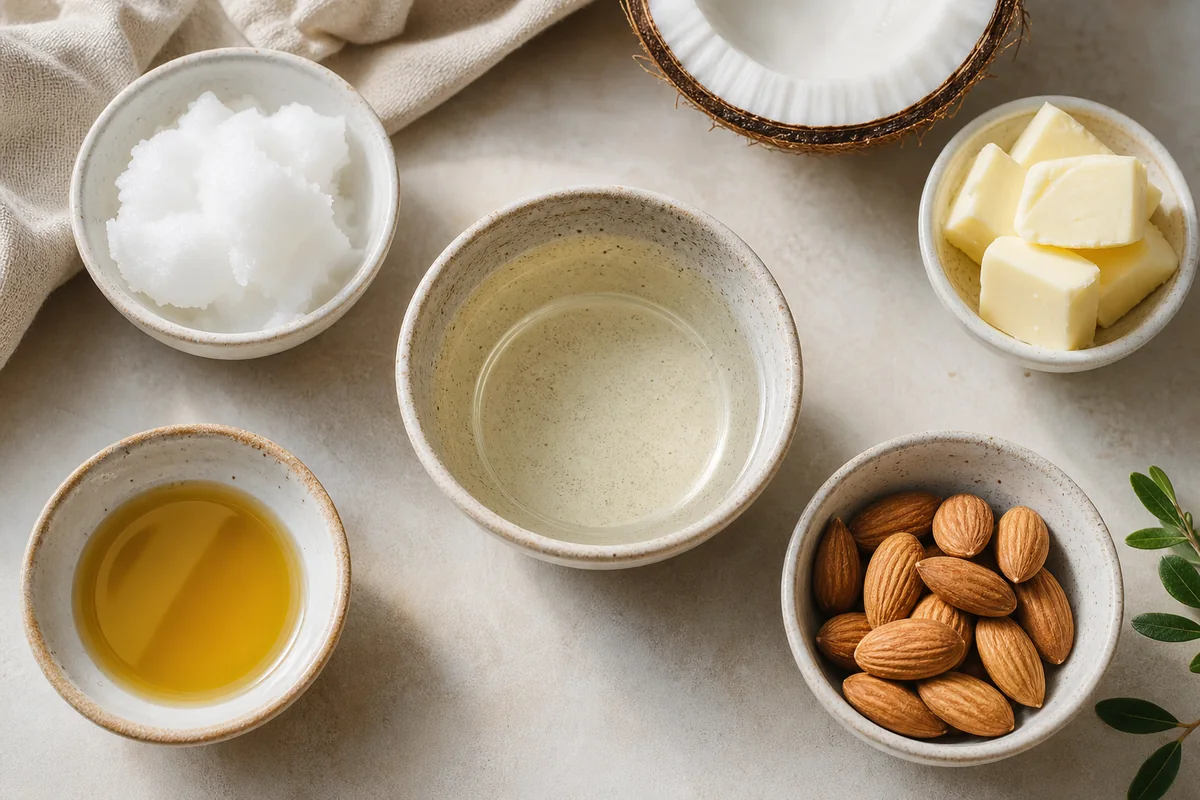
5 Best Mct Oil Substitutes (That Actually Work)
Ingredients
Equipment
Method
- Decide whether your use is no-heat (smoothies, dressings) or heat/baking (sautéing, roasting, baked goods).
- Choose the substitute that matches your goal: closest mouthfeel (fractionated coconut oil) or minimal flavor + heat stability (avocado or extra-light olive oil).
- Use the ratio 1:1 by weight for most recipes; if your substitute is solid at room temp (refined coconut oil), melt first and cool slightly before mixing.
- For baking, mix the oil fully into wet ingredients to prevent grainy texture from cooling fats.
- Taste-check after mixing: add a balancing flavor (a pinch of salt or a small amount of vanilla/citrus) if the substitute tastes more assertive than your original.
Notes
- If your recipe relies on MCT’s liquid feel, choose a pourable substitute (fractionated coconut oil, avocado oil, extra-light olive oil).
- If your recipe relies on coconut-fat characteristics, refined coconut oil is the closest “coconut-like” behavior, especially when melted.
Tried this recipe?
Let us know how it was!
Carrie is a food writer and editor with more than 15 years of experience. She has worked for some of the biggest names in the food industry, including Bon Appétit, Food & Wine, and Martha Stewart Living.
As the Editor in Chief of EpicureDelight, Carrie oversees all of the content on the site. She also manages the team of contributing writers and editors, who help to create delicious recipes, helpful tips, and informative articles that you’ll find on the site.
A native of the Chicago area, Carrie is passionate about all things food. She loves trying new restaurants and experimenting with new recipes in her kitchen. She’s also a graduate of the Culinary Institute of America, so she knows a thing or two about food!



