
Mimolette has that specific thing going for it: a deep, almost butterscotch-nutty bite wrapped in a firm, gratable body. Finding a true one-to-one match is harder than it sounds, because most aged cheeses lean either sharper or milder.
The right mimolette cheese substitute comes down to one question first. Are you grating it over pasta, melting it into a gratin, or setting it on a board?
That answer narrows the field fast. Comté and Gruyère cover most cooking scenarios.
Parmesan and Asiago handle grating. Aged cheddar is the emergency pull.
Mimolette is a firm, nutty, caramelized-tasting cheese that grates and melts well. For the closest swap, use Comté or Gruyère (nutty, melt-friendly) in hot dishes, Parmesan or Asiago for grating, and aged cheddar when nothing else is available.
5 Best Mimolette Cheese Substitutes, Ranked by Flavor and Use
The table below maps each substitute to its best role. Closer to mimolette's firm caramel notes means a higher rank.
Softer or sharper cheeses sit lower but still solve specific problems well.
| # | Substitute | Best For | Ratio | Key Note |
|---|---|---|---|---|
| 1 | Comté (aged) | Both | 1:1 | Closest nutty match |
| 2 | Gruyère (aged) | Both | 1:1 | Best melt performance |
| 3 | Parmesan | Grating | ¾:1 | Saltier, use less |
| 4 | Asiago (aged) | Grating | 1:1 | Firm, easy to shred |
| 5 | Aged Cheddar | Both | 1:1 | Bold; grate fine |
1. Comté
Comté is the most direct substitute for mimolette in both flavor and texture. Aged Comté carries that same roasted-nut, slightly sweet depth that mimolette is known for, and it behaves almost identically when grated or melted.
It holds its shape for cheeseboard slicing. It also melts without going greasy, which makes it reliable in gratins and baked dishes.
For those exploring aged cheese swaps, Comté is usually the first name that comes up, and for good reason.
- Grating: Use a fine Microplane for pasta finishing; medium box grater for baked toppings
- Melting: Works at 1:1 in any gratin or croque monsieur-style recipe
- Aging level: Choose 18-month or older for the strongest nutty, caramelized hit
- Board use: Slice thin; it firms up well at room temperature
- Pairing: Apple, pear, or a drizzle of honey offset its salt edge on a cheeseboard
Skip if: your dish needs a very low-sodium cheese. Comté can run salt-forward, especially at longer aging.
2. Gruyère
Gruyère sits just behind Comté on flavor closeness but pulls ahead on melt consistency. It has a reliable stretch and creamy, even melt that makes it the better pick for fondue, gratins, and hot sandwiches.
Understanding Gruyère's flavor profile helps here: it reads nutty and savory but finishes slightly milder than mimolette.
Gruyère
Works for: fondue, gratin, béchamel, hot sandwich topping, baked pasta
Skip if: you want mimolette's deeper caramelized, aged-bread finish on a cold cheeseboard
- Ratio: 1:1 in all hot applications
- Shred style: Medium shred melts faster; coarse shred holds texture in layered gratins
- Flavor boost: Add a pinch of mustard powder or a small splash of dry white wine to the dish to deepen the savory note
- Cheeseboard: It works, but choose an older (12-month+) wheel for more character
Skip if: you want the most caramelized, aged-bread-crust finish. Comté or Parmesan read closer in that direction.
3. Parmesan
Parmesan is the go-to when the recipe calls for hard grating rather than melting slabs. Its aged umami and granular texture scatter fast over hot pasta or roasted vegetables, making it practical even if the flavor profile skews saltier and more pungent than mimolette.
When swapping aged hard cheeses in baked recipes, Parmesan is often already in the pantry.
- Ratio: Use ¾ of the mimolette amount; Parmesan's salt concentration is higher
- Grate fresh: Pre-shredded has anti-caking agents that slow melting in sauces
- Moisture fix: Stir in a small knob of butter (about 1 teaspoon per 30g cheese) if the sauce feels dry
- Best applications: Pasta topping, baked gratins, crust coatings, salad finishing
- Pairing: Pair with something slightly sweet or fatty (cream, roasted garlic) to soften the sharp salt edge
Skip if: the recipe depends on a mellow, restrained cheese note. Parmesan's salt and umami can dominate.
4. Asiago
Aged Asiago (d'allevo style) is a solid grating substitute that most grocery stores carry. It is firm enough to hold on a Microplane, and its savory, slightly sharp character comes close to mimolette's aged bite without tipping into Parmesan's intensity.
For those already familiar with nutty aged alternatives, Asiago will feel like a natural pick.
- Aging matters: Look for "Asiago d'allevo" or "aged" on the label; fresh Asiago is much milder
- Best uses: Pasta topping, pizza, baked casseroles, potato gratin
- Ratio: 1:1 with mimolette; no adjustment needed
- Board option: Slice thin and serve at room temperature for best flavor release
Skip if: your recipe leans on mimolette's specific caramelized sweetness. Asiago reads sharper and more purely "cheesy" than caramelized.
5. Aged Cheddar
Sharp aged cheddar is the emergency swap when specialty cheeses are not an option. It has serious flavor intensity, which can actually cover ground that mimolette holds.
The challenge is that cheddar's sharpness can overshoot the nutty-sweet lane mimolette sits in, so technique matters.
| Use | Ratio | Notes |
|---|---|---|
| Pasta/gratin topping | 1:1 | Fine grate; blends smoothly into crust |
| Melted sauce | 1:1 | Add 1 teaspoon butter per 30g to keep texture smooth |
| Cheeseboard slicing | 1:1 | Pair with honey or dried fruit to round sharpness |
- Age level: Choose extra-sharp or vintage (18-24 month) for the closest intensity to mimolette
- Grate fine: Coarse cheddar chunks in a hot sauce can turn greasy; fine grate disperses cleanly
- Fat pairing: A small amount of cream or butter in the dish rounds the sharper edge
- Cold use: Works on boards but add something sweet nearby to balance
Skip if: the recipe needs a delicate or restrained cheese note. Aged cheddar tends to dominate.
Making Mimolette Substitutes Work in Any Recipe
The fastest way to pick correctly is to sort your recipe into one of three buckets: grate and finish, melt into a hot dish, or serve cold on a board. Grating calls for Parmesan or Asiago.
Melting calls for Gruyère or Comté. Board use calls for Comté or aged cheddar with a sweet pairing.
If you are unsure about a softer option, melting soft cheese into warm dishes is a safer bet than cold slicing it.
- Saltier substitutes (Parmesan, aged cheddar): Reduce the total amount by about 25% and taste before adding extra salt to the dish
- Milder substitutes (Gruyère, Emmental): Boost the dish with aromatics (garlic, shallot, mustard) or a touch of fat to close the flavor gap
- All substitutes: Fine grating always performs better than chunking-faster melt, more even flavor distribution, and no greasy pockets
Frequently Asked Questions
Aged Comté is the closest match. It shares mimolette's roasted-nut depth and caramelized character, and it behaves similarly whether you grate or slice it.
Yes, at a 1:1 ratio. Gruyère melts cleanly and carries a nutty, savory note that holds up well in gratins and baked pasta.
Use about ¾ of the mimolette amount. Parmesan is saltier and more concentrated, so a smaller quantity prevents the dish from tasting over-seasoned.
Gruyère is the top pick for melting. It stretches evenly, stays creamy under heat, and delivers a savory flavor close to mimolette.
Pair the cheese with a small amount of fat (butter, cream) or something slightly sweet in the dish. Both approaches soften the sharp edge without muting the cheese.
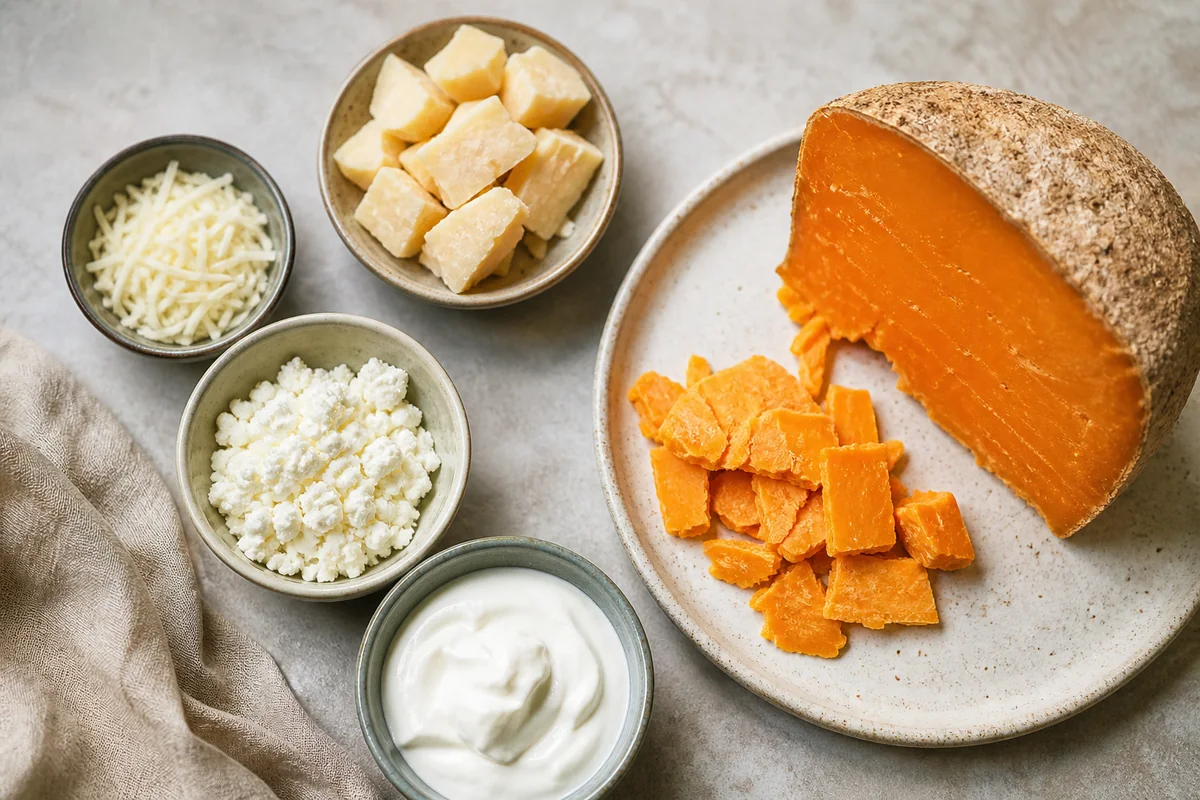
5 Best Mimolette Cheese Substitutes in Every Recipe
Ingredients
Equipment
Method
- Decide how you’ll use the cheese: grating/finishing, melting in hot dishes, or serving on a board.
- Match flavor intensity: choose Comté or Gruyère for mimolette’s nutty depth; choose Parmesan/Asiago for salty, aged bite.
- Apply the listed ratio (e.g., Parmesan ¾ for 1):1 swaps) and grate more finely for smoother melting.
- If the substitute is softer (like Taleggio), chill briefly so it firms up for slicing or topping.
- Taste after mixing: add a pinch of salt if you used a milder cheese (Emmental), or balance sharpness with a bit of fat (butter/oil).
Notes
- For the closest match, prioritize aged nutty Swiss-style cheeses (Comté/Gruyère) rather than mild cheeses.
- If your recipe requires hard grating, avoid very soft ripe cheeses unless you chill and use as a topping.
Tried this recipe?
Let us know how it was!
Carrie is a food writer and editor with more than 15 years of experience. She has worked for some of the biggest names in the food industry, including Bon Appétit, Food & Wine, and Martha Stewart Living.
As the Editor in Chief of EpicureDelight, Carrie oversees all of the content on the site. She also manages the team of contributing writers and editors, who help to create delicious recipes, helpful tips, and informative articles that you’ll find on the site.
A native of the Chicago area, Carrie is passionate about all things food. She loves trying new restaurants and experimenting with new recipes in her kitchen. She’s also a graduate of the Culinary Institute of America, so she knows a thing or two about food!



