
Smoky, slightly sweet, and just hot enough to make you pay attention - that's what morita pepper brings to a salsa or marinade. It's a smoked jalapeño, dried longer and darker than chipotle, so it carries more concentrated fruit alongside the smoke.
Losing it mid-recipe is a real problem, because cheap swaps can turn the dish sharp or thin.
The right morita pepper substitute depends on what the pepper is doing in your dish. If it's there for smoke and heat, go chipotle-first.
If it's there for fruity warmth with only background smoke, ancho or guajillo will serve you better.
Morita pepper is a smoked, dried jalapeño with medium heat and a slightly sweet, fruity depth. The best substitutes are chipotle (closest smoky match), ancho and guajillo (fruitier, milder), and a cayenne-plus-smoked-paprika blend for emergencies. Match by flavor priority, not just heat level.
5 Best Morita Pepper Substitutes Ranked by Flavor
The list runs closest match first. Start at the top if you want smoke.
Slide toward the middle if your priority is fruity warmth. The last two are emergency swaps - they work, but they need a little tuning.
| # | Substitute | Best For | Ratio | Key Note |
|---|---|---|---|---|
| 1 | Chipotle Peppers | Both | 1:1 | Closest smoky depth |
| 2 | Ancho Chile | Cooking | ¾:1 | Mild, fruity, less smoke |
| 3 | Dried Guajillo Chile | Cooking | ¾:1 | Tangy-fruity, low smoke |
| 4 | Cayenne + Smoked Paprika | Both | ½:1 | Fast smoky-heat blend |
| 5 | Smoked Jalapeño Powder | Both | 1:1 | Watch heat level closely |
1. Chipotle Peppers
Chipotle is the most obvious match, and it actually earns that reputation. Both chipotle and morita start as smoked jalapeños - morita just dries darker and longer, so the flavor concentrates a touch more.
Use dried chipotle whole the same way you'd use morita: drop it into stews, toast it briefly, or rehydrate in warm water for 20 minutes. Canned chipotle in adobo is softer and quicker - just mince it fine.
- Ratio: 1:1 by count (dried) or by tablespoon (minced canned)
- Stews and braises: Add whole, then remove or blend at the end
- Marinades: Use minced canned chipotle; the adobo sauce adds extra depth
Skip if: Your dish already has chipotle or other smoked chiles - stacking two smoked peppers pushes the smoke too heavy.
2. Ancho Chile
Ancho is a dried poblano, and it brings something morita doesn't: a chocolatey, raisin-like sweetness with almost no smoke. The heat is noticeably lower, closer to mild.
Ancho vs. Morita
Works for: fruity-warm sauces, mole-style stews, dishes where smoke is background
Skip if: the recipe needs visible smokiness or bold heat as the lead flavor
Start at three-quarters of the morita amount. If the dish needs more heat, add a small pinch of cayenne rather than more ancho.
You can read about picking a milder dried chile if you want to explore the ancho family further.
Skip if: You need smoky punch in a thin sauce - ancho won't carry that load without help.
3. Dried Guajillo Chile
Guajillo is tangy, slightly berry-forward, and earthy. It has no smoke at all, so it's better suited to dishes where morita is present for warmth rather than fire.
It's one of the backbone chiles in red enchilada sauce for a reason.
- Ratio: ¾ of the morita amount; add ¼ teaspoon smoked paprika if smoke matters
- Prep: Toast 30 seconds per side in a dry skillet, then soak 15 minutes in hot water
- Best uses: Salsas, enchilada sauces, chile-rubbed meats
- Heat: Mild to medium; boost with a few drops of hot sauce if needed
If you're already considering swapping red chiles broadly, replacing dried red chiles covers options beyond guajillo worth knowing.
Skip if: Your dish relies on that signature smokiness - guajillo reads clean and fruity, not smoky.
4. Cayenne + Smoked Paprika
This is the emergency-pantry move. Neither ingredient alone mimics morita, but together they cover two of its three pillars: heat and smoke.
The fruity sweetness is the gap.
Use half the morita amount in cayenne, then add an equal volume of smoked paprika. So for 1 teaspoon morita, use ½ teaspoon cayenne and ½ teaspoon smoked paprika.
The smoky paprika options page is worth checking if your smoked paprika has been sitting open too long - stale paprika flattens fast.
- Heat control: Cayenne is hotter than morita; start at half and taste
- Smoke depth: Use Spanish smoked paprika (pimentón de la Vera) for best results
- Texture note: Both are ground, so bloom them in oil for 30 seconds before adding liquid
Skip if: Your recipe is salsa cruda or any raw preparation - the sharpness of cayenne without cooking is noticeable.
5. Smoked Jalapeño Powder
If you can find smoked jalapeño powder (some spice shops carry it, and it's simple to make at home by smoking fresh jalapeños and grinding them dry), it is the most honest structural replacement. The smoke-to-heat ratio is almost identical to morita.
The trouble is heat variability. Commercial powders range a lot.
Start at the 1:1 ratio, then cut back by 25% if the powder smells very sharp and pungent before cooking.
| Use | Ratio | Notes |
|---|---|---|
| Stews / braises | 1:1 | Add early; the powder rehydrates in liquid |
| Dry rubs | 1:1 | Mix with salt to balance heat spike |
| Marinades | ¾:1 | Bloom in oil first for fuller flavor |
Skip if: Your powder has added salt - reduce other salt in the recipe by at least half.
Making a Morita Pepper Substitute Taste Right
The goal when tuning any substitute is three things working together: smoky depth, medium heat, and a quiet fruity sweetness underneath. Most swaps get two of the three on their own.
When you're working with smoky paprika options or ground chile blends, blooming in oil is the single step that closes the gap fastest - 30 to 45 seconds in hot fat opens up aromatics that liquid alone won't pull out.
- Bloom ground chiles first: Heat 1 teaspoon oil in the pan, add your ground substitute, and stir for 30-45 seconds before adding any liquid or other ingredients.
- Add acid at the end: A squeeze of lime or a splash of cider vinegar lifts flat-tasting substitutes and mimics morita's natural brightness.
- Build heat gradually: Add two-thirds of your substitute amount first, taste after 10 minutes of cooking, then add more if needed - this is easier than fixing an overly hot dish.
Frequently Asked Questions
Dried chipotle pepper is the closest match. Both are smoked jalapeños, and the flavor profile - medium heat with earthy smoke - is nearly identical at a 1:1 ratio.
Start at three-quarters of the morita amount for both. They're milder and less smoky, so add a pinch of smoked paprika if the dish tastes flat.
Yes, at 1:1 by volume, but chipotle powder is often hotter than whole morita. Taste after adding two-thirds and adjust from there.
Bitterness usually means the ground chile wasn't bloomed in oil, or the heat was too high when you added it. Stir in a small amount of honey or lime juice to balance it.
Ancho chile is the better pick. It has morita's fruity warmth without the smoke, and its mild heat lets you control the final intensity precisely.
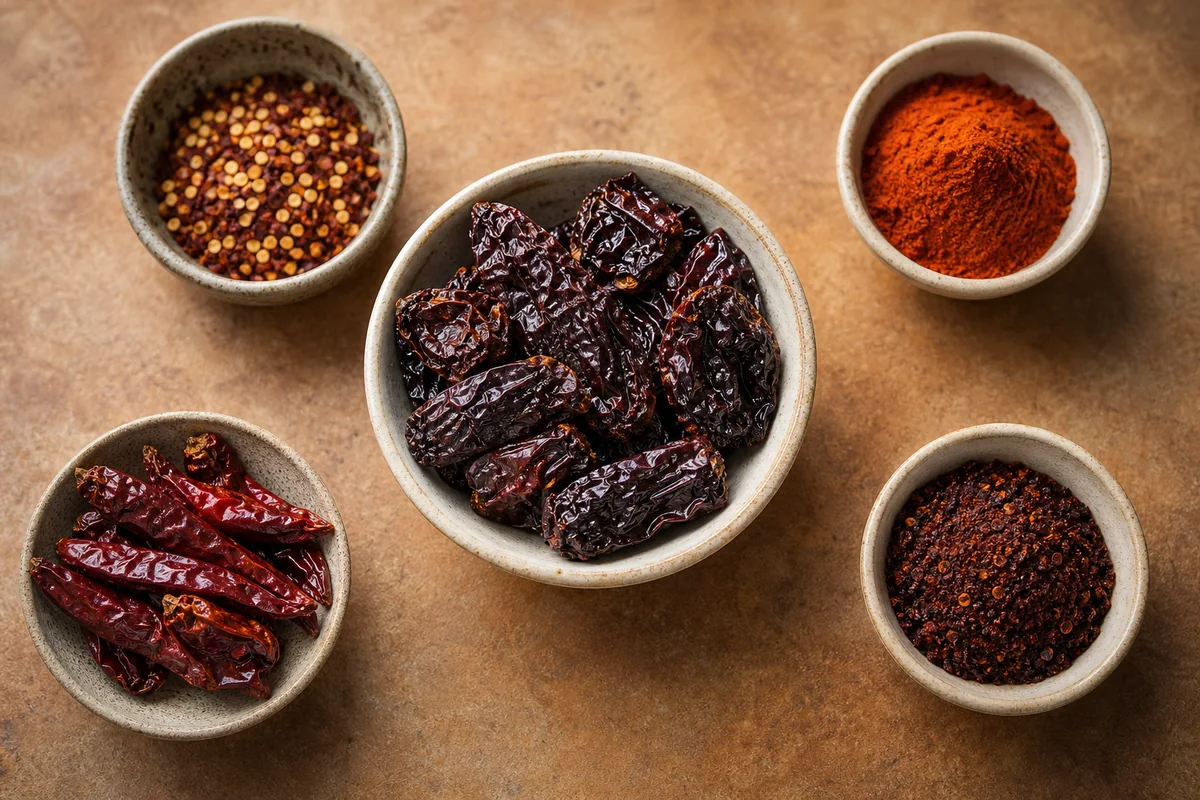
5 Best Morita Pepper Substitutes for Better Results
Ingredients
Equipment
Method
- Decide whether you need morita for smoky depth (smoke-forward) or for fruity warmth (mild-to-medium).
- Choose the closest match from the table: chipotle for smoky heat, ancho/guajillo for fruity warmth, or cayenne + smoked paprika for a pinch.
- Use the listed ratio; if your substitute is hotter than morita, reduce by 25–50% and build gradually.
- If the substitute is ground (ancho/guajillo/powders), bloom it in a teaspoon of oil for 30–45 seconds to rehydrate flavor.
- Taste at the end and tune: add a little acid (lime) if it reads flat, or add more chili if it lacks warmth.
Notes
- Morita pepper is typically smoked jalapeño with a medium, slightly sweet, fruity heat—aim for smoky-forward flavor first.
- When substituting with ground dried chiles, blooming in oil often improves the “like-morita” taste.
Tried this recipe?
Let us know how it was!
Carrie is a food writer and editor with more than 15 years of experience. She has worked for some of the biggest names in the food industry, including Bon Appétit, Food & Wine, and Martha Stewart Living.
As the Editor in Chief of EpicureDelight, Carrie oversees all of the content on the site. She also manages the team of contributing writers and editors, who help to create delicious recipes, helpful tips, and informative articles that you’ll find on the site.
A native of the Chicago area, Carrie is passionate about all things food. She loves trying new restaurants and experimenting with new recipes in her kitchen. She’s also a graduate of the Culinary Institute of America, so she knows a thing or two about food!



