
Ancho chile pepper has a character that's hard to fake: it's dried, mildly smoky, and carries a low sweetness that reads almost like raisin or dried plum. That depth is what makes finding an ancho chile pepper substitute tricky-heat alone won't get you there.
The good news is that several dried chiles and pantry spices land close enough to matter, especially in baking, dry rubs, and blended sauces. Each swap below comes with a ratio, a use-case note, and a "skip if" so you can choose without second-guessing.
Ancho chile is a dried poblano with mild heat, smoky roast character, and a faint dried-fruit sweetness. The closest swap is mulato chile (1:1), which shares cocoa-like depth. Guajillo is the next best for sauces. Smoked paprika works fastest from the pantry.
Best Ancho Chile Pepper Substitutes (Smoky, Mild, and Baking-Friendly)
Whether you're working with a dry rub, a blended sauce, or a spiced batter, the table below gives you a fast read on each option. Ground dried chiles integrate cleanly into dry mixes; rehydrated and blended chiles fold into sauces and batters without leaving gritty texture.
| # | Substitute | Best For | Ratio | Key Note |
|---|---|---|---|---|
| 1 | Mulato Chile | Both | 1:1 | Toast first, cocoa-like depth |
| 2 | Guajillo Chile | Both | 1:1 | Slightly tangier, rehydrate well |
| 3 | New Mexico Chile | Both | 1:1 | Milder, toast for more smoke |
| 4 | Chipotle in Adobo | Sauce | ¾:1 | Hotter and bolder, use less |
| 5 | Smoked Paprika | Both | 1:1 | Fast pantry fix, smoke-only |
1. Mulato Chile
Mulato is probably the most honest stand-in for ancho: same family of dried Mexican chiles, similar mild heat, and a cocoa-earthy note that sits right where ancho's raisin-like sweetness lives. If you've never cooked with it, the flavor of mulato chile is worth understanding before you commit-it reads slightly darker and earthier than ancho, but not by much.
- Toast before using: Dry-toast whole dried mulato 30-60 seconds per side in a skillet before grinding or soaking-it lifts the roasted aroma significantly.
- For dry rubs: Grind toasted mulato and use at a 1:1 ratio by weight; the color and spice level will match closely.
- For sauces and batters: Rehydrate in hot water 15-20 minutes, then blend until smooth; strain if you need a silkier texture.
- Taste check: If the cocoa note feels too dominant, add a small pinch of mild chili powder to brighten the mix slightly.
Skip if your recipe can't handle any earthy or cocoa undertone-mulato can read darker than ancho in light-colored preparations.
2. Guajillo Chile
Guajillo is a reliable ancho alternative for sauced dishes and batter-based recipes, bringing a sweet-roasty warmth that tracks well with ancho's dried-fruit base. It runs slightly tangier and brighter, so you'll want to account for that when blending.
For a broader look at what works in its place, the best new mexico chile alternatives article also covers options that overlap with guajillo-style profiles.
- Ground vs. blended: Ground guajillo works in dry rubs; for sauces and batters, rehydrate whole dried chiles in hot water for 20 minutes, then blend until smooth to avoid a gritty finish.
- Managing the tang: If guajillo tastes too bright or acidic, add a small pinch of brown sugar and a drop of olive oil before blending.
- Quantity: Start at 1:1 by weight, then taste; guajillo's sweetness holds up well but its heat can vary batch to batch.
Guajillo vs. Ancho
Works for: sauces, marinades, blended batters, enchilada-style bases where brightness is fine
Skip if: you need ancho's raisiny dark sweetness and deeper smoke-guajillo won't fully replicate that
3. New Mexico Chile
New Mexico chile is the low-risk option. It is mild, earthy, and gently sweet-perfect for baked applications where you want chili character without the intensity.
It won't overpower a cornbread batter or a spiced cookie the way chipotle might.
For context on where it fits among other dried chiles, seasoning with mulato chile shows how earthier dried chiles compare side by side.
| Use | Ratio | Notes |
|---|---|---|
| Dry rub | 1:1 | Ground New Mexico chile; toast in dry pan 30 sec first |
| Baked batter | 1:1 | Ground; sift in with dry ingredients for even distribution |
| Blended sauce | 1:1 | Rehydrate 15 min, blend smooth; add pinch smoked paprika for more depth |
- Boost smokiness: Toast the ground chile in a dry skillet 30-45 seconds before mixing-it brings out a warmer, more roasted quality.
- Color note: New Mexico chile produces a bright orange-red color, which bakes well and looks clean in finished dishes.
- Mild heat: If your recipe needs more warmth, add a small pinch of cayenne-New Mexico chile alone is quite gentle.
Skip if you're specifically after ancho's darker, smokier profile. New Mexico chile is lighter by nature, even after toasting.
4. Chipotle in Adobo
Chipotle in adobo brings heavy smoke and good color, but it runs noticeably hotter than ancho and comes with a savory, slightly acidic edge from the adobo sauce. We prefer this one for robust applications-braises, mole-adjacent sauces, dark spiced batters-rather than anything delicate.
Understanding how smoked paprika taste compares can help you decide whether chipotle's smoke is more or less than you actually need.
- Puree before using: Blend whole chipotles with a spoonful of their adobo sauce until smooth; this integrates more evenly into batters and sauces than chopped pieces.
- Starting ratio: Use ¾ of the ancho amount called for, then add more in small increments after tasting the base mixture.
- Balance heat and acid: If the adobo sauce makes the mixture taste sharp, add a small pinch of brown sugar or a few drops of honey to round it out.
- When it works best: Dark chili sauces, chocolate-spice batters, red braising liquids-anywhere bold smoke is an asset, not a liability.
Skip if your recipe is a light-colored batter or mild quick bread. Chipotle will darken the result and dominate every other flavor.
5. Smoked Paprika
When you have no dried chiles at all, smoked paprika is the fastest pantry fix. It delivers smoke immediately and measures cleanly into dry mixes. Seasoning with smoked paprika follows its own rules though-it won't bring the dried-fruit sweetness ancho has, so it works best when you pair it with something that adds a little depth.
- Start lighter: Begin with ¾ of the ancho amount and taste before adding the full measure-smoked paprika can read sharper than expected once baked.
- Add cocoa for depth: Mix ¾ teaspoon smoked paprika with ¼ teaspoon unsweetened cocoa powder per teaspoon of ancho called for; this approximates the dark-fruit layer ancho contributes.
- Form matters: Sift into dry ingredients for baked goods; whisk into oil or paste before adding to sauces, so it blooms properly.
- Don't use sweet paprika: Only smoked paprika works here-sweet or plain paprika won't provide the roasted backbone you're replacing.
Skip if the recipe specifically needs that raisiny sweetness. Smoked paprika alone tastes smoky, not fruity, and the gap shows in applications where ancho's sweetness is the point.
Making Ancho Chile Pepper Substitutes Taste Right
The most common mistake when swapping dried chiles is adding too much too fast. Every substitute here behaves slightly differently depending on heat, moisture, and cooking time-so tasting the base mixture before it's fully assembled is what separates a good result from an overpowering one.
If you find yourself combining options (say, smoked paprika with mild chili powder), start each component at half measure and build up.
- Toast every time: Whether it's ground spice or dried chile, 30-60 seconds in a dry skillet before mixing adds a warmer, more roasted character that gets closer to ancho's profile.
- Fix heat mismatch: If your substitute is too hot, reduce the amount by 2 teaspoon per tablespoon and add a pinch of salt to round the edge-don't just dilute with water.
- Fix missing smoke: If the blend tastes flat, add a small pinch of smoked paprika rather than more chili heat-smoke and spice level are separate levers.
Frequently Asked Questions
Mulato chile is the closest match-it shares ancho's mild heat, cocoa-earthy depth, and dried-fruit sweetness. Use it at a 1:1 ratio and toast briefly before grinding or blending.
Ground dried chile works best for dry rubs and spiced batters. Rehydrated and blended chile integrates more smoothly into wet batters and sauces without leaving gritty spots.
Reduce the quantity by about 25% and add a small pinch of salt to soften the heat perception. Avoid adding more liquid-it dilutes flavor without actually reducing heat.
Smoked paprika replicates the smoke but not the dried-fruit sweetness. Add a small amount of unsweetened cocoa to get closer to ancho's fuller depth.
Start at 1:1 by weight for most dried chile substitutes. Drop to ¾:1 for chipotle in adobo, which is significantly bolder and hotter than ancho.
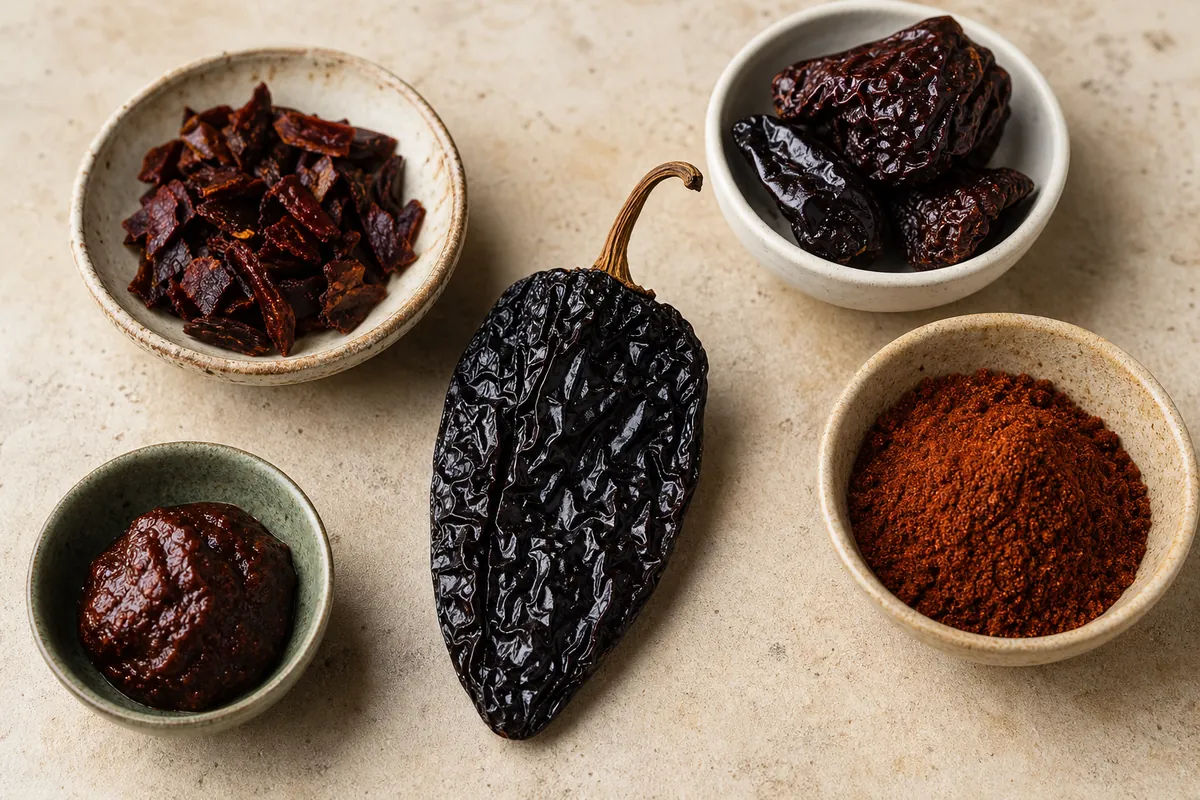
5 Best Ancho Chile Pepper Substitutes That Taste Right
Ingredients
Equipment
Method
- Identify the form you need: ancho ground for dry rubs, or rehydrated/blended for sauces and batters.
- Use the table’s ratio by weight (start with the recommended amount), then taste the mixture base (not just the finished bake).
- If your substitute is more intense (especially chipotle), reduce to the lower ratio and add back depth with a small pinch of cocoa or smoked paprika.
- Toast dried chiles (or ground spices) 30–60 seconds in a dry pan for a warmer, more “roasted” profile before mixing into the recipe.
- Adjust heat and bitterness last: add a tiny pinch of sugar/honey if it tastes sharp, or add salt if it tastes flat.
Notes
- When substituting in baking, depth matters more than heat—choose a mild smoky option first, then fine-tune with cocoa or smoked paprika if needed.
- For sauces/pastes, blend rehydrated dried chiles until smooth to mimic ancho’s velvety body.
Tried this recipe?
Let us know how it was!
Carrie is a food writer and editor with more than 15 years of experience. She has worked for some of the biggest names in the food industry, including Bon Appétit, Food & Wine, and Martha Stewart Living.
As the Editor in Chief of EpicureDelight, Carrie oversees all of the content on the site. She also manages the team of contributing writers and editors, who help to create delicious recipes, helpful tips, and informative articles that you’ll find on the site.
A native of the Chicago area, Carrie is passionate about all things food. She loves trying new restaurants and experimenting with new recipes in her kitchen. She’s also a graduate of the Culinary Institute of America, so she knows a thing or two about food!



