
That sharp, almost nose-clearing bite is hard to fake. Mustard oil brings a pungency most other oils simply don't carry, and that's exactly what makes finding a mustard oil substitute tricky.
The good news: a few targeted swaps get surprisingly close, especially if you match the oil to the cooking stage.
Mustard oil does two things at once. It adds warmth and a slightly sharp edge during tempering, and it carries spices without turning flat.
Neutral oils alone can't replicate that edge, but pairing them with a small pungency booster (more on this below) closes the gap.
The best mustard oil substitutes are toasted sesame oil, groundnut (peanut) oil, and canola oil with black mustard seed. Each handles heat differently. For baking, a neutral vegetable oil covers fat function. For tempering, sesame or peanut oil gives the closest savory depth. Pungency boosters help neutral oils punch up.
5 Best Mustard Oil Substitutes Ranked
Here's how each option stacks up before you get into the details.
| # | Substitute | Best For | Ratio | Key Note |
|---|---|---|---|---|
| 1 | Toasted Sesame Oil | Tempering / Stir-fry | 1:1 | Nutty depth, not mustard bite |
| 2 | Groundnut (Peanut) Oil | Sauté / Frying | 1:1 | Warm savory base, high heat |
| 3 | Canola + Mustard Seed | Tempering / Curries | 1:1 | Neutral oil with pungency booster |
| 4 | Vegetable Oil (Sunflower/Safflower) | Baking / Frying | 1:1 | Fat function only, no aroma |
| 5 | Light Olive Oil + Pepper | Tempering / Sauté | ¾:1 | Use less; pepper adds edge |
1. Toasted Sesame Oil
Toasted sesame oil is the closest single-oil swap for mustard oil in tempering. It carries a warm, savory depth that makes tempered spices feel complete rather than flat.
The aroma is nutty rather than sharp, so you won't get mustard's exact pungency. But in dal, vegetable stir-fries, and Indian-style curries, sesame's flavor profile holds up well where other neutral oils fall short.
- Ratio: 1:1 replacement for mustard oil
- Heat stage: Add to a medium-heat pan; temper until just shimmering, then add aromatics immediately
- Taste check: If it tastes too nutty, cut it with a tablespoon of neutral oil next time
- Skip if: Your dish needs a clean, aroma-free base. Sesame will add its own nutty character throughout.
2. Groundnut (Peanut) Oil
Peanut oil is the workhorse here. It has a mild, savory undertone that pairs well with cumin, mustard seed, and curry leaves without fighting them.
It handles higher heat better than most alternatives, which makes it reliable for both long sautés and quick tempering. If peanut allergy is a concern, check our options for replacing peanut oil before committing to this swap.
- Ratio: 1:1 replacement for mustard oil
- Tempering method: Preheat on medium until the surface ripples slightly, then add whole spices immediately
- Avoid overheating: Groundnut oil at very high heat loses its subtle savory note and turns bland
- Skip if: Your recipe is a delicate sweet or cream sauce where peanut flavor would feel out of place
3. Canola + Black Mustard Seed
Canola is neutral. On its own, it handles frying cleanly but adds nothing to pungency.
The fix is a small pinch of black mustard seed added during tempering, which provides exactly the sharp bite mustard oil normally delivers.
This combination is the most accurate pungency match of the five options. It takes one extra step, but the result is noticeably closer to true mustard oil than any single-oil swap.
Canola + Black Mustard Seed
Works for: Indian curries, dal, tempering, any dish where mustard bite matters most
Skip if: your recipe needs a smooth, seed-free texture (batters, smooth sauces)
- Ratio: 1:1 canola replacing mustard oil, plus a small pinch of black mustard seed (roughly ¼ teaspoon per tablespoon of oil)
- Tempering: Heat canola until shimmering, add mustard seeds, let them crackle for 10-15 seconds, then proceed with aromatics
- If too harsh: Reduce the seed amount next time rather than adding more salt to compensate
When sourcing seed, check what swapping mustard seed looks like if you run out of that too.
4. Vegetable Oil (Sunflower/Safflower)
In baking, mustard oil functions mostly as fat and moisture. The pungency is secondary, often masked by other strong ingredients like spice blends, yogurt, or jaggery.
A neutral sunflower or safflower oil covers the fat role cleanly and won't interfere with the bake's structure. If the recipe genuinely depends on mustard's bite (certain Indian flatbreads, for example), add a small black pepper pinch to the batter to carry a mild warmth forward.
- Ratio: 1:1 replacement, no adjustment needed
- Flavor compensation: Add a small pinch of black pepper to the batter if the recipe calls on mustard's warmth
- Heat behavior: Sunflower and safflower have high smoke points, so frying temperature stays stable
- Skip if: The recipe's identity is built on a sharp mustard aroma. The final dish will taste noticeably milder.
For more on neutral oil swaps, the options there apply well to baking contexts.
5. Light Olive Oil + Pepper Pinch
Light or extra-light olive oil is the emergency pantry swap. It is far more fruity than mustard oil, and regular extra-virgin olive oil will bring bitterness that competes with Indian spice profiles.
Use slightly less than a 1:1 ratio and add a small black pepper pinch during tempering to approximate mustard's edge. The result is acceptable, not identical.
- Ratio: ¾ tablespoon light olive oil per 1 tablespoon mustard oil called for
- Pungency fix: Add a small black pepper pinch directly to the tempering pan just before adding aromatics
- Best use cases: Simple sautés, mild gravies, dishes with heavy sauce coverage where the oil flavor blends in
- Skip if: You're using strongly flavored extra-virgin olive oil. Its fruity, bitter notes will be obvious in the finished dish.
When you want to move away from olive oil entirely, choosing a different base oil gives you cleaner options.
Making Mustard Oil Substitutes Taste Right
The key is understanding when mustard oil's pungency is actually released. It peaks during early heating, which is why tempering is the moment that matters most.
If your substitute goes into the pan cold or is added late, you lose that front-loaded sharpness even before spices hit the oil.
For baking, swapping safflower for neutral oils can help you match fat behavior without fussing over aroma. Keep these three calibration steps close:
- Temper early: Add your substitute oil first, heat until shimmering, then add whole spices so pungency (real or boosted) develops before any water or vegetables go in
- Taste at the tempering stage: Dip a small piece of bread or a spoon in before the dish finishes building; if it tastes flat, add a black pepper pinch now while the oil is still active
- Adjust the booster, not the oil volume: If a neutral-oil swap tastes dull, the fix is more black mustard seed or pepper in the next batch, not more oil overall
Frequently Asked Questions
Yes, for most substitutes the 1:1 ratio holds. The exception is light olive oil, where ¾:1 works better to avoid a heavy, fruity taste.
Canola oil paired with black mustard seed comes closest to replicating the sharp bite. Toasted sesame oil is second best for overall depth.
A neutral vegetable oil preserves fat function without adding flavor. If the recipe needs warmth, a small black pepper pinch in the batter partially compensates.
Use light or extra-light olive oil only, and reduce the amount to ¾ of the original. Regular extra-virgin olive oil is too fruity and bitter for most tempering applications.
Add a small black pepper pinch or a few black mustard seeds directly to the hot oil and let them crackle briefly. That restores the front-loaded pungency the dish is missing.
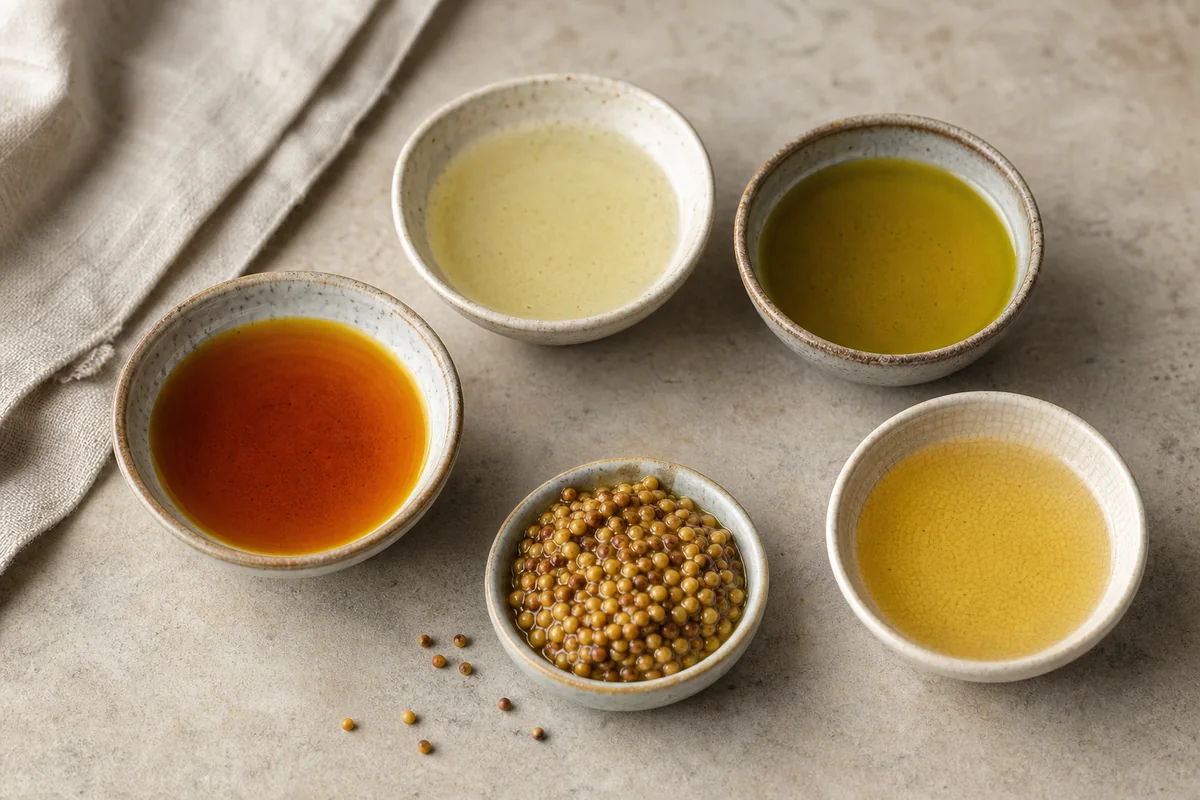
5 Best Mustard Oil Substitutes (Ranked)
Ingredients
Equipment
Method
- Choose your goal: match mustard’s pungency (use sesame toasted or a neutral oil + booster) or prioritize cooking performance (use groundnut/canola).
- Use the listed swap ratio for the oil volume in your recipe (1:1 for canola/groundnut/vegetable; ¾:1 for olive-light).
- If your substitute is neutral (canola/vegetable), add a small pungency booster in the tempering stage (black mustard seed or a tiny black pepper pinch) to mimic the “bite.”
- Heat-match the method: for tempering, preheat until shimmering for nutty oils; for canola/vegetable, heat just until active to avoid flat flavor.
- Taste after tempering and before simmering; adjust with salt and (only if needed) a brief extra pinch of pepper to bring the bite forward.
Notes
- Mustard oil’s signature is a pungent bite; neutral oils can work if you add a small pepper/mustard-seed booster during tempering.
- Sesame and peanut oils add their own flavor—use them when that depth is welcome in the dish.
Tried this recipe?
Let us know how it was!
Carrie is a food writer and editor with more than 15 years of experience. She has worked for some of the biggest names in the food industry, including Bon Appétit, Food & Wine, and Martha Stewart Living.
As the Editor in Chief of EpicureDelight, Carrie oversees all of the content on the site. She also manages the team of contributing writers and editors, who help to create delicious recipes, helpful tips, and informative articles that you’ll find on the site.
A native of the Chicago area, Carrie is passionate about all things food. She loves trying new restaurants and experimenting with new recipes in her kitchen. She’s also a graduate of the Culinary Institute of America, so she knows a thing or two about food!



