Go Back
+ servings
5 Best Neufchatel Cheese Substitutes (with Ratios) | EpicureDelight

5 Best Neufchatel Cheese Substitutes (with Ratios)

No ratings yet
Pick a neufchatel substitute based on texture needs: use cream cheese for closest behavior, or Greek yogurt/cottage cheese/ricotta for lighter or tangy swaps (with straining/draining).
Prep Time 5 minutes
Cook Time 0 minutes
Total Time 5 minutes
Servings: 1 batch
Course: Substitutes

Ingredients
  

Best Matches
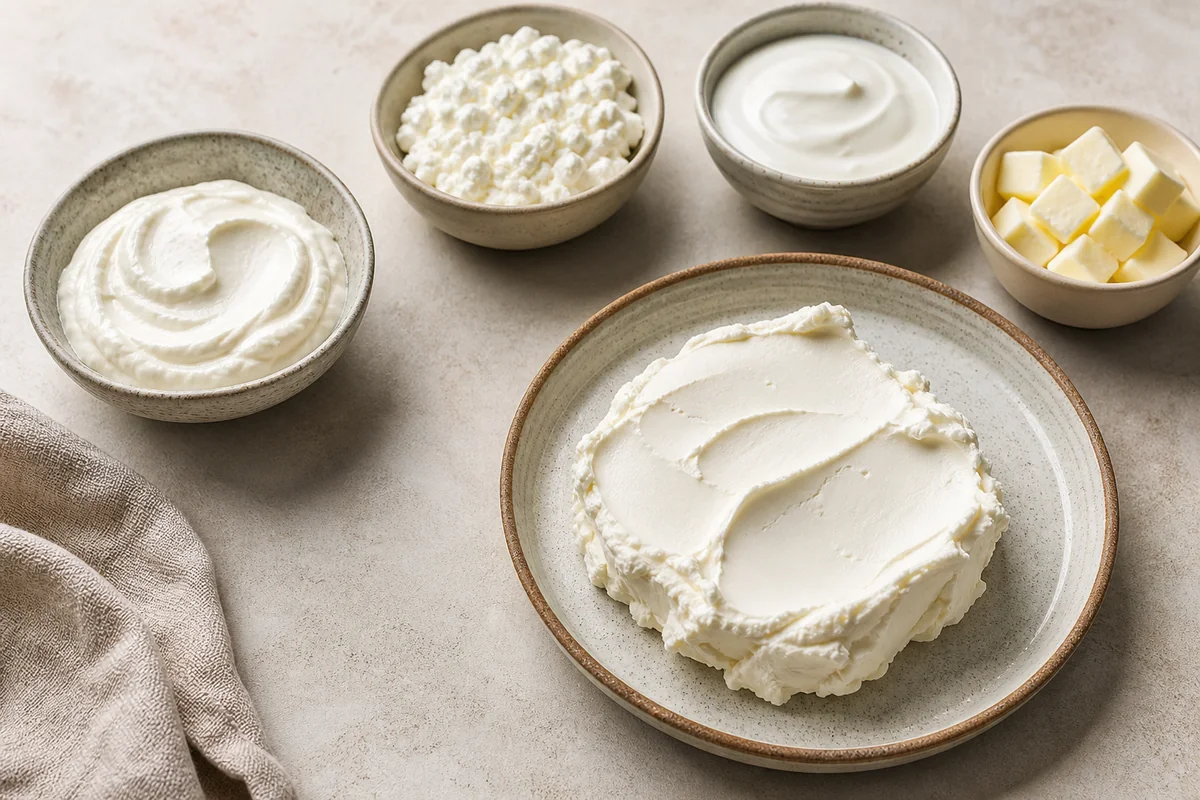
  • 1:1 Cream cheese (full-fat, softened) Closest flavor/texture; soften so it blends smoothly with no lumps.
Good Alternatives
  • 1:1 Mascarpone Richer and sweeter than neufchatel; reduce added sugar elsewhere if your recipe is sweet.
  • ¾:1 Greek yogurt (thick, strained) Lighter and tangier; strain 30 minutes for a cream-cheese-like body in dips and cheesecakes.
  • 1:1 Ricotta (blended smooth) Slightly grainy unless blended; blend until silky for spreads and batters.
Emergency Swaps
  • ¾:1 Cottage cheese (blended, well-drained) High moisture; drain and blend for a workable texture (especially for baking).

Equipment

  • Small strainer or cheesecloth (for straining yogurt/cottage cheese)
  • Blender or food processor (for smooth ricotta/cottage cheese)
  • Mixing Bowl
  • Measuring cups/spoons

Method
 

  1. Identify what you’re making: a spread/dip (needs smoothness) or a baked dish (needs structure and reduced moisture).
  2. Choose the substitute that matches your goal: cream cheese for closest behavior, or strained/thickened dairy for lighter swaps.
  3. Use the listed ratio. If your substitute is wetter (Greek yogurt, ricotta, cottage cheese), strain/drain first to prevent a loose final texture.
  4. Mix thoroughly until smooth, especially with ricotta/cottage cheese. Then taste and adjust salt or sweetness to match the original recipe’s balance.
  5. If baking, reduce extra liquid from the recipe if the batter seems thin. Bake until set, not just “cooked through.”
Notes

  • Ratios assume you’re substituting by weight for best consistency when possible.
  • For dips and frosting, prioritize smooth blending; for baking, prioritize lower moisture to avoid a soft set.

Tried this recipe?

Let us know how it was!