Juniper is the thing. That piney, slightly resinous note is what makes gin taste like gin, and when you pull it out of the equation, a lot of cocktails go flat fast.
A good non alcoholic gin substitute doesn't just add liquid volume. It needs to carry that botanical backbone, stay dry, and hold a faint bitter edge without dumping in extra sweetness.
Sweet substitutes can survive in high-citrus builds where lemon or lime does the heavy lifting. In a martini-style drink, though, sweetness kills the profile almost immediately.
The picks below are ranked by how well they hold that dry, juniper-forward character intact.
The best non alcoholic gin substitutes match on three things: juniper presence, dryness, and a botanical bitter edge. A gin-style botanical spirit is the closest 1:1. Juniper tea with alcohol-free bitters is the fastest pantry build. Avoid sweet-leaning options in martini-style drinks.
Best Non-Alcoholic Gin Alternatives (Quick Table + Picks)
Not every swap fits every drink. The table below ranks each option by how closely it mimics gin's dry, juniper-forward character.
Use it to pick fast, then read the H3 section for the exact ratio and any adjustments needed.
| # | Substitute | Best For | Ratio | Key Note |
|---|---|---|---|---|
| 1 | Non-alcoholic gin-style botanical spirit | Most cocktails | 1:1 | Closest juniper profile |
| 2 | Juniper-forward non-alcoholic aperitif | Martini/gimlet | 1:1 | Drier, more bitter |
| 3 | Juniper syrup diluted with water | Citrus drinks | ¾:1 | Dilute to reduce sweetness |
| 4 | Alcohol-free tonic + juniper tea | Gin & tonic | 1:1 | Bubbles required here |
| 5 | Juniper tea + lemon + alcohol-free bitters | All styles | 1:1 | Best pantry DIY option |
Ratios assume you're starting at 1:1 and tasting before you commit. A few of these need a small reduction if the substitute runs sweet.
5 Non-Alcoholic Gin Swaps Ranked by Flavor Match
1. Non-Alcoholic Gin-Style Botanical Spirit
This is the easiest win on the list. Brands made specifically as non-alcoholic gin already carry juniper oil, botanical distillates, and a dry finish that nothing homemade quite replicates.
Use it at a straight 1:1 in almost any gin cocktail.
The gap from real gin is smaller here than anywhere else on this list. Some brands skew floral or citrus-heavy, so taste your bottle before you build.
Understanding dry botanical notes in these spirits helps you pick the right brand for your recipe.
- Flavor fit: Juniper-forward and dry, very close to the real thing
- Ratio: 1:1 with no dilution needed unless the bottle tastes sweet
- Best drinks: Martinis, gin and tonics, negroni-style builds, gimlets
- Adjustment: If the bottle runs sweet, cut by 1 tablespoon per serving and add a small splash of water
Skip if: You can't find a bottle labeled "non-alcoholic gin," or the brand you have tastes strongly fruit-forward rather than piney and dry.
2. Juniper-Forward Non-Alcoholic Aperitif
A dry botanical aperitif sits a little closer to the bitter end of the spectrum than gin does. That's actually useful.
When your recipe leans on dryness and wants a strong herbal finish, an aperitif can outperform a sweeter gin-style bottle.
Start at 1:1, then taste. If the bitterness feels sharp, pull back by 1 to 2 teaspoons and balance with a small squeeze of citrus.
For drinks where you're swapping spirit bases more broadly, this same bitter-dry logic applies.
- Best drinks: Martini-adjacent builds, gimlets, spritzes, and aromatic soda cocktails
- Ratio: Start 1:1, reduce to ¾ if the bitterness dominates
- Balance fix: A ½ teaspoon of simple syrup softens excessive edge without losing the dry character
- Avoid: Pairing with heavy tonic already loaded with bitterness
Skip if: Your drink already has strong bitters or aggressive tonic and you don't want to stack more bitter layers on top.
3. Juniper Syrup
Juniper syrup gets the aroma right. The problem is it also brings sweetness that gin never had.
You need to dilute it, and the fix is simpler than it sounds.
Use ¾ of the amount your recipe calls for. Then top with still water or a light soda to reach the original volume.
If it still tastes sweet, a dash of lemon juice pulls it back toward dry fast.
- Starting ratio: Use ¾ of the called-for amount, then dilute with water or soda to match volume
- Too sweet fix: Add ½ teaspoon lemon juice per serving and stir well before tasting again
- Not juniper enough: Add a few drops more syrup, or steep a pinch of dried juniper berries in warm water and mix in 1 tsp
- Best drinks: Collins-style, citrus-heavy builds, and anything with tonic or soda already in the glass
Skip if: The recipe is a martini-style drink where sweetness has nowhere to hide and you don't have citrus or bitters nearby to correct it.
4. Alcohol-Free Tonic + Juniper Tea
This pairing works because it splits the job. The tonic brings carbonation and its own dry bitter lift.
The juniper tea brings the botanical aroma. Together, they do a decent impression of what pours out of a non-alcoholic gin bottle.
Steep 1 teaspoon of dried juniper berries in 120ml of just-boiled water for 8 minutes, then strain and chill. Pour your tonic base, then add the chilled tea in a 1:1 combined ratio to what the recipe expects.
- Quick prep: Steep, strain, chill the tea ahead so it's ready when you build the drink
- Ratio: Half tonic, half juniper tea as a combined 1:1 replacement for the gin volume
- Prevent watery taste: Use a concentrated tea (longer steep or a bit more juniper) rather than over-diluting with tonic
- Best drinks: Gin and tonic, soda-topped spritzes, cucumber highballs
Skip if: Your recipe is a coupe or martini-style drink with no tonic, where carbonation and tonic bitterness will fight the intended profile.
5. Juniper Tea + Lemon + Alcohol-Free Bitters
This is the fastest pantry build that actually tastes like it belongs in a cocktail. Juniper tea handles the aroma, fresh lemon handles brightness and some dryness, and the freshly squeezed citrus pulls the whole thing away from flat or watery.
Alcohol-free bitters are the ingredient that most people skip, and they shouldn't be.
Without bitters, the drink tastes herbal and bright but lacks the dry backbone that gin puts in every sip. A single dash changes that.
| Taste Problem | Fix | Amount |
|---|---|---|
| Too sweet | Add lemon juice or extra bitters | ½ teaspoon lemon or 1 dash bitters |
| Too flat | Increase juniper tea strength | Steep 2 min longer next batch |
| Too bitter | Add a small splash of simple syrup | ¼ teaspoon at a time |
| Too watery | Reduce water, increase tea ratio | Use ⅔ tea to ⅓ water |
- Build order: Steep and chill tea first, then add lemon juice, then bitters last so you can dose carefully
- Ratio: 80ml juniper tea, 10ml lemon juice, 1 to 2 dashes alcohol-free bitters per serving
- Best drinks: Any gin cocktail where a moderate botanical presence works: G&T, gimlet, sling
Skip if: You don't have alcohol-free bitters and can't substitute any other bitter note. Without that edge, the drink lands flat.
Making Non-Alcoholic Gin Substitutes Taste Right
Three things control how close any substitute lands: juniper intensity, sweetness level, and the bitter-dry finish. Get all three close enough and most drinkers won't notice the difference.
Adjust them one at a time rather than fixing everything at once, and taste after each change. If you're building with homemade options and feel uncertain about the base, understanding dry botanical notes in detail helps calibrate how much adjustment a recipe actually needs.
- Step 1: Start with a 1:1 pour, taste before adding other ingredients, and decide if it's sweeter or drier than needed
- Step 2: If sweet, reduce by 1 tablespoon and add a splash of water plus a squeeze of lemon to restore the dry edge
- Step 3: If flat or too mild, add 1 dash of alcohol-free bitters and stir well. Taste cold, not at room temperature, since the juniper opens up once properly chilled
Frequently Asked Questions
Yes, a quality gin-style botanical spirit swaps in at 1:1 for most cocktail recipes. If the bottle tastes sweet in the glass, reduce by 1 tablespoon and balance with a small citrus squeeze.
Reduce the substitute by 1 to 2 tablespoons and add a few dashes of alcohol-free bitters plus a small lemon squeeze. Switch to a drier aperitif-style option if the sweetness persists.
Juniper tea works but tastes mild on its own. Steep longer for stronger flavor, and always add lemon juice and a dash of bitters to build the dry backbone that tea alone misses.
They aren't mandatory, but skipping them usually makes the drink taste flat. Bitters supply the dry, slightly bitter backbone that juniper tea and citrus alone don't fully replace.
The alcohol-free tonic plus chilled juniper tea pairing works best. The tonic provides carbonation and bitter lift while the tea supplies the juniper aroma that makes it read as gin.
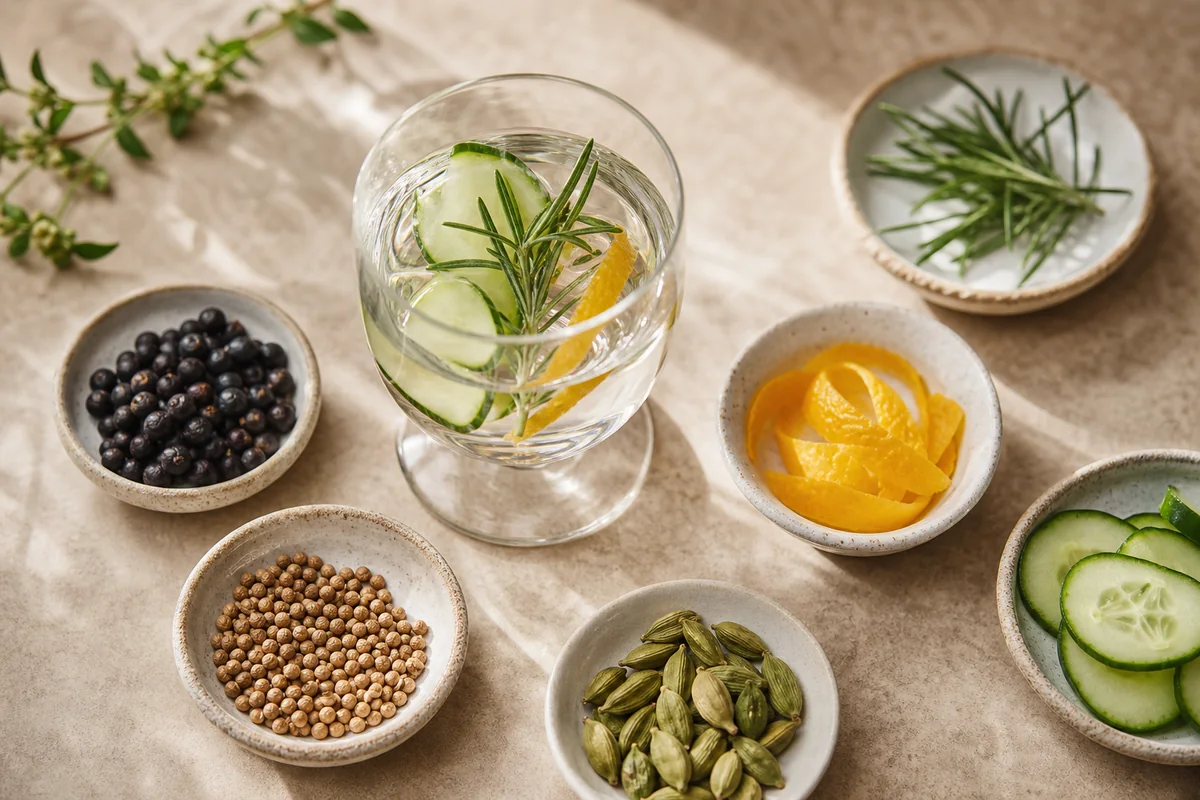
5 Best Non Alcoholic Gin Substitutes That Taste Right
Ingredients
Equipment
Method
- Check the drink type: for gin-and-tonic or spritzes, prioritize tonic + juniper; for martinis, prioritize dry bitterness and low sweetness.
- Start with the 1:1 swap from the reference table; if the substitute is sweet, use slightly less and dilute with water or soda.
- Adjust the “gin backbone”: add a little more juniper (tea/syrup) if it tastes flat, or add citrus/bitters if it lacks lift.
- Balance after dilution: if the drink turns too sweet, add a squeeze of lemon or a dash of alcohol-free bitters.
- Chill/serve over ice and taste once the drink is properly cold, since flavors mute at first and open up after a few minutes.
Notes
- Aim for juniper-forward, dry botanical flavor; sweetness and heavy fruit notes are the most common failure mode.
- Alcohol-free bitters (or a bitter aperitif style) helps mimic dry gin’s edge in martini-like drinks.
Tried this recipe?
Let us know how it was!
Carrie is a food writer and editor with more than 15 years of experience. She has worked for some of the biggest names in the food industry, including Bon Appétit, Food & Wine, and Martha Stewart Living.
As the Editor in Chief of EpicureDelight, Carrie oversees all of the content on the site. She also manages the team of contributing writers and editors, who help to create delicious recipes, helpful tips, and informative articles that you’ll find on the site.
A native of the Chicago area, Carrie is passionate about all things food. She loves trying new restaurants and experimenting with new recipes in her kitchen. She’s also a graduate of the Culinary Institute of America, so she knows a thing or two about food!