
Oaxaca cheese pulls into long, elastic strings when melted, giving quesadillas and fundidos their signature stretch.
It's a semi-soft, low-moisture cheese made by a pasta filata stringing process, which puts it in the same family as mozzarella but with a mild lactic tang all its own.
Understanding what Oaxaca cheese brings to a dish makes it easier to pick a substitute that actually holds up.
The challenge with replacing it is that no single cheese copies every property at once. You need long, stretchy melt for quesadillas, controlled browning for baked dishes, and mild flavor for cold applications like taco fillings.
The swaps below are sorted by use case so you can match the right cheese to the right job.
Low-moisture whole-milk mozzarella is the best overall substitute for Oaxaca cheese, swapping 1:1 for melting and shredding. It hits the closest stretch and melt point. Add 1 teaspoon lime juice per 8 oz if you need more tang. Avoid queso fresco for any melt application - it won't stretch.
5 Best Substitutes for Oaxaca Cheese to Try 🧀
Each column below tells you exactly where the substitute works, how much to use, and what trade-off to expect.
| # | Substitute | Best For | Ratio | Key Note |
|---|---|---|---|---|
| 1 | Low-Moisture Whole-Milk Mozzarella | ✨ Both | 1:1 | Less tang; melts smooth |
| 2 | Monterey Jack | 🍳 Cooking | 1:1 | Milder; browns faster |
| 3 | String Mozzarella | ✨ Both | 1:1 | Higher moisture; less tang |
| 4 | Mozzarella + Monterey Jack Blend | 🧁 Baking | ¾ + ¼ | Add lime; closest flavor |
| 5 | Aged Cotija / Queso Añejo | 🥗 Raw | 1:1 | Crumbly; no stretch at all |
Common Mistakes When Swapping Oaxaca Cheese
Swapping without a plan leads to broken texture, wrong salt levels, or a filling that won't pull. These are the six mistakes that come up most often, and what to do instead.
- Using queso fresco for melt: Queso fresco doesn't melt or stretch. Save it for cold garnish and use mozzarella instead for any hot application.
- Wrong ratio with high-moisture substitutes: String mozzarella holds extra water, so reduce other added liquids by 1-2 tablespoon per cup to keep the dish from going soggy.
- Skipping acid adjustment: Low-moisture mozzarella is sweeter than Oaxaca. Add 1 teaspoon lime juice per 8 oz to bring back that mild lactic tang.
- Overheating the cheese: Pushing shredded cheese above 170°F causes fat to separate, leaving a greasy, grainy texture. Pull it off heat at the glossy-stretch stage.
- Ignoring salt differences: Aged cotija is noticeably saltier. Reduce added salt in the recipe by ¼ teaspoon per cup when using it as a topping.
- Not draining high-moisture subs: If you use full-fat ricotta as a base in a blend, drain it for 30 minutes in the fridge before mixing so excess water doesn't thin the filling.
1 - Low-Moisture Whole-Milk Mozzarella
Low-moisture whole-milk mozzarella is the closest functional match for Oaxaca cheese across most recipes. It's made by a similar pasta filata process, so the protein structure pulls into strings under heat rather than breaking apart.
Its moisture content sits around 45%, close enough to Oaxaca that it swaps 1:1 for both melting and shredding without adjusting quantities.
For melting in quesadillas or fundido, it hits a glossy stretch around 130-140°F.
For baked dishes, reduce added liquid by 1-2 tablespoon per cup because this cheese releases less moisture than some alternatives.
The main gap is flavor: low-moisture mozzarella is slightly sweeter and less tangy, so add 1 teaspoon lime juice per 8 oz when tang matters.
Once opened, use it within 5-7 days; for tips on storing mozzarella properly, the shelf life details are worth reviewing before your recipe day.
Low-Moisture Whole-Milk Mozzarella
Works for: quesadillas, fundido, tacos, baked enchiladas, anywhere stretch is needed
Skip if: you need strong tangy flavor without adding acid, or for cold crumble toppings
2 - Oaxaca-Friendly Monterey Jack
Monterey Jack has a mild, creamy profile with very little tang, making it a reliable shredding substitute at a 1:1 ratio. It melts smoothly in cold applications like taco fillings and works well in quesadillas, though its melt isn't quite as elastic.
You won't get the same pull, but the texture stays cohesive.
One practical note for baked dishes: Monterey Jack browns about 10% sooner at 400°F compared to Oaxaca, so watch the surface and drop oven temp by 25°F if needed.
Because it's milder and slightly saltier in some brands, reduce added salt by about ⅛ teaspoon per cup when swapping.
If you're ever short on it, Monterey Jack cheese alternatives follow similar swap logic.
3 - Queso Oaxaca (if available) or String Mozzarella
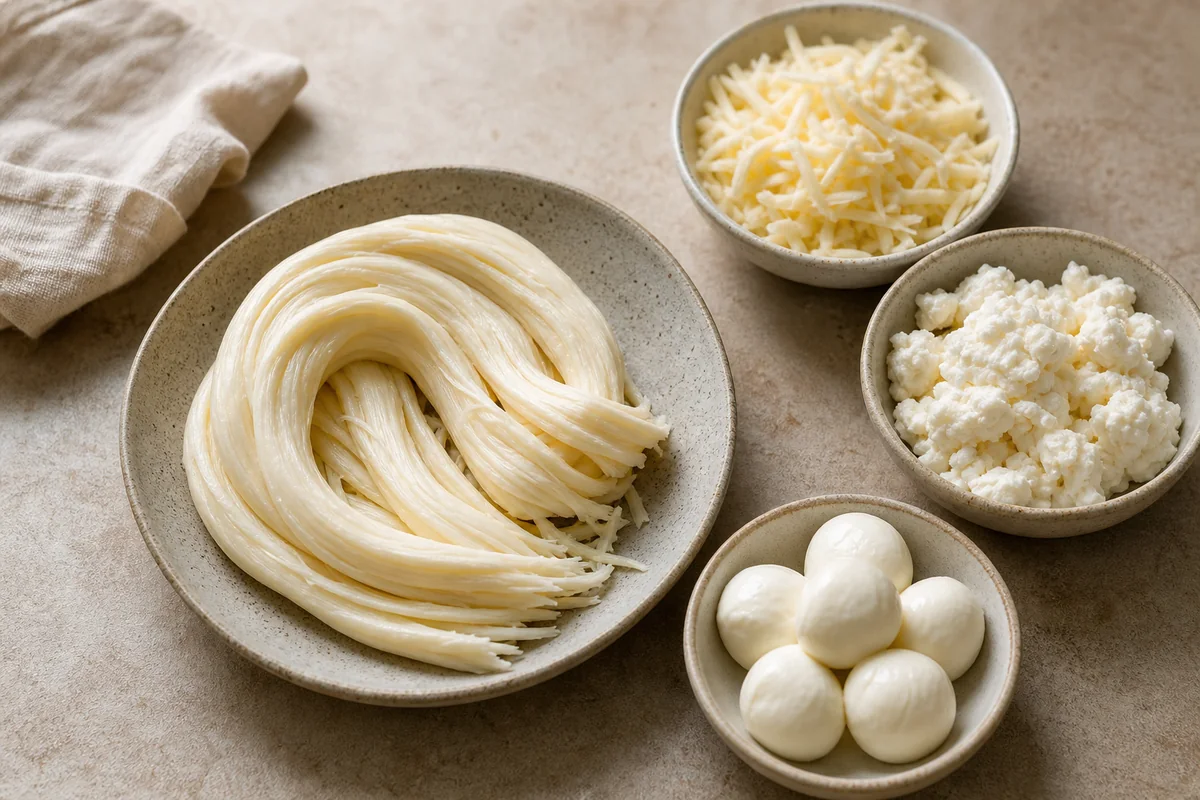
The name "queso Oaxaca" gets used loosely in the U.S. Authentic queso Oaxaca is sold in ball or rope form at Latin grocery stores, and it has a slightly tangier flavor than most domestic versions.
String mozzarella comes in a nearly identical rope shape and is an easy visual and functional stand-in when authentic Oaxaca isn't on the shelf.
Both swap at 1:1 across all applications. The key difference is moisture: store-bought string mozzarella can run 5-8% higher in water content than authentic Oaxaca, which affects browning and filling texture in baked dishes.
Authentic Queso Oaxaca
Works for: all applications; closest tang and stretch to the original
Skip if: unavailable locally - sourcing it is the only barrier
String Mozzarella
Works for: melting, shredding, cold use; widely available at any grocery store
Skip if: a baked recipe is moisture-sensitive - pat it dry or reduce liquids slightly
4 - Oaxaca-Style Blended Substitute (Mozzarella + Oaxaca-ish Twist)
When you want the closest possible flavor and stretch without tracking down authentic Oaxaca, a simple DIY blend does the job. Combine ¾ cup low-moisture mozzarella with ¼ cup shredded Monterey Jack per 1 cup of Oaxaca called for in the recipe.
Mix the two cheeses together before adding to the dish so they melt as a unit.
Add 1 teaspoon fresh lime juice per 8 oz of the blend to nudge the flavor toward lactic tang without breaking the melt.
The acid adjusts pH slightly, which actually helps the proteins stay cohesive under heat rather than separating.
This blend works especially well in baked quesadillas and melted fillings where both stretch and flavor matter.
For times you run low on lime, lime juice substitutes can step in at the same quantity.
5 - Queso Añejo / Aged Cotija (for crumbling/topping, not melting)
Aged cotija and queso añejo are hard, dry cheeses aged between 2 and 6 months. They're 10-20% drier than Oaxaca and will not melt or stretch under heat, so they belong in a completely different use category.
Use them 1:1 by volume as a crumbled topping on tacos, soups, or finished baked dishes where no stretch is needed.
For a baked gratin that requires some melt, blend 75% of a proper melting substitute (mozzarella or Monterey Jack) with 25% cotija. That ratio gives you the stretch while the cotija adds its sharp, salty finish on top.
Because cotija is significantly saltier than Oaxaca, reduce added salt in the recipe by ¼ teaspoon per cup.
Flavor and Texture Differences at a Glance
Here's a one-line profile for each option so you can compare them side by side before committing to a swap.
- Oaxaca (original): High stretch, mild lactic tang, best for quesadillas, fundido, and melted fillings.
- Low-moisture mozzarella: Closest stretch to Oaxaca, slightly sweeter, best all-purpose melting substitute at 1:1.
- Monterey Jack: Smooth melt, very mild, slightly faster browning, best for shredding and cold fillings.
- String mozzarella: Good stretch, milder tang, higher moisture; pat dry before using in baked dishes.
- Mozzarella + Monterey Jack blend: Closest overall flavor match with acid added; best for baked and melted applications.
- Aged cotija / queso añejo: No melt, strong salty flavor, crumbly texture; use for cold finishing only.
Oaxaca cheese itself stays fresh for 2-3 weeks unopened and 5-7 days once opened; check Oaxaca cheese storage methods if you're planning ahead and want to minimize waste.
For dishes like quesadillas where the melted cheese is part of the final product, how long quesadillas keep is useful to know before you scale a recipe up.
Frequently Asked Questions
No. Queso fresco is a fresh, crumbly cheese that does not melt or stretch when heated. It will remain as dry crumbles rather than forming a cohesive, stretchy layer. Use low-moisture mozzarella instead for any application that requires melt.
A pre-mixed mozzarella and Monterey Jack blend keeps for 4-5 days in an airtight container in the fridge. If you've added lime juice, use it within 2-3 days because the acid slowly breaks down the proteins and softens the texture.
At small amounts, 1 teaspoon per 8 oz, acid does not break the melt. It lowers pH slightly, which can actually help proteins stay stable under heat. Stick to that ratio; going beyond 2 teaspoon per 8 oz risks a grainy or separated texture in the oven.
Low-moisture whole-milk mozzarella at a 1:1 ratio is the top choice for enchiladas. It holds its stretch through baking and doesn't release excess liquid onto the sauce. Add 1 teaspoon lime juice per 8 oz to the filling blend if you want a tangier finish.
Yes, but it takes about 45-60 minutes. You heat whole milk with citric acid, form curds, then stretch them in hot water (around 160-170°F) to develop the elastic strands. It's closer to a 30-minute mozzarella method than a hands-off process, and results vary with milk fat content.
5 Best Oaxaca Cheese Substitutes That Taste Right
Ingredients
Equipment
Method
- Measure your chosen substitute at the stated ratio (mostly 1:1); for blends, mix components thoroughly and shred before use so they integrate evenly.
- If substituting for melting in hot applications, check cheese temperature while cooking-stop at glossy stretch (~130-140°F) to avoid graininess.
- For baked dishes that call for Oaxaca, reduce added liquids by 1-2 tablespoon per cup if using higher-moisture substitutes; watch browning times and lower oven temp by 25°F if surface browns too fast.
- For cold use (tacos, fillings), use 1:1 and adjust salt-aged cheeses are saltier so scale back added salt by ⅛-1/4 teaspoon per cup.
- If testing a new substitute, try a ¼-batch first (test-batch) to confirm melt, flavor, and seasoning before scaling to a full recipe.
Notes
- Direct-swap ratios are optimized for common home recipes: quesadillas, tacos, baked fundido.
- When in doubt, test a small portion to check melt and seasoning.
Tried this recipe?
Let us know how it was!
Carrie is a food writer and editor with more than 15 years of experience. She has worked for some of the biggest names in the food industry, including Bon Appétit, Food & Wine, and Martha Stewart Living.
As the Editor in Chief of EpicureDelight, Carrie oversees all of the content on the site. She also manages the team of contributing writers and editors, who help to create delicious recipes, helpful tips, and informative articles that you’ll find on the site.
A native of the Chicago area, Carrie is passionate about all things food. She loves trying new restaurants and experimenting with new recipes in her kitchen. She’s also a graduate of the Culinary Institute of America, so she knows a thing or two about food!



