
That sticky, glossy spoonful of orange marmalade does a lot of work. It brings sweet citrus, a sharp tart edge, and those tiny suspended peel bits that give it texture unlike any other jam.
Finding a good orange marmalade substitute means matching all three: sweetness, brightness, and that slightly chewy body.
The bitterness level in marmalade varies a lot by brand. Some jars lean sweet and mild, others carry a real pith punch.
Know which style your recipe is built around before choosing your swap.
Orange jam with zest pieces is the closest swap in texture and flavor. For glazes, use orange juice concentrate reduced with zest. For baking, apricot jam plus fresh orange zest works well. Add lemon juice to any swap that tastes flat or too sweet.
5 Best Orange Marmalade Substitutes Ranked by Use
Each swap below works at a different job. The table is your quick reference.
Read the ratio column first, then check the "Best For" badge to match your recipe. Add a squeeze of lemon when the swap tastes too sweet, and simmer briefly when it's too loose for glazing.
| # | Substitute | Best For | Ratio | Key Note |
|---|---|---|---|---|
| 1 | Orange Jam with Zest | Both | 1:1 | Add lemon if too sweet |
| 2 | Seville-Style Marmalade | Baking | 1:1 | Stir before measuring |
| 3 | Apricot Jam + Orange Zest | Baking | ¾:1 | Add zest to taste |
| 4 | Orange Preserves + Lemon | Both | 1:1 | Simmer if too thin |
| 5 | Citrus Syrup, Reduced | Glaze | 1:1 | Reduce 1-2 min to thicken |
1. Orange Jam with Zest
Orange jam is the most direct swap. It shares marmalade's citrus flavor base and, when it includes actual zest pieces, it mimics the mouthfeel of the real thing almost exactly on toast, in pastry fillings, and stirred into sauces.
If your jar reads "orange preserve" but has no zest bits, the tangy spread loses some of its textural identity, so check the label before using it as-is.
- Too sweet? Add ⅛ teaspoon lemon juice per ¼ cup of jam, taste, and repeat.
- No zest bits? Stir in ½ teaspoon freshly grated orange zest per tablespoon of jam.
- For glazing: Warm gently and stir until it turns glossy before brushing.
Skip if: Your recipe depends on a visible zest texture and your jam is labeled "smooth" with no peel.
2. Seville-Style Orange Marmalade
When you want that classic marmalade bitterness, a Seville-style jar is the flavor-correcting swap. It leans harder into pith and citrus aroma than standard sweet marmalade, so it's ideal when your base swap tastes too mild or one-dimensional.
You can find it at specialty grocery stores or online, and storing it properly keeps it sharp and usable for months.
- Before measuring: Stir the jar well so zest distributes evenly through each spoonful.
- Too bitter for your dish? Blend it with a milder orange jam, half and half.
- Ratio: Use 1:1 for all applications: toast, glaze, or baked filling.
Skip if: You can't source it quickly and need a substitute today from pantry staples.
3. Apricot Jam with Orange Zest
Apricot jam is a classic pastry glaze base, and it works here because it carries the same thick, clingy texture as marmalade without being watery. The apricot flavor is mild enough that fresh orange zest takes over the citrus role convincingly.
For anyone who wants stone fruit-based swaps that go beyond apricot, there are several good options worth knowing.
Adding zest is the key step. Start with ½ teaspoon per tablespoon, taste, then build from there.
Zest intensity varies a lot by orange variety and how long the fruit has been sitting, so don't add it all at once.
Apricot Jam + Orange Zest
Works for: baking fillings, pastry glaze, chicken or pork glazes
Skip if: you need a true citrus peel texture and can't add fresh or dried zest
- Ratio: Use ¾ cup apricot jam to replace 1 cup marmalade, then add zest.
- For brightness: Add 1 teaspoon lemon juice per ¼ cup to keep it from tasting flat.
- For thinner glazes: Warm the jam slightly before brushing; it loosens fast.
4. Orange Preserves with a Lemon Squeeze
Orange preserves are often sitting right next to marmalade on the shelf, and they do a solid job in a pinch. The chunky fruit pieces help approximate marmalade's "bits" quality, which matters in baked goods and thick glazes.
They're usually sweeter and less bitter than marmalade, so a squeeze of lemon is the one adjustment that pulls the flavor into the right range.
For glazing, check the consistency first. If your preserves slide off a spoon like juice rather than clinging, simmer them in a small pan for 1 to 2 minutes before using.
Skip if: Your jar is very thin or syrupy. Simmer first, then use. Don't brush watery preserves onto roasted meat expecting them to cling.
5. Citrus Syrup, Reduced
Orange juice concentrate mixed with fresh orange zest and reduced on the stove becomes a surprisingly effective marmalade stand-in for glazes and sauces. It coats well, it tastes bright, and the zest gives it an aroma that concentrate alone lacks.
This swap is built for situations where texture matters more than peel bits.
The reduction step is not optional for glazing. Unreduced concentrate is too thin to cling to meat or pastry.
Knowing how long citrus juice keeps helps if you're working from an opened carton that's been sitting in the fridge.
- Base ratio: 3 tablespoon orange juice concentrate + 1 teaspoon zest = roughly ¼ cup marmalade.
- Too sweet after reducing? Add lemon juice, a few drops at a time.
- For sauces: Add a small pinch of salt to sharpen the citrus edge.
Skip if: You need a spreadable jam texture for toast or pastry. Syrup won't work there without heavy reduction into something almost candy-like.
Making Your Substitute Behave Like Marmalade
The goal with any swap is three things together: sweetness, tartness, and some kind of citrus texture. Most substitutes nail one or two but need help with the third.
If you're choosing between zest forms, fresh zest gives more punch in uncooked applications, while dried works fine in baked fillings where heat unlocks the oils anyway. A quick taste-test after each adjustment keeps you from overcorrecting.
- Too sweet? Add lemon juice in ¼ teaspoon increments, stirring and tasting between each addition until the tartness is back.
- Too thin? Simmer the substitute in a small pan over medium heat for 1 to 2 minutes, stirring constantly, until it coats a spoon.
- Not citrusy enough? Stir in freshly grated orange zest, starting with ½ tsp, and let it rest 5 minutes before using so the oils release into the mix.
Frequently Asked Questions
Orange jam with zest pieces is the best match for toast. It has the same sticky body and citrus flavor; add a drop of lemon juice if it tastes too sweet.
Yes, orange jam works at a 1:1 ratio in most baked fillings and glazed pastries. Add orange zest if your jam doesn't contain peel bits.
Add fresh lemon juice in ¼ teaspoon increments and stir well between each addition. A tiny pinch of salt can also sharpen the citrus edge without adding sourness.
Simmer the substitute in a small pan for 1 to 2 minutes over medium heat before brushing. This thickens the sugars so the glaze clings instead of running off.
They're close but not identical. Preserves are usually sweeter and less bitter; add lemon juice and check consistency before using preserves in a glaze or filling.
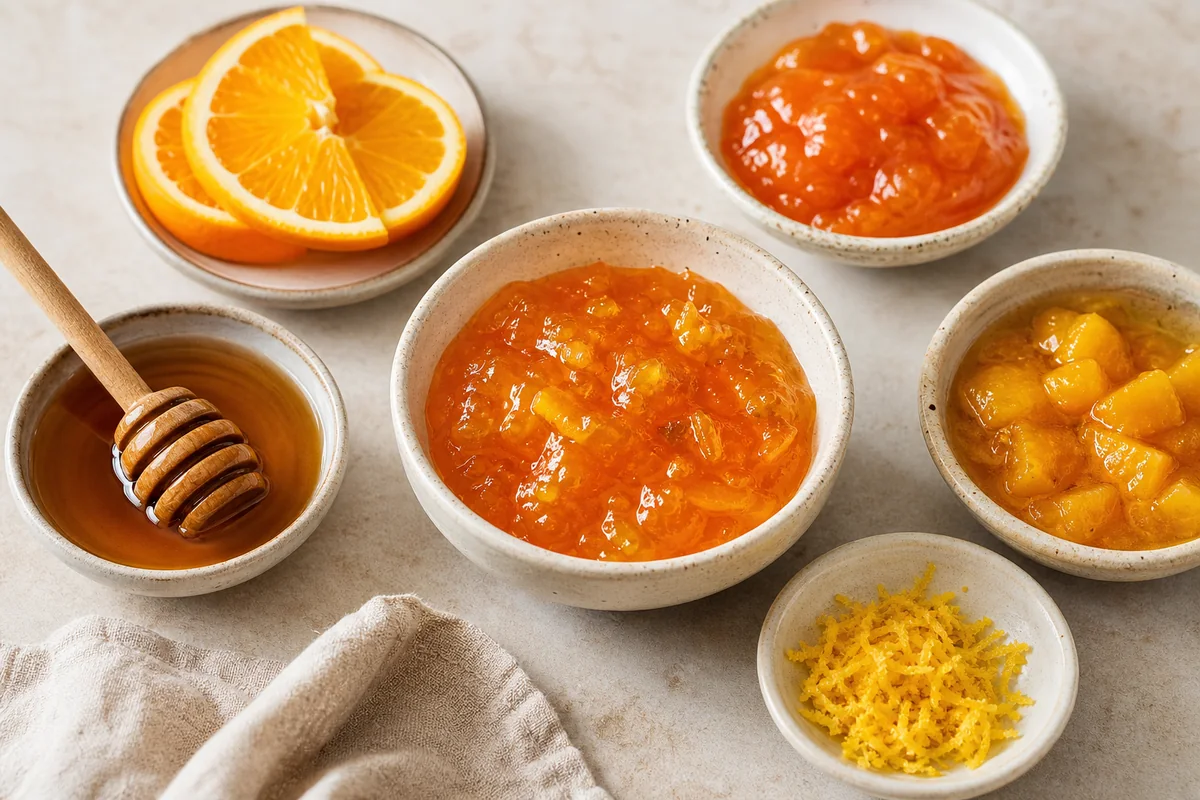
5 Best Orange Marmalade Substitutes (Tested)
Ingredients
Equipment
Method
- Identify how you’re using marmalade: spreading (needs jam texture), baking (needs stable sweetness), or glazing (needs pourable thickness).
- Match flavor first: aim for sweet + bright citrus + a hint of bitterness (pith) using zest, lemon, or a tiny salt pinch.
- Measure using the substitute ratio; if the substitute is thinner than marmalade, simmer it briefly to reduce.
- Taste and correct: add lemon juice for brightness, orange zest for aroma, or a pinch of salt to sharpen the citrus.
- Rest 5 minutes (optional): this helps flavors meld, especially in glazes and baked fillings.
Notes
- If your recipe depends on marmalade’s zest bits, prefer jams/preserves with visible zest or add fresh zest to your swap.
- For glazes, slightly thicken if the substitute is watery so it clings to the surface.
Tried this recipe?
Let us know how it was!
Carrie is a food writer and editor with more than 15 years of experience. She has worked for some of the biggest names in the food industry, including Bon Appétit, Food & Wine, and Martha Stewart Living.
As the Editor in Chief of EpicureDelight, Carrie oversees all of the content on the site. She also manages the team of contributing writers and editors, who help to create delicious recipes, helpful tips, and informative articles that you’ll find on the site.
A native of the Chicago area, Carrie is passionate about all things food. She loves trying new restaurants and experimenting with new recipes in her kitchen. She’s also a graduate of the Culinary Institute of America, so she knows a thing or two about food!



