
That thick, sticky jar sitting empty at the back of your pantry has a way of derailing dinner plans. Whether you need a peanut butter substitute for a sauce, a baked bar, or a quick sandwich spread, the swap that works depends on three things: how thick the original recipe needs to be, how strong a nut flavor it expects, and whether you're cooking sweet or savory.
Most swaps start at a 1:1 ratio. Adjust from there based on texture and taste, not just convenience.
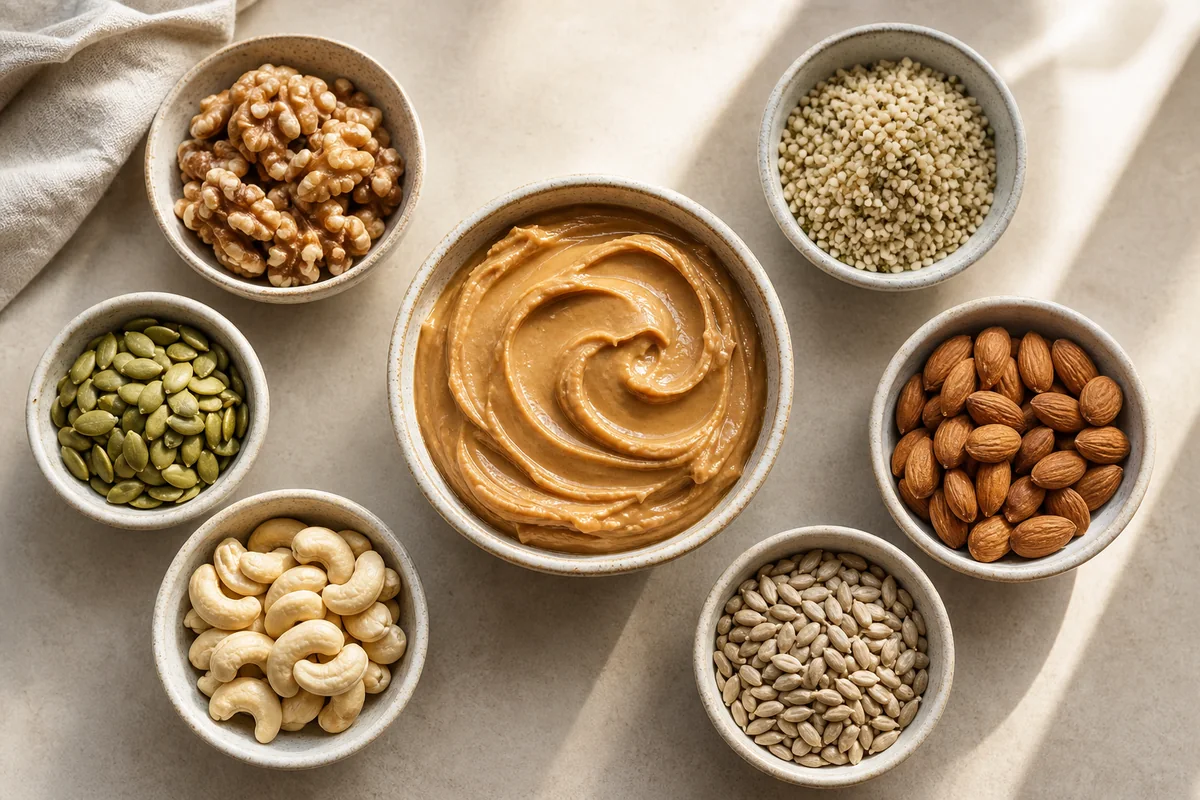
The best peanut butter substitutes are almond butter and cashew butter for a near-identical creamy swap, sunflower seed butter for a peanut-free option, tahini for savory sauces at a reduced ratio, Greek yogurt for no-bake creaminess, and cookie butter for sweet baked goods.
5 Best Peanut Butter Substitutes (Plus How to Use Them)
A quick look at all five options before you commit. The ratio column is your starting point, not a hard rule.
| # | Substitute | Best For | Ratio | Key Note |
|---|---|---|---|---|
| 1 | Almond butter (smooth) | Both | 1:1 | Slightly sweeter, very close texture |
| 2 | Cashew butter (smooth) | Both | 1:1 | Mild, silky, great in sauces |
| 3 | Sunflower seed butter | Both | 1:1 | Peanut-free; add salt for depth |
| 4 | Tahini | Savory | ¾:1 | Thinner and sesame-forward |
| 5 | Greek yogurt + nutty seasoning | No-bake | 1:2 | Creamy but no structure for baking |
1. Almond Butter
Almond butter is the most versatile swap on this list. It matches that roasted, earthy spread in thickness and mouthfeel, though it's a touch sweeter and more delicate in flavor.
Use it freely in smoothies, oatmeal, stir-fry sauces, baked bars, and sandwiches without changing anything else in the recipe first.
- Texture match: Nearly identical viscosity to standard peanut butter; no thinning or thickening needed at 1:1
- Flavor note: Slightly sweeter and less roasty, so reduce added sugar by 1 teaspoon per 2 tablespoon used in sweet recipes
- Oil separation: Stir thoroughly before measuring; natural almond butter separates just like natural peanut butter
- Skip if: You need a facility-certified nut-free product; confirm the almond butter's processing environment before using for serious allergies
2. Cashew Butter
Cashew butter is the creamiest option here, and its mild flavor means it disappears into a dish rather than competing with it. When you're making chocolate no-bake bites or a silky sauce swap, cashew butter blends in without announcing itself.
That subtlety is a feature, not a flaw.
- Best for creamy sauces: Blends smooth into coconut milk or soy-based sauces with no graininess at 1:1
- Oil separation fix: Blend for 10 seconds in a blender or stir vigorously; don't pour off the oil before mixing
- Flavor balancing: Add a pinch of salt and a drop of vanilla if the recipe expected peanut butter's savory-sweet contrast
- Skip if: You want that classic roasted peanut note to come through; cashew butter is too mild to replicate it
3. Sunflower Seed Butter
Sunflower seed butter is the go-to when you need something peanut-free that still spreads like a nut butter. It has a lighter roast note than peanuts, and learning its seed-forward flavor profile makes it easier to use it well.
The fix is simple: a pinch of salt and a small drizzle of honey close most of the flavor gap.
Sunflower Seed Butter vs. Peanut Butter
Works for: spreading on toast, swirling into oatmeal, cookie and brownie batters where nut flavor is background
Skip if: you need bold roasted-nut flavor front and center, or if allergy protocol requires a confirmed peanut-free facility label
- Flavor vs. peanut butter: Lighter and slightly grassy; salt and a touch of honey bring it closer to peanut butter's balance
- Texture: Comparable thickness to standard peanut butter at 1:1; stir well before using
- Baking note: Can turn baked goods green due to a reaction with baking soda; this is harmless but worth knowing
- Salt adjustment: Add ⅛ teaspoon salt per 2 tablespoon if using unsalted sunflower seed butter in a savory recipe
4. Tahini
Tahini earns its place here for savory dishes, not sweet ones. It pairs beautifully with this pantry staple's longer shelf life in that both are jarred, oil-separating spreads that store similarly.
But tahini is thinner and more intense, so start at ¾ the amount your recipe calls for and work up.
| Use | Ratio | Notes |
|---|---|---|
| Savory sauce or dressing | ¾:1 | Tahini + reduce other liquids by 1 tbsp |
| Dip base (hummus-style) | ¾:1 | Thin with water, not oil, to control intensity |
| Baked cookies or bars | ¾:1 | Expect a sesame note; reduce sugar by 1 tsp |
- Thickness fix: If the sauce feels too thin, whisk in 1 teaspoon of flour or cornstarch per ¼ cup tahini
- Flavor balance: Tahini pairs well with lemon juice, soy sauce, and garlic; it doesn't play well with chocolate or caramel
- Bitterness watch: Overcooking tahini intensifies bitterness; add it off-heat when possible in warm sauces
- Skip if: Your recipe is sweet-forward; tahini's sesame intensity clashes with chocolate, fruit, or vanilla profiles
5. Greek Yogurt + Nutty Seasoning
Full-fat Greek yogurt is a smart no-bake stand-in when you need creaminess without structure. The tangy, thick dairy base handles spreading and swirling well, but it needs help on flavor.
Stir in toasted sesame, a little cocoa powder, or a nut-butter spice blend to build back some depth.
- Best ratio: Use 1 part yogurt to 2 parts called-for peanut butter; it's lighter and won't replicate full richness at 1:1
- Flavor boost: Add ½ teaspoon toasted sesame or a pinch of almond extract to push past plain tang
- Skip if: Your recipe needs peanut butter's fat and binding power for structure in baked goods; yogurt won't hold bars or cookies together
Making Peanut Butter Substitutes Work (Fast)
The biggest mistake people make is choosing the right substitute and then forgetting to adjust around it. Almond butter going into a freshly opened smooth jar behaves differently from a separated one sitting two weeks open.
And knowing seed-based swap options helps when you're juggling both allergy and pantry constraints at the same time.
Three adjustments cover most problems:
- Texture control: If your substitute is thinner than peanut butter (tahini, yogurt), reduce other liquids by 1-2 tablespoon or add a dry thickener like oats or cocoa powder that fits the recipe
- Flavor balancing: Mild swaps (cashew butter, yogurt) need a pinch of salt; sweet swaps (cookie butter, almond butter in desserts) need 1-2 teaspoon less added sugar than the original recipe calls for
- Blending or heating: Warm thick nut butters for 10 seconds in the microwave before stirring into sauces; blend seed butters for 15 seconds to smooth out any graininess before measuring
Frequently Asked Questions
Yes, smooth unsweetened almond butter swaps in at 1:1 in almost every recipe. It's slightly sweeter, so reduce added sugar by about 1 teaspoon per 2 tablespoon used in sweet recipes.
Cashew butter or almond butter are the best picks for no-bake balls, bars, and bites. Greek yogurt with nutty seasoning works in swirls and dips but won't bind dry ingredients.
Sunflower seed butter is peanut-free by ingredient, but check the label for shared-facility warnings. For serious peanut allergies, only use brands that state peanut-free production explicitly.
Start at ¾ the amount the recipe calls for, since tahini is thinner and more intense. Reduce other liquids by 1 tablespoon and taste before adding more.
For too-sweet swaps like cookie butter, cut added sugar by 1-2 tsp. For bitterness from tahini, add a squeeze of lemon or a tiny pinch of salt to soften the edge.
5 Best Peanut Butter Substitutes for Any Recipe
Ingredients
Equipment
Method
- Identify your use: spreading (toast), thickener/sauce base (stir-ins), or baking structure (bars/cookies).
- Use the listed ratio as your starting point; peanut butter swaps are usually 1:1 except tahini (use a bit less).
- If the substitute is thinner (common with tahini), reduce other liquids by a small amount or add a thickener like oats/cocoa/flour depending on the recipe.
- Adjust flavor: add salt to muted nut-seed swaps (sunflower butter) or reduce added sugar if your substitute is sweeter (cookie butter).
- Taste and test your texture—then decide whether to blend longer for smoother results (especially almond/cashew butters with oil separation).
Notes
- For crunchy needs, choose a chunky version of the substitute and fold in later to preserve texture.
- If using a seed butter for allergy reasons, confirm it’s produced in a peanut-free facility when needed.
Tried this recipe?
Let us know how it was!
Carrie is a food writer and editor with more than 15 years of experience. She has worked for some of the biggest names in the food industry, including Bon Appétit, Food & Wine, and Martha Stewart Living.
As the Editor in Chief of EpicureDelight, Carrie oversees all of the content on the site. She also manages the team of contributing writers and editors, who help to create delicious recipes, helpful tips, and informative articles that you’ll find on the site.
A native of the Chicago area, Carrie is passionate about all things food. She loves trying new restaurants and experimenting with new recipes in her kitchen. She’s also a graduate of the Culinary Institute of America, so she knows a thing or two about food!



