
Petimezi is a syrup made by boiling grape must down until it thickens into something dark, sticky, and faintly tannic. It coats a spoon the way honey does, but the flavor sits closer to a concentrated fruit molasses than simple sweetness.
Finding the right petimezi substitute means thinking about three things at once: how thick the replacement is, how dark its sweetness runs, and whether it carries any fruit or tang.
Thickness matters more than most cooks expect. A substitute that pours like water will loosen batter and change how a cookie or cake sets.
The flavor direction matters too, especially if your recipe calls for that particular grape-must character rather than just generic dark sweetness.
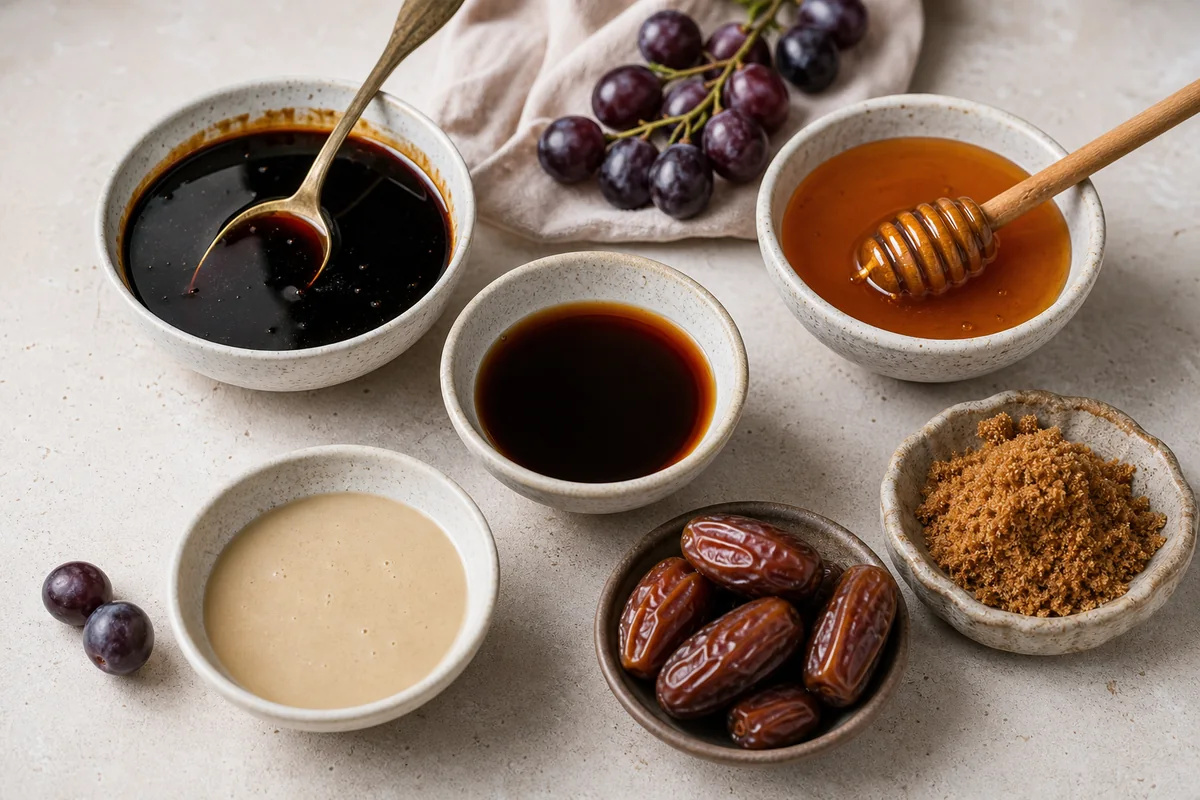
For most baking, thick grape molasses or a sweet balsamic reduction are the closest swaps for petimezi. Date syrup works when you need dark sweetness with body. Fig jam (thinned and blended) and brown sugar syrup cover emergency situations when the pantry is short.
5 Best Petimezi Substitutes (Closest Match)
The table below gives you a fast comparison. Each substitute's ratio is tested for baking and glazes, and the key note tells you the single most important adjustment to make before you use it.
| # | Substitute | Best For | Ratio | Key Note |
|---|---|---|---|---|
| 1 | Thick Grape Molasses | Both | 1:1 | Reduce if too thin |
| 2 | Balsamic Reduction | Both | 1:1 | Use sweet-style only |
| 3 | Date Syrup | Both | ¾:1 | Reduce amount slightly |
| 4 | Fig Jam (thinned) | Baking | 1:1 | Blend until smooth |
| 5 | Brown Sugar Syrup | Both | 1:1 | Simmer to coat spoon |
1. Thick Grape Molasses
Reduced grape syrup is the substitute that sits closest to petimezi in flavor. Both start from concentrated grape must, so the dark-fruit sweetness and slight tannin carry over in a way that other syrups simply can't match.
The difference usually comes down to texture. Many commercial grape syrups are pourable rather than coating, so check consistency before measuring.
If it runs off your spoon in under two seconds, simmer it over low heat for 3-4 minutes first.
Thick Grape Molasses
Works for: baked goods, glazes, marinades, any recipe where grape-molasses flavor is part of the dish's identity
Skip if: you need a bright citrus tang, or your recipe requires a light-colored batter since reduced grape syrup darkens the crumb
- Ratio: Use 1:1 for petimezi in baking and glazes
- When to choose it: Any Greek or Middle Eastern recipe where petimezi is both the sweetener and the flavor anchor
- Adjustment tip: If the syrup still seems thin after reducing, stir in 1 teaspoon of honey to add body without changing the flavor direction
2. Balsamic Reduction
A thick, sweet-style balsamic reduction brings dark, slightly tangy sweetness and a coating body that behaves well in glazes and baked cookies. It is not identical to petimezi, but the syrupy weight and caramel-dark flavor are close enough that most recipes won't notice the shift.
The word "thick" matters here. Before reaching for picking a vinegar swap, check that your balsamic reduction coats a spoon fully.
Watery balsamic will taste sharp and thin, and it will weaken batter consistency.
- Ratio: 1:1 for petimezi, but only after reducing to a thick, slow-dripping consistency
- Best use: Glazes, drizzles over cheese or fruit, cookies, and dark breads where mild tang is welcome
- Adjustment: If the reduction is slightly acidic, add ½ teaspoon of honey per tablespoon to soften the edge
Skip if your recipe depends on grape-specific flavor. Balsamic reduction is similar in body and dark sweetness, but the grape character reads differently here.
3. Date Syrup
Date syrup is thicker than you might expect and carries a caramel-leaning sweetness with a faint earthiness underneath. That profile works surprisingly well in recipes that use petimezi for dark sweetness and body, like spiced cookies, dense cakes, or sticky glazes.
The caramel notes from this dark sweetener can be stronger than petimezi's grape-fruit tone, so we reduce the amount slightly rather than swapping 1:1.
Date Syrup
Works for: spiced bakes, chocolate-adjacent recipes, dark glazes, and any dish where caramel depth is welcome
Skip if: you're baking a delicate vanilla or lemon cake where date's caramel flavor will overpower the base, or if you can't measure precisely by ratio
- Ratio: Use ¾ of the petimezi amount called for; taste and add more only if the batter needs more sweetness
- Thickness tip: Date syrup is usually ready to use without adjustment, but if it seems thick and stiff, loosen it with 1 teaspoon of warm water per tablespoon
- Pairing tip: Pairs especially well in recipes with cinnamon, cardamom, or dark chocolate, where its natural caramel tone reads as intentional
Also consider how you plan to store leftovers. If you're storing date syrup for repeated use, keep it refrigerated and it holds well for months.
4. Fig Jam (Thinned and Blended)
Fig jam brings a dark-fruit depth that echoes petimezi more closely than most pantry shortcuts. The key is handling the texture correctly, because jam used straight from the jar will introduce chunks and uneven sweetness into your batter.
Blending is worth the 90 seconds it takes. For dark-fruit jam flavors and what to expect from the base ingredient, fig's natural sweetness profile runs deep and jammy rather than bright.
Thin the jam before blending if it's very stiff.
- Ratio: 1:1 for petimezi; start with 1 tablespoon of warm water per 3 tablespoons of jam to reach syrup consistency
- Thinning method: Warm the jam gently in a small saucepan, add water 1 teaspoon at a time, then blend smooth with an immersion blender or in a mini chopper
- Best recipe types: Dense bars, oat cookies, spiced breads, and glazes where some fruit intensity is a bonus rather than a problem
Skip if you need a completely smooth, neutral-sweet batter. Fig's seedy texture can survive blending imperfectly, which may affect delicate crumb structure.
5. Brown Sugar Syrup
Brown sugar syrup is the emergency option. It won't give you grape-molasses flavor, but it delivers the sticky, coating body that petimezi provides in batter, and it takes about five minutes to make from scratch.
Combine 1 cup of packed brown sugar with ½ cup of water in a small saucepan. Stir over medium heat until dissolved, then simmer until a spoon dipped and lifted drips slowly rather than runs off.
That coating-spoon test is how you know the thickness is right.
- Ratio: 1:1 for petimezi in most recipes
- Flavor note: Expect caramel and molasses tones, not grape; it works in recipes that use petimezi as a background sweetener rather than a featured flavor
- Thickening tip: Simmer an extra 2 minutes if the syrup feels thin; it thickens more as it cools, so test at room temperature
Skip if your batter is already quite thick or if the recipe relies on petimezi's specific fruit character. For a wider set of options when brown sugar is the starting point, picking the right granulated swap can open up more paths. Skip if your batter is already very moist, since an extra liquid sweetener will soften the texture further.
How to Make Any Petimezi Substitute Work
The approach is always the same: match thickness first, then taste for sweetness, then correct the flavor direction with small additions. Petimezi does two jobs in a recipe, sweetening and adding sticky body, so a substitute that only does one of those will show up as a problem in your finished dish.
Salt and lemon juice are your correction tools. A pinch of salt tones down substitutes that read too sweet, and a small splash of lemon juice, no more than ½ teaspoon per tablespoon of syrup, adds the tang that some replacements lack.
- Test thickness before adding to batter: Dip a spoon, lift it, and the syrup should drip slowly and coat the back. If it pours clean, simmer it for 2-4 more minutes.
- Adjust sweetness in stages: Add the substitute in two additions. Taste after the first, and hold back or add the second depending on how the batter reads.
- Correct for tang last: After mixing, taste the batter directly. If it tastes flat or one-dimensionally sweet, stir in ½ teaspoon of lemon juice before baking.
Frequently Asked Questions
Most thick substitutes like balsamic reduction and grape molasses swap 1:1 without issue. Date syrup is the exception; use ¾ of the petimezi amount to avoid over-sweetening.
Thick grape molasses is closer in flavor because it shares the same grape-must base. Date syrup is similar in body and dark sweetness but shifts toward caramel rather than fruit.
Dip a spoon and hold it sideways. The syrup should cling and drip slowly, not run off in a thin stream. If it runs, simmer 2-3 more minutes and retest.
Slightly, yes. A well-reduced sweet balsamic adds dark, faintly tangy sweetness that reads as a background note rather than a sharp vinegar flavor in most baked goods.
Add a pinch of salt to reduce perceived sweetness. For missing tang, stir in ½ teaspoon of fresh lemon juice per tablespoon of substitute before adding to the recipe.
5 Best Petimezi Substitutes (Closest Match)
Ingredients
Equipment
Method
- Identify what you’re making (baked goods vs. glaze/sauce) and whether the recipe relies on thick, sticky body.
- Choose the closest match from the ingredient list: grape molasses or a sweet balsamic reduction first.
- Swap using the listed ratio; for wetter substitutes, simmer 2–4 minutes to thicken before adding to batter/glaze.
- Taste the batter/sauce and correct: add a pinch of salt for balance or a splash of lemon juice if it needs tang.
- If the substitute is drier/thicker than petimezi, loosen with 1–2 teaspoons of warm water (then mix thoroughly).
Notes
- Petimezi is grape-molasses style: prioritize dark grape sweetness plus syrupy thickness.
- If your substitute is very acidic or very thin, adjust with thickening or small tang balancing (salt/lemon).
Tried this recipe?
Let us know how it was!
Carrie is a food writer and editor with more than 15 years of experience. She has worked for some of the biggest names in the food industry, including Bon Appétit, Food & Wine, and Martha Stewart Living.
As the Editor in Chief of EpicureDelight, Carrie oversees all of the content on the site. She also manages the team of contributing writers and editors, who help to create delicious recipes, helpful tips, and informative articles that you’ll find on the site.
A native of the Chicago area, Carrie is passionate about all things food. She loves trying new restaurants and experimenting with new recipes in her kitchen. She’s also a graduate of the Culinary Institute of America, so she knows a thing or two about food!



