
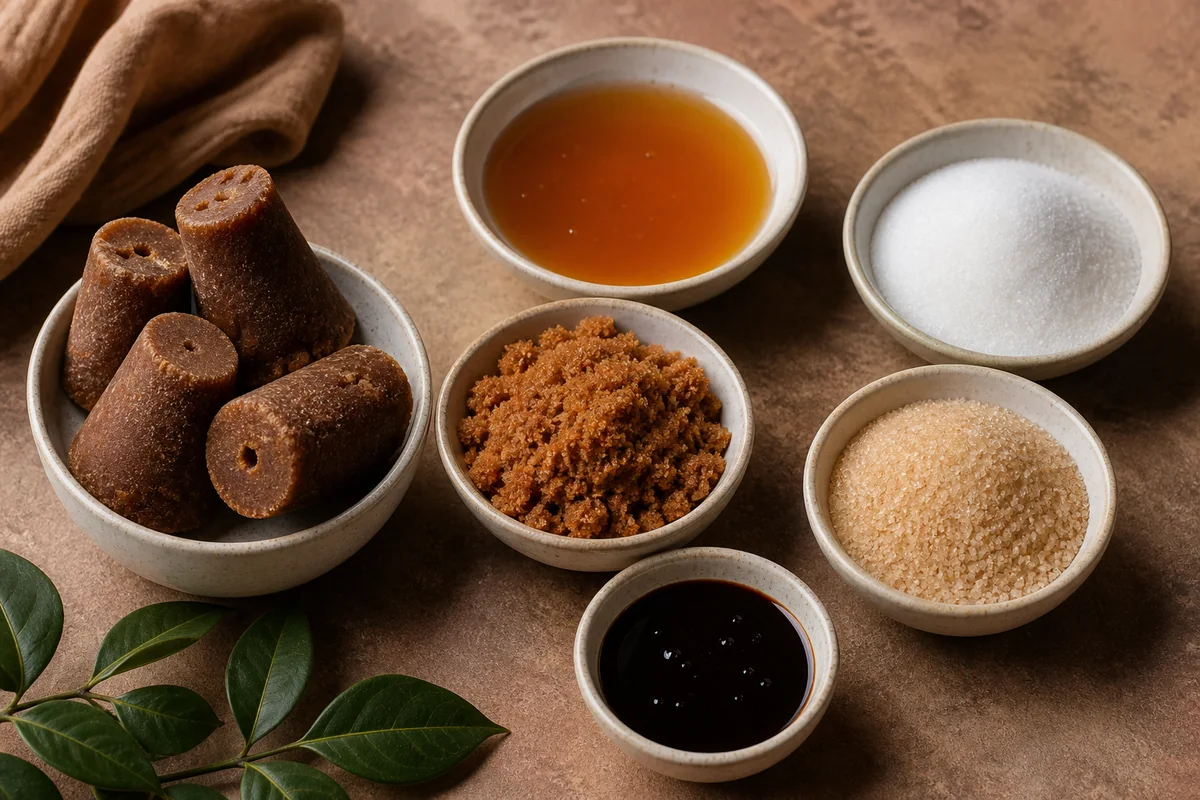
Piloncillo has a flavor that brown sugar simply doesn't. It's darker, smokier, and carries a molasses weight that you notice most in simmered sauces, Mexican hot chocolate, and slow-cooked braises.
Finding a good piloncillo substitute means matching both that flavor depth and how it dissolves into liquid.
The biggest swap variable is flavor depth versus viscosity. Some substitutes nail the caramel-molasses taste but are dry and granular.
Others give you body and gloss but taste milder. Knowing which one your recipe needs most changes everything.
Piloncillo is unrefined cane sugar with deep molasses character. The closest swap is muscovado sugar at 1:1. For pantry-built depth, mix 3 parts brown sugar with 1 part molasses. Liquid substitutes like date syrup and maple syrup work best in sauces and glazes where viscosity matters.
5 Best Piloncillo Substitutes Ranked by Flavor Depth
A good piloncillo substitute should match three things: molasses depth, how quickly it dissolves in hot liquid, and viscosity for sauces that reduce. The table below gives you a fast reference, and the sections after it break down each option in detail.
| # | Substitute | Best For | Ratio | Key Note |
|---|---|---|---|---|
| 1 | Muscovado Sugar | Both | 1:1 | Dissolve fully in hot liquid |
| 2 | Brown Sugar + Molasses | Both | 1:1 | 1 part molasses per 3 parts sugar |
| 3 | Dark Brown Sugar | Both | 1:1 | Use 15-25% less if already sweet |
| 4 | Date Syrup | Sauces | 1:1 | Fruitier note; add molasses for depth |
| 5 | Maple Syrup (dark) | Glazes | ¾:1 | Best with cinnamon or cocoa |
1. Muscovado Sugar
Muscovado is the substitute that gets closest to what piloncillo actually tastes like. It's unrefined, heavy with molasses, and has a slightly damp, almost sticky texture that dissolves slowly but fully in warm liquids.
The muscovado versus brown sugar comparison matters here: muscovado keeps far more molasses than standard brown sugar does, which is why it works so well in simmered sauces and spiced drinks.
Muscovado Sugar
Works for: sauces, hot chocolate, braises, spiced syrups, molasses-forward baking
Skip if: you want clean, fruit-forward sweetness without smoky depth
- Ratio: Use 1:1 whenever piloncillo dissolves in liquid (syrups, sauces, drinks).
- Texture note: It can feel slightly drier than dissolved piloncillo. Stir until every grain is fully melted to avoid a gritty finish.
- Baking: Works in dark cookies, spiced cakes, and anything that benefits from a molasses-brown flavor background.
2. Brown Sugar + Molasses Mix
This is the pantry-builder approach. Start with 3 parts dark or light packed brown sugar and stir in 1 part molasses until it forms a cohesive, paste-like mix before adding it to your recipe.
The molasses is what does the heavy lifting. That bitter-sweet depth is exactly what separates piloncillo from plain brown sugar in simmered dishes.
- Glazes and marinades: The mix dissolves fast under heat and thickens into a glossy coating.
- Dulce-style syrups: Simmer the mix with water until it coats a spoon; it behaves almost identically to dissolved piloncillo cone.
- Baking crumbs: Use as a topping for streusel or crumble where the molasses note is welcome.
- Skip if: You need a fully dry substitute with low moisture. Choose muscovado instead.
3. Dark Brown Sugar
Dark brown sugar is the easiest swap for most cooks. It's available everywhere and dissolves cleanly, though it reads milder than piloncillo because it has less molasses by weight.
Start at 1:1 for most recipes. If your dish already has strong spices, chocolate, or another sweetener, pull the amount back by 15-25% because dark brown sugar can tip sweet faster than piloncillo does.
It won't fully recreate piloncillo's deeper finish on its own, but for everyday baking and mild sauces it holds up well. If you want to push it closer to piloncillo's profile, the brown sugar swap options include adding a small molasses boost.
Skip if: Your recipe depends on a pronounced caramel-molasses finish. In that case, go with muscovado or the brown sugar and molasses mix from option 2.
4. Date Syrup
Date syrup is thick, naturally sweet, and carries a caramel-fruity depth that works surprisingly well in glazes and reduction sauces. It brings viscosity that most granular substitutes can't match.
The flavor shift is real, though. Date syrup leans fruity-caramel rather than smoky-molasses.
If date syrup's flavor profile is new to you, taste a small spoonful before adding it to a savory dish. You can balance the fruitiness by stirring in a half teaspoon of molasses per tablespoon of syrup.
- Ratio: Use 1:1 for sauces and glazes; simmer until glossy before tasting.
- Adjust flavor: Add a small amount of molasses if the fruity note is too forward for your dish.
- Skip if: Your sauce must stay strictly molasses-forward. Muscovado is safer in that case.
5. Maple Syrup (Dark Amber)
Dark amber maple syrup is widely available and brings genuine sweetness with good browning behavior. It does not taste like piloncillo, but it performs well in glazes, spiced drinks, and anything where the recipe already has cinnamon, clove, or cocoa doing the flavor work.
The amber-dark syrup grade has more character than light maple. That extra depth helps close the gap when you're using it as a stand-in for a more complex sweetener.
- Ratio: Start at ¾:1 (maple to piloncillo) to avoid an overly sweet result.
- Simmer briefly: Maple thins out fast. Give it 2-3 extra minutes over medium heat to thicken into a workable consistency.
- Best pairings: Works best in spiced Mexican hot chocolate, pork glazes with warm spices, and baked goods where molasses tang is secondary.
- Skip if: You're making a molasses-dominant sauce where tang is essential. Use muscovado or option 2 instead.
Making a Piloncillo Substitute Taste Right
Choosing the right sub comes down to one question: does your recipe need molasses depth or liquid body? For sauces that reduce, date syrup and the brown sugar-molasses mix dissolve and thicken fastest.
For baking where texture matters, muscovado or dark brown sugar keeps moisture stable without adding extra liquid. This dark, syrupy ingredient is what pushes most substitutes closer to piloncillo's real character when you add even a small amount.
- Dissolve completely: Always melt granular substitutes in warm liquid first. Gritty undissolved sugar will throw off both texture and sweetness distribution.
- Adjust depth: If a substitute tastes flat, add molasses in small increments, a teaspoon at a time, until the flavor reads darker and more complex.
- Manage thickness: Liquid substitutes add moisture. Simmer 2-5 minutes longer than your recipe calls for to reduce that excess and restore the right glossy consistency.
Frequently Asked Questions
Muscovado sugar is the closest match at a 1:1 ratio. It has the same molasses-heavy depth and dissolves fully in hot liquid without changing the sauce's base flavor profile significantly.
Yes, dark brown sugar works at a 1:1 ratio. The result will be milder; stir in a teaspoon of molasses per cup if you need more depth.
Too sweet: reduce the amount by 15-20% and add a small pinch of salt. Too flat: stir in molasses a teaspoon at a time until the flavor deepens.
Yes, at a 1:1 ratio. It gives glazes natural body and good browning. Expect a fruitier caramel note rather than piloncillo's smokier finish.
Use dark maple syrup at a ¾:1 ratio and simmer briefly to thicken. Add a teaspoon of molasses if the flavor feels too mild for your dish.
5 Best Piloncillo Substitutes You Can Trust
Ingredients
Equipment
Method
- Decide what you’re making (simmered sauce, baking, or a drink) and choose the substitute by closest flavor depth first.
- Measure using the listed ratio (use exact ratios for baking; for sauces, dissolve fully in warm liquid before adding).
- Adjust to taste with small increments: add a pinch of salt for molasses balance or add a few drops more flavor (molasses/date syrup) if it tastes flat.
- If the recipe needs a thick, glossy finish, simmer 2–5 minutes longer to reduce excess moisture from liquid sweeteners.
Notes
- For piloncillo-style depth, prioritize muscovado or a brown sugar + molasses blend.
- Liquid substitutes can add moisture; reduce simmer time if the sauce gets too thick early.
Tried this recipe?
Let us know how it was!
Carrie is a food writer and editor with more than 15 years of experience. She has worked for some of the biggest names in the food industry, including Bon Appétit, Food & Wine, and Martha Stewart Living.
As the Editor in Chief of EpicureDelight, Carrie oversees all of the content on the site. She also manages the team of contributing writers and editors, who help to create delicious recipes, helpful tips, and informative articles that you’ll find on the site.
A native of the Chicago area, Carrie is passionate about all things food. She loves trying new restaurants and experimenting with new recipes in her kitchen. She’s also a graduate of the Culinary Institute of America, so she knows a thing or two about food!



