
Piquillo peppers have a very specific personality: smoky, sweet, tender, and just a little tangy. They're almost always sold roasted and jarred, which means the texture is already soft when you open the lid.
That combination of flavors is what makes a good piquillo pepper substitute harder to nail than you'd expect.
The right swap depends on how you're using them. Chopped for a topping or tapa, blended into a sauce, or layered in a stuffed pepper dish each call for something slightly different.
A watery or vinegar-heavy swap can throw off a sauce; a too-crunchy fresh pepper can't stand in for jarred piquillo's tender bite.
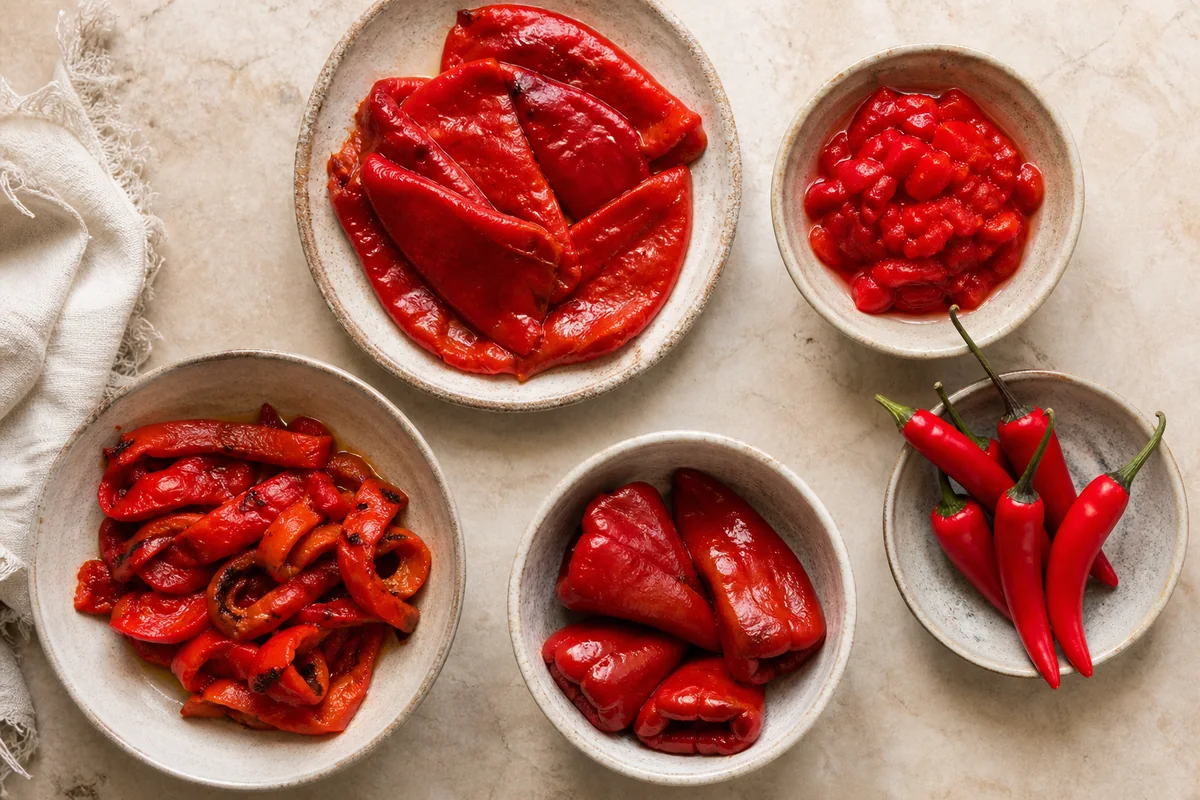
Jarred roasted red bell peppers are the closest match in most recipes. They share the same tender texture and sweet-roast character. Add a small pinch of smoked paprika to close the flavor gap. For a tang fix, a few drops of sherry vinegar pulls the flavor back toward piquillo's mild brightness.
5 Best Piquillo Pepper Substitutes (and When to Use Them)
Each substitute below is matched to a specific use case. Scan the table first, then read the item that fits your dish.
| # | Substitute | Best For | Ratio | Key Note |
|---|---|---|---|---|
| 1 | Roasted red bell peppers (jarred) | Both | 1:1 | Drain well; add smoked paprika |
| 2 | Piquillo-style roasted peppers (jarred) | Both | 1:1 | Check label: mild, sweet, roasted |
| 3 | Roasted red peppers + smoked paprika | Sauce | 1:1 | Add paprika in small increments |
| 4 | Cherry peppers (drained) + sugar | Topping | ¾:1 | Pinch of sugar softens tang |
| 5 | Sweet roasted peppers + sherry vinegar | Sauce | 1:1 | Few drops only; taste first |
1. Roasted Red Bell Peppers
Jarred roasted red bell peppers are the default swap, and they earn that spot. The texture after roasting and jarring is almost identical to piquillo: soft, easy to slice, and not chewy.
Color and appearance are also close enough that most plates won't look different.
The main gap is flavor. Red bell peppers are sweeter and milder, with less of that smoky-roast depth piquillo carries.
That's fixable, and we'll cover it in the bullets below.
Chopped for toppings or tapas
Works for: jarred, drained, and sliced-use 1:1 directly
Skip if: peppers taste sharp from the jar; rinse and add a tiny pinch of sugar
Blended for sauce or puree
Works for: blend with a pinch of smoked paprika to deepen the roast note
Skip if: you're blending with already-smoky ingredients; paprika can overpower
- Drain first: Press peppers gently in a paper towel before chopping or blending.
- Ratio: Use 1:1 in any recipe calling for piquillo.
- Smoke fix: Add a small pinch of smoked paprika per half cup of peppers.
- Sweetness check: If the jarred peppers taste sharp, a tiny pinch of sugar balances them out.
Skip if: your recipe needs whole peppers for presentation and size matters. Roasted red bell peppers come in larger pieces; cut them to match piquillo's smaller shape.
Piquillo's flavor is worth understanding before you swap. The smoky-tender bite it delivers is surprisingly specific, and knowing that helps you calibrate how much paprika or sugar to add.
2. Piquillo-Style Roasted Peppers
Some grocery stores and online retailers carry jarred peppers labeled as "roasted mild red peppers" or "sweet roasted peppers" without the piquillo name. These are often the same variety or a close relative.
They're your best identity match when you can't find an actual piquillo jar.
The key is reading the label carefully. Words like "hot," "pickled," or "Italian-style" signal something different.
You want the sweet, mild, thick-walled type that has been fire-roasted.
- Label check: Look for "roasted," "mild," and "sweet" on the jar.
- Avoid: Anything labeled "hot," "pickled," or "marinated in vinegar."
- Texture tip: Trim any tougher skin edges before using in a smooth dish.
- Ratio: Use 1:1 once drained; no flavor adjustment usually needed.
Skip if: the only option you find is pickled or hot. That flavor skews toward heat or vinegar, which fights piquillo's mild roast sweetness rather than standing in for it.
If you're also curious about milder chili swaps, those options can fill a different gap when heat isn't what you're after.
3. Roasted Red Peppers + Smoked Paprika
This combo is the flavor-depth fixer. Plain roasted red peppers taste flat compared to piquillo, especially in a sauce where that roast character is the main note.
A small amount of smoked paprika fills that gap without changing the texture at all.
The trick is incremental addition. Smoked paprika is more intense than most people expect, and it goes from "background warmth" to "all I can taste" faster than it should.
Start with less than you think you need. For reference on how paprika smoke registers in cooked dishes, the flavor sharpens as liquid reduces, so hold back when making a sauce.
- Starting point: 1 cup roasted red peppers + a scant ¼ teaspoon smoked paprika.
- For blended sauces: Add paprika before blending so it distributes evenly.
- For chopped dishes: Toss drained peppers with paprika and let sit 5 minutes before using.
- Taste test: Add more in ⅛ teaspoon increments after mixing.
Skip if: your dish already includes smoked meats, smoked cheese, or chipotle. Stacking smoke sources pushes the flavor out of balance quickly.
4. Cherry Peppers (Drained) + Sugar
Cherry peppers bring genuine pepper character and a similar small, round shape. That makes them a useful pantry fallback, especially for chopped toppings.
The problem is they often skew tangy and bright rather than sweet and smoky.
The fix is simple. Using about ¾ the amount you'd use for piquillo, plus a small pinch of sugar, pulls the flavor closer.
The sugar doesn't make the dish sweet; it softens the sharper edge the peppers carry.
Cherry peppers work best where you need visible pepper pieces rather than a smooth texture. They're firmer than jarred piquillo, which means they hold their shape in a topping or crostini but don't blend as smoothly.
If you're considering other options for this style of dish, picking the right jarred pepper comes down to knowing which textures work for your format.
Skip if: you're making a delicate sauce where the sweetness balance is tight. The firmer texture and brighter tang can throw off a pureed sauce. Use roasted red bell peppers instead for that application.
5. Sweet Roasted Red Peppers + Sherry Vinegar
Sometimes a roasted red pepper swap just tastes flat. Piquillo has a gentle tang that most jarred alternatives don't replicate on their own.
A small amount of sherry vinegar adds exactly that brightness, without pushing the dish toward vinegar-forward territory.
Start with a few drops per serving, not per batch. Sherry vinegar is mellow but still acidic, and you want it to lift the flavor, not announce itself.
| Situation | Adjustment | Notes |
|---|---|---|
| Peppers taste flat | 2-3 drops sherry vinegar per serving | Add after draining, stir and taste |
| Peppers taste too sweet | 4-5 drops sherry vinegar + small squeeze lemon | Mix before adding to dish |
| Peppers taste too tangy already | Skip vinegar; add a pinch of sugar instead | Use as-is after draining |
Sherry vinegar is the closest acid match to piquillo's natural tang. White wine vinegar works if you don't have sherry vinegar, but use even less-it's sharper.
When swapping in bell peppers for any pepper-based dish, vinegar adjustment is often the last and most important step.
- Ratio: Use peppers 1:1; vinegar is an adjustment, not a measured ingredient.
- Order: Drain peppers first, then add vinegar, then taste.
- Blended use: Add vinegar before blending so it incorporates evenly.
Skip if: your dish already has tomato, lemon juice, and wine. Adding vinegar on top of multiple acid sources tips the balance too far. In that case, use plain roasted red peppers and skip the tang fix entirely.
Making the Substitute Taste Right (Quick Fix Checklist)
The three things that most piquillo substitutes get wrong are texture (too watery or too firm), smoke (too little or too much), and tang (missing or overdone). Fixing all three is faster than it sounds.
Drain your peppers well before doing anything else-excess liquid is the first thing that makes a sauce taste diluted rather than clean and pepper-forward.
For jarred roasted peppers stored after opening, texture starts to soften and liquid increases over a few days. Use them within 3-4 days for the best results in any substitute application.
If you're also adjusting smoke level and want a fallback, choosing a paprika replacement gives you a few non-smoked options that can shift the depth without adding more smoke.
- Drain and press: Pat peppers dry with a paper towel before chopping or blending-this prevents watery sauce and diluted flavor.
- Balance in order: Fix smoke first (pinch of smoked paprika), then sweetness (pinch of sugar), then tang (drops of sherry vinegar). Don't adjust all three at once.
- Match your format: For chopped toppings, keep pieces distinct; for sauces, blend briefly and taste before adding acid.
Frequently Asked Questions
Jarred roasted red bell peppers blended with a small pinch of smoked paprika are the best match. Drain them well first, then blend and add a few drops of sherry vinegar to restore piquillo's mild tang.
Yes, but cut them to a smaller size to match piquillo's shape. Drain well and add a pinch of smoked paprika for a closer flavor match on the plate.
Add a very small pinch of sugar and stir before tasting again. Skip any vinegar adjustment entirely if the peppers are already bright or tangy.
Yes. Excess brine dilutes flavor and makes sauces watery. Press them gently in a paper towel before chopping or blending.
Jarred piquillo-style roasted peppers or well-drained roasted red bell peppers cut to size are the best options. Cherry peppers also hold their shape but have a firmer texture and sharper flavor.
5 Best Piquillo Pepper Substitutes (Honest Picks)
Ingredients
Equipment
Method
- Decide how you’re using piquillo: blended for sauce, chopped for topping, or layered in a dish.
- Start with the 1:1 swap (roasted red bell peppers). For more piquillo-like roast depth, add a pinch of smoked paprika.
- If your substitute is sharper, stir in a small pinch of sugar; if it tastes flat, add a few drops of sherry vinegar or another mild vinegar.
- Match texture: drain excess liquid for chopped use, and blend slightly for a smoother, piquillo-like puree.
- Taste and adjust in small increments (smoke → sweetness → tang) so you don’t overpower the dish.
Notes
- Use drained peppers for toppings; puree slightly for sauces.
- Smoked paprika and a tiny vinegar/sugar adjustment are the main “flavor-matching” levers.
Tried this recipe?
Let us know how it was!
Carrie is a food writer and editor with more than 15 years of experience. She has worked for some of the biggest names in the food industry, including Bon Appétit, Food & Wine, and Martha Stewart Living.
As the Editor in Chief of EpicureDelight, Carrie oversees all of the content on the site. She also manages the team of contributing writers and editors, who help to create delicious recipes, helpful tips, and informative articles that you’ll find on the site.
A native of the Chicago area, Carrie is passionate about all things food. She loves trying new restaurants and experimenting with new recipes in her kitchen. She’s also a graduate of the Culinary Institute of America, so she knows a thing or two about food!



